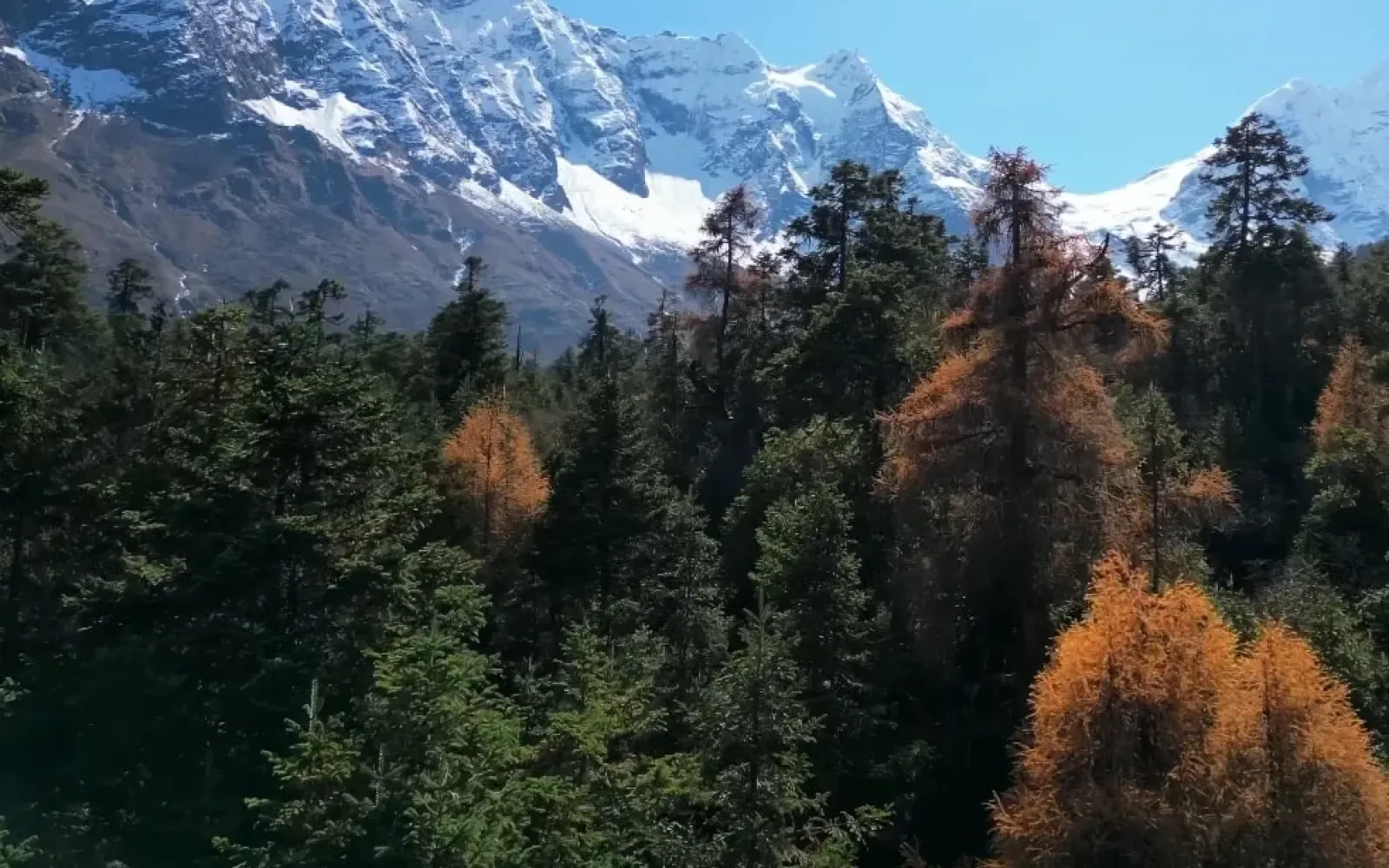
Karma Sherpa's teahouse in Samagaon used to get its first snowfall by mid-October. Every single year since he opened the lodge in 1993, he could count on it. Last year, the snow came in December. This year—on January 3rd when I sat across from him drinking butter tea—the ground outside was still brown and exposed.
"In thirty years, I've never seen this," he said, gesturing toward the window where Manaslu's massive north face loomed in the distance. He pulled out his phone and showed me a photograph his grandfather had taken in 1989 from the exact spot where we sat. A thick tongue of glacier descended all the way to where prayer flags now fluttered in a wind that felt unseasonably warm.
I was on day six of the Manaslu Circuit Trek when I heard this. I'd come for the adventure, the mountain views, the challenge of crossing Larkya La pass at 5,160 meters. What I hadn't expected was to witness the front lines of climate change in the Himalayas. And I definitely didn't expect it to completely change how I thought about trekking in Nepal.
Here's what nobody mentions in the glossy trekking brochures: the Himalayas are warming faster than almost anywhere else on Earth. According to the International Centre for Integrated Mountain Development (ICIMOD), temperatures in the Hindu Kush Himalayan region have increased by approximately 1.5°C since the 1970s—a rate significantly higher than the global average.
For Manaslu specifically, the changes are stark. The Punggen Glacier, which flows down from the mountain's north face, has retreated more than 800 meters in the past four decades. I know this not just from research papers but because our guide, Pasang Lama, pointed to landmarks his father had used as reference points when he started guiding in the 1980s.
"See that rock outcrop?" Pasang asked as we trekked from Lho to Samagaon. "My father used to tell trekkers they were standing on ice when they reached it. Now it's exposed rock with a small lake below it."
The lake he mentioned wasn't there five years ago. It's a glacial lake, formed by meltwater, and it's growing. While beautiful in photographs, these lakes represent something more precarious. In 2015, ICIMOD identified over 200 potentially dangerous glacial lakes in Nepal alone—bodies of water perched high in the mountains that could burst their natural dams and send floods cascading down valleys where villages like Samagaon sit.
But the glacier retreat is just the most visible change. Talk to anyone who's lived in these mountains for more than a decade, and you'll hear about the others.
Alternative Destinations: If you're concerned about heavily impacted areas, consider lesser-trodden routes like the Upper Mustang Trek, Lower Dolpo Trek, or the culturally rich Tamang Heritage Trek.
The trekking seasons everyone relies on—spring and autumn, when the weather is supposedly stable and predictable—aren't what they used to be. Mingma Sherpa, who's been running trekking expeditions for twenty-two years, pulled up his booking calendar on a weathered laptop in Deng.
"Look at October 2018," he said. "Twenty-three groups that month. October 2023? Eleven groups. And five of those had to change their plans because of unexpected weather."
What he's describing matches broader patterns. The monsoon, which traditionally runs June through September, has become erratic. It arrives late some years, early others. It lingers when it should have moved on, or disappears for weeks during what should be peak rainfall. This isn't just inconvenient for trekkers—though getting caught in an October snowstorm above 4,000 meters is legitimately dangerous. For the farming communities in these valleys, it's existential.
Karma grows barley and buckwheat on terraced fields behind his teahouse. Or he used to. "The timing is all wrong now," he explained. "We plant when we should plant, but the rain doesn't come. Or it comes too much, all at once." Last season, an unexpected late-September deluge washed out half his barley crop. The year before, a dry spell during what should have been monsoon season left his buckwheat stunted and weak.
These aren't just anecdotes. A 2023 study published in Environmental Research Letters documented significant shifts in precipitation patterns across the Manaslu Conservation Area. The data shows exactly what local farmers have been experiencing: more variability, less predictability, and an overall decline in the reliability of traditional agricultural calendars that communities have followed for generations.
The economic mathematics are brutal. Karma estimated he's lost about 40% of his agricultural income over the past decade. His teahouse picks up some of the slack during trekking season, but he has two daughters. The younger one, Dawa, is studying in Kathmandu. The older one, Pema, helps run the lodge, but she's twenty-four now and talks openly about maybe moving to the city.
"There's no future in farming here anymore," Pema told me the next morning while serving the breakfast dal bhat. "Not the way things are going."
If you've trekked in Nepal before, you've probably done Everest Base Camp or the Annapurna Circuit. Those routes are spectacular, but they're also heavily trodden. Manaslu is different. It's Nepal's eighth-highest mountain, a massive 8,163-meter giant that only opened to trekkers in 1991. Even now, it sees a fraction of the traffic that flows to Everest.
This relative obscurity has protected Manaslu's cultural integrity—villages here feel genuinely lived-in rather than transformed into trekking theme parks—but it's also meant less attention to the environmental changes happening here. While researchers and filmmakers document glacier retreat on Everest, Manaslu changes more quietly.
The geography matters too. The Manaslu Circuit wraps around the mountain through a valley system that channels weather in specific ways. Pasang, who studied environmental science before becoming a guide, explained it during our rest day in Samagaon.
"This valley is like a funnel," he said, sketching in my notebook. "When weather patterns shift even slightly, we feel it more intensely. Warmer air from the south pushes farther up the valley than it used to. Cold air masses from Tibet behave differently. Everything is out of balance."
Dr. Arun Shrestha, a glaciologist at ICIMOD who's studied the Manaslu region specifically, confirmed this when I contacted him after my trek. "The Manaslu massif is experiencing some of the most rapid glacial retreat we've documented in Nepal," he told me via email. "The Punggen Glacier, the Thulagi Glacier—we're seeing retreat rates that have accelerated notably in the past fifteen years."
What worries him most isn't just the retreat itself but the cascading effects. "These glaciers feed the Budhi Gandaki river system," he explained. "That's the water source for hundreds of thousands of people downstream. As the glaciers shrink, dry season water availability will become increasingly problematic."
I thought about that every time I crossed one of the suspension bridges spanning the roaring Budhi Gandaki. All that water, rushing past—for now.
On day nine, climbing toward Larkya La, we stayed in a basic stone lodge at Dharamsala. The temperature dropped fast after sunset, and everyone huddled around a yak-dung stove in the common room. That's where I met Nawang, a guide who's been doing this circuit since 2005.
He wasn't particularly chatty at first—most guides aren't with trekkers they don't know—but when I mentioned what Karma had told me about the snow timing, something shifted.
"You want to know what's really changed?" Nawang asked. "The ice."
Twenty years ago, he explained, the approach to Larkya La involved crossing permanent ice fields that required crampons even in autumn. Now? "Mostly rock and scree until you get very high. The permanent ice line has moved up at least two hundred meters."
This matters for safety. Rock and scree are unstable, especially when they're newly exposed after being frozen for centuries. "We've had more rockfall incidents in the past five years than in the previous fifteen," Nawang said. "The ice was holding everything together. Now it's not."
He showed me photos on his phone from a trek in 2019 when his group got caught in an unexpected October storm. "We should have been fine at this altitude in mid-October," he said. "Instead, we got thirty centimeters of wet, heavy snow in six hours. Two trekkers got altitude sickness. One needed a helicopter rescue."
The cost of that rescue—over $5,000—nearly bankrupted the family involved. Travel insurance covered most of it, but the deductible and uncovered expenses were devastating.
I asked him if he ever thought about doing different work.
"Every single day," he admitted. "But this is what I know. This is what my father taught me. And honestly? As long as people still come, someone needs to guide them safely. Might as well be someone who understands what's changing."
Let's get practical, because if you're reading this, you're probably either planning a Manaslu trek or seriously considering one. You should still go. Absolutely. But you need to go in with eyes open.
The traditional wisdom about Nepal trekking seasons—March to May and September to November—still mostly applies, but with important caveats. October used to be the gold standard for Manaslu: post-monsoon clarity, stable weather, comfortable temperatures. It's still good, but it's not guaranteed anymore.
In 2024, several trekking groups had to turn back from Larkya La in late October due to unexpected snowstorms. In 2023, early-November groups reported perfect conditions. The predictability you could count on even a decade ago has eroded.
What does this mean for you?
First, build flexibility into your schedule. If you've got a tight timeline—fly in, trek, fly out—you're gambling. Weather delays that used to be rare are now common enough that you need buffer days. I met three separate groups during my trek who'd missed international flights because weather delayed their completion of the circuit.
Second, the difficulty level has changed in subtle ways. The official route hasn't changed, but conditions on that route have. More exposed rock means different terrain than described in guidebooks from even five years ago. The altitude challenges are the same, but add in less predictable weather and you've got a more complex risk profile.
Third—and this is crucial—choose your trekking company with climate awareness in mind. Not all operators are equal on this front.
When I started researching Manaslu treks, I looked at price first. Lots of people do. There are companies offering the circuit for $800-900, others charging $1,500-2,000. The difference isn't just markup.
The cheaper operators often cut corners that matter: less experienced guides, minimal emergency protocols, lower porter wages, no real environmental policies. The pricier ones—at least the good ones—invest in guide training, proper equipment, fair wages, and genuine sustainability practices.
Here's what to actually ask when vetting companies:
"How do you train your guides on changing weather patterns and environmental conditions?" If they look confused or give vague answers, that's a red flag. Good companies now specifically train guides on climate-related risks and changing seasonal patterns.
"What's your policy on porter loads and welfare?" Ethical companies cap porter loads at 20-25 kg and provide proper gear. Exploitative ones overload porters with 40+ kg and don't care if they have adequate clothing for high passes.
"How do you handle waste on the trail?" Every trekker generates waste. Companies that care bring it back down. Companies that don't leave it in mountain villages that have zero waste infrastructure.
"What happens if weather forces route changes or delays?" You want a company that has clear protocols, emergency funds for unexpected costs, and communication systems that work even in remote areas.
I trekked with Explore Holiday Nepal, and one thing impressed me: when we reached Samdo and weather looked uncertain for crossing Larkya La the next day, our guide Pasang didn't push it. We took an extra acclimatization day. Yes, it meant I had to rebook my flight from Kathmandu (at my expense). But it meant we crossed the pass safely two days later in perfect conditions.
The cheap trek operators I talked to at other teahouses? They were pushing their groups across regardless because they didn't have flexibility built into their schedules or their budgets.
Related Reading: Check out our guide on 10 Essential Everest Trekking Tips that apply to Manaslu as well, and learn about real stories from high-altitude treks.
You can't single-handedly stop glaciers from melting. But you can trek in ways that minimize your impact and maximize your contribution to communities adapting to these changes.
Water: This is the big one. Nepal has a severe plastic pollution problem, and trekking routes are littered with discarded water bottles. I carried a LifeStraw filter bottle and refilled from streams and taps the entire trek. Zero plastic bottles. It worked perfectly.
If you're worried about water quality—and at lower elevations, you should be—bring purification tablets or a filter system. The slight inconvenience is worth it. Every plastic bottle you don't buy is one less piece of waste in a mountain village with no recycling infrastructure.
Electricity: Most lodges above 3,000 meters run on solar power, sometimes supplemented by small hydroelectric systems. Charging devices consumes real power that comes at a cost—both financial and environmental. I brought a portable solar charger and a high-capacity power bank. Worked great, and I never had to plug into lodge power except in emergencies.
Food choices: Ordering dal bhat (lentil soup and rice) isn't just culturally appropriate—it's the most sustainable choice on any menu. The ingredients are local, it's what lodge owners eat themselves, and it genuinely does give you "24-hour power" as the saying goes. I ate it twice daily for the entire trek and never got tired of it.
The pasta, pizza, and other Western foods some lodges offer? All those ingredients are carried up from the lowlands, often by porter or yak. Every order creates a supply chain impact. I'm not saying never eat them, but be conscious about it.
For Peak Climbers: If you're considering combining your trek with peak climbing in Nepal, climate impacts are even more pronounced at higher elevations. Routes like Island Peak and Mera Peak are experiencing similar glacier changes.
Tipping and spending: Direct your money where it matters. Don't haggle aggressively over lodge prices—these places operate on razor-thin margins. Do tip guides and porters generously—they're the ones taking on physical and safety risks for your adventure.
Buy crafts and supplies in the villages rather than saving it all for Kathmandu. Karma's daughter Pema sells beautiful handwoven scarves made by women in Samagaon during the off-season. I bought three. They cost more than I'd pay in Thamel, but the money goes directly to families adapting to climate impacts on their traditional livelihoods.
Photography ethics: I saw trekkers constantly pushing into homes and monasteries, cameras first, without asking permission. Don't be that person. The communities along the Manaslu Circuit aren't zoo exhibits. They're people's homes.
Always ask before photographing individuals. Offer to share the photos afterward—get contact info and actually send them. I used my portable solar charger to print photos on a small portable printer I carried (yes, extra weight, but worth it) and gave prints to families who'd welcomed me into their homes. The delight on faces when I handed over those prints? That's the kind of tourism these communities deserve.
It's not all dire news. While climate change is real and its impacts on Manaslu are undeniable, there are people fighting back.
The Manaslu Conservation Area Project, established in 1998, has been adapting its strategies to address climate realities. When I met with project coordinator Tashi Gurung in Philim, he described efforts to work with villages on climate adaptation strategies.
"We're helping communities diversify income sources," he explained. "Traditional agriculture alone isn't viable anymore. So we're supporting sustainable tourism enterprises, helping families develop homestay programs, training local people as guides and conservation workers."
One initiative trains community members to monitor glacial lake levels and early warning systems for potential floods. It's not high-tech—mostly visual markers and regular observations—but it's practical and potentially life-saving.
Another program works with women's groups to develop off-season income through traditional crafts. The scarves I bought from Pema? Part of this program. The income helps families weather both the literal winters and the economic uncertainty of changing agricultural patterns.
International organizations are involved too. ICIMOD runs regular scientific monitoring programs throughout the region, collecting data that helps predict future changes. Their work isn't just academic—they share findings with local communities and district officials to inform planning and adaptation.
Could more be done? Absolutely. The resources committed to climate adaptation in vulnerable Himalayan communities are a fraction of what's needed. But knowing that real work is happening—and that your trekking fees and local spending support these efforts—matters.
Should you even trek in Nepal given the climate impact of long-distance flights?
It's a fair question, and I wrestled with it before booking my trip. Flying from Europe or North America to Nepal generates significant carbon emissions. There's no getting around that fact.
Here's how I think about it: Nepal's economy depends heavily on tourism. Trekking tourism specifically provides crucial income to mountain communities that have few other economic options, especially as traditional agriculture becomes less viable due to—wait for it—climate change.
If Western tourists stop coming because of flight guilt, the immediate impact falls on people like Karma, Pema, Pasang, and Mingma. People who contributed essentially nothing to global climate change but are living with its consequences every single day.
The solution isn't to stop traveling. It's to travel more responsibly.
I carbon-offset my flights through Gold Standard certified projects—yes, offsets aren't perfect, but they're something. I stayed longer in Nepal rather than flying in for just a two-week trek. I spent money directly in communities rather than just with international tour operators. I'm writing this article to share what I learned and hopefully influence how others trek.
Perfect? No. Better than not going at all? I believe so.
But everyone has to make that calculation for themselves. If you decide to trek, do it with intention. Make it count. Don't just collect Instagram photos and move on. Engage with the communities. Learn about the changes they're experiencing. Support conservation efforts. Share what you learn.
My last morning in Samagaon, I had breakfast with Karma again. I asked him directly: what's going to happen to this village?
He was quiet for a while, looking out at the mountain.
"My daughters will probably move to Kathmandu," he said finally. "Maybe I will too, eventually. The farming isn't working anymore. The trekking business helps, but it's only a few months a year. And who knows if people will keep coming if the weather gets worse."
Then he paused. "But you know what? My grandfather was a herder. My father became a farmer and started this teahouse. I studied in Kathmandu but came back to run it. My daughter Pema studied business but she's here too, for now. We adapt. We've always adapted."
That's what I'll remember most about the Manaslu Circuit. Not just the stunning mountain views or the physical challenge of crossing Larkya La. But the resilience of communities facing an existential threat not of their making, and doing everything they can to survive it.
The glaciers are vanishing. The weather patterns are shifting. The villages are changing in profound ways. But the people remain, adapting, persisting, hoping that the world beyond these mountains will wake up to what's happening—and that travelers who do come will do so as responsible guests rather than extractive consumers.
I'm not going to end this by telling you the Manaslu Circuit is the trek of a lifetime or that you'll find yourself in the mountains. Those clichés are probably true, but they miss the point.
What I will say is this: if you trek Manaslu, or anywhere in the Himalayas, do it with your eyes open. See what's actually happening, not just what's in the guidebook. Talk to the people who live there. Ask them about changes they've witnessed. Listen to their stories.
Support operators who treat guides and porters fairly, who have genuine environmental policies, who invest in the communities they work in. Yes, it costs more. It should cost more. The bargain-basement trek prices are possible only because someone—usually someone at the bottom of the economic ladder—is being exploited or because corners are being cut that shouldn't be cut.
Minimize your environmental impact. Carry out all waste. Use refillable water bottles. Choose local food. Turn off lights. These actions seem small against the scale of climate change, but they matter to the specific places you visit.
And when you get home, don't just post photos and move on. Tell people what you learned. Support organizations working on climate adaptation in mountain communities. Vote for policies that take climate change seriously. Stay connected.
The mountain villages of Manaslu are vanishing—maybe not this year or next, but the trajectory is clear. The glaciers are retreating. The weather is destabilizing. The young people are leaving.
But they're not gone yet. And as long as they're there, they deserve visitors who see them, really see them, and act accordingly.
That's what I learned at 4,000 meters, drinking butter tea with Karma while the snow that should have already fallen still hadn't come.
The mountains are telling us something. The question is whether we're ready to listen.
More Himalayan Adventures: If you're passionate about responsible mountain travel, explore our Ghorepani Poon Hill Trek for a shorter sustainable option, or dive deeper into the Kanchenjunga region for an even more remote experience. For cultural immersion, consider the spiritual Tsum Valley.
Ready to trek Manaslu responsibly? Explore Holiday Nepal offers sustainable circuit treks with experienced local guides, fair porter treatment, and genuine environmental commitment. Our 15-day Manaslu Circuit includes proper acclimatization, flexible scheduling for weather, and direct support for communities along the route.
Looking for other responsible trekking options? Explore our Tsum Valley Trek, Annapurna Base Camp Trek, or Langtang Valley Trek—all designed with sustainability and community benefit at their core.
Read more about trekking permits, essential trekking tips, and what to expect on Nepal's mountain trails.

Nepal, a landlocked gem nestled in the lap of the majestic Himalayas, is a paradise for travelers seeking a harmonious blend of nature, culture, and spirituality. In this comprehensive guide, we will embark on a detailed exploration of the mesmerizing tour places that make Nepal a unique and captivating destination.

Nepal, a landlocked country nestled in the heart of the Himalayas, is a trekking paradise renowned for its breathtaking landscapes and rich cultural heritage. From the towering peaks of the Himalayas to lush valleys and vibrant villages, Nepal offers an array of trekking experiences suitable for all levels of adventurers.
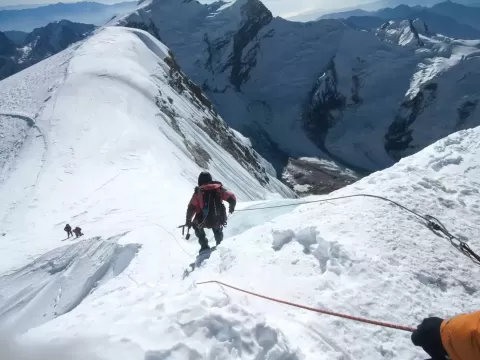
Nepal, the ultimate destination for mountaineers and adventure enthusiasts, offers some of the most popular and accessible peaks for climbing expeditions. Among the most sought-after climbs in Nepal for 2025 are Mera Peak, Island Peak, Lobuche Peak, Chulu East and Chulu West, and the iconic Ama Dablam.
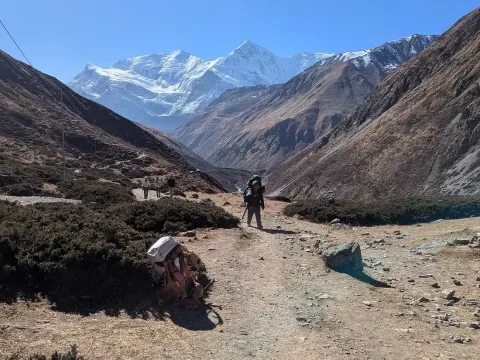
Nepal, home to some of the world’s most breathtaking mountain landscapes, offers a variety of trekking experiences, but none quite compare to the grandeur of the Manaslu and Annapurna Circuits. Both treks are iconic in their own right, drawing adventurers from around the globe. However, they differ significantly in terms of scenery, difficulty, cultural experiences, and remoteness.
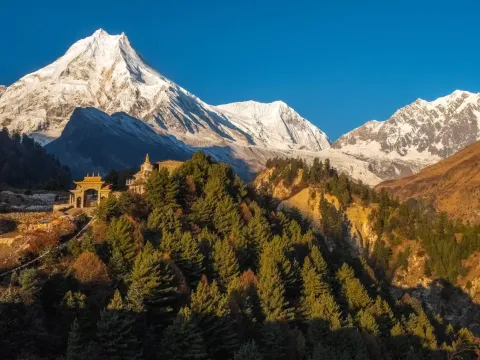
The Manaslu Circuit Trek, often referred to as Nepal’s hidden gem, is a spectacular journey that takes adventurers through one of the least explored regions of the Himalayas. Unlike the more popular Everest or Annapurna circuits, the Manaslu trek offers pristine landscapes, traditional villages, and a profound sense of tranquility, making it a perfect choice for trekkers seeking solitude combined with authentic cultural experiences.
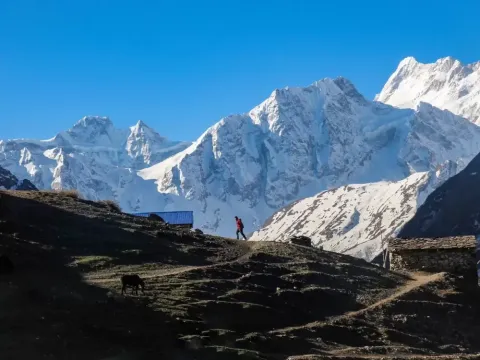
The Manaslu Circuit Trek is a spectacular journey through the remote and serene landscapes of the Manaslu region, offering trekkers breathtaking views of the eighth-highest mountain in the world, Mount Manaslu (8,163 meters).
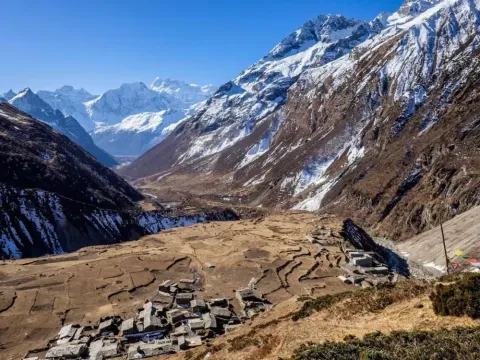
Tsum Valley, a hidden gem tucked away in the northern reaches of Nepal, is a pristine Himalayan valley known for its untouched natural beauty, rich cultural heritage, and deep spiritual significance. Often referred to as the “Valley of Mystics,” Tsum Valley has remained isolated from mainstream tourism, allowing its traditions, monasteries, and local lifestyles to flourish with minimal external influence.
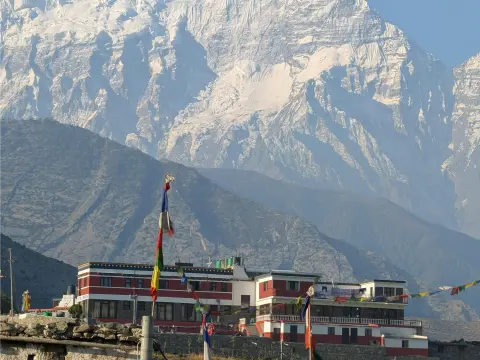
Beyond the trekking trails and mountain peaks lies another Nepal—one of prayer bells, butter lamps, and timeless wisdom. Journey through famous monasteries like Tengboche and Kopan, witness the authentic daily life of Buddhist monks, and discover why thousands of spiritual seekers find transformation in these sacred Himalayan sanctuaries.
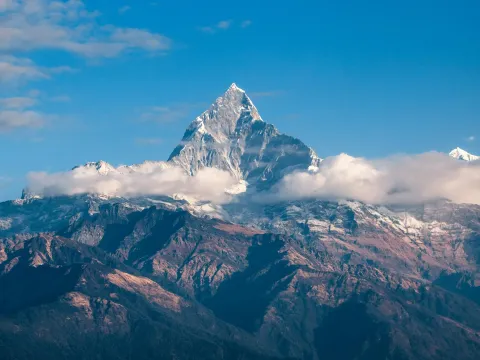
I'm going to be blunt: altitude sickness doesn't care if you're fit, young, or have trekked before. I've seen marathon runners struggling at Namche Bazaar while 60-year-olds cruise to Everest Base Camp. I've watched cocky 25-year-olds need helicopter evacuation while cautious first-timers make it without issues. After organizing 300+ high-altitude treks and dealing with countless altitude sickness cases (from mild headaches to life-threatening emergencies), here's everything you actually need to know. No medical jargon. No sugar-coating. Just the real information that might save your trek—or your life.
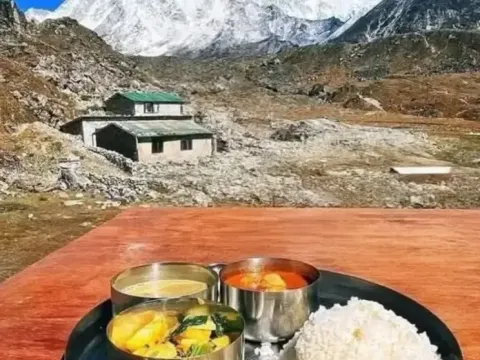
I'll be honest—when my guide Pasang first told me "dal bhat power 24 hour" on day two of my Annapurna Base Camp trek, I thought he was joking. I'd just finished my first proper serving of this Nepali staple, and while it filled me up, I couldn't understand the near-religious devotion trekkers and locals had for what looked like a simple plate of rice and soup.Three weeks and probably forty servings later, I got it. And now I'm one of those people who actually craves dal bhat when I'm back home dealing with altitude of exactly zero meters. Let me tell you why this unassuming meal has become the stuff of legend on Nepal's trekking trails.
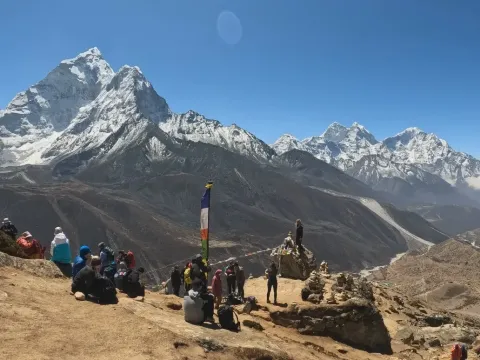
Trekking in the Everest region is more than a bucket-list adventure—it’s a life-changing journey through towering mountains, ancient Sherpa villages, and some of the most dramatic landscapes on Earth. For many travelers, an Everest trek is their first high-altitude trekking experience, and while the rewards are incredible, proper preparation is essential. First-time trekkers often focus on reaching Everest Base Camp or enjoying views from Kala Patthar, but success on the trail depends on much more than motivation alone. Altitude, weather, physical endurance, packing choices, and mindset all play a critical role in shaping your experience.


 (34)
(34) 