 Honey Hunting in Ghanpokhara and Ghalegaun: The Ultimate Cultural Adventure in Nepal
Deep in the heart of Lamjung district, two traditional Gurung villages preserve one of Nepal's most extraordinary cultural practices. Ghanpokhara and Ghalegaun offer travelers an authentic window into the ancient art of honey hunting, where brave villagers scale towering cliffs to harvest wild honey from the world's largest honeybees. This isn't just another tourist attraction—it's a living tradition that has defined these communities for centuries.
While most travelers flock to popular destinations like the Everest Base Camp Trek or Annapurna Circuit Trek, Ghanpokhara and Ghalegaun remain beautifully untouched by mass tourism. These twin villages sit nestled in the hills of Lamjung district, offering sweeping views of the Annapurna and Manaslu ranges that rival any famous viewpoint in Nepal.
Ghalegaun, in particular, has gained recognition as Nepal's first model tourism village. The entire community has embraced sustainable tourism, creating a blueprint for how traditional villages can share their culture while maintaining their authentic way of life. Walking through these villages feels like stepping back in time, where stone houses with slate roofs line narrow pathways, and locals still practice agriculture using centuries-old methods.
The star of this experience is Apis laboriosa, the largest honeybee species on Earth. These remarkable insects build their hives on steep cliff faces, sometimes at dizzying heights exceeding 100 meters. Unlike domesticated bees that build hidden hives, these wild bees create massive exposed combs that can measure over a meter across and weigh up to 60 kilograms when full of honey.
What makes these bees truly special is their honey. The giant Himalayan honeybee collects nectar primarily from rhododendron flowers during spring, creating a distinctive honey with unique properties. This "mad honey" contains grayanotoxins that produce mild psychoactive effects and has been used in traditional medicine for centuries to treat conditions ranging from hypertension to digestive issues.
The bees themselves are fascinating creatures. They're remarkably docile compared to their smaller cousins, but their size—workers can be nearly twice as large as domestic honeybees—makes them intimidating up close. During the harvesting season, you can observe thousands of these bees creating a living curtain of insects around their precious honeycomb.
Watching a honey hunt unfolds like witnessing a choreographed dance between humans and nature. The process hasn't changed substantially in hundreds of years, relying on courage, skill, and deep traditional knowledge passed down through generations.
The honey hunting season begins with important rituals. Village shamans perform ceremonies to appease forest spirits and seek blessings for the hunters' safety. These aren't merely superstitions—they reflect the Gurung people's profound respect for nature and their understanding that they're borrowing from the bees, not simply taking.
On hunting day, the village assembles before dawn. The lead hunter, called the "kuiche," is typically an experienced man who has proven his bravery and skill over many years. He's supported by a team including rope handlers, smoke makers, and basket carriers. Everyone has a specific role, and the entire operation requires seamless teamwork.
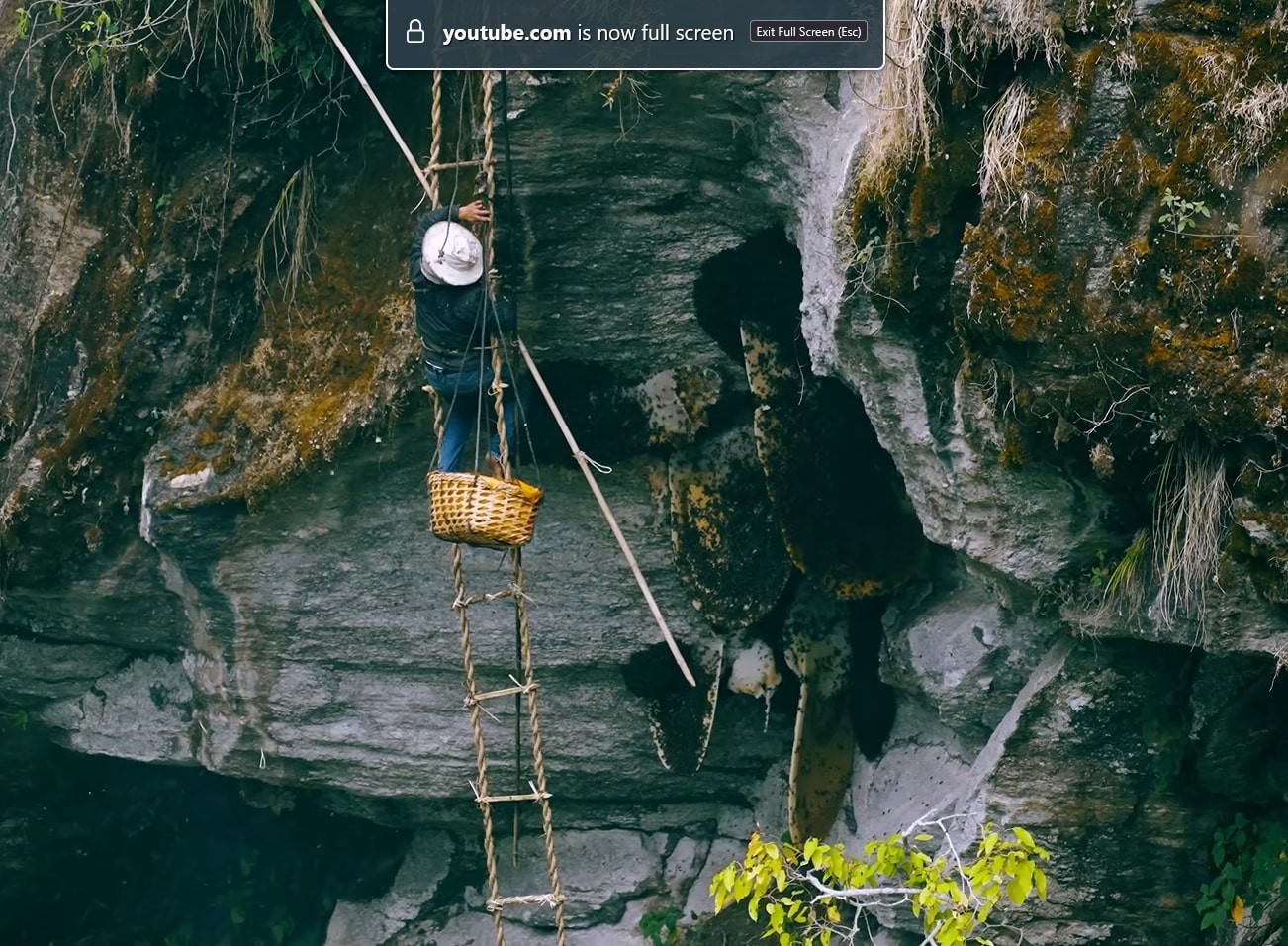
As the sun rises, the team approaches the cliff face. Long bamboo poles are assembled, and handmade rope ladders—woven from local materials—are secured to rocks above the hive. The kuiche begins his descent, sometimes hanging hundreds of feet above the ground with only these traditional ropes between him and disaster.
Below, team members light fires using green leaves and vegetation. The resulting smoke rises up the cliff face, calming the bees without harming them. This technique shows the hunters' sophisticated understanding of bee behavior—the smoke triggers the bees' instinct to prepare for evacuation, making them less aggressive.
Once in position, the kuiche uses a long bamboo pole with a specialized cutting tool to slice sections of honeycomb. These fall into baskets held by team members below. The entire process requires extraordinary coordination, with the kuiche sometimes spending hours suspended on the cliff face.
What makes honey hunting in Ghanpokhara and Ghalegaun special is how the entire community participates. While the kuiche does the dangerous cliff work, others manage ropes, control smoke, position baskets, and keep watch for any problems. Children and elderly villagers gather at safe distances, singing traditional songs believed to bring good fortune.
After the harvest, the honey is divided according to traditional customs. The kuiche receives the largest share for his risk and skill, but everyone who participated gets a portion. This communal approach strengthens village bonds and ensures that honey hunting remains a shared cultural practice rather than a commercial enterprise.
The honey hunting tour offers far more than witnessing a harvest. These villages provide genuine cultural immersion that feels worlds away from typical tourist experiences.
Staying in Ghanpokhara or Ghalegaun means experiencing authentic Gurung hospitality. You'll lodge in traditional homestays where families welcome you as honored guests rather than paying customers. These stone houses, built to withstand harsh mountain weather, feature carved wooden windows, low doorways, and central fireplaces where families gather.
Your hosts will share meals prepared using ingredients from their own fields and gardens. Expect dishes like dhindo (buckwheat or millet porridge), gundruk (fermented greens), and local chicken curry flavored with freshly harvested honey. Meals are communal affairs where conversation flows as freely as the tea, giving you insights into daily village life that no guidebook could provide.
Evenings in these villages come alive with cultural performances. The Gurung community maintains rich traditions of music and dance that tell stories of their history, beliefs, and connection to the mountains. You'll witness performances like the Ghatu dance, where dancers in traditional attire move to the rhythms of madal drums and damphu percussion instruments.
These aren't performances staged solely for tourists—they're genuine cultural expressions that the community practices during festivals and celebrations. Your presence provides an opportunity for younger generations to learn these traditions from their elders, helping preserve cultural knowledge that might otherwise be lost.
Many homestays offer opportunities to learn traditional Gurung crafts. Women in the villages are skilled at weaving, creating beautiful textiles using back-strap looms. You might spend an afternoon learning to spin wool from local sheep or trying your hand at basket weaving using bamboo harvested from nearby forests.
These activities provide genuine cultural exchange. As you struggle with techniques these villagers mastered as children, you develop appreciation for the skills required to live traditionally in mountain environments. Your hosts, meanwhile, enjoy sharing their knowledge with someone genuinely interested in learning.
The journey to Ghanpokhara and Ghalegaun is as rewarding as the destination. The region's natural beauty rivals any of Nepal's more famous trekking areas, with the added benefit of far fewer crowds.
The trek typically begins from Besisahar or nearby trailheads, taking you through diverse landscapes that showcase Nepal's incredible ecological variety. You'll start in subtropical zones where banana trees and rice paddies dominate, gradually ascending through temperate forests thick with rhododendron, oak, and pine.
Spring trekkers are treated to hillsides ablaze with rhododendron blooms in shades of red, pink, and white. These are the same flowers that provide nectar for the honey you'll taste during the harvest. Autumn offers crystal-clear skies and comfortable temperatures, with the added bonus of post-monsoon freshness that makes colors seem more vivid.
Throughout the trek, the Annapurna and Manaslu ranges provide a spectacular backdrop. On clear mornings, peaks like Annapurna II, Lamjung Himal, and Manaslu itself seem close enough to touch. The play of light on these mountains throughout the day creates endless photographic opportunities.
The trail to Ghanpokhara and Ghalegaun passes through numerous traditional villages where life continues much as it has for generations. You'll encounter farmers tending terraced fields using wooden plows pulled by oxen, children walking to school along narrow mountain paths, and elderly villagers spinning wool or mending stone walls.
These interactions provide glimpses into rural Nepalese life that most tourists never experience. Locals are genuinely friendly and curious about visitors, often inviting trekkers for tea or simply sharing a few words along the trail. Their warmth and hospitality reflect values deeply embedded in Nepali culture.
The forests surrounding these villages support rich biodiversity. Birdwatchers can spot species like the Himalayan monal (Nepal's national bird), blood pheasants, and various species of flycatchers and thrushes. Mammal sightings might include langur monkeys swinging through forest canopies, occasional glimpses of Himalayan black bears (though they're shy and usually avoid humans), and signs of elusive leopards that hunt in these hills.
The region's plant diversity is equally impressive. Besides the famous rhododendrons, you'll see medicinal plants used in traditional healing, edible wild mushrooms gathered by villagers, and countless wildflower species that carpet meadows during spring and summer.
The honey hunting season occurs twice annually, making timing crucial for this experience. Spring harvests typically happen in April and May, coinciding with the end of the rhododendron blooming season. This is when bees have produced the greatest quantity of honey, and the weather is most favorable for the dangerous cliff work.
Autumn harvests occur in October and November, after the monsoon rains have ended and before winter cold sets in. Autumn often provides clearer mountain views, though honey quantities may be slightly less than spring. Both seasons offer distinct advantages, and your choice might depend on what else you want to experience in Nepal.
Winter visits (December-February) won't coincide with honey hunting, but Ghanpokhara and Ghalegaun still offer cultural experiences and stunning mountain views. Summer monsoon months (June-September) bring heavy rainfall that makes trekking challenging and honey hunting impossible.
The trek to these villages involves moderate physical demands. Daily hiking typically ranges from 4-6 hours, with elevation gains and losses that require reasonable fitness. You don't need to be an athlete, but regular walking or hiking in the months before your trip will make the experience much more enjoyable.
The altitude in Ghanpokhara and Ghalegaun sits around 1,800-2,000 meters, which most people handle without altitude issues. However, if you're combining this experience with higher-altitude treks like the Manaslu Circuit Trek or Annapurna Base Camp Trek, proper acclimatization becomes important.
Packing appropriately ensures comfort throughout your honey hunting adventure. Essential items include sturdy hiking boots broken in before your trip, moisture-wicking layers for varying temperatures, warm jacket for cool evenings and early mornings, rain gear including waterproof jacket and pack cover, sun protection including hat, sunglasses, and sunscreen, basic first aid kit with any personal medications, headlamp for evening activities and early starts, reusable water bottle with purification method, camera equipment with extra batteries and memory cards, and small gifts for host families if desired.
Remember that homestay facilities are basic but clean. Don't expect luxury amenities, but do anticipate warm hospitality and authentic experiences that luxury hotels can't provide.
Many travelers combine the honey hunting experience with other adventures in the region. The Mardi Himal Trek is relatively close and offers spectacular close-up views of Machhapuchhre (Fishtail Mountain). This less-crowded alternative to Annapurna Base Camp can be completed in 5-7 days and provides excellent mountain scenery.
The Royal Trek passes through Gurung villages similar to Ghanpokhara and Ghalegaun, though without the honey hunting component. This gentle trek got its name when Prince Charles and his entourage trekked this route in the 1980s, and it remains excellent for those wanting cultural immersion without extreme physical demands.
For more adventurous spirits, the Annapurna Circuit Trek can be accessed from this region. This classic trek crosses the Thorong La pass at 5,416 meters and circles the entire Annapurna massif, offering diverse landscapes from subtropical jungle to high-altitude desert.
Ghanpokhara and Ghalegaun lie relatively close to Pokhara, Nepal's adventure capital. Many itineraries include time in this lakeside city known for its laid-back atmosphere and stunning mountain views. From Pokhara, you can try Paragliding, soaring like a bird with the Annapurna range as your backdrop.
The Ghorepani Poon Hill Trek starts from near Pokhara and offers arguably the best sunrise views in Nepal. At dawn from Poon Hill, you'll watch the first light touch peaks stretching from Dhaulagiri to Annapurna, creating a spectacle that's worth the early wake-up call.
Nepal offers several honey hunting experiences, each with unique characteristics. The Honey Hunting Tour in Siurikhola, also in Lamjung district, provides similar cultural experiences with slightly different landscapes and village atmospheres.
The Honey Hunting Tour in Ludi takes place in a different region, offering variations on the traditional practice. Comparing these experiences reveals how local conditions and community traditions create unique expressions of this ancient skill.
For the Gurung people, honey hunting represents far more than a method of gathering food. It's a defining element of cultural identity that connects present generations to their ancestors. The skills, rituals, and social structures surrounding honey hunting transmit important cultural values about courage, cooperation, and respect for nature.
Young Gurung men traditionally proved their bravery by becoming honey hunters. The kuiche occupies a position of respect within the community, similar to how warriors were honored in many cultures. This tradition creates role models and helps maintain social cohesion within villages that might otherwise struggle with modernization pressures.
Like many traditional practices, honey hunting faces challenges in the modern era. Younger generations increasingly move to cities for education and employment opportunities, leaving fewer people to maintain traditional knowledge. Climate change affects bee populations and honey production, creating uncertainty about the practice's future.
Tourism provides a potential solution by making traditional practices economically valuable. When visitors pay to witness honey hunting, communities receive income that helps them maintain their traditional lifestyle rather than abandoning it for wage labor elsewhere. This creates incentives for younger generations to learn honey hunting skills and preserve associated cultural knowledge.
However, tourism must be managed carefully to avoid turning authentic traditions into staged performances. The communities of Ghanpokhara and Ghalegaun have struck a good balance, welcoming visitors while ensuring honey hunting remains a genuine practice serving community needs rather than simply entertaining tourists.
Your participation in honey hunting tours directly benefits remote mountain communities. Unlike large-scale tourism that often channels profits to city-based companies, community-based honey hunting tours ensure that money stays local. Homestay fees, guide payments, and purchases of local honey and handicrafts provide income for families who might otherwise struggle economically.
This economic support helps maintain traditional villages that might otherwise depopulate as young people seek opportunities elsewhere. When village life remains economically viable, communities can preserve their cultural heritage while providing children with education and opportunities.
The Gurung people's traditional honey hunting practices embody sustainable resource use. Hunters never take all the honey from a hive, leaving sufficient stores for the bee colony to survive. They avoid disturbing nests during critical breeding periods and harvest only when honey is abundant. This sustainable approach has allowed wild bee populations to thrive for centuries while providing communities with this valuable resource.
Modern conservation efforts build on these traditional practices. Local communities increasingly recognize the importance of forest conservation for maintaining healthy bee populations. Tourism provides additional incentives for environmental protection, as pristine natural environments attract more visitors and justify higher tour fees.
Travelers can maximize their positive impact by following responsible tourism principles. Respect local customs regarding dress and behavior, support local businesses by purchasing handicrafts and honey, ask permission before photographing people, minimize plastic waste by using refillable bottles, stay on established trails to minimize environmental impact, and learn basic Nepali phrases to facilitate cultural exchange.
Small gestures like properly disposing of trash, respecting photography boundaries, and showing genuine interest in local culture create positive impressions that benefit future travelers while demonstrating respect for host communities.
The moderate altitudes of Ghanpokhara and Ghalegaun present minimal health risks for most travelers. However, basic health precautions ensure a comfortable experience. Stay hydrated throughout the trek, practice good hygiene to avoid stomach issues, protect against sun exposure at higher elevations, carry basic medications for common ailments, and consider travel insurance covering medical evacuation.
Stomach issues are probably the most common health complaint among trekkers. Stick to bottled or purified water, eat at established lodges and homestays, wash hands frequently, and consider bringing anti-diarrheal medication just in case.
Observing honey hunting is remarkably safe for visitors. You'll watch from secure positions well away from the cliff face and bee activity. Experienced guides ensure everyone maintains safe distances while still getting excellent views and photographs.
The hunters themselves face real dangers—falls, bee stings, and equipment failures all pose risks. However, these are skilled professionals who have spent years perfecting their craft. Accidents are rare, and when they occur, communities have traditional first aid knowledge supplemented by modern medical training that guides and porters often receive.
ATMs are scarce in rural areas, so withdraw sufficient cash in Kathmandu or Pokhara before departing. Bring small denomination bills for purchases in villages where making change can be difficult. While your tour package covers most expenses, budget extra for personal purchases like snacks, drinks, souvenirs, and handicrafts, tips for guides and porters (culturally expected), and emergency expenses.
Mobile phone coverage in Ghanpokhara and Ghalegaun is limited and unreliable. Internet access is sporadic at best. Many travelers find this digital detox refreshing, allowing them to fully immerse in the experience without constant connectivity distractions.
Inform family and friends before departing that you'll be mostly out of contact for several days. This prevents worry and allows you to embrace the opportunity to disconnect from digital life and reconnect with nature and authentic human experiences.
The honey hunting tour provides extraordinary photographic opportunities. The dramatic cliff face harvest creates spectacular images, especially when captured with the Himalayan peaks in the background. Early morning and late afternoon light produces the most atmospheric conditions, with golden hour lighting creating magical effects on the landscape.
Photographers should bring versatile equipment including wide-angle lenses for landscapes and village scenes, telephoto lenses for distant subjects and wildlife, and extra batteries and memory cards (no shops in villages selling photography gear).
Always prioritize respect and safety over getting the perfect shot. Request permission before photographing people, especially during cultural ceremonies, avoid using flash during honey hunting (it could disturb bees and endanger hunters), compensate locals fairly if they request payment for photographs, and be present in moments rather than experiencing everything through a viewfinder.
Some of your most meaningful memories won't appear in photographs—the taste of fresh honey, conversations with village elders, the feeling of being welcomed into a stranger's home. Balance documentation with genuine experience.
Meals in Ghanpokhara and Ghalegaun introduce you to authentic Gurung cuisine that most tourists never experience. Dal bhat, Nepal's staple meal of rice and lentils, appears daily but with local variations that make each serving unique. Your hosts might prepare it with red rice grown in their own fields, lentils they've dried themselves, and vegetables harvested that morning from their garden.
Other traditional dishes include khapse (fried bread served during festivals), sel roti (ring-shaped rice bread), masyaura (dried lentil cakes used in soups), and various fermented vegetables that add nutrition and flavor to the diet. Everything is prepared using traditional methods—often over wood fires—that create flavors impossible to replicate with modern cooking equipment.
Fresh wild honey is the culinary highlight of this journey. The taste defies description—complex, slightly spicy, with floral notes that vary based on which flowers the bees visited. Spring honey from rhododendron nectar has a distinctive flavor and the mild psychoactive properties that create the "mad honey" effect when consumed in larger quantities.
You'll taste honey in various preparations from simple honey tea to honey-sweetened desserts and traditional honey wine. The community will guide you on appropriate quantities, especially regarding mad honey, ensuring you have a pleasant experience without overdoing it.
While often visited together, these two villages have distinct characteristics that might influence your choice if time constraints require selecting just one.
Ghalegaun has received recognition as Nepal's first model tourism village, with infrastructure and programs specifically designed to share Gurung culture with visitors. The village offers more developed homestay facilities and organized cultural programs. If you prefer slightly more comfortable accommodations and structured activities, Ghalegaun might be your preference.
The village's location provides spectacular panoramic views of Annapurna II, Lamjung Himal, and Manaslu. Clear days offer photography opportunities that rival any famous viewpoint. Ghalegaun also offers short hiking trails to nearby viewpoints and traditional cheese factories where you can observe local cheese production.
Ghanpokhara remains more rustic and traditional, with less tourism development. If you want the most authentic experience with minimal tourist infrastructure, Ghanpokhara delivers. The village's isolation has preserved traditional architecture and lifestyles to a remarkable degree.
Honey hunting in Ghanpokhara often feels more intimate, with smaller groups and more personal interactions with the hunting team. The village's location in a narrower valley creates different photographic opportunities, with cliffs rising dramatically from the settlement itself.
Even without timing your visit to coincide with honey hunting season, Ghanpokhara and Ghalegaun offer rewarding experiences. Staying in homestays provides opportunities to participate in daily village life—helping with agricultural tasks, learning traditional cooking methods, or simply sitting with families in the evening listening to stories.
These everyday interactions often prove more meaningful than staged activities. Helping your host family harvest corn, learning to milk water buffalo, or joining them for morning tea as the sun rises over the mountains creates connections that transcend language barriers.
The area surrounding these villages offers numerous short hiking options for those wanting to explore without committing to multi-day treks. Local guides can lead you to viewpoints offering Himalayan panoramas, waterfalls hidden in forest valleys, caves used by Buddhist hermits, and high-altitude pastures where villagers graze livestock during summer months.
Many homestays offer workshops teaching traditional skills like weaving on back-strap looms, preparing traditional dishes, learning Gurung language basics, playing traditional musical instruments, and understanding medicinal plants used in traditional healing.
These workshops provide hands-on learning that deepens cultural understanding while supporting the preservation of traditional knowledge systems.
The honey hunting tour provides authentic cultural experiences rather than luxury tourism. Accommodation is simple, bathrooms may be shared and offer only cold water, meals are traditional rather than catering to Western preferences, and entertainment is conversation and cultural performance rather than wifi and television.
If you approach this experience with openness to different ways of living and genuine curiosity about Gurung culture, you'll find it incredibly rewarding. Those expecting five-star amenities and constant comfort might find it challenging.
Few villagers speak fluent English, though younger generations often know basics. Your guide will handle translation, but learning simple Nepali phrases enhances your experience. "Namaste" (hello/goodbye), "Dhanyabad" (thank you), "Mitho cha" (delicious), and "Ramro cha" (good/beautiful) go a long way toward creating connections.
Communication transcends language. Smiles, gestures, and genuine interest in people's lives create understanding that doesn't require perfect translation. Some of the most meaningful exchanges happen with minimal shared language but abundant shared humanity.
The Gurung people maintain both Hindu and Buddhist traditions, often blending elements of both religions along with animist beliefs predating these faiths. Show respect for religious sites and symbols, avoid interrupting prayers or ceremonies, dress modestly when visiting temples, and never touch religious objects without permission.
Remove shoes before entering homes and temples, accept food and drink when offered (refusing can cause offense), use your right hand for eating and giving objects (left hand is considered unclean), and avoid public displays of affection which make locals uncomfortable.
The Honey Hunting Tour in Ghanpokhara and Ghalegaun transcends typical tourism to offer something increasingly rare in our interconnected world—genuine cultural immersion that benefits both visitors and host communities. This isn't about checking another destination off your bucket list or collecting Instagram photos. It's about witnessing living traditions that connect present communities to ancient wisdom, experiencing hospitality that reminds us of our shared humanity, and supporting sustainable tourism that helps preserve cultural heritage.
When you watch honey hunters scale cliff faces using techniques perfected over centuries, you're witnessing human courage and ingenuity that modern safety equipment can't diminish. When you sit with Gurung families sharing meals prepared over wood fires, you're participating in hospitality traditions that value human connection above commercial transactions. When you trek through pristine mountain landscapes still largely free from mass tourism's impacts, you're experiencing natural beauty that becomes increasingly precious in our developed world.
The memories you create in these villages will likely outlast souvenirs and photographs. You'll remember the taste of honey fresh from the cliff, the warmth of strangers who became friends, the silence of mountain nights unbroken by traffic, and the realization that contentment doesn't require the modern conveniences we assume are necessary.
This journey also matters beyond personal enrichment. Your participation supports communities working to maintain traditional lifestyles in a rapidly modernizing world. It provides economic alternatives to abandoning rural life for urban slums. It creates incentives for preserving forests and traditional knowledge systems that might otherwise disappear.
Whether you're an adventure seeker drawn by the spectacle of honey hunting, a cultural enthusiast eager to learn about Gurung traditions, or simply someone wanting to experience Nepal beyond the typical tourist trail, Ghanpokhara and Ghalegaun deliver something authentic and meaningful. This is Nepal at its best—beautiful, welcoming, and deeply human.
Ready to experience honey hunting in these remarkable villages? The cliffs are waiting, the bees are busy, and the Gurung communities of Ghanpokhara and Ghalegaun are ready to share their extraordinary tradition. Start planning your journey today with Explore Holiday Nepal and discover why some travelers describe this as their most meaningful Nepal experience.
Upon arrival at Tribhuvan International Airport in Kathmandu, you will be welcomed by our representative and transferred to your hotel. After checking in, you have the rest of the day to relax or explore the vibrant streets of Thamel. In the evening, there will be a welcome dinner where you can meet your guide and fellow travelers, and discuss the exciting adventure ahead. Overnight stay at the hotel.
After an early breakfast, Scenic drive from Kathmandu to Khudi. The journey takes us through the lush green hills, terraced fields, and along the banks of the Trishuli and Marsyangdi rivers. We will pass through various small towns and villages, giving you a glimpse of rural Nepal. We will stop for lunch along the way, enjoying the local cuisine. By late afternoon, we reach Khudi, a small town that serves as the starting point for our trek. Here, you can rest and prepare for the trekking adventure. Overnight stay in a local guesthouse.
After breakfast, we begin our trek from Khudi to Ghalegaun. The trail ascends gradually, taking us through beautiful forests, terraced fields, and traditional Gurung villages. As we climb higher, we are rewarded with stunning views of the Annapurna and Manaslu mountain ranges. We will stop for lunch at a picturesque spot along the trail. Continuing our trek, we pass through rhododendron forests and reach Ghalegaun by late afternoon. Ghalegaun is a charming village known for its rich cultural heritage and panoramic mountain views. In the evening, enjoy a cultural program performed by the local Gurung community. Overnight stay in a local homestay.
Today is the highlight of our tour – observing the traditional honey hunting in Ghanpokhara and Ghalegaun. After an early breakfast, we trek to the honey hunting site, where the local Gurung people demonstrate their age-old techniques for harvesting wild honey. Watch in awe as the brave hunters scale steep cliffs using handmade ladders and ropes to collect honeycombs from the rock face. This ancient practice is both thrilling and fascinating, showcasing the unique skills and bravery of the Gurung community. You will also have the opportunity to taste the freshly harvested wild honey. After the honey hunting experience, we return to Ghalegaun for some rest and further cultural immersion. Overnight stay in a local homestay.
After breakfast, we bid farewell to Ghalegaun and begin our trek to Pasgaun. The trail takes us through dense forests, past waterfalls, and across several small streams. We will pass through traditional villages where you can interact with the locals and learn about their daily lives. The trek is moderately challenging with some steep sections, but the breathtaking views and serene environment make it worthwhile. We will stop for lunch along the way and continue our journey, arriving in Pasgaun by late afternoon. Pasgaun is a beautiful village with a rich cultural heritage and stunning mountain views. Overnight stay in a local homestay.
After an early breakfast, we start our trek from Pasgaun to Pakharikot or Nangdidhar. The trail takes us through a variety of landscapes, including terraced fields, forests, and traditional villages. We will have numerous opportunities to enjoy the natural beauty and take photographs. As we trek, we will stop for lunch at a scenic spot. The path is relatively easy, with some gentle ascents and descents. By late afternoon, we reach our destination for the day, either Pakharikot or Nangdidhar, where we will spend the night in a local homestay. These villages offer stunning views of the surrounding hills and valleys, providing a peaceful and relaxing environment. Overnight stay in a local homestay.
After breakfast, we begin our final day of trekking, heading towards Thumsikot. The trail takes us through lush forests, past terraced fields, and across several small streams. We will pass through traditional villages, where you can interact with the locals and learn about their culture and way of life. By late morning, we reach Thumsikot, where our vehicle will be waiting to take us to Pokhara. The drive to Pokhara offers stunning views of the Himalayan foothills and the beautiful landscapes of central Nepal. Upon arrival in Pokhara, you will be transferred to your hotel. The rest of the day is free for you to relax or explore the lakeside city. Overnight stay at the hotel in Pokhara.
After breakfast, we begin a day of sightseeing in Pokhara, visiting some of the city’s most famous attractions. We will visit the serene Phewa Lake, where you can enjoy a boat ride and take in the stunning views of the surrounding mountains. We will also visit the World Peace Pagoda, which offers panoramic views of the Annapurna range and Pokhara city. Other highlights include the Davis Falls, Gupteshwor Cave, and the International Mountain Museum. After lunch, we drive back to Kathmandu, retracing our journey through the beautiful landscapes of central Nepal. Upon arrival in Kathmandu, you will be transferred to your hotel. In the evening, we will gather for a farewell dinner to celebrate the successful completion of our honey hunting tour. Overnight stay at the hotel.
After breakfast, depending on your flight schedule, you will have some free time for last-minute shopping or sightseeing. Our representative will then transfer you to Tribhuvan International Airport for your onward journey. We hope you had an unforgettable experience and look forward to welcoming you back to Nepal in the future. Safe travels!
Your Start Date is the day you land in Nepal, and your End Date is when you fly home.
If the set Honey Hunting in Ghanpokhara and Ghalegaun group dates don’t suit your schedule, we can offer alternative dates upon request.
Honey hunting in Ghanpokhara and Ghalegaun was a unique and heart-pounding experience. Watching the locals climb cliffs to harvest honey was exhilarating. Explore Holiday Nepal made the trip unforgettable with excellent organization and knowledgeable guides.
Honey hunting is a traditional practice in which locals climb cliffs to collect honey from wild beehives. In Ghanpokhara and Ghalegaun, this practice is not only a source of income but also an important cultural event, showcasing local traditions and skills. The honey harvested is often sought after for its unique flavor and medicinal properties.
Ghanpokhara and Ghalegaun are picturesque villages situated in the Annapurna region of Nepal. Ghanpokhara is known for its stunning views of the Himalayas and rich biodiversity, while Ghalegaun is famous for its traditional Gurung culture and warm hospitality. Both locations offer a serene environment for experiencing rural life and adventure activities.
During a honey hunting experience, participants can observe and learn about traditional techniques used by local hunters. This may include climbing techniques, the use of smoke to calm bees, and harvesting methods. It's also an opportunity to appreciate the natural beauty of the surrounding area and the cultural significance of the practice.
Yes, many tour operators offer guided honey hunting experiences for tourists. These tours provide a unique opportunity to engage with local culture, learn traditional practices, and witness the thrill of honey hunting firsthand. It’s advisable to book with a reputable operator to ensure safety and authenticity.
In addition to honey hunting, visitors can enjoy trekking, birdwatching, and cultural tours in Ghanpokhara and Ghalegaun. The region is known for its rich biodiversity and stunning views of the Annapurna range, making it a great destination for nature enthusiasts and adventure seekers.
The best time for honey hunting in this region is typically from March to May and September to November. During these months, the weather is generally favorable, and the bees are active, making it safer and more productive for honey hunters.
Honey hunting involves certain risks due to the nature of climbing cliffs and the potential for bee stings. However, local honey hunters are experienced and use traditional methods to minimize danger. Participating under the guidance of local experts can enhance safety and provide a richer understanding of the practice.
Honey hunters typically use basic equipment such as ropes, ladders, and baskets for collecting honey. They may also use smoke from burning leaves or wood to calm the bees and reduce the risk of stings. The techniques and tools may vary depending on local customs.
To prepare for a honey hunting experience, it's important to wear sturdy footwear and comfortable clothing suitable for climbing. Bring along a water bottle, sunscreen, and a camera to capture the adventure. Being open to learning about local customs and practices will enhance your overall experience.
Accommodation in Ghanpokhara and Ghalegaun typically consists of guesthouses and homestays, offering a chance to experience local hospitality and cuisine. Some lodges may provide basic amenities, while homestays offer a more immersive cultural experience.


 (34)
(34) 