 Kailash Mansarovar Tour: The Ultimate Spiritual Pilgrimage to the Sacred Mountain
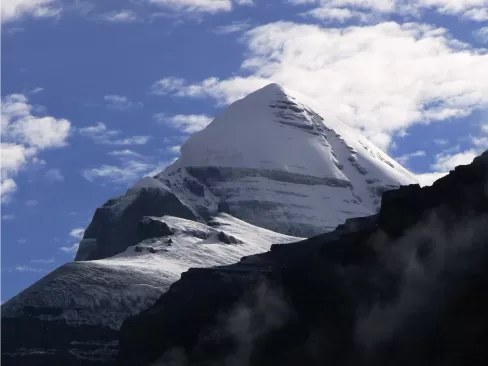
The Kailash Mansarovar Tour stands as one of humanity's most profound spiritual journeys, drawing pilgrims, spiritual seekers, and adventure travelers from across the globe to one of the world's most remote and sacred regions. Mount Kailash, rising majestically to 6,638 meters in the far western corner of Tibet, holds unparalleled significance across multiple religions—revered as the abode of Lord Shiva in Hinduism, the earthly manifestation of Mount Meru in Buddhism, the soul mountain in Jainism, and the seat of all spiritual power in the ancient Bon tradition. Paired with the pristine waters of Lake Mansarovar at 4,590 meters, this journey transcends ordinary travel, offering transformative experiences that touch the deepest aspects of human spirituality and consciousness.
Unlike typical adventure tours, the Kailash Mansarovar pilgrimage demands not just physical endurance but also mental fortitude and spiritual openness. The journey takes you across some of Earth's most extreme landscapes—vast high-altitude plateaus, barren mountain passes, and stark valleys where the veil between the material and spiritual worlds seems impossibly thin. For many who undertake this journey, the experience proves life-changing, offering perspectives on existence, faith, and the human condition that no amount of reading or preparation can fully anticipate.
Mount Kailash's spiritual importance cannot be overstated. This nearly symmetrical, pyramid-shaped peak has remained unclimbed throughout recorded history—not due to technical impossibility, but because all four religions that revere it consider climbing the mountain a profound sacrilege. This universal reverence creates an atmosphere of sanctity that permeates the entire region, making every step of the journey feel consecrated.
In Hindu cosmology, Mount Kailash represents the eternal abode of Lord Shiva, the destroyer and transformer among the trinity of principal deities. Hindus believe that Shiva sits atop Kailash in eternal meditation, accompanied by his consort Parvati, while the sacred Ganges River flows from his matted locks. The mountain's four faces, aligned almost perfectly with the cardinal directions, are said to be made of crystal, ruby, gold, and lapis lazuli—each face representing different aspects of divine power.
Hindu pilgrims who complete the Kora (circumambulation) around Mount Kailash believe they can attain moksha (liberation from the cycle of birth and death) or at least burn away sins accumulated over lifetimes. The journey is seen not merely as physical travel but as a moving meditation, a walking prayer that brings devotees closer to divine realization. Many Hindu pilgrims prostrate themselves the entire 52-kilometer circuit, a demonstration of devotion that can take weeks to complete.
Tibetan Buddhists identify Mount Kailash with Mount Meru, the cosmic axis that serves as the center of the Buddhist universe. According to Buddhist cosmology, Meru rises from the center of the world, its peak touching the heavens while its base reaches the underworld. The mountain's spiritual significance in Buddhism extends beyond geography—it represents the path to enlightenment itself, with each step around the mountain symbolizing progress on the spiritual journey.
The great Buddhist master Milarepa is said to have engaged in a magical competition with the Bon practitioner Naro Bonchung at Mount Kailash, ultimately winning the mountain for Buddhism. This legend adds layers of spiritual significance for Buddhist pilgrims, who believe that circumambulating Kailash in the Buddhist tradition (clockwise) accumulates merit and brings them closer to enlightenment. Many Tibetan Buddhists aspire to complete 108 circuits of Mount Kailash in their lifetime, believing this practice leads to immediate enlightenment.
For Jains, Mount Kailash is known as Ashtapada, the site where Rishabhadeva, the first Jain Tirthankara, attained liberation (moksha). Jain texts describe how Rishabhadeva's son, Emperor Bharata, undertook the first recorded pilgrimage to this sacred mountain, establishing a tradition that continues today. Jain pilgrims consider the journey to Kailash among the most auspicious actions a devotee can undertake.
The indigenous Bon religion of Tibet, which predates Buddhism in the region, also considers Kailash supremely sacred, though Bon practitioners circumambulate the mountain counterclockwise (opposite to the Buddhist direction). For Bon followers, Kailash represents the seat of all spiritual power, the place where their founder Tonpa Shenrab descended from heaven to Earth. This multi-religious reverence creates a unique spiritual atmosphere where pilgrims from different faiths share the same sacred space, each following their own traditions while respecting others' practices.
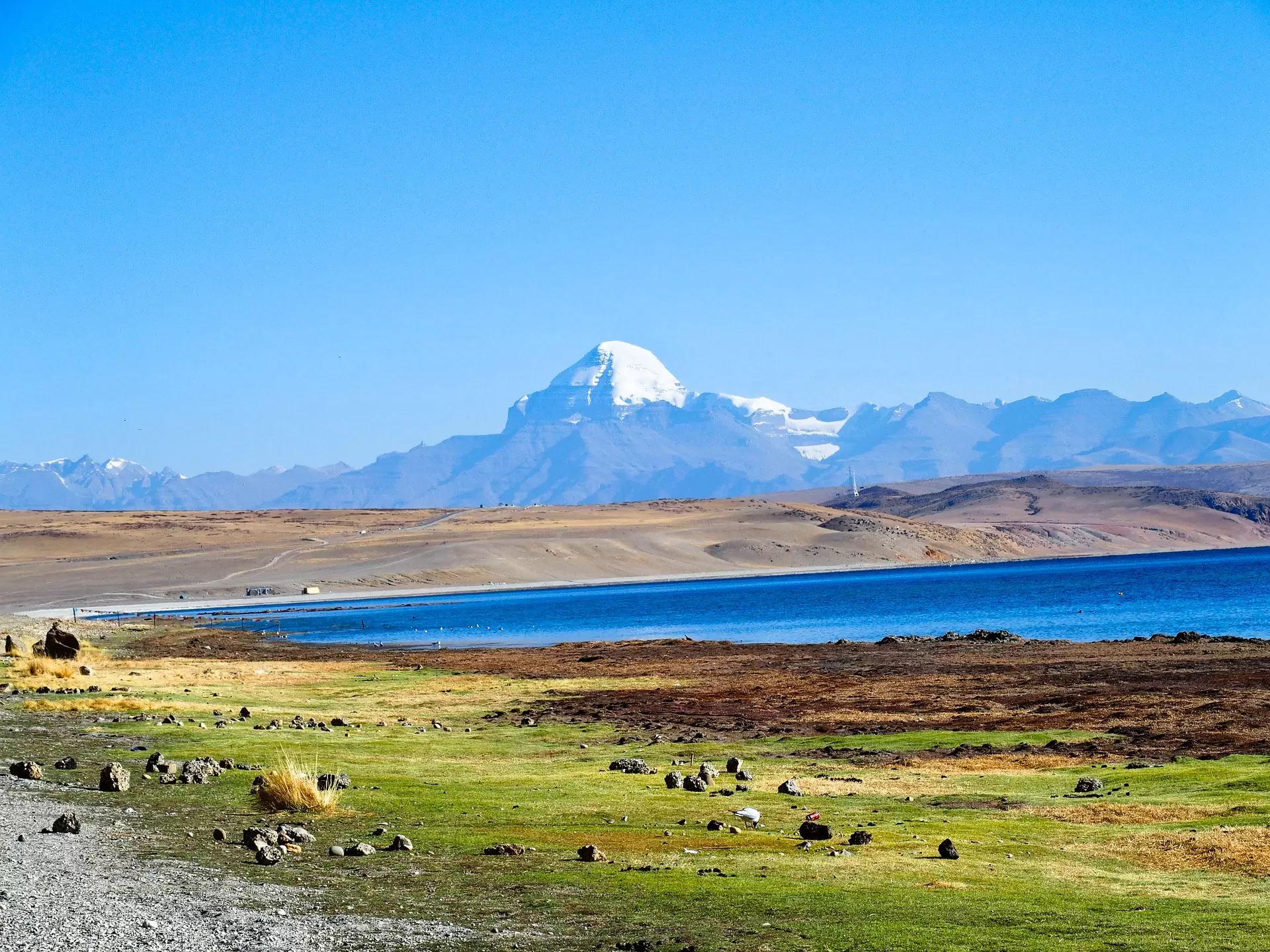
Lake Mansarovar, situated at the southern base of Mount Kailash, complements the mountain's masculine energy with feminine receptivity. This freshwater lake, one of the highest in the world at 4,590 meters, spans approximately 320 square kilometers and reaches depths of 90 meters. The name "Mansarovar" derives from Sanskrit—"Manas" (mind) and "Sarovar" (lake)—literally meaning "Lake of Consciousness" or "Mind Lake."
According to Hindu mythology, Lake Mansarovar was created by Lord Brahma, the creator deity, as a place where souls could bathe and purify themselves before ascending to heaven. The lake's pristine, crystalline waters are believed to possess extraordinary purifying properties, cleansing not just physical impurities but spiritual ones as well. Pilgrims immerse themselves in these sacred waters, performing rituals and prayers while experiencing the profound peace that emanates from this holy place.
The lake's spiritual significance extends across religious boundaries. Buddhists revere it as the birthplace of Maya Devi, mother of Buddha. Jains associate it with the sacred waters where the first Tirthankara's elephant bathed before his enlightenment. Even the ancient Bon tradition considers Mansarovar a source of spiritual power and renewal. This universal reverence creates an atmosphere where pilgrims from vastly different backgrounds share moments of profound spiritual communion.
The landscape surrounding Mansarovar is breathtaking—snow-capped peaks reflected in the turquoise waters, vast open skies, and an quality of light that seems to enhance the spiritual ambiance. On calm days, the lake's surface becomes a perfect mirror, creating images of such clarity and beauty that many pilgrims describe feeling transported beyond ordinary reality. The sight of Mount Kailash rising majestically beyond the lake creates one of the most spiritually powerful vistas on Earth.
The Kora around Mount Kailash represents the spiritual and physical heart of the pilgrimage. This 52-kilometer circuit traditionally takes three days to complete, though the exact duration depends on individual pace and acclimatization. The path reaches its highest point at Dolma La Pass (5,630 meters), where pilgrims face both the journey's greatest physical challenge and, many believe, its most spiritually powerful moment.
The practice of circumambulation (walking around a sacred site) exists across many religious traditions, but at Mount Kailash, this ancient practice takes on extraordinary significance. Each complete circuit is believed to erase the sins of one lifetime. Completing 108 circuits—a number sacred in both Hinduism and Buddhism—is said to grant enlightenment in this lifetime. While few modern pilgrims complete 108 circuits (which would take several years), even one circuit is considered profoundly meritorious.
The direction of circumambulation differs by religion—Hindus, Buddhists, and Jains walk clockwise, while Bon practitioners walk counterclockwise. This creates the unusual sight of pilgrims walking in both directions on the same path, each group respecting the other's traditions. The clockwise direction is said to align with the natural energy of the universe, while the counterclockwise direction represents a different spiritual approach rooted in Bon cosmology.
Many pilgrims undertake the Kora in silence or while chanting mantras—Hindus often recite "Om Namah Shivaya," while Buddhists chant "Om Mani Padme Hum." This constant prayer or meditation transforms the walk into a moving spiritual practice, with each step becoming an offering, each breath a prayer. The physical exertion combined with the high altitude creates an altered state of consciousness that many pilgrims describe as deeply meditative and spiritually revealing.
The Kora presents significant physical challenges. The altitude alone—never dropping below 4,600 meters and reaching 5,630 meters at Dolma La Pass—affects everyone to some degree. The thin air makes every step more difficult, every breath more conscious. The terrain varies from relatively flat valley floors to steep, rocky ascents that demand full concentration and physical effort.
Proper acclimatization is absolutely essential for completing the Kora safely. Most tour itineraries include several days at moderate altitude (3,600-4,500 meters) before attempting the circuit, allowing your body to adjust gradually to the reduced oxygen levels. Travelers who have completed high-altitude treks in Nepal, such as the Everest Base Camp Trek, Annapurna Circuit Trek, or Manaslu Circuit Trek, often find they acclimate more quickly, though Kailash's extreme altitude still demands respect and caution.
The weather at Kailash can change rapidly and dramatically. Even in summer months, snowstorms can occur at high passes, while intense sunshine creates scorching conditions in valleys. Temperature variations from early morning to midday can span 20-30 degrees Celsius. This variability requires careful packing and constant attention to weather conditions. Many experienced Himalayan trekkers compare the conditions to those found on Nepal's highest passes, similar to challenges faced on routes like the Three Passes Trek or the Nar Phu Valley Trek.
Day One: Darchen to Dirapuk - The Kora begins from Darchen, the small town that serves as the base for the pilgrimage. The first day covers approximately 20 kilometers, gradually ascending the Lha Chu Valley. The walking is relatively moderate, allowing pilgrims to ease into the circuit while maintaining focus on the spiritual purpose of the journey. The landscape is stark but beautiful—barren brown hills, prayer flags at various points along the path, and the imposing western and northern faces of Kailash growing ever larger as you progress.
Dirapuk, the overnight stop, sits at 4,920 meters directly facing Kailash's north face. The sight of the mountain from Dirapuk, particularly at sunrise or sunset when the light paints the face in shades of gold and rose, is among the most spectacular views of the entire pilgrimage. Many pilgrims wake before dawn to witness sunrise illuminating Kailash's north face, a sight considered especially auspicious and spiritually powerful.
Day Two: Dirapuk to Zutulpuk via Dolma La Pass - The second day presents the Kora's greatest physical and spiritual challenge. The path climbs steeply from Dirapuk to Dolma La Pass at 5,630 meters, an ascent of over 700 meters at extreme altitude. Every step requires conscious effort, and the thin air leaves even fit trekkers breathing heavily. Yet this physical challenge is intentional—the difficulty itself becomes a form of spiritual purification, with each labored breath a prayer, each painful step an offering.
Dolma La Pass holds profound spiritual significance. Pilgrims believe that those who die at this pass attain immediate liberation, and symbolically, all pilgrims "die" to their old selves here, leaving behind sins and past karma before being "reborn" on the descent. The pass is marked by thousands of prayer flags and numerous stone cairns, along with personal items left by pilgrims as offerings—clothes, hair, teeth, even drops of blood symbolizing the death of the old self.
The descent from Dolma La to Zutulpuk is steep and can be treacherous, particularly if ice or snow is present. The path drops about 600 meters to Zutulpuk at 4,790 meters, where pilgrims rest for the night. Despite the physical exhaustion, many pilgrims report feeling spiritually energized after crossing Dolma La, as if a weight has been lifted from their souls.
Day Three: Zutulpuk to Darchen - The final day covers about 14 kilometers, descending gradually back to Darchen. This relatively easy walk allows pilgrims to reflect on their experience while completing the sacred circuit. The landscape here is gentler, with the path following the Zong Chu River through a valley that feels almost welcoming after the stark heights of Dolma La. Many pilgrims report feeling a sense of completion and accomplishment, along with profound gratitude for having been able to complete this sacred journey.
Arriving back in Darchen, having completed the full circuit, creates emotions difficult to describe—exhaustion certainly, but also spiritual fulfillment, a sense of having achieved something beyond the merely physical. Many pilgrims describe feeling changed by the experience, as if they've left something behind on the mountain and gained something intangible but precious in return.
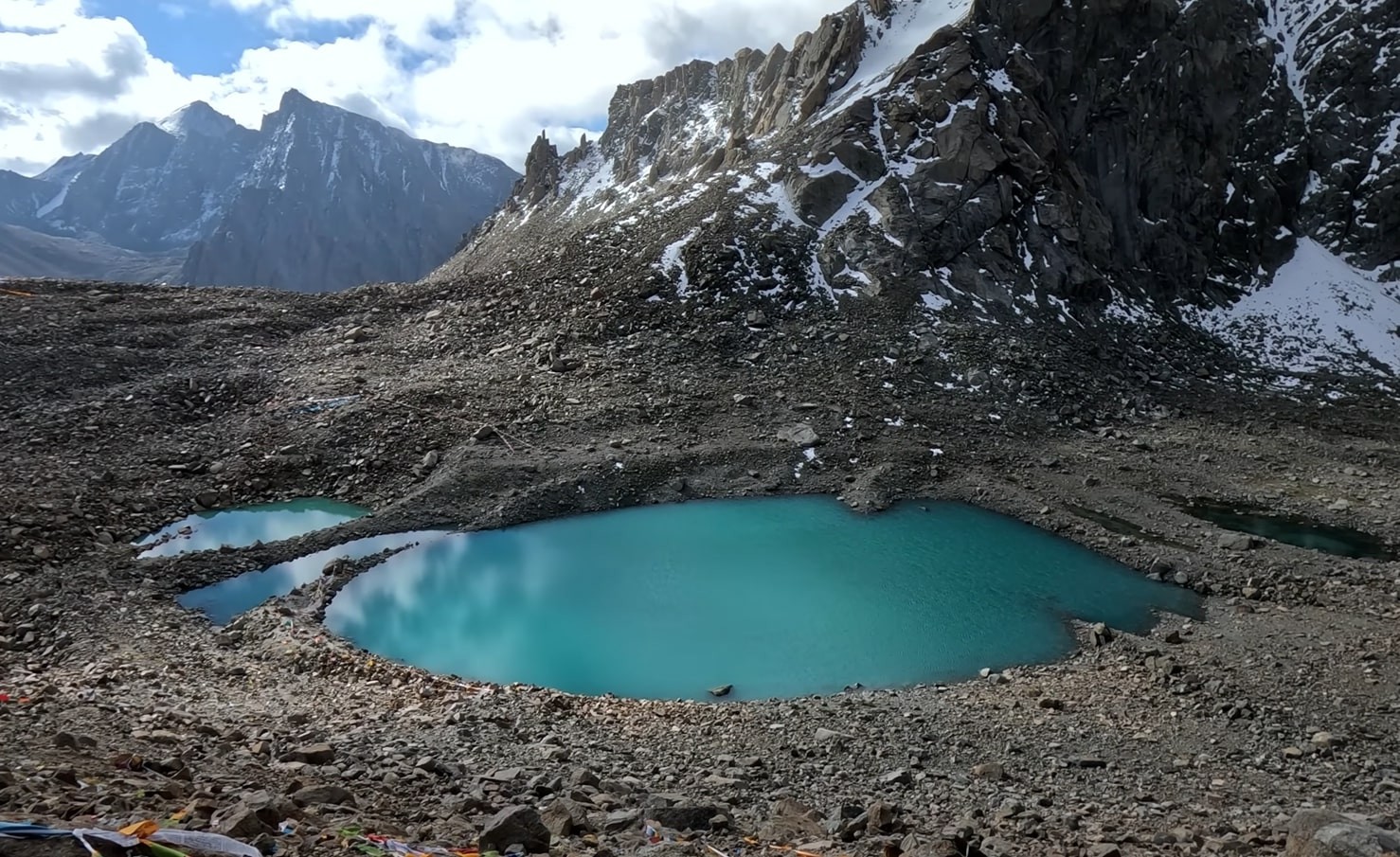
Gauri Kund, located on the second day of the Kora shortly before Dolma La Pass, holds special significance in Hindu tradition. This small glacial lake is named after Goddess Parvati (also known as Gauri), Lord Shiva's consort. According to legend, Parvati created this lake to bathe in while Shiva meditated on Mount Kailash. The lake is partially frozen most of the year, its icy blue waters reflecting the surrounding mountain walls.
Despite the altitude and cold, many Hindu pilgrims choose to bathe in Gauri Kund as an act of devotion and purification. The water is numbingly cold—barely above freezing—but devotees believe that bathing here brings blessings from Goddess Parvati and provides spiritual purification before crossing Dolma La Pass. The courage required to immerse oneself in these frigid waters at over 5,000 meters elevation represents the kind of devotion that characterizes the entire Kailash pilgrimage.
Located about 75 kilometers from Mount Kailash, Tirthapuri offers a fascinating contrast to the harsh, cold landscapes that dominate most of the pilgrimage. This site features natural hot springs believed to have been created by Padmasambhava (Guru Rinpoche), the Buddhist master who brought Tantric Buddhism to Tibet. The hot springs are considered highly auspicious, and many pilgrims bathe in the warm, sulfurous waters for both physical relaxation and spiritual purification.
The Tirthapuri Monastery, built around the hot springs, is an active religious site where monks maintain daily practices and ceremonies. The monastery contains numerous meditation caves where great masters have practiced, and pilgrims often perform their own kora around the monastery complex. The combination of spiritual significance and physical comfort (the warm springs are particularly welcome after the rigors of the Kailash Kora) makes Tirthapuri a meaningful addition to the pilgrimage circuit.
Just beyond Lake Mansarovar lies Rakshas Tal (also called Ravana Tal), creating an interesting spiritual counterpoint to its sacred neighbor. While Mansarovar is considered auspicious and pure, Rakshas Tal is traditionally viewed as inauspicious or demonic. According to Hindu mythology, the demon king Ravana performed severe penances at this lake to gain favor from Lord Shiva, giving the lake its name.
Despite its negative associations, or perhaps because of them, Rakshas Tal possesses its own stark beauty. The lake's darker blue waters contrast sharply with Mansarovar's turquoise hues, and the desolate landscape surrounding it feels appropriately otherworldly. The channel connecting the two lakes (Ganga Chhu) represents the eternal balance between light and darkness, good and evil, purity and impurity—fundamental dualities explored in Hindu and Buddhist philosophy.
Some spiritual practitioners specifically visit Rakshas Tal to confront their own inner demons, using the lake's negative associations as a mirror for self-examination and spiritual purification. This approach reflects the deeper understanding that spiritual growth often requires confronting uncomfortable truths rather than avoiding them.
The Kailash Mansarovar Tour demands excellent physical condition and, ideally, previous high-altitude experience. The extreme elevations, difficult terrain, and physical demands of the Kora challenge even experienced trekkers. Beginning physical training at least 3-4 months before your departure date provides the foundation for a successful journey.
Cardiovascular conditioning is essential—hiking, running, cycling, or swimming several times per week builds the aerobic capacity necessary for sustained effort at altitude. Include hill training or stair climbing to simulate the steep ascents you'll encounter. Many pilgrims also practice yoga, which combines physical conditioning with breath control and mental focus—all valuable for high-altitude trekking.
Previous high-altitude experience provides invaluable preparation. Completing treks in Nepal before your Kailash journey offers both physical conditioning and altitude acclimatization. Classic routes like the Everest Base Camp Trek take you to 5,364 meters, while the Annapurna Circuit Trek crosses Thorong La Pass at 5,416 meters. The Gokyo Lakes Trek reaches Gokyo Ri at 5,357 meters, and the Three Passes Trek crosses three passes all exceeding 5,300 meters.
For those seeking serious altitude preparation, Nepal's Manaslu Circuit Trek crosses Larkya La Pass at 5,160 meters, while the remote Kanchenjunga Base Camp Trek reaches elevations exceeding 5,000 meters. Even shorter treks like the Langtang Valley Trek or Ghorepani Poon Hill Trek provide valuable high-altitude experience, though at more moderate elevations.
Physical preparation alone is insufficient for the Kailash pilgrimage. The journey's spiritual dimensions require mental and emotional preparation as well. Many pilgrims spend months or even years preparing spiritually—studying relevant texts, practicing meditation, performing devotional practices, and contemplating their intentions for undertaking this sacred journey.
Understanding the religious and cultural significance of Mount Kailash and Lake Mansarovar deepens your experience. Reading Hindu texts like the Puranas, Buddhist teachings about Mount Meru, or Jain accounts of Ashtapada provides context and meaning to what might otherwise be merely spectacular scenery. Many pilgrims also study the experiences of previous pilgrims, finding inspiration in accounts of transformative journeys.
Meditation practice proves particularly valuable. The physical challenges and high altitude of the Kailash journey can trigger mental and emotional responses—anxiety, frustration, doubt, or even spiritual crisis. A regular meditation practice develops the mental stability and equanimity helpful for navigating these challenges. Many pilgrims describe the Kora itself as a form of walking meditation, where the repetitive physical motion combined with prayer or mantra creates altered states of consciousness conducive to spiritual insight.
Setting clear intentions for your pilgrimage focuses your spiritual work. Why are you undertaking this journey? What do you hope to achieve spiritually? What are you willing to leave behind on the mountain? These questions help transform the journey from mere tourism into genuine pilgrimage, creating the mindset necessary for the profound experiences Mount Kailash can offer.
The Kailash Mansarovar Tour requires extensive documentation and permits. All foreign visitors must obtain a Tibet Travel Permit, plus additional permits for the Mount Kailash region (a restricted border area). Chinese visa requirements are complex, and individual travelers cannot arrange these permits independently—you must book through a registered tour operator who handles all permit arrangements.
The permit application process requires submitting your passport, photos, and completed application forms at least 30-40 days before your planned departure. Processing times can be unpredictable, and regulations sometimes change with little notice, making working with experienced operators essential. Tour operators like Explore Holiday Nepal have established relationships with Chinese authorities and handle all permit applications on your behalf.
The tour typically begins in Kathmandu, where final permit arrangements are completed before crossing into Tibet. Some tours approach via Lhasa, allowing time for acclimatization and sightseeing in Tibet's capital before journeying to western Tibet and Mount Kailash. Other itineraries take a more direct overland route from the Nepal-Tibet border, reaching Kailash more quickly but with less gradual acclimatization.
The Kailash Mansarovar Tour operates from May through September, with these months offering the only weather conditions suitable for the pilgrimage. Outside this window, winter conditions make the journey dangerous or impossible, with heavy snow blocking high passes and extreme cold creating serious health risks.
May and Early June: These months mark the beginning of the pilgrimage season. Snow may still linger at high passes, particularly Dolma La, but temperatures are moderate and crowds are smaller. The landscape retains winter's stark quality, with snow-capped peaks particularly dramatic. However, weather can be unpredictable, with late-season storms possible.
Mid-June through August: This period represents peak season, with the warmest temperatures and most stable weather. However, this is also the monsoon period in the broader Himalayan region. While Tibet's high plateau receives less rainfall than areas to the south, clouds and afternoon showers are more common, potentially obscuring mountain views. The warming temperatures make high-altitude trekking more comfortable, particularly important at extreme elevations like Dolma La Pass.
September: Many consider September the optimal month for the Kailash pilgrimage. Temperatures remain moderate, rainfall decreases significantly, and skies are typically crystal clear, providing spectacular mountain views. The autumn light has a special quality, with the low-angle sun creating dramatic shadows and illuminating peaks in shades of gold. This is also the second busiest period, so booking well in advance is essential.
For those interested in combining their Kailash pilgrimage with trekking in Nepal, spring and autumn also offer excellent conditions for routes like the Everest Three High Passes Trek, Upper Mustang Trek, or Tsum Valley Trek.
Most Kailash Mansarovar Tours originating from Nepal follow the overland route through western Tibet. This journey traverses some of the planet's most remote and spectacular landscapes, crossing high passes and vast plateaus where horizons seem endless. The route typically enters Tibet at the Kerung (Gyirong) border crossing, then heads west across the Tibetan Plateau toward Mount Kailash.
The initial stages take you through landscapes similar to those experienced on the Tibet Overland Tour, with barren mountains, prayer-flag-adorned passes, and occasional glimpses of nomadic camps. As you travel westward, the landscape becomes even more remote and pristine, with entire days passing seeing only yaks, wild donkeys, and the occasional nomadic herder.
The drive to Kailash typically takes 3-4 days from the Nepal border, allowing for gradual acclimatization as you ascend to higher elevations. This gradual approach is far superior to flying directly to high altitude, giving your body time to adapt to the progressively thinner air. Along the way, you'll cross multiple high passes, each marked with cairns and prayer flags, where tradition dictates adding a stone and offering prayers for safe passage.
An alternative approach begins in Lhasa, allowing pilgrims to explore Tibet's spiritual capital before journeying to Mount Kailash. This route follows the Friendship Highway west from Lhasa, passing through Gyantse and Shigatse before heading toward western Tibet. This itinerary takes longer but provides better acclimatization and includes opportunities to visit major monasteries and cultural sites.
The journey from Lhasa to Mount Kailash covers approximately 1,200 kilometers and typically takes 4-5 days of driving. This extended journey reveals the diversity of Tibetan landscapes—from the relatively fertile valleys around Lhasa to the increasingly barren plateaus of western Tibet. The route passes sacred lakes, remote monasteries, and traditional Tibetan villages where life continues much as it has for centuries.
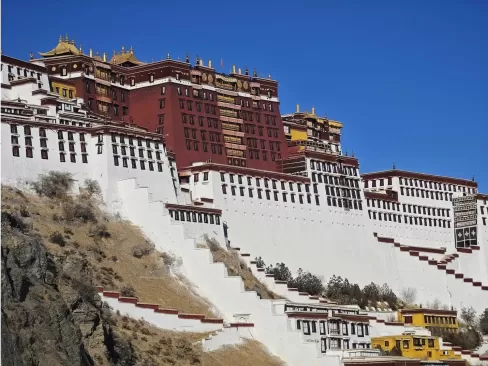
This approach particularly suits travelers who want comprehensive exposure to Tibetan culture before undertaking the Kailash pilgrimage. The time in Lhasa visiting the Potala Palace, Jokhang Temple, and major monasteries provides cultural and spiritual context that enriches the later experiences at Mount Kailash. For those combining their pilgrimage with broader Tibetan exploration, this route offers the most complete experience.
The landscapes surrounding Mount Kailash host unique high-altitude ecosystems supporting specialized wildlife. The Tibetan Plateau is home to the wild yak, Tibetan antelope (chiru), Tibetan wild ass (kiang), Himalayan wolf, and snow leopard, among other species. While many of these animals are shy and difficult to spot, patient observers often see wild asses and antelopes grazing on the sparse vegetation.
Bird life is also surprisingly abundant, despite the harsh conditions. Various species of snow finches, rosefinches, and other high-altitude birds have adapted to these extreme environments. Raptors like the golden eagle and bearded vulture soar on thermal currents, scanning the ground for prey. The presence of this wildlife, surviving and thriving in conditions that challenge human endurance, adds to the sense of wonder that permeates the entire region.
The flora is sparse but fascinating, with hardy plants clinging to existence in this extreme environment. Cushion plants, alpine grasses, and tiny wildflowers appear in sheltered locations, their delicate beauty contrasting sharply with the harsh landscape. These plants have developed remarkable adaptations to survive the intense solar radiation, extreme temperature variations, and short growing season that characterize high-altitude environments.
Darchen, the base town for Mount Kailash pilgrims, provides fascinating insights into how Tibetan communities function in these remote regions. The town's population swells dramatically during pilgrimage season (May-September) as pilgrims arrive from across Asia and beyond. What serves as a quiet village during winter transforms into a bustling hub of spiritual and commercial activity in summer months.
The town offers basic facilities—simple guesthouses, small restaurants serving Tibetan, Chinese, and basic international food, and shops selling pilgrimage necessities like prayer flags, incense, and warm clothing. Darchen's main street becomes a meeting place where Hindu pilgrims from India, Buddhist practitioners from Tibet and East Asia, Western spiritual seekers, and local Tibetans interact in a remarkable cross-cultural exchange.
Walking through Darchen during pilgrimage season reveals the universal aspects of spiritual seeking across cultures. Despite language barriers and different religious traditions, pilgrims share common goals—purification, blessing, spiritual growth, and connection with the divine. This commonality creates an atmosphere of mutual respect and often leads to meaningful encounters that transcend cultural and linguistic differences.
The lands around Mount Kailash are home to nomadic herders (drokpa) who maintain traditional lifestyles adapted to the extreme environment. These families move seasonally with their herds of yaks, sheep, and goats, following ancient patterns that maximize available grazing while protecting fragile high-altitude ecosystems. Their distinctive black yak-hair tents dot the landscape during summer months, disappearing as families move to lower elevations for winter.
Encounters with nomadic families provide glimpses into lives shaped by conditions most people cannot imagine—winters where temperatures drop to -40°C, constant high-altitude challenges, and isolation from modern amenities. Yet these communities possess deep knowledge of their environment, spiritual practices rooted in centuries of tradition, and a warmth that welcomes strangers despite the hardships of their own lives.
Many nomadic families are devout Buddhists who regularly perform kora around Mount Kailash, considering it their sacred duty and privilege to live near this holy mountain. Their presence adds authenticity to the pilgrimage experience, reminding travelers that this isn't merely a tourist destination but a living sacred landscape where people maintain traditional relationships with the divine. Similar cultural encounters can be experienced on treks like the Tamang Heritage Trail in Nepal, where traditional mountain communities welcome visitors into their homes and lives.
Acute Mountain Sickness (AMS) represents the primary health concern on the Kailash Mansarovar Tour. The extreme altitudes—never dropping below 4,500 meters and reaching 5,630 meters at Dolma La Pass—affect everyone to some degree. Understanding AMS symptoms and prevention strategies is essential for a safe and successful pilgrimage.
Mild AMS symptoms include headache, nausea, dizziness, fatigue, and difficulty sleeping. These are common and usually manageable with rest, hydration, and pain relievers. However, severe symptoms—including extreme fatigue, confusion, severe headache unrelieved by medication, difficulty breathing at rest, or loss of coordination—indicate potentially life-threatening conditions requiring immediate descent and medical attention.
Prevention focuses on proper acclimatization. Tour itineraries build in rest days and gradual ascent schedules, allowing your body time to adapt to decreasing oxygen levels. Staying well-hydrated (3-4 liters of water daily), avoiding alcohol and sleeping medications, eating light but regular meals, and not overexerting yourself all support acclimatization. Medications like acetazolamide (Diamox) can help, but should only be used under medical supervision.
Previous high-altitude experience helps you recognize your personal responses to altitude. Completing treks like the Everest Base Camp Trek, Annapurna Base Camp Trek, or Island Peak Climbing before attempting Kailash allows you to understand how your body reacts to reduced oxygen and builds confidence in managing altitude challenges.
Medical facilities around Mount Kailash are extremely limited. Darchen has a basic clinic capable of treating minor ailments, but serious medical emergencies require evacuation to larger cities—Lhasa (1,200km away) or even Kathmandu (1,000km away). Helicopter evacuation from the Kailash region is difficult and unreliable due to the extreme altitude and weather conditions.
Comprehensive travel insurance that specifically covers high-altitude trekking above 5,500 meters and emergency evacuation is absolutely essential. Read policy details carefully, as many standard travel insurance policies exclude coverage for high-altitude activities. Your insurance should cover medical treatment, emergency evacuation (including helicopter rescue if possible), and repatriation to your home country if necessary.
Carrying a comprehensive first-aid kit is essential. Include altitude sickness medications (if prescribed by your doctor), pain relievers, anti-diarrheal medication, antibiotics (prescribed by your doctor), bandages, blister treatment supplies, and any personal prescription medications with extras in case of delays. Your tour operator should also carry extensive medical supplies and have guides trained in wilderness first aid.
Weather at Mount Kailash is notoriously unpredictable and can change dramatically within hours. Even in summer months, temperatures at Dolma La Pass can drop well below freezing, while midday sun in sheltered valleys can be scorching. This extreme variability requires a comprehensive gear list and a layering system that allows quick adaptation to changing conditions.
Essential gear includes a warm down jacket rated for extreme cold, waterproof and windproof outer shell, thermal base layers, fleece mid-layers, warm hat and gloves, sun protection (hat, sunglasses, high-SPF sunscreen), and sturdy trekking boots appropriate for snow and ice. A four-season sleeping bag is necessary for the cold nights, even in summer. Trekking poles provide valuable stability on steep or icy sections of the Kora.
The intense solar radiation at high altitude poses serious risks. Sunburn and snow blindness can occur within hours without proper protection. Use high-SPF sunscreen (50+), lip balm with UV protection, and sunglasses with 100% UV protection and side shields to prevent reflected light from snow and ice. Many trekkers also bring face masks or buffs to protect against wind and dust.
Similar gear requirements apply to high-altitude treks in Nepal like the Everest Base Camp Trek, Manaslu Circuit Trek, or Annapurna Circuit Trek, making these excellent preparation trips for the Kailash pilgrimage.
Many pilgrims combine their Kailash Mansarovar journey with trekking in Nepal, creating comprehensive Himalayan adventures that showcase the region's diversity. Nepal offers trekking routes for all skill levels, from easy walks through traditional villages to challenging high-altitude expeditions requiring technical skills.
For those seeking serious altitude preparation before Kailash, the Everest Base Camp Trek provides ideal training. This 12-14 day trek reaches 5,364 meters at Kala Patthar, exposing you to similar altitudes you'll encounter at Mount Kailash while building fitness and confidence. The Three Passes Trek, which crosses Kongma La (5,535m), Cho La (5,420m), and Renjo La (5,360m), offers even more demanding altitude exposure.
The Annapurna Circuit Trek provides another excellent preparation option, crossing Thorong La Pass at 5,416 meters while showcasing diverse landscapes from subtropical forests to high-altitude deserts. The Manaslu Circuit Trek, crossing Larkya La Pass at 5,160 meters, offers similarly valuable altitude experience while remaining less crowded than the more famous Everest and Annapurna regions.
For travelers with limited time, shorter treks still provide valuable acclimatization and mountain experiences. The Ghorepani Poon Hill Trek (4-5 days) reaches 3,210 meters while offering spectacular Annapurna and Dhaulagiri views. The Langtang Valley Trek (7-10 days) reaches approximately 4,300 meters, providing good altitude exposure in a shorter timeframe. The Mardi Himal Trek offers beautiful mountain views while reaching 4,500 meters in just 5-7 days.
Nepal's Kathmandu Valley contains seven UNESCO World Heritage Sites offering profound insights into Hindu and Buddhist traditions closely related to the Kailash pilgrimage. Spending several days exploring these sites before or after your Kailash journey enriches your understanding of the religious and cultural context.
Pashupatinath Temple, Nepal's most important Hindu pilgrimage site, provides opportunities to witness Shiva worship similar to practices you'll encounter at Mount Kailash. Boudhanath Stupa, the spiritual center of Nepal's Tibetan Buddhist community, offers introduction to Tibetan Buddhist practices and traditions. The ancient cities of Bhaktapur and Patan showcase medieval Newari culture with beautifully preserved temples, palaces, and traditional architecture.
For those interested in deeper cultural immersion, the Tamang Heritage Trail visits remote Tamang villages in the Langtang region, where traditional Buddhist practices and Tibetan-influenced culture remain strong. The Upper Mustang Trek explores the former Kingdom of Mustang, where Tibetan Buddhist culture flourishes in monasteries and villages that have remained isolated for centuries.
Explore Holiday Nepal brings years of specialized experience organizing Kailash Mansarovar Tours, combined with deep expertise gained from operating treks throughout the Himalayan region. Our team understands the unique challenges of high-altitude pilgrimage and the cultural sensitivity required when organizing journeys to sacred sites. We've successfully guided hundreds of pilgrims to Mount Kailash, building relationships with local partners and authorities that ensure smooth logistics and proper permits.
Our guides possess extensive knowledge of the religious significance of Mount Kailash across different faith traditions, the history and legends associated with the mountain and Lake Mansarovar, and the cultural practices of Tibetan communities. They're not merely tour leaders but cultural interpreters and spiritual companions who enhance your experience through insights that years of study and firsthand experience provide.
Safety represents our highest priority. All our Kailash Mansarovar Tours include experienced guides trained in wilderness first aid and altitude sickness recognition and treatment. We maintain conservative itineraries with appropriate acclimatization schedules, and we're prepared to modify plans if conditions or individual health concerns require. Our guides carry comprehensive medical kits and have protocols for emergency evacuation if necessary.
We handle all logistics—permits, transportation, accommodations, meals—allowing you to focus entirely on the spiritual aspects of your pilgrimage. Our local partnerships ensure reliable service even in remote regions where infrastructure is minimal. We maintain small group sizes to ensure personalized attention and minimize environmental impact.
We're committed to sustainable tourism that preserves Mount Kailash's sacred environment and benefits local communities. Our tours follow Leave No Trace principles, with all waste carried out and disposed of properly. We support local businesses and employ local guides and support staff whenever possible, ensuring your tourism dollars benefit Tibetan communities.
We emphasize cultural respect and sensitivity, educating our clients about appropriate behavior at sacred sites, interaction with local communities, and the importance of maintaining Mount Kailash's sanctity. We believe tourism should enhance rather than diminish sacred spaces, and we design our tours accordingly.
We understand that every pilgrim's needs and capabilities differ. We offer flexible itineraries that can be customized based on your physical fitness, time constraints, spiritual interests, and desire to combine Kailash with other destinations. Whether you want to approach via Lhasa for maximum cultural exposure, take the most direct route from Nepal, or combine your pilgrimage with trekking in Nepal's Himalayan regions, we design itineraries that meet your specific goals.
For pilgrims with previous Himalayan experience who want to combine Kailash with challenging treks, we can arrange combinations with routes like the Everest Base Camp Trek, Kanchenjunga Base Camp Trek, or Makalu Base Camp Trek. For those seeking moderately challenging options, we suggest combinations with treks like the Annapurna Base Camp Trek, Langtang Gosainkunda Trek, or Pikey Peak Trek.
The Kailash Mansarovar Tour represents more than travel—it's a pilgrimage to one of Earth's most sacred mountains, a journey that challenges body and spirit while offering opportunities for profound transformation. Whether you're drawn by religious devotion, spiritual seeking, or simply the desire to witness one of the planet's most extraordinary landscapes, Mount Kailash and Lake Mansarovar deliver experiences that exceed imagination.
This journey demands significant physical preparation, mental fortitude, and genuine respect for the sacred nature of the region. But for those willing to embrace these challenges, the rewards are immeasurable—standing before the four perfectly symmetrical faces of Mount Kailash, bathing in the crystalline waters of Lake Mansarovar, completing the sacred Kora that countless pilgrims have walked for centuries, and experiencing the profound spiritual atmosphere that permeates every aspect of this sacred landscape.
Your pilgrimage begins with a single step toward the Roof of the World. The sacred mountain awaits, its presence calling to something deep within the human spirit—that yearning for connection with the divine, for purification and renewal, for experiences that transcend ordinary existence. Are you ready to answer Mount Kailash's call?
For more information about combining your Kailash Mansarovar pilgrimage with trekking adventures in Nepal, explore our complete range of trekking packages designed to create the ultimate Himalayan experience. Whether you choose classic routes like the Everest View Trek or remote adventures like the Dolpo Trek, we offer journeys for every skill level and interest, all designed to prepare you physically and spiritually for the profound experiences awaiting you at Mount Kailash.
Your Start Date is the day you land in Nepal, and your End Date is when you fly home.
If the set Kailash Mansarovar Tour group dates don’t suit your schedule, we can offer alternative dates upon request.
The Kailash Mansarovar Tour with Explore Holiday Nepal was a life-changing experience. The entire journey, from the sacred Mansarovar Lake to the trek around Mount Kailash, was deeply spiritual and well-organized. The team took great care of us, making sure everything went smoothly. Truly unforgettable!
The Kailash Mansarovar Tour is a spiritual pilgrimage and adventure journey to Mount Kailash and Lake Mansarovar, both of which are considered sacred by Hindus, Buddhists, Jains, and Bonpo traditions. Located in the remote region of Tibet, Mount Kailash is believed to be the abode of Lord Shiva, and Lake Mansarovar is considered the holiest lake. The tour includes a trek around Mount Kailash (the Kailash Kora) and a visit to Lake Mansarovar, offering spiritual significance and breathtaking views of the Himalayas. This journey combines religious significance with natural beauty, making it a life-changing experience for many.
The Kailash Mansarovar Tour typically lasts 12 to 14 days, depending on the itinerary and travel logistics. The tour includes travel from Nepal to Tibet, a few days for acclimatization, the trek around Mount Kailash, and time spent near Lake Mansarovar. The duration also depends on the specific services included, such as the guided tours and any sightseeing in nearby regions. Explore Holiday Treks offers customized itineraries to suit different travel needs and preferences.
Yes, the Kailash Mansarovar Tour involves some physical challenges, particularly the trek around Mount Kailash (Kailash Kora). The trek takes about 3 days and involves walking at high altitudes (over 5,000 meters), with steep ascents and rugged terrain. The altitude can cause physical strain and increase the risk of altitude sickness, so it is essential to be in good physical condition and acclimatize properly. While the trek is not highly technical, the high-altitude environment makes it challenging for some. It's best suited for individuals who have previous experience in trekking at high altitudes.
While it’s possible to organize a private tour to Kailash Mansarovar, the region requires travel with a licensed tour operator, and all visits are conducted in groups. Explore Holiday Treks offers personalized itineraries and small-group tours, allowing for a more tailored experience. Our team will work with you to customize the tour to meet your needs while ensuring compliance with all necessary regulations.
The cost of the Kailash Mansarovar Tour varies depending on the itinerary, group size, and services included. Typically, the cost covers transportation, permits, accommodation, meals, a professional guide, and necessary equipment. Explore Holiday Treks offers competitive pricing with transparent details and ensures that every aspect of your journey is taken care of. For an accurate quote based on your preferences, please contact us directly.
The best time to visit Kailash Mansarovar is during the months of May to September, when the weather is more favorable for trekking and traveling. During these months, the temperatures are relatively mild, and the risk of heavy snowfall or extreme weather conditions is minimal. The region's accessibility is also better during this period, as Tibet's roads and trekking routes are usually open. Travel in the winter months is not recommended due to harsh cold and possible road closures.
Yes, a special permit is required to travel to Kailash Mansarovar, as it is located in Tibet. All foreign nationals (except Chinese nationals) must apply for a Tibet Travel Permit and other required permits. Explore Holiday Treks assists with the application process for these permits, ensuring that all necessary paperwork is in order. Additionally, trekkers are required to travel as part of an organized group with a licensed tour operator, as individual travel to Kailash Mansarovar is not allowed.
Booking your Kailash Mansarovar Tour with Explore Holiday Treks is simple. You can reach out to us via our website, email, or phone to inquire about availability and discuss your preferred itinerary. Our team will assist you with the booking process, provide you with all necessary travel details, and answer any questions you may have. We are committed to ensuring your trip to Kailash Mansarovar is seamless and unforgettable.
Accommodation during the Kailash Mansarovar Tour varies depending on the location. In Lhasa and other cities, you will find comfortable hotels and guesthouses with modern amenities. However, during the trek around Mount Kailash and at Lake Mansarovar, accommodation is more basic, typically in guesthouses, monasteries, or camping tents. The facilities are minimal, especially at higher altitudes, and trekkers should be prepared for basic conditions. Explore Holiday Treks ensures that the accommodations are safe and comfortable, considering the remote nature of the region.
Packing for the Kailash Mansarovar Tour requires careful consideration of the high-altitude environment and the basic facilities available. Essential items include:
Clothing: Warm clothing (layers for cold temperatures), waterproof jacket and pants, sun protection (hat, sunscreen, sunglasses), gloves, and a good quality trekking jacket.
Footwear: Sturdy trekking boots for the Kailash Kora and comfortable shoes for travel.
Trekking Gear: A daypack, trekking poles, sleeping bag (for camping), and a headlamp with extra batteries.
Health and Safety: Personal medications, a first-aid kit, hand sanitizer, and altitude sickness prevention medication (consult your doctor).
Documents: Passport, Tibet permits, travel insurance, and any medical records.
Explore Holiday Treks provides detailed packing lists to ensure you are fully prepared for the journey.
Altitude sickness is a concern during the Kailash Mansarovar Tour, especially as you will be trekking at altitudes above 5,000 meters. To prepare, it is essential to acclimatize properly by taking rest days at intermediate altitudes. Drinking plenty of water, eating high-energy foods, and avoiding alcohol are also important for preventing altitude sickness. It’s recommended to train at higher altitudes if possible before your trip. Additionally, your guide will monitor your health and well-being throughout the journey and help ensure your safety.
Yes, travel insurance is mandatory for the Kailash Mansarovar Tour. It should cover emergency medical expenses, trip cancellations, and evacuation costs in case of health issues or emergencies, including altitude sickness. Insurance for trekking and high-altitude activities is strongly recommended. Ensure that your policy covers evacuation from remote areas and medical assistance in case of emergencies. Explore Holiday Treks can provide guidance on the type of insurance required for the trip.




 (34)
(34) 