 Kathmandu, Pokhara, Lumbini, and Chitwan: The Ultimate Nepal Journey
Nepal stands as one of Asia's most diverse and spiritually enriching destinations, offering travelers an unparalleled combination of ancient culture, natural splendor, spiritual awakening, and wildlife adventures. A journey encompassing Kathmandu, Pokhara, Lumbini, and Chitwan represents the most comprehensive way to experience Nepal's multifaceted character—from the bustling streets of the capital to the birthplace of Buddha, from mountain-ringed lakes to jungle safaris where rhinos and tigers roam.
This four-destination circuit has become increasingly popular among travelers who want to experience Nepal beyond just trekking. While the country is famous for expeditions like the Everest Base Camp Trek and Annapurna Circuit Trek, this cultural and natural tour showcases different but equally compelling aspects of Nepali life and landscape.
Whether you're considering the comprehensive Kathmandu Pokhara Lumbini Chitwan Tour or planning to explore these destinations independently, this guide provides everything you need to know to make your journey unforgettable.
Kathmandu serves as more than just Nepal's capital—it functions as the nation's living, breathing cultural museum. With a history spanning over 2,000 years, this valley city has witnessed the rise and fall of dynasties, survived devastating earthquakes, and continuously evolved while maintaining its essential character. The moment you step into Kathmandu's streets, you enter a world where medieval architecture stands alongside modern buildings, where sacred cows wander past internet cafes, and where the scent of incense mingles with motorcycle exhaust.
The city sits at approximately 1,400 meters elevation in a bowl-shaped valley surrounded by forested hills and distant Himalayan peaks. This unique geography has made Kathmandu a natural meeting point for trade routes, pilgrimage paths, and cultural exchanges for millennia. Today, it serves as the starting point for adventures ranging from the Langtang Valley Trek to spiritual pilgrimages and cultural explorations.
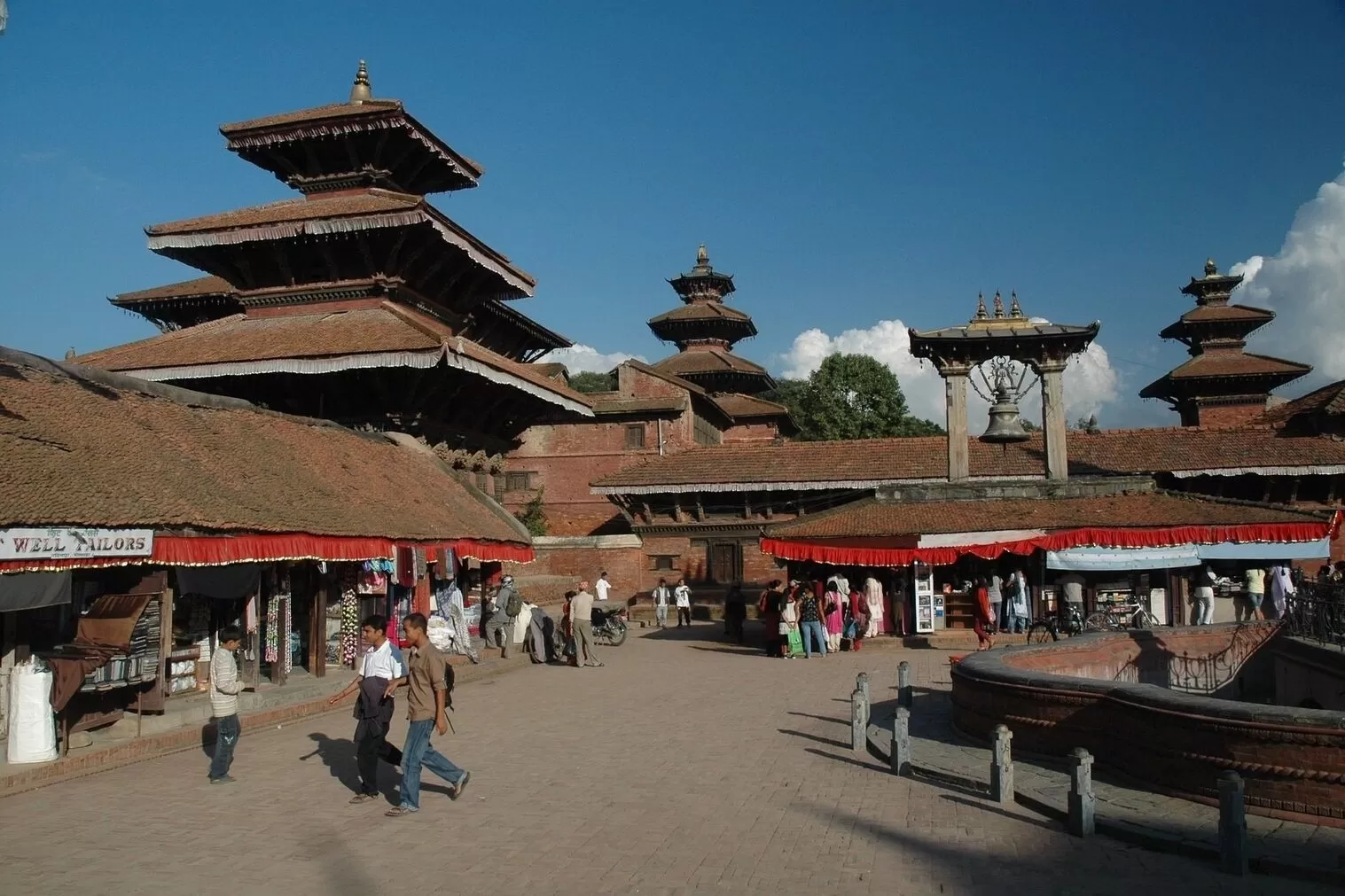
Kathmandu Durbar Square represents one of three royal palace squares in the Kathmandu Valley (the others being in Patan and Bhaktapur). This UNESCO World Heritage Site showcases the pinnacle of Newari architecture and craftsmanship. The Newars, the indigenous people of the Kathmandu Valley, developed architectural and artistic traditions that remain unmatched in their complexity and beauty.
The square served as the ceremonial and administrative heart of the old kingdom. The Hanuman Dhoka Palace complex dominates the area, its name derived from the stone image of Hanuman, the monkey god, guarding the entrance. The palace's courtyards reveal layer upon layer of history, with additions and renovations from various rulers creating a fascinating architectural timeline.
The wooden carvings throughout Durbar Square deserve particular attention. Window frames, door surrounds, roof struts, and beams feature extraordinarily intricate designs—gods and goddesses, mythological creatures, geometric patterns, and everyday life scenes all rendered with stunning precision. Many of these carvings date back several centuries yet remain remarkably well-preserved, protected by the region's relatively dry climate during most of the year.
Kumari Ghar, the residence of the Living Goddess, adds a unique dimension to Durbar Square. The Kumari tradition involves selecting a young prepubescent girl from the Shakya caste who must meet 32 specific physical criteria and pass several tests. She lives as a goddess until she reaches puberty, after which a new Kumari is selected. Visitors can sometimes glimpse the current Kumari when she appears at a window, though photography is prohibited out of respect for this sacred tradition.
The 2015 earthquake severely damaged several structures in Durbar Square, including the complete collapse of some historic buildings. The tragedy sparked international reconstruction efforts, and today visitors can observe restoration work in progress—traditional craftsmen applying ancient techniques to rebuild these cultural treasures exactly as they stood before.
Pashupatinath Temple holds a position among the most sacred Hindu temples dedicated to Lord Shiva worldwide. Located on both banks of the Bagmati River, this extensive complex attracts devotees from across South Asia, particularly during the festival of Maha Shivaratri when hundreds of thousands of pilgrims converge here.
The main temple, with its distinctive golden roof and silver doors, permits entry only to Hindus. However, the surrounding areas offer profound cultural experiences for all visitors. The ghats (cremation platforms) along the river provide insight into Hindu death rituals and beliefs about the soul's journey. Bodies are cremated on open-air pyres, their ashes scattered in the sacred waters—a cycle witnessed multiple times daily.
The hillside opposite the main temple features numerous shrines, meditation caves, and small temples where sadhus (Hindu ascetics) live and practice their spiritual disciplines. These holy men, with their ash-covered bodies, dreadlocked hair, and minimal possessions, embody renunciation and spiritual devotion. Many are happy to bless visitors or pose for photographs in exchange for small donations.
The entire complex buzzes with spiritual energy—temple bells ringing, devotees chanting mantras, priests performing ceremonies, and the constant flow of pilgrims seeking blessings. The atmosphere creates a powerful impression that lingers long after leaving.
Perched dramatically atop a hill overlooking Kathmandu Valley, Swayambhunath Stupa ranks among Nepal's most iconic landmarks. The distinctive white dome and golden spire topped with the all-seeing eyes of Buddha have become symbols of Nepal itself, appearing on countless postcards and photographs.
Legend holds that Swayambhunath emerged spontaneously from a lotus flower that bloomed in the middle of a lake that once filled the Kathmandu Valley. Whether or not you believe this mythology, archaeological evidence confirms that the site has served as a sacred place for at least 2,000 years, making it one of the oldest Buddhist sites in Nepal.
To reach the main stupa, most visitors climb the 365 stone steps leading up from the eastern entrance. This climb, while moderately challenging, forms part of the pilgrimage experience. As you ascend, you pass numerous small shrines, prayer wheels, and, of course, the resident monkeys that give the temple its nickname. These holy monkeys consider the temple their territory and entertain (or occasionally harass) visitors with their playful antics.
The main stupa dominates the hilltop, surrounded by a variety of smaller shrines, monuments, and temples representing both Buddhist and Hindu traditions—a reminder of the religious harmony characteristic of Nepal. Devotees circumambulate the stupa clockwise, spinning prayer wheels and reciting mantras. The four sides of the tower display Buddha's eyes and the Nepali character for "unity" (representing the number one), symbolizing unity in diversity.
The views from Swayambhunath, particularly at sunrise or sunset, are spectacular. On clear days, you can see the entire Kathmandu Valley spread below, with the Himalayan range visible on the horizon. This vantage point helps you understand the valley's geography and appreciate why this location became such an important cultural center.
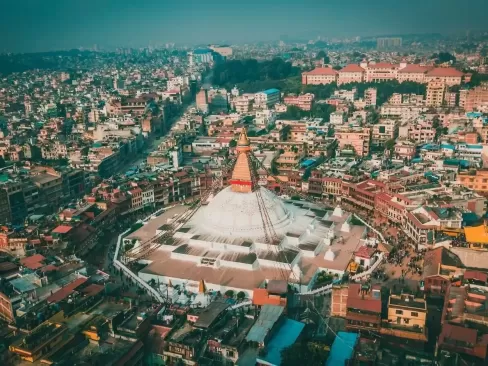
While Kathmandu has many significant religious sites, Boudhanath Stupa stands out for its massive scale and its role as the center of Tibetan Buddhism in Nepal. This enormous mandala-shaped stupa, one of the largest in the world, sits at the heart of Kathmandu's Tibetan community.
The stupa's design follows precise mathematical and symbolic principles. The massive white dome represents the world, while the tower structure symbolizes the thirteen steps to enlightenment. Four pairs of Buddha's eyes gaze out in the cardinal directions, watching over the world. Prayer flags stream from the top, carrying mantras and prayers on the wind.
The area surrounding Boudhanath has evolved into a thriving Tibetan quarter following the Chinese occupation of Tibet in the 1950s, which brought thousands of refugees to Nepal. Today, the neighborhood features numerous monasteries, shops selling Tibetan handicrafts, restaurants serving authentic Tibetan cuisine, and the constant presence of maroon-robed monks going about their daily routines.
The atmosphere at Boudhanath differs markedly from Kathmandu's other major religious sites. There's a sense of spaciousness and calm, with the wide plaza around the stupa allowing visitors to maintain comfortable distances while engaging in kora (circumambulation). Early morning and evening are particularly special times to visit, when the stupa is illuminated and locals perform their devotional practices.
No discussion of Kathmandu would be complete without mentioning Thamel, the vibrant neighborhood that has become synonymous with tourism in Nepal. This maze of narrow streets and alleys features an almost overwhelming density of hotels, restaurants, trekking agencies, shops, and cafes catering to international visitors.
Thamel serves multiple functions for travelers. It's where most organize trekking permits and gear for expeditions like the Manaslu Circuit Trek or Ghorepani Poon Hill Trek. It's where you can find familiar Western food alongside authentic Nepali cuisine. It's where you can buy everything from singing bowls to fake North Face jackets. And it's where travelers from around the world gather to share stories, plans, and occasionally form new friendships.
Despite its tourist-centric nature, Thamel retains a certain charm. The energy is infectious, the people-watching is excellent, and the convenience of having everything in one area makes it an ideal base for exploring Kathmandu. Just remember to venture beyond Thamel to experience authentic Kathmandu life in other neighborhoods.
The journey from Kathmandu to Pokhara, whether by road or by air, transports you from the valley's urban intensity to one of the most naturally beautiful cities anywhere in the world. Pokhara sits at roughly 900 meters elevation beside the tranquil waters of Phewa Lake, with the Annapurna Range rising dramatically just 28 kilometers to the north—creating one of the most spectacular urban settings imaginable.
Pokhara has evolved into Nepal's adventure capital and the launching point for treks into the Annapurna region, including the Annapurna Base Camp Trek and Mardi Himal Trek. But the city offers far more than just trekking logistics—it provides a perfect blend of natural beauty, adventure activities, cultural sites, and relaxation opportunities.
Phewa Lake dominates Pokhara's geography and character. This is Nepal's second-largest lake, spanning about 5.23 square kilometers, and its mirror-smooth surface creates perfect reflections of the surrounding mountains—particularly the distinctive pyramid of Machapuchare (Fishtail Mountain), considered sacred and remaining one of the few unclimbed major peaks in Nepal.
The Lakeside area, stretching along Phewa Lake's eastern shore, forms Pokhara's tourist hub. Unlike Kathmandu's chaotic Thamel, Lakeside maintains a much more relaxed, almost meditative atmosphere. Cafes with comfortable cushions and low tables overlook the water, allowing visitors to spend hours watching the light change on the mountains while sipping endless cups of lemon ginger tea or local coffee.
Boating on Phewa Lake ranks among Pokhara's quintessential experiences. You can rent colorful wooden rowboats or paddle boats and glide across the calm waters at your own pace. Many people paddle out to Tal Barahi Temple, a two-story pagoda sitting on a small island near the lake's center. This Hindu temple dedicated to the goddess Durga (Barahi) sees constant streams of devotees who boat across to make offerings and receive blessings.
The lake supports a healthy ecosystem with various fish species, water birds, and aquatic plants. Early morning brings a magical mist that often hovers over the water's surface, gradually burning off as the sun rises. Sunset transforms the lake into a painter's palette of colors reflected in the still waters—pinks, oranges, purples, and golds creating unforgettable scenes.
For many visitors, watching sunrise from Sarangkot represents Pokhara's most memorable experience. This hilltop viewpoint, situated at 1,600 meters elevation, provides unobstructed panoramic views of the Annapurna and Dhaulagiri ranges stretching across the northern horizon.
The pre-dawn drive up to Sarangkot takes about 30 minutes from Lakeside. Most people arrange this through their hotel or a local tour operator, departing around 4:30-5:00 AM to ensure arrival before the sun's first rays strike the peaks. There's something special about standing in the darkness surrounded by fellow sunrise seekers, all waiting for that magical moment when the mountains begin to glow.
When the sun finally crests the eastern horizon, its light gradually illuminates the snow-covered peaks, transforming them from dark silhouettes into glowing giants of gold and pink. On exceptionally clear days, the view encompasses eight of the world's ten highest mountains, stretched across a 200-kilometer panorama. The entire display typically lasts 20-30 minutes as the light strengthens and spreads across the landscape.
Sarangkot also serves as Pokhara's primary paragliding launch site. Throughout the day, colorful paragliders launch from the hilltop like butterflies, soaring above the valley and lake before landing near Lakeside. The views from this vantage point remain spectacular even without sunrise, making Sarangkot worth visiting at any time of day.
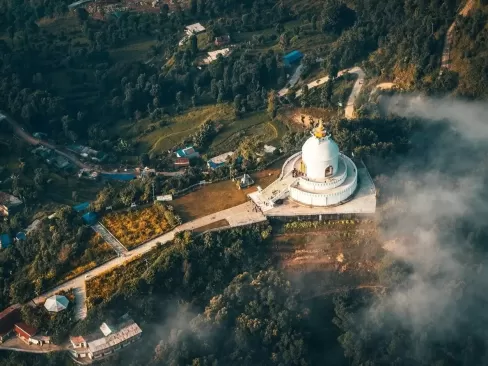
The World Peace Pagoda offers another excellent viewpoint over Phewa Lake and Pokhara, combined with a peaceful spiritual atmosphere. This brilliant white stupa, built by Japanese Buddhist monks as part of their worldwide peace initiative, sits atop a hill on the southern shore of the lake.
Reaching the pagoda requires a moderate hike of about 45 minutes to an hour from Lakeside. Many visitors choose to boat across the lake first, reducing the walking distance. The trail winds through forested slopes, with occasional glimpses of the lake and mountains through the trees. The climb isn't particularly difficult, making it accessible to most fitness levels.
The pagoda itself provides a serene setting for meditation and contemplation. Four Buddha statues face the cardinal directions, each representing different aspects of Buddha's life and teachings. Prayer flags flutter in the breeze, and the sound of bells creates a peaceful ambiance. The 360-degree views encompass the lake below, the city of Pokhara spreading across the valley, and the magnificent Himalayan panorama to the north.
Unlike some of Pokhara's more touristed attractions, the World Peace Pagoda often remains relatively uncrowded, allowing for genuine moments of tranquility. The combination of spiritual atmosphere, physical exercise from the hike, and stunning natural beauty makes this one of Pokhara's most rewarding experiences.
Pokhara has earned its reputation as Nepal's adventure capital through its diverse range of activities:
Paragliding ranks as Pokhara's most popular adventure activity. Tandem flights with experienced pilots allow even complete beginners to safely soar above the valley, with the Himalayas as your backdrop and Phewa Lake shimmering below. Most flights last 20-30 minutes and include aerial photography services, giving you both the experience and lasting memories.
Ultralight flights provide powered flying experiences along the mountain range. These small aircraft fly closer to the peaks than paragliders, offering dramatic perspectives and photo opportunities. Some flights even approach the face of Machapuchare, providing views typically seen only by mountaineers.
Zip-lining enthusiasts can experience one of the world's steepest and fastest zip-lines operating near Pokhara. The cable stretches 1.8 kilometers at a 56-degree angle, sending adventurers zooming down at speeds exceeding 100 kilometers per hour while enjoying incredible valley views.
White-water rafting on rivers like the Seti and Kali Gandaki offers everything from gentle family-friendly floats to challenging Grade IV rapids for experienced rafters. Day trips and multi-day expeditions are available, combining adventure with camping experiences along scenic riverbanks.
Beyond adventure activities, Pokhara offers several worthwhile cultural and natural sites:
The International Mountain Museum presents fascinating exhibits on Himalayan mountaineering history, indigenous mountain cultures, geology, flora and fauna, and the great mountaineers who attempted to conquer these peaks. Scale models of the major mountains and displays of historical climbing equipment provide context for understanding the region's mountaineering heritage.
Gupteshwor Cave and Devi's Fall (Patale Chhango) showcase interesting geological features. The underground waterfall at Devi's Fall plunges into a deep gorge, then flows through the extensive Gupteshwor Cave system, creating an otherworldly atmosphere especially dramatic during the monsoon season when water flow increases significantly.
Davis Falls and the Tibetan refugee camps offer additional cultural exploration opportunities. The camps feature monasteries, handicraft centers, and opportunities to observe traditional Tibetan carpet weaving and other crafts being produced by refugees who fled Tibet following Chinese occupation.
Lumbini holds a position of supreme importance in Buddhist history as the birthplace of Siddhartha Gautama, who became Buddha, the Enlightened One. This UNESCO World Heritage Site attracts Buddhist pilgrims from around the world, particularly from countries where Buddhism is widely practiced—Thailand, Myanmar, Sri Lanka, Japan, Korea, Vietnam, and many others.
The significance of Lumbini extends beyond Buddhism. For anyone interested in religious history, philosophy, or the development of one of the world's major religions, Lumbini provides a profound and moving experience. The site's peaceful atmosphere, combined with its historical importance, creates a unique destination quite different from Nepal's other major attractions.
The Pilgrimage Tour package offers a focused exploration of Nepal's spiritual sites including Lumbini, while the comprehensive Kathmandu Pokhara Lumbini Chitwan Tour incorporates this sacred site into a broader Nepal experience.
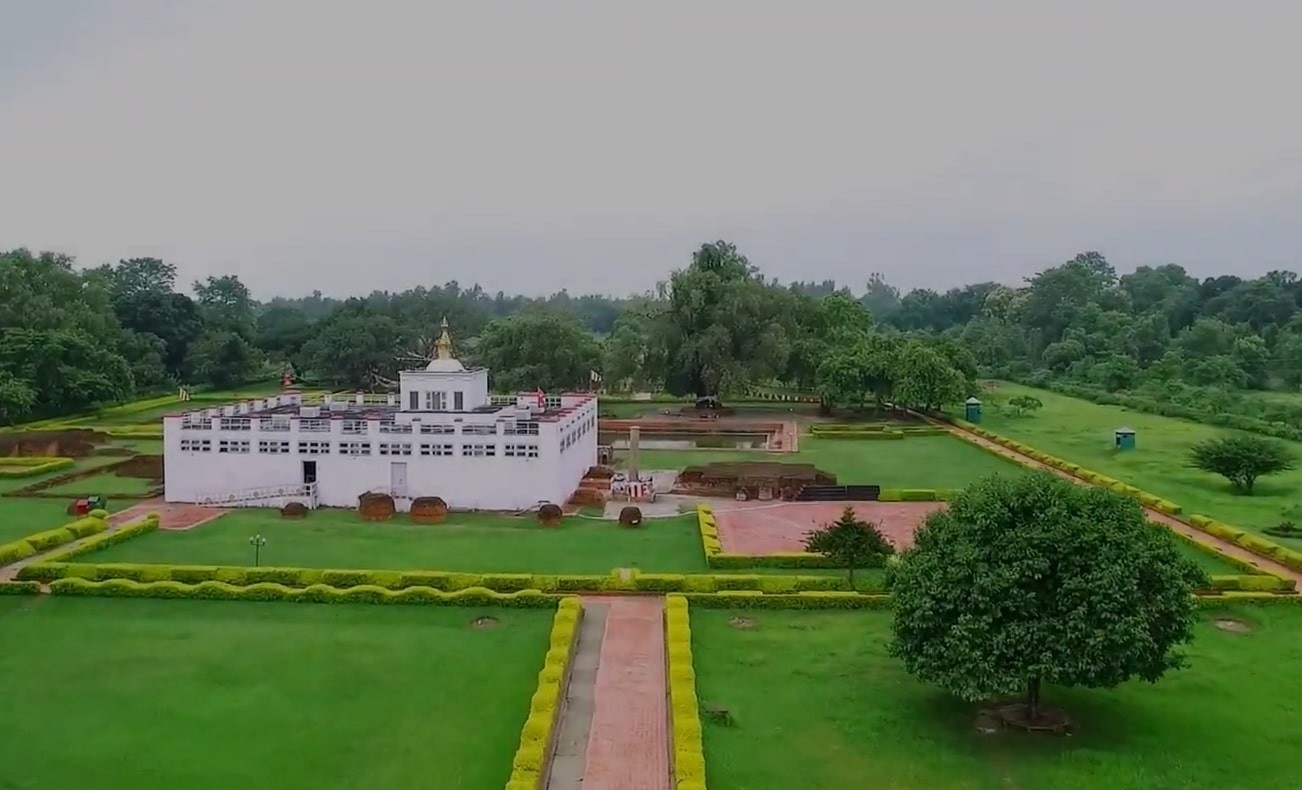
The Maya Devi Temple marks the exact spot where Queen Maya Devi gave birth to Siddhartha Gautama in 623 BCE (according to tradition, though some scholars debate the exact date). The temple stands within the Sacred Garden, a peaceful area featuring ancient ruins, a sacred pond where Maya Devi bathed before giving birth, and various archaeological remnants.
The current temple structure, a simple sandstone building, replaced earlier structures while preserving the archaeological evidence beneath. Inside, visitors can view a stone marker stone indicating the precise birth location and a bas-relief sculpture depicting the birth scene. The sculpture shows Maya Devi holding the branch of a sal tree while giving birth to the infant Siddhartha, with other figures in attendance—a scene familiar from Buddhist art and texts.
The Sacred Garden surrounding the temple offers a contemplative space for meditation and reflection. Ancient monastery foundations excavated by archaeologists reveal that Lumbini served as an important Buddhist center for many centuries. The pool where Maya Devi bathed, known as Puskarni, remains a focal point where pilgrims perform rituals and prayers.
Walking through the Sacred Garden, you'll encounter pilgrims from diverse Buddhist traditions, each with their own practices and styles of worship. Some prostrate themselves repeatedly, others sit in meditation, some chant sutras, and others simply walk slowly, absorbing the spiritual atmosphere. This diversity beautifully demonstrates Buddhism's evolution across different cultures while maintaining its essential teachings.
Standing within the Sacred Garden, the Ashoka Pillar provides crucial historical evidence for Lumbini's authenticity as Buddha's birthplace. Emperor Ashoka, the great Mauryan ruler who converted to Buddhism and spread its teachings throughout his empire, erected this sandstone pillar around 249 BCE during his pilgrimage to Lumbini.
The pillar's inscription, written in Brahmi script, clearly identifies this location as Buddha's birthplace and records Ashoka's visit. This inscription provides the earliest known epigraphic evidence of Buddha's historical existence and makes Lumbini one of the best-documented sacred sites in Buddhism. The pillar stands as a direct connection to ancient history—a stone monument that has witnessed over 2,200 years of changes, conflicts, and rediscoveries.
The pillar's survival itself tells an interesting story. Lumbini was gradually abandoned after the decline of Buddhism in India, becoming overgrown and forgotten for centuries. The pillar was rediscovered in 1896 by a German archaeologist, leading to Lumbini's identification and subsequent development as a pilgrimage site. Today, a fence protects the pillar, though visitors can approach closely to view the ancient inscription.
Lumbini's Monastic Zone represents one of its most unique features. This planned area contains monasteries built by Buddhist communities from countries around the world, each designed in their own traditional architectural style. Walking through the Monastic Zone feels like traveling across Buddhist Asia, encountering the diverse expressions of Buddhist faith and culture.
The monasteries are organized into two zones: the Theravada (East Monastic Zone) and Mahayana (West Monastic Zone), representing Buddhism's two major branches. Each monastery showcases distinctive architectural traditions:
The Thai monastery features elegant, curved roofs and golden decorations characteristic of Thai temple architecture. The Myanmar monastery displays Myanmar's distinctive style with elaborate carvings and multi-tiered roofs. The Chinese monastery impresses with its grand scale, red walls, and traditional Chinese temple layout. The Japanese monastery offers minimalist elegance with carefully raked gravel gardens.
Other nations represented include Korea, Vietnam, Sri Lanka, Cambodia, Nepal itself, and many others. More monasteries continue to be added as different Buddhist communities establish their presence in this sacred place. Most monasteries welcome visitors, offering opportunities to observe religious ceremonies, view beautiful artwork, and learn about different Buddhist traditions.
The Monastic Zone's peaceful atmosphere, wide spaces, and beautiful architecture make it ideal for walking meditation or simply wandering and appreciating the diversity of Buddhist expression. Many visitors spend several hours exploring the various monasteries, discovering how each culture has interpreted Buddhist teachings through architecture and art.
The Lumbini Museum provides context for understanding Buddhism's development and spread across Asia. Exhibits include Buddhist art and artifacts from various periods and regions, archaeological findings from Lumbini and surrounding areas, and explanations of Buddhist philosophy and practices.
The Lumbini Cultural Center occasionally hosts programs including meditation sessions, dharma talks, and cultural performances. Check the schedule during your visit to see if any programs align with your interests and timing.
The journey from Nepal's mountains and cultural sites to Chitwan National Park represents a dramatic shift in landscape, climate, and focus. Here in the subtropical Terai lowlands, one of Asia's finest wildlife sanctuaries protects incredible biodiversity, offering visitors opportunities to encounter species ranging from one-horned rhinoceros to Bengal tigers.
Chitwan National Park, established in 1973 as Nepal's first national park, spans 932 square kilometers of sal forests, grasslands, and riverine habitat. The park's UNESCO World Heritage designation recognizes its importance for conservation and its role in protecting endangered species. Unlike mountain trekking destinations like the Upper Mustang Trek or Kanchenjunga Base Camp Trek, Chitwan offers a completely different kind of adventure—one focused on patience, observation, and connection with wildlife.
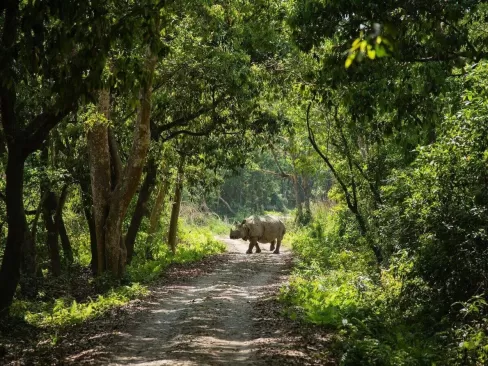
Chitwan's primary conservation success story centers on the greater one-horned rhinoceros. These magnificent creatures, which can weigh up to 2,000 kilograms, were hunted nearly to extinction in the early 20th century. At one point, fewer than 100 rhinos survived in Nepal. Today, thanks to dedicated conservation efforts, Chitwan supports a population of over 600 rhinos—one of the world's most significant populations of this species.
Unlike their African cousins with two horns, Asian rhinos sport a single horn made of keratin (the same protein as human fingernails and hair). Despite legal protection and international efforts, rhinos remain threatened by poaching, with their horns commanding astronomical prices in traditional medicine markets despite having no proven medical benefits.
Visitors have excellent chances of spotting rhinos during jungle activities, particularly in the grasslands near water sources. These prehistoric-looking animals spend much of their time grazing, bathing, and wallowing in mud to regulate body temperature and protect their skin from insects. While they appear docile, rhinos can be dangerous if surprised or threatened, moving with surprising speed despite their bulk. Guides maintain safe distances while still providing excellent viewing opportunities.
Chitwan provides critical habitat for Bengal tigers, with an estimated population of around 120 individuals—a remarkable conservation achievement considering the species' endangered status throughout Asia. However, actually seeing a tiger in Chitwan remains relatively rare due to their secretive nature and the park's dense vegetation.
Even without direct sightings, evidence of tiger presence frequently appears during jungle activities. Guides point out pugmarks (paw prints) in the mud, scat deposits, territorial scratch marks on trees, and occasionally the remains of prey. Some fortunate visitors do spot tigers, particularly during early morning or late afternoon safaris when these apex predators are most active. The possibility, combined with the knowledge that you're walking through tiger habitat, creates a thrilling edge to every jungle experience.
Other carnivores inhabiting Chitwan include leopards (even more secretive than tigers), jungle cats, fishing cats, several mongoose species, and sloth bears. The latter can be dangerous if surprised, though they primarily feed on termites, fruits, and honey rather than meat.
Beyond the megafauna, Chitwan supports extraordinary biodiversity:
Mammals: Asian elephants (both wild herds and domesticated working elephants), four species of deer (spotted deer, sambar, hog deer, and barking deer), wild boar, gaur (wild buffalo), pangolins, and four primate species including endangered Ganges river dolphins in the park's waterways.
Reptiles: The gharial (a critically endangered fish-eating crocodile with a distinctive long, narrow snout) and mugger crocodiles frequent the rivers. Various snake species include pythons, cobras, and vipers, though bites are extremely rare due to their shy nature.
Birds: Over 540 recorded bird species make Chitwan one of Asia's premier birdwatching destinations. Species range from tiny sunbirds to massive hornbills, from water-dwelling storks and herons to forest owls and woodpeckers. Notable species include the giant hornbill, Bengal florican (critically endangered), lesser adjutant stork, and numerous eagles, kites, and falcons.
Chitwan offers multiple ways to explore its wilderness, each providing different perspectives and experiences:
Jeep Safaris: Four-wheel drive vehicles venture deep into the park along established tracks, maximizing ground coverage and wildlife sighting opportunities. Morning safaris (starting around 6 AM) and afternoon safaris (starting around 3 PM) take advantage of times when animals are most active. Jeeps can cover significant distances, increasing chances of spotting diverse species. Full-day safaris include packed lunches and thorough park exploration.
Walking Safaris: Accompanied by trained naturalist guides and often armed guards (for safety), walking safaris provide the most intimate jungle experience. The heightened awareness required when walking through tiger and rhino habitat creates unforgettable excitement. The slower pace allows appreciation of smaller creatures, plants, insects, and ecosystem dynamics often missed from vehicles. Walking safaris require reasonable fitness and willingness to follow guide instructions precisely for safety.
Canoe Rides: Silent canoe trips along the Rapti or Narayani rivers offer excellent opportunities for observing gharial and mugger crocodiles basking on riverbanks, plus incredible water bird diversity. The peaceful gliding motion and water-level perspective create meditative experiences punctuated by exciting wildlife encounters. Canoe rides typically last 1-2 hours and often combine with short nature walks.
Elephant-Back Safaris: While traditional in Chitwan, elephant safaris have become controversial from animal welfare perspectives. These rides allow penetration into areas inaccessible to vehicles and on foot, and many species tolerate elephants' approach more readily than humans. However, concerns about elephant treatment, training methods, and long-term welfare have led many responsible travelers to skip this activity. If you choose to participate, research operators carefully regarding elephant care standards.
Bird Watching Tours: Specialized birding excursions with expert guides focus on locating and identifying the park's remarkable avian diversity. These tours combine walking with vehicle transport to reach prime birding locations. Early morning provides the best birdwatching when birds are most active and vocal.
Chitwan isn't solely about wildlife. The indigenous Tharu people have inhabited the Terai region for centuries, developing unique cultural traditions and remarkable resilience. Historically, Tharus possessed genetic resistance to malaria, which was endemic in the Terai before eradication programs, allowing them to thrive where others could not survive.
Traditional Tharu architecture features distinctive mud-walled homes decorated with elaborate geometric patterns and intricate designs. These designs serve both aesthetic and functional purposes—the smooth mud walls help regulate temperature, while the decorative elements express cultural identity and artistic traditions. Grain storage structures called gola, raised on posts to protect from moisture and pests, dot village landscapes.
Tharu cultural programs, particularly the famous stick dance, provide entertaining insights into local traditions. The stick dance involves dancers in a circle, striking bamboo sticks together in complex rhythmic patterns while moving in choreographed steps. Both men and women participate, with live musical accompaniment creating infectious energy. These performances demonstrate remarkable coordination and have been passed down through generations.
Many villages around Chitwan have developed community-based tourism initiatives allowing visitors to experience authentic Tharu life. You might observe traditional farming practices, watch handicraft production (including colorful paintings called mudhora), taste Tharu cuisine, or simply sit with families and learn about their daily lives and relationship with the forest. Supporting these initiatives helps ensure that local populations benefit economically from conservation efforts and tourism, creating incentives for protecting rather than exploiting wildlife habitat.
The Rapti River forms a natural boundary along sections of Chitwan National Park and serves as a crucial water source for the park's wildlife. The river and its banks create habitat for numerous species while providing visitors with peaceful waterborne exploration opportunities.
Canoeing experiences reveal the rich life associated with river ecosystems. Kingfishers—brilliant blue flashes of color—dart across the water's surface, diving with remarkable precision to catch small fish. Cormorants swim and dive for larger prey. Various heron species stand motionless in the shallows, awaiting opportunities to strike at fish, frogs, or other aquatic prey. Egrets gather in white flocks along sandbars.
The gharial, with their distinctive elongated snouts studded with sharp teeth perfectly adapted for catching fish, represent one of the river's most impressive inhabitants. These critically endangered crocodiles can exceed 5 meters in length. The broader-snouted mugger crocodile, a more aggressive species, also inhabits these waters, keeping paddlers respectfully alert to the prehistoric predators sharing their environment.
River sunsets in Chitwan create magical moments as the light softens, birds return to roosting sites, and the sounds of the jungle intensify with nightfall's approach. Many visitors cite these peaceful river experiences among their most memorable Chitwan moments—times when the divide between human visitor and natural world feels momentarily dissolved.
Connecting these four diverse destinations requires careful planning:
Kathmandu to Pokhara: Tourist buses, private vehicles, or domestic flights (25-30 minutes). The road journey takes 6-7 hours through scenic landscapes. The Kathmandu to Pokhara Tourist Bus Ticket provides an economical option.
Pokhara to Lumbini: This journey typically takes 6-7 hours by road, traveling through the Terai plains. Private vehicles offer flexibility for stops. Tourist bus services are available but less frequent than the Kathmandu-Pokhara route.
Lumbini to Chitwan: Approximately 4-5 hours by road, this journey can be combined with the Pokhara-Lumbini leg or done separately depending on your itinerary structure.
Chitwan to Kathmandu: Tourist buses make this 5-6 hour journey multiple times daily. Private vehicles and domestic flights to Bharatpur (near Chitwan) are alternatives.
A comprehensive exploration of all four destinations requires at least 10-12 days:
Your Start Date is the day you land in Nepal, and your End Date is when you fly home.
If the set Kathmandu Pokhara Lumbini Chitwan Tour group dates don’t suit your schedule, we can offer alternative dates upon request.
The Kathmandu sightseeing tour covered everything I wanted to see, from ancient temples to stunning viewpoints. Explore Holiday Nepal provided excellent service, making the day smooth and enriching.
This tour covered everything—cultural landmarks in Kathmandu, the tranquility of Pokhara, the birthplace of Buddha in Lumbini, and wildlife adventures in Chitwan. Explore Holiday Nepal’s impeccable service made this an effortless and enjoyable experience.
The Kathmandu-Pokhara-Lumbini-Chitwan tour was a perfect balance of culture, spirituality, and adventure. From the historical sites in Kathmandu to the wildlife safari in Chitwan, every moment was well-planned and meaningful. Thanks to Explore Holiday Nepal, the tour was smooth and enriching.
This tour combines cultural, spiritual, and natural experiences. In Kathmandu, you'll explore ancient temples and vibrant markets. Pokhara is renowned for its stunning lakes and mountain views, offering adventure activities like paragliding. Lumbini, the birthplace of Buddha, is a significant pilgrimage site with serene gardens and monasteries. Chitwan National Park provides wildlife experiences, including jungle safaris and opportunities to see rhinos and tigers.
Traveling between these destinations can be done by road or air. Buses are a popular choice, with travel times ranging from 6 to 8 hours between Kathmandu and Pokhara, about 6 hours from Pokhara to Lumbini, and 4 to 5 hours from Lumbini to Chitwan. Domestic flights are available between Kathmandu and Pokhara, which takes about 25 to 30 minutes.
Lumbini offers a peaceful environment for reflection and exploration. Key activities include visiting the Maya Devi Temple, which marks the exact birthplace of Buddha, walking through the sacred garden, and exploring various international monasteries built by different countries. The Ashoka Pillar and the Lumbini Museum are also significant sites to visit.
Chitwan National Park is a UNESCO World Heritage Site known for its rich biodiversity. Activities include jungle safaris on foot, by jeep, or on elephant back, canoeing along the Rapti River, and birdwatching. You can also visit local Tharu villages to experience their culture and traditions, and enjoy evening cultural performances.
Throughout your tour, you can enjoy a variety of Nepali cuisine. In Kathmandu, try traditional dishes like dal bhat (rice and lentil soup), momo (dumplings), and Newari specialties. Pokhara offers fresh fish from Phewa Lake along with similar Nepali dishes. In Lumbini and Chitwan, you can sample local Tharu cuisine and fresh produce from nearby farms.
The best times to visit are during spring (March to May) and autumn (September to November). These seasons feature mild weather, clear skies, and excellent visibility for mountain views and outdoor activities. The monsoon (June to August) can bring heavy rainfall, while winter (December to February) may be cold, especially in the mornings and evenings.
Yes, all four destinations offer a variety of accommodation options. In Kathmandu, you’ll find budget guesthouses to luxury hotels. Pokhara has many lakeside accommodations catering to different budgets. Lumbini offers basic lodgings, while Chitwan has eco-lodges and resorts that provide easy access to the national park and often include safari packages.
These locations are generally safe for tourists. Standard precautions, such as being aware of your surroundings and keeping an eye on your belongings, are advisable. In Chitwan, follow safety guidelines provided by your guides during wildlife activities. Familiarizing yourself with local customs and respecting cultural practices will enhance your experience.
Staying hydrated and being cautious with street food is essential during your travels. In Chitwan, it's wise to take precautions against mosquito bites by using insect repellent and wearing long sleeves, especially during the evening. It’s also a good idea to have basic medications and a first-aid kit on hand for minor issues.




 (34)
(34) 