 Bhutan Tour: Discover the Kingdom of Happiness in the Himalayas
Nestled high in the Eastern Himalayas between India and Tibet, Bhutan stands as one of the world's most enigmatic and spiritually rich destinations. Known as Druk Yul—the Land of the Thunder Dragon—this small Himalayan kingdom has captured the imagination of travelers worldwide with its unique approach to development, pristine natural beauty, and deeply preserved Buddhist culture. Unlike any other destination on Earth, Bhutan measures its success not through Gross Domestic Product but through Gross National Happiness, a philosophy that permeates every aspect of life in this mystical kingdom.
A Bhutan tour offers far more than stunning mountain vistas and ancient monasteries. It's an immersion into a culture that has deliberately chosen a different path, one that prioritizes environmental conservation, cultural preservation, and the wellbeing of its people over rapid modernization. With more than 70% of the country covered in forest—a percentage enshrined in the constitution—Bhutan remains one of the few carbon-negative countries in the world, absorbing more CO2 than it produces.
For travelers coming from Nepal, a combined Nepal Bhutan Tour presents the perfect opportunity to experience two distinct Himalayan cultures within one comprehensive journey. While Nepal dazzles with its towering eight-thousanders and vibrant cultural tapestry combining Hindu and Buddhist traditions, Bhutan captivates with its commitment to preserving tradition and its philosophy of measuring progress through happiness rather than economic indicators alone.
The decision to embark on a Bhutan tour represents a choice to step outside the ordinary tourist experience and enter a world where ancient wisdom still guides modern life. Here's why Bhutan should be on every thoughtful traveler's bucket list:
Unlike many countries where spirituality has retreated to museums and ceremonial occasions, Bhutan maintains Buddhism as the living heart of daily life. Prayer flags flutter from every hilltop and bridge, sending blessings on the mountain wind. Monasteries aren't historical relics but thriving communities where monks study, practice, and preserve sacred traditions that stretch back over a thousand years. The teachings of Guru Rinpoche, who brought Buddhism to Bhutan in the 8th century, still resonate through every valley and village.
For travelers who've experienced the spiritual atmosphere of treks like the Langtang Valley Trek or the Everest Base Camp Trek in Nepal, Bhutan offers an even more concentrated immersion into Himalayan Buddhist culture. The difference lies in Bhutan's successful preservation of tradition as the mainstream way of life rather than a parallel existence alongside modernization.
Bhutan's unique development philosophy sets it apart from every other nation. Introduced by the fourth king in the 1970s, Gross National Happiness evaluates progress through nine domains: psychological wellbeing, health, education, time use, cultural diversity and resilience, good governance, community vitality, ecological diversity and resilience, and living standards. This holistic approach creates a palpable atmosphere of contentment and balance that visitors immediately sense.
Walking through Bhutanese villages, you'll notice something different—people seem genuinely happy, taking time for spiritual practices, maintaining strong community bonds, and living in harmony with their environment. This isn't romanticized nostalgia but a conscious national choice to prioritize wellbeing alongside economic development.
Bhutan's landscape unfolds like a series of carefully composed paintings—from the Paro Valley's terraced rice fields and traditional farmhouses to Punakha's subtropical warmth and lush vegetation, from Thimphu's pine-forested hills to the high-altitude pristineness of the Phobjikha Valley. Unlike many popular destinations, Bhutan's natural beauty remains remarkably unspoiled thanks to strict environmental policies and controlled tourism.
The country's commitment to conservation extends beyond mere rhetoric. Protected areas cover over 51% of the country, creating biological corridors that allow wildlife to migrate freely. Rare species like the black-necked crane, red panda, golden langur, and even tigers thrive in Bhutan's forests—a testament to the kingdom's environmental stewardship.
Bhutan's "high value, low impact" tourism policy might initially seem restrictive, but it actually enhances the visitor experience. The requirement to book through licensed tour operators and the daily sustainable development fee (which contributes to free healthcare and education for Bhutanese citizens) keeps visitor numbers manageable. This means you won't find the overcrowding that plagues many other popular destinations.
Every aspect of your journey—hotels, transportation, guides, meals—is arranged through your tour operator, eliminating the stress of logistics while ensuring consistent quality. Your Bhutanese guide becomes more than just a navigator; they're your cultural interpreter, helping you understand and appreciate the deeper meanings behind what you observe.
For those who've trekked popular routes like the Annapurna Base Camp Trek or Ghorepani Poon Hill Trek in Nepal during peak season, Bhutan's uncrowded trails and sites offer refreshing contrast. Even at Bhutan's most famous landmarks, you'll rarely encounter the masses that can diminish the experience elsewhere.
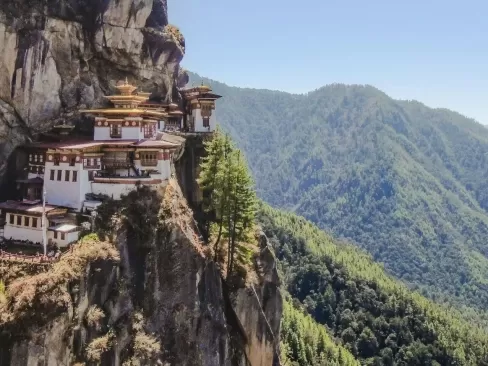
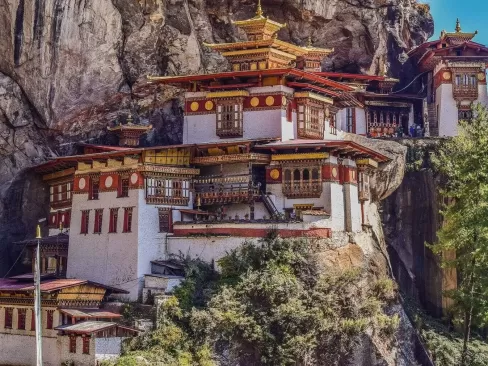
No structure in Bhutan captures the imagination quite like Paro Taktsang, the legendary Tiger's Nest Monastery perched impossibly on a sheer cliff 900 meters above the Paro Valley. This sacred site represents the pinnacle of Bhutanese pilgrimage destinations and stands as one of the most photographed landmarks in the Himalayas.
According to legend, Guru Rinpoche (Padmasambhava) flew to this location on the back of a tigress in the 8th century and meditated in a cave for three years, three months, three weeks, three days, and three hours, subduing demons and introducing Buddhism to Bhutan. The monastery, built around these meditation caves in 1692, clings to the cliff face in defiance of logic and gravity—a testament to both engineering prowess and spiritual devotion.
The pilgrimage to Tiger's Nest begins at the trailhead near Paro, where you might choose to ride a pony for the initial steep section, though most visitors prefer to walk. The path climbs steadily through blue pine and rhododendron forests, with the monastery appearing and disappearing through the trees like a vision. Prayer flags flutter overhead, their mantras carried on the mountain breeze, while the scent of juniper smoke from small shrines mingles with the pine-scented air.
Approximately halfway up, a cafeteria offers rest and refreshments alongside spectacular views of the monastery across the valley—a perfect place to catch your breath and contemplate the achievement still ahead. The final approach involves steep stone steps that test determination, but every step carries you deeper into the spiritual atmosphere that makes this place sacred.
Inside the complex (photography prohibited), you'll discover temples adorned with ancient murals, flickering butter lamps, and the quiet devotion of both monks and pilgrims. The meditation cave where Guru Rinpoche sat radiates a powerful energy that transcends religious affiliation—even non-Buddhist visitors often describe profound experiences here. Standing on the monastery's terraces, gazing out over the Paro Valley far below with snow peaks rising in the distance, you understand why Bhutanese consider this one of their most sacred sites.
For trekkers who've challenged themselves on routes like the Manaslu Circuit Trek or Everest Three Pass Trek, the Tiger's Nest hike offers a different kind of challenge—shorter in duration but steep in elevation gain, and carrying profound spiritual significance beyond the physical effort.
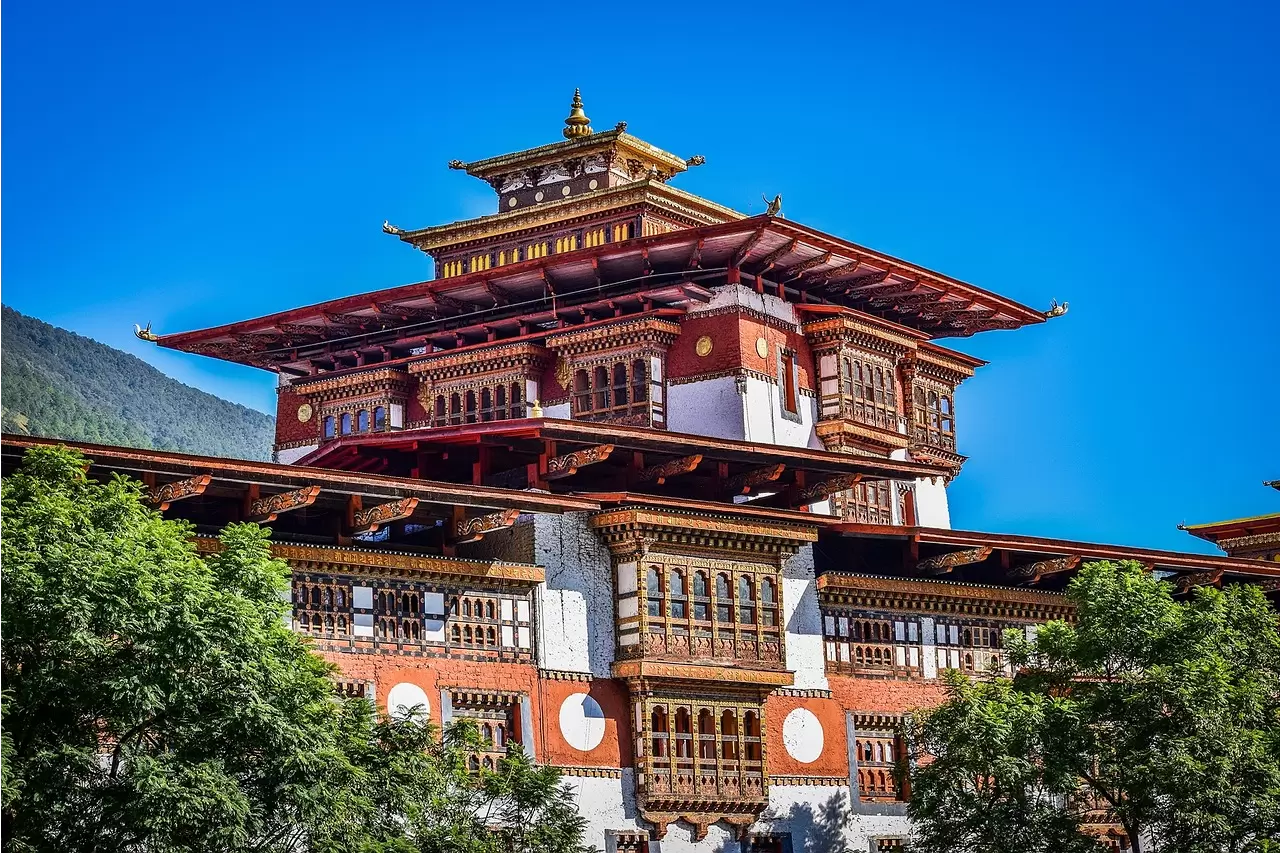
Situated at the confluence of the Mo Chhu (Mother River) and Pho Chhu (Father River), Punakha Dzong represents perhaps Bhutan's most beautiful architectural achievement. The massive fortress-monastery, with its six-story central tower and golden roofs gleaming in the sun, seems to emerge organically from the landscape, its white walls reflected in the rivers that embrace it.
Built in 1637 by Zhabdrung Ngawang Namgyal, the founder of Bhutan as a unified state, Punakha Dzong served as the seat of government until the capital moved to Thimphu in 1955. Today, it remains the winter residence of the Je Khenpo (Chief Abbot) and the central monk body, who relocate here each winter from the colder temperatures of Thimphu.
The dzong's interior contains intricate woodwork, ancient murals depicting Buddhist teachings and Bhutanese history, and sacred relics of immense importance to Bhutanese Buddhism. The central tower houses the remains of Zhabdrung Ngawang Namgyal and a statue of Buddha as large as a three-story building. Walking through the courtyards and temples, you'll witness monks going about their daily rituals—chanting prayers, debating philosophical points, and performing the ceremonies that maintain Bhutan's spiritual traditions.
The approach to Punakha Dzong crosses a traditional wooden cantilever bridge, offering postcard-perfect views of the fortress framed by purple jacaranda trees (which bloom spectacularly in spring) and the valley's lush vegetation. The setting alone—in a warm, subtropical valley where rice paddies create geometric patterns on the hillsides and tropical fruits flourish—provides stark contrast to Bhutan's higher elevations.
Thimphu offers a fascinating glimpse into how Bhutan balances preservation of tradition with necessary modernization. As the kingdom's capital and largest city (population around 100,000), Thimphu famously has no traffic lights—instead, white-gloved police officers direct traffic at major intersections from elaborately painted booths, their precise movements almost dance-like.
Tashichho Dzong, the impressive fortress-monastery on Thimphu's northern edge, houses the throne room and offices of the king, the secretariat, and the central monk body. The massive white structure with golden roofs dominates Thimphu's skyline, and during summer months, hundreds of monks reside here. The meticulously maintained courtyards and temples showcase Bhutanese architecture at its finest—no nails used in construction, only intricate joinery and craftsmanship passed down through generations.
The National Memorial Chorten, built in memory of the third king, draws a constant stream of devotees who circumambulate clockwise, spinning prayer wheels and reciting mantras. This active participation in religious practice—the elderly completing their rounds with prayer beads clicking through their fingers, young professionals stopping by during lunch breaks—demonstrates how spirituality remains woven into daily life rather than relegated to special occasions.
Buddha Dordenma, the massive golden Buddha statue overlooking the valley, represents a more recent addition to Thimphu's spiritual landscape. Standing 51 meters tall and housing 125,000 smaller Buddha statues within, this colossal monument celebrates Bhutan's 100th year of monarchy. The view from this hilltop spans the entire Thimphu Valley, offering perspective on how the capital has grown while maintaining its essential character.
If your visit falls on a weekend, the Centenary Farmers Market provides wonderful cultural immersion. Farmers from surrounding valleys bring their produce—organic vegetables, red rice, chilies (lots of chilies!), mushrooms, cheese, and handicrafts. The market buzzes with activity as locals bargain good-naturedly, examining tomatoes and testing the heat of dried peppers. This is Thimphu at its most authentic, where you can sample yak cheese, watch traditional weighing methods, and understand the agricultural foundation that still feeds Bhutan.
Additional stops might include the National Library, housing ancient Buddhist manuscripts written on handmade paper and preserved through centuries; the Traditional Medicine Institute, where age-old healing practices continue alongside modern healthcare; and local craft workshops where you can watch weavers, painters, and sculptors creating the arts that define Bhutanese culture.
For those who've explored Nepal's cultural treasures through experiences like the Kathmandu Tour or visits to the Kathmandu Valley's UNESCO sites, Thimphu offers intriguing comparisons—a capital city that deliberately chooses tradition over unchecked modernization, creating a unique urban atmosphere unlike anywhere else in the Himalayas.
The Phobjikha Valley, often called Gangtey Valley after its main village, offers one of Bhutan's most serene and beautiful landscapes. This bowl-shaped glacial valley spreads below forested ridges, one of Bhutan's few wetland areas preserved as a protected sanctuary. The valley's gentle contours, patchwork farmland, and winding streams create a pastoral scene that seems frozen in time.
Each winter (November to March), black-necked cranes migrate to Phobjikha from Tibet, and the entire valley celebrates their arrival with festivals and protection measures. These elegant birds hold special significance in Bhutanese culture, featured in folk songs and considered sacred. The Gangtey Monastery, sitting on a ridge overlooking the valley, offers panoramic views of the entire basin—particularly spectacular during crane season when the birds' distinctive calls echo across the marsh.
Even without the cranes, Phobjikha captivates visitors with its pristine beauty and traditional farming villages. The valley trek provides gentle walking through beautiful scenery, passing farmhouses where families dry red chilies on roofs and maintain lifestyles unchanged for generations. The absence of electricity in parts of the valley (by choice, to preserve the ecosystem) creates nighttime darkness that reveals stars in quantities urban dwellers forget exist.
The journey to Phobjikha itself rewards travelers with constantly changing landscapes—climbing through blue pine forests toward Dochu La Pass, descending into the lush Punakha Valley, then climbing again through dense forests of oak, maple, and rhododendron into the Black Mountains region. This remoteness, rather than being an inconvenience, enhances the sense of having discovered a hidden world.
While not a destination in itself, Dochula Pass at 3,100 meters deserves mention for its significance on the journey between Thimphu and Punakha or other eastern destinations. The pass offers panoramic views of the eastern Himalayas on clear days, with peaks stretching toward Tibet creating a magnificent backdrop.
The 108 memorial chortens (stupas) built here create a stunning foreground for photographs, though the spiritual significance outweighs the aesthetic—each stupa honors Bhutanese soldiers who died protecting the kingdom. The formations of white chortens against blue sky and snow peaks create one of Bhutan's most iconic vistas, particularly beautiful when rhododendrons bloom in spring, carpeting the pass in vibrant colors.
A beautiful temple near the pass, built by the Queen Mother, contains intricate murals and provides a peaceful space for contemplation. The prayer flags fluttering by the thousands from every available tree and hillside create waves of color against green forest, their mantras carried on the wind to bless all beings.
One of the most immediately noticeable aspects of Bhutanese culture is the widespread wearing of traditional dress. Men wear the gho, a knee-length robe tied at the waist with a woven belt called a kera, while women wear the kira, an ankle-length dress made from beautifully woven fabric, paired with a short jacket called a wonju.
What's remarkable is that Bhutanese don't wear these garments merely for special occasions or to please tourists—they're everyday attire, worn to work, school, and all official functions. This isn't costume; it's living culture. The fabrics themselves represent significant artistic achievements, with traditional weaving techniques producing intricate patterns that identify regional origins and social status. A hand-woven gho or kira might require months to complete, making authentic pieces valuable both financially and culturally.
The requirement to wear national dress in dzongs, monasteries, and government offices reinforces cultural identity while maintaining appropriate respect in sacred and official spaces. For visitors, this creates a visual feast—streets filled with people in traditional dress going about modern lives, a seamless blend of ancient and contemporary that characterizes Bhutanese society.
Dzongs represent Bhutan's most distinctive architectural features, serving simultaneously as administrative centers and monastic communities. These massive fortress-monasteries embody Bhutan's unique integration of spiritual and secular governance, with one section housing government offices and another accommodating monks and religious activities.
Built without architectural plans or nails, using only traditional joinery techniques, dzongs demonstrate sophisticated engineering and craftsmanship. Massive timbers support multi-story structures, intricate paintings cover every surface, and strategic positioning on hilltops or at valley confluences combines defensive practicality with aesthetic beauty.
Each dzong has its own history and character. Punakha Dzong's position at the river confluence makes it perhaps the most beautiful, while Paro Dzong's strategic location overlooking the valley showcases defensive architecture. Trongsa Dzong, controlling the only east-west route through central Bhutan, played a crucial historical role, while Jakar Dzong in Bumthang represents one of the oldest dzongs, dating to 1549.
Visiting dzongs requires appropriate dress (national dress for Bhutanese, modest clothing covering shoulders and knees for foreigners) and respectful behavior. Remove shoes before entering temples, walk clockwise around religious structures, and ask permission before photographing. These aren't museums but living institutions where government officials work and monks practice—respecting their sacred and administrative functions enhances your experience while honoring Bhutanese culture.
Bhutanese festivals, called tsechus, rank among the most spectacular in the Himalayas. These multi-day events feature elaborate mask dances (cham) performed by monks, representing stories from Buddhist teachings and Bhutanese history. The dances serve both as entertainment and as spiritual teaching, with each movement and costume laden with symbolic meaning.
The Paro Tsechu, held annually in spring, attracts thousands of Bhutanese and foreign visitors. The festival culminates with the unfurling of a massive thangka (religious painting) of Guru Rinpoche before dawn, a sight of extraordinary power and beauty believed to bring blessings and liberation from sin. The dances include the Dance of the Terrifying Deities, the Dance of the Stag and Hounds, and many others, each conveying specific Buddhist teachings about the triumph of good over evil, the path to enlightenment, and the protection offered by Buddhist deities.
The Thimphu Tsechu, held in autumn, provides another opportunity to witness these remarkable performances. Bhutanese families dress in their finest traditional clothing, spreading picnics around the festival grounds and socializing between performances. The atmosphere combines deep religious devotion with social celebration—elderly monks watch attentively absorbing the teachings, children play in the margins, young people see and be seen, and foreigners photograph the spectacular costumes and masks.
Smaller festivals occur throughout Bhutan's regions, often at specific dzongs or monasteries. Attending these less-visited festivals offers even more intimate cultural experiences, with smaller crowds and more opportunities to interact with local people. The Black-Necked Crane Festival in Phobjikha Valley celebrates the arrival of the cranes each November with folk dances, masked performances, and environmental awareness programs conducted by schoolchildren.
For travelers accustomed to Nepal's vibrant festivals like Dashain, Tihar, or the colorful Holi celebrations, Bhutanese tsechus offer different but equally rich cultural experiences—more formal, more religiously focused, but no less spectacular or emotionally engaging.
Bhutanese cuisine centers on ema datshi, often called the national dish. This deceptively simple combination of chilies and cheese might initially challenge unaccustomed palates, but most visitors quickly appreciate its bold flavors. Unlike many cuisines where chilies serve merely as spice, Bhutanese treat them as a vegetable, incorporating large quantities into most dishes.
The basic ema datshi combines hot green or red chilies with local cheese (typically yak cheese or cow cheese), though regional and family variations abound. Restaurants and homes prepare countless versions: kewa datshi adds potatoes, shamu datshi includes mushrooms, shakam datshi features dried beef, and so on through an extensive repertoire.
For visitors unaccustomed to spicy food, requesting "less spicy" helps, though understand that Bhutanese "mild" might still pack heat. The combination of cheese and chilies creates a unique flavor profile—rich, creamy, and fiery—that becomes surprisingly addictive. Many travelers find themselves craving ema datshi long after leaving Bhutan.
Red rice, a nutty, semi-milled variety, serves as Bhutan's staple grain. Higher in fiber and minerals than white rice, it provides both nutritional benefits and a distinctive taste that complements Bhutanese curries and stews. The grains retain their reddish-brown color even after cooking, creating visually appealing presentations.
Buckwheat, particularly in eastern Bhutan, features in pancakes (puta or khulé) and noodles (puta). These dishes carry cultural significance beyond mere sustenance, often served during special occasions and festivals. The nutty, earthy flavor of buckwheat pairs well with Bhutanese sauces and accompaniments.
Suja (butter tea), made from tea leaves, butter, and salt churned together, provides warmth and calories in Bhutan's cool climate. While the salty, rich taste initially surprises some visitors expecting sweet tea, it becomes remarkably satisfying, particularly in the mountains. The butter provides energy and the salt helps with hydration at altitude—practical benefits that explain this beverage's ubiquity across the Himalayas.
Ara, a traditional alcoholic beverage made from rice or other grains, accompanies social gatherings and celebrations. Different regions produce variations with distinct flavors—some clear and potent like strong vodka, others cloudy and milky. Sharing ara represents hospitality and friendship in Bhutanese culture, though visitors should drink moderately as the alcohol content can be deceptively high.
While momos (dumplings) originated in Tibet, they've become popular throughout Bhutan and offer comforting familiarity for visitors who've enjoyed them during treks like the Langtang Gosaikunda Trek or Tamang Heritage Trek in Nepal. Bhutanese versions might contain beef, pork, cheese, or vegetables, served steamed or fried with spicy ezay (chili sauce).
Other dishes worth trying include jasha maroo (spicy chicken), phaksha paa (pork with red chilies and radish), and various vegetable preparations. Bhutanese food emphasizes fresh, organic ingredients—most produce comes from local farms following traditional agricultural methods without chemical fertilizers or pesticides.
While Bhutan's cultural attractions captivate most visitors, the kingdom also offers exceptional trekking opportunities for those seeking mountain adventures. Bhutanese treks differ from Nepal's teahouse system, following instead a fully-supported camping style with guides, cooks, pack animals, and all equipment provided.
The most popular trek, the Druk Path Trek connects Paro and Thimphu through high mountain passes, pristine lakes, and yak herder camps. This moderate trek typically requires 4-6 days and offers stunning views of Mount Jomolhari (7,326m) and Jichu Drake. The trail passes through diverse landscapes—from the pine forests near Paro to high-altitude lakes where the sky reflects in still waters, from yak pastures to rhododendron forests that blaze with color during spring blooms.
Unlike Nepal's teahouse treks, Bhutanese treks are fully supported camping expeditions. Pack horses or yaks carry equipment and supplies, cooks prepare meals in camp, and guides navigate the route while sharing knowledge about the landscape, culture, and natural history. This system, while more expensive than Nepal's budget treks like the Annapurna Base Camp Budget Trek, offers flexibility to trek in areas without infrastructure while ensuring comfort and safety.
For serious trekkers, the Snowman Trek represents one of the world's most challenging treks. This epic 25-day journey crosses multiple 5,000-meter passes through remote northern Bhutan, requiring serious preparation, excellent fitness, and high-altitude experience. Those who complete it join an exclusive club—fewer people have finished the Snowman Trek than have climbed Everest.
The trek traverses some of the most remote and pristine landscapes in the Himalayas, passing through regions where traditional lifestyles continue largely unchanged. Yak herders in their seasonal camps, high-altitude lakes reflecting snow peaks, and the sheer isolation create profound wilderness experiences. However, the extreme altitude, challenging terrain, and long duration mean this trek suits only experienced mountaineers accustomed to routes like the Everest Three Pass Trek or Manaslu Circuit Trek.
The Jomolhari Base Camp Trek offers spectacular mountain scenery with views of Jomolhari (7,326m), Bhutan's second-highest peak and most sacred mountain. This 6-8 day trek starts near Paro and climbs through varied landscapes to the base camp at around 4,000 meters.
The trail follows ancient trade routes once used by Bhutanese and Tibetan traders, passing through yak herder settlements and camping in high-altitude meadows with panoramic mountain views. Wildlife sightings are possible—blue sheep on distant slopes, Himalayan monal pheasants, and perhaps even glimpses of rare species like the snow leopard (though actual sightings require exceptional luck).
For travelers seeking comprehensive Himalayan experiences, combining Nepal and Bhutan into one journey creates the perfect itinerary. The Nepal Bhutan Tour allows you to experience both countries' unique characteristics while maximizing your time in South Asia.
Nepal offers towering eight-thousanders, diverse trekking options from the accessible Poon Hill Trek to challenging routes like the Kanchenjunga Base Camp Trek, vibrant cultural fusion of Hindu and Buddhist traditions, and the energetic chaos of Kathmandu's streets. Bhutan provides pristine environments, deeply preserved Buddhist culture, the unique GNH philosophy in action, and uncrowded trails and temples.
A typical combined itinerary might include cultural exploration in Kathmandu's UNESCO World Heritage Sites, a trek in Nepal's Annapurna or Everest region, flight to Bhutan through spectacular mountain views, cultural touring in Paro, Thimphu, and Punakha, pilgrimage to Tiger's Nest Monastery, and possibly a short trek in Bhutan's beautiful valleys.
This combination satisfies multiple travel desires—the physical challenge of trekking, cultural immersion in two distinct societies, spiritual exploration through Buddhist heritage, natural beauty from rice terraces to high peaks, and authentic encounters with local people living traditional lifestyles.
For those who've already trekked popular Nepal routes like the Everest Base Camp Trek, Annapurna Circuit Trek, or Mardi Himal Trek, adding Bhutan extends your Himalayan experience with a completely different cultural perspective and less-trodden paths.
Bhutan's seasons offer different advantages, though spring and autumn provide optimal conditions for most activities.
Spring (March-May) brings warming temperatures, blooming rhododendrons that paint hillsides in vivid colors, clear skies for mountain views (though afternoon clouds sometimes develop), and comfortable weather for both cultural touring and trekking. This season hosts several important festivals including the Paro Tsechu.
Autumn (September-November) offers stable weather after monsoon, crystal-clear skies and exceptional mountain visibility, comfortable temperatures, and major festivals including Thimphu Tsechu. This peak season attracts most visitors, so book well in advance.
Winter (December-February) provides crystal-clear skies and sharp mountain views, fewer tourists and more intimate experiences, cold temperatures at higher elevations, and warm, pleasant weather in the valleys. Winter is particularly nice for cultural touring, though high-altitude treks become challenging.
Summer Monsoon (June-August) sees heavy rain in some regions but Bhutan receives less monsoon impact than Nepal, lush green landscapes and flowing waterfalls, possible trekking in rain shadow areas, and fewer crowds. The eastern valleys receive more rain, but western Bhutan remains relatively accessible.
All foreign nationals (except citizens of India, Bangladesh, and Maldives) require visas obtained through licensed Bhutanese tour operators. Individual tourist visas are not issued—all arrangements must go through registered agencies. This system, while initially seeming restrictive, actually simplifies planning and ensures quality experiences.
Your tour operator handles all visa processing, requiring only your passport details and photographs. The visa approval typically takes several working days, and you receive confirmation before departure. Upon arrival at Paro airport or land border, immigration officials issue your physical visa, which you've already paid for through your tour operator.
Bhutan implements a Sustainable Development Fee (SDF) of $100 per person per night (as of 2023, subject to change). This fee, separate from tour costs, funds free healthcare and education for Bhutanese citizens, infrastructure development, environmental conservation, and cultural preservation programs.
While this fee increases the overall cost of visiting Bhutan, it serves important purposes—controlling visitor numbers to prevent overtourism, ensuring tourism benefits reach Bhutanese people directly, and protecting the environment and culture that make Bhutan special. Visiting Bhutan represents a premium experience, but one where your tourism dollars support meaningful development and preservation.
All Bhutan tours include comprehensive services: accommodation in licensed hotels (3-star to luxury depending on package), all meals (breakfast, lunch, dinner), licensed Bhutanese guide throughout your stay, private transportation, entrance fees to all monuments and museums, and camping equipment and support staff for treks.
This all-inclusive approach eliminates the uncertainty common in independent travel—no worrying about finding accommodation, no calculating meal costs, no negotiating with taxi drivers. Everything is arranged, allowing you to focus on experiencing Bhutan rather than managing logistics.
Bhutan poses few health risks compared to many destinations. The lower elevations remain free from malaria and most tropical diseases. Food safety standards are high, with most ingredients coming from organic farming. Altitude sickness can affect visitors on treks or trips to high passes, so proper acclimatization is important.
Comprehensive travel insurance that covers emergency evacuation is essential, particularly if trekking. Medical facilities in Thimphu can handle most issues, but serious problems might require evacuation to Thailand or India. The insurance provides both practical protection and peace of mind.
Explore Holiday Nepal brings years of experience organizing tours throughout the Himalayan region, including comprehensive Bhutan packages. Our team consists of local experts who understand both Bhutanese and Nepali cultures, ensuring smooth transitions if combining destinations through the Nepal Bhutan Tour.
We handle all logistics—from obtaining Bhutanese permits to arranging comfortable accommodations, knowledgeable guides, and reliable transportation. Our commitment to sustainable tourism ensures your visit supports local communities while respecting Bhutan's cultural and environmental values. We prioritize your safety and comfort throughout the journey, providing tailored itineraries that match your interests, pace, and fitness level.
Our guides are more than navigators—they're cultural interpreters who help you understand and appreciate Bhutan's rich heritage, Buddhist traditions, and unique development philosophy. Whether you're interested in spiritual exploration, cultural immersion, mountain photography, or simply experiencing a different way of life, we craft experiences that exceed expectations.
For travelers who've trekked with us on routes like the Manaslu Tsum Valley Trek, Gokyo Valley Trek, or Upper Mustang Trek, you already know our commitment to quality and authentic experiences. We bring the same dedication to our Bhutan tours, ensuring every aspect of your journey meets the highest standards.
Packing for Bhutan requires balancing preparedness with keeping luggage manageable, especially if combining cultural touring with trekking.
Essential clothing includes: Layered clothing for varying temperatures (mornings and evenings can be cool even in valleys), modest clothing that covers shoulders and knees for dzongs and monasteries, comfortable walking shoes for temple visits and short hikes, warm jacket even in summer (mountain evenings turn cool), and rain gear (especially important during monsoon months or for trekking).
Other important items: Sunscreen and sunglasses for high-altitude sun exposure, hat for sun protection during day hikes, personal medications and basic first aid kit, camera with extra batteries and memory cards, power bank for charging devices where electricity may be limited, toiletries (hotels provide basics but bring preferred brands), and cash in small denominations (US dollars work well and can be exchanged for Ngultrum).
If trekking, add trekking poles for steep ascents and descents, headlamp with extra batteries for early morning starts or evening camp time, water purification tablets or filter, sleeping bag liner (sleeping bags provided but liner adds warmth and hygiene), and day pack for carrying essentials during daily walks.
Understanding and following Bhutanese cultural norms enhances your experience while showing respect for your hosts.
General guidelines: Remove shoes before entering temples, homes, and sometimes shops; walk clockwise around religious structures and monuments; never point feet toward religious objects or people (feet are considered lowest and dirtiest body part); ask permission before photographing people, especially monks and during religious ceremonies; dress modestly, particularly at religious and government sites; and speak quietly and behave respectfully in sacred spaces.
Specific to dzongs and monasteries: Never touch religious artifacts, paintings, or statues without permission; don't wear hats inside temples; sit properly if attending ceremonies (legs folded, not extended toward altar); turn off phone ringers and avoid phone use; and follow guide instructions regarding photography restrictions.
Social interactions: Accept offerings of food or drink with right hand or both hands (never left hand alone); remove hat when greeting elders or entering homes; and show respect for the king and royal family (their images appear everywhere).
Bhutan offers extraordinary photography opportunities, from dramatic landscapes to colorful festivals, traditional architecture to candid cultural moments.
The Tiger's Nest Monastery provides iconic shots, particularly from the cafeteria viewpoint with the monastery across the valley. Early morning or late afternoon light creates the most dramatic images. Punakha Dzong photographed from across the river, framed by the cantilever bridge and jacaranda trees (spring blooms), offers postcard-perfect compositions. Festival dances featuring elaborate masks and costumes, though challenging to photograph due to movement and lighting, produce spectacular images.
Always ask permission before photographing people, particularly in rural areas and during religious ceremonies. Many Bhutanese willingly pose, especially if you show them the photo afterward. However, some older people or monks may decline, and respecting these preferences builds goodwill.
Photography is prohibited inside most temples and dzongs. Respect these rules—they protect sacred spaces and ancient artifacts while maintaining the spiritual atmosphere. The exterior architecture and surrounding landscapes offer ample opportunities anyway.
While Bhutan's valleys sit at moderate elevations (Paro at 2,200m, Thimphu at 2,320m), passes like Dochula reach 3,100m, and treks venture much higher. Altitude affects people differently regardless of fitness level.
Symptoms of mild altitude sickness include headache, nausea, dizziness, fatigue, and difficulty sleeping. Most people experience some symptoms between 2,500-3,500m, particularly if ascending quickly from low elevation. The key to prevention includes ascending gradually (which tour itineraries account for), staying well hydrated, avoiding alcohol during acclimatization, eating regular meals even without appetite, and listening to your body (rest when needed).
For treks reaching high altitudes like the Druk Path Trek or Jomolhari Base Camp Trek, proper acclimatization becomes crucial. Tour operators schedule rest days and gradual ascents. Some travelers take Diamox (acetazolamide) as preventive medication, though consulting a doctor before the trip is essential.
Anyone who's completed high-altitude treks like the Everest Base Camp Trek, Annapurna Circuit Trek, or Gokyo Everest Base Camp Trek will find Bhutan's moderate elevations manageable, though the same precautions apply.
Bhutan's approach to tourism differs fundamentally from most destinations. Rather than maximizing visitor numbers to increase revenue, Bhutan deliberately limits tourism to protect its culture and environment while ensuring tourism dollars support national development.
The "high value, low impact" policy means fewer tourists paying more, creating a sustainable model that benefits Bhutanese people without overwhelming the country's capacity to absorb visitors. The Sustainable Development Fee funds education (which remains free for all Bhutanese citizens), healthcare (also free), infrastructure development, and cultural preservation programs.
This approach prevents the negative impacts visible in over-touristed destinations—cultural dilution, environmental degradation, inflation that prices locals out of their own economy, and loss of authentic character. Walking through Bhutanese villages, you encounter real communities living traditional lifestyles, not staged cultural performances for tourist consumption.
Many Bhutanese families participate in tourism through community-based initiatives that allow visitors to experience rural life authentically. Farm stays let you participate in daily activities—helping with harvest, preparing traditional meals, or learning crafts like weaving or archery.
These experiences provide income directly to rural families while preserving traditional knowledge and skills. For visitors, they offer insights into Bhutanese life impossible to gain from hotels and standard tours. Making butter tea with a family in their traditional farmhouse, learning to shoot a bamboo bow (archery is Bhutan's national sport), or helping tend yaks creates connections and memories beyond typical tourist experiences.
While Paro, Thimphu, and Punakha form the core of most Bhutan tours, the country offers much more for those with additional time or interest in off-the-beaten-path experiences.
Located in central Bhutan, Bumthang Valley contains some of the kingdom's oldest Buddhist temples and monasteries. Called Bhutan's spiritual heartland, Bumthang rewards visitors with rich religious heritage, beautiful landscapes, and opportunities to witness traditional crafts.
Jambay Lhakhang, one of Bhutan's oldest temples dating to the 7th century, attracts pilgrims year-round. According to legend, the Tibetan king Songtsen Gampo built 108 temples in a single day to pin down a demoness, and Jambay Lhakhang was one of them. Kurjey Lhakhang preserves the body print of Guru Rinpoche, who meditated here in the 8th century. The valley also produces excellent cheese, honey, and apple products—local industries that supplement agricultural income while maintaining traditional knowledge.
The Haa Valley, only opened to tourism in 2002, retains remarkably traditional character thanks to its remoteness and limited visitor numbers. This western valley features pristine landscapes, traditional architecture, and communities continuing age-old practices with minimal modern influence.
The annual Haa Summer Festival celebrates nomadic herding culture through traditional sports, food, and performances that showcase highland lifestyle. Unlike the religious focus of tsechus, this festival emphasizes cultural traditions related to yak herding, cheese making, and mountain livelihoods.
Trongsa Dzong, controlling the only east-west route through central Bhutan, played a crucial historical role. All Bhutanese kings ruled as Trongsa Penlop (governor) before ascending to the throne, making this dzong central to Bhutanese monarchy history.
The massive fortress-monastery cascades down a ridge, its multiple levels and buildings creating an impressive complex visible from great distances. The Tower of Trongsa, a museum in a former watchtower, provides excellent context for understanding Bhutanese monarchy and the Wangchuck dynasty's role in modern Bhutan's development.
Bhutan's commitment to conservation has created one of the world's ten biodiversity hotspots, with protected areas covering over 51% of the country and biological corridors allowing wildlife to migrate freely.
The black-necked crane, which migrates to the Phobjikha Valley each winter, holds special significance in Bhutanese culture. These elegant birds feature in folk songs and are celebrated with an annual festival. Bhutanese tradition considers harming these cranes a serious wrong, and their winter habitat receives careful protection.
Red pandas, though rarely seen due to their shy nature and dense forest habitat, inhabit Bhutan's temperate forests. Conservation programs work to protect these endangered animals while studying their behavior and ecology. Trekkers on routes through rhododendron and bamboo forests might encounter signs of red pandas—droppings, feeding marks—even if actual sightings require exceptional luck.
Golden langurs, endemic to Bhutan and small parts of neighboring Assam, feature striking golden-orange fur. These primates live in subtropical forests at lower elevations, particularly in the Phobjikha and central regions. Conservation efforts focus on protecting their habitat from fragmentation and human encroachment.
Tigers survive in Bhutan despite the country's small size, with populations documented from subtropical forests in the south to high-altitude environments rarely associated with tigers elsewhere. Bhutan's biological corridors allow tigers to move between protected areas, supporting genetic diversity and long-term viability.
Snow leopards prowl the high Himalayas, though sightings remain extraordinarily rare. These elusive cats occupy some of the world's harshest terrain, hunting blue sheep and other mountain prey across vast territories. Conservation programs use camera traps to monitor populations while working with herding communities to reduce conflicts.
For nature enthusiasts who've explored Nepal's biodiversity through experiences like jungle safaris in Chitwan National Park or wildlife watching during the Langtang Valley Trek, Bhutan offers similar richness with even stronger conservation commitments.
For travelers fascinated by Himalayan cultures and willing to invest time in comprehensive exploration, adding Tibet to a Nepal-Bhutan itinerary creates the ultimate Himalayan trilogy. Tibet offers its own distinct character—the Potala Palace in Lhasa, Mount Kailash pilgrimage, high-altitude desert landscapes, and Tibetan Buddhist culture under different circumstances than Nepal or Bhutan.
Explore Holiday Nepal organizes Tibet tours including the Kailash Mansarovar Tour, combining sacred pilgrimage with spectacular Himalayan scenery. The logistics of Tibet travel differ significantly from Nepal and Bhutan, requiring special permits and arrangements, but the rewards justify the effort for those seeking comprehensive Himalayan experiences.
If time permits, exploring Nepal's diverse regions beyond the popular Kathmandu and Pokhara areas reveals the country's remarkable variety. The Upper Dolpo Trek ventures into remote western Nepal where Tibetan Buddhist culture thrives in landscapes resembling Tibet itself. The Makalu Base Camp Trek explores the fifth-highest mountain's pristine wilderness.
For those interested in unique cultural experiences, the Tsum Valley Trek discovers a hidden valley where ancient Tibetan Buddhism continues largely unchanged, or the Lower Dolpo Trek follows ancient trade routes through remote mountain valleys.
Beyond itineraries, attractions, and logistics lies something harder to quantify but ultimately more valuable—the transformative impact of experiencing Bhutan's unique approach to development and life.
Many visitors report that Bhutan changes their perspectives on happiness, success, and quality of life. Witnessing a society that has deliberately chosen environmental conservation and cultural preservation over rapid economic growth provokes reflection on what truly matters. Meeting people who possess little materially yet radiate contentment challenges assumptions about the relationship between wealth and wellbeing.
The visible integration of spirituality into daily life—monks maintaining centuries-old traditions, families making pilgrimages to sacred sites, prayer flags covering the landscape—demonstrates that ancient wisdom can remain relevant in modern contexts. The Gross National Happiness philosophy, emphasizing wellbeing over GDP, offers an alternative framework for assessing societal success.
For travelers who've trekked in Nepal on routes like the Everest Base Camp Trek, Annapurna Base Camp Trek, or Manaslu Circuit Trek, Bhutan provides a different but complementary Himalayan experience. Where Nepal offers physical challenges and cultural diversity, Bhutan provides serenity and cultural depth. Together, they create a complete picture of Himalayan life—from the energetic chaos of Kathmandu to the peaceful valleys of Bhutan, from challenging high-altitude passes to gentle walks through rice terraces.
A Bhutan tour represents far more than checking another country off your travel list. It's an opportunity to experience a society that has charted a different course, one that prioritizes happiness, environmental stewardship, and cultural preservation alongside economic development. From the iconic Tiger's Nest Monastery perched impossibly on a cliff face to the serene beauty of Phobjikha Valley where black-necked cranes winter, from the architectural grandeur of Punakha Dzong to the living traditions visible in every village, Bhutan offers experiences that stay with you long after you've returned home.
Whether you're drawn primarily to cultural exploration, spiritual seeking, photography opportunities, or simply experiencing a different way of life, Bhutan delivers authentic experiences in a country that has successfully maintained its identity in an increasingly homogenized world. The "high value, low impact" tourism policy, while creating a premium experience, ensures your visit supports Bhutanese people and protects the environment and culture that make the kingdom special.
For those combining destinations through the Nepal Bhutan Tour, you'll witness the fascinating contrasts and connections between these Himalayan neighbors—Nepal's vibrant diversity and Bhutan's serene preservation, Nepal's towering peaks and Bhutan's forested valleys, Nepal's teahouse treks and Bhutan's camping expeditions.
With Explore Holiday Nepal as your partner, every aspect of your Bhutan journey receives expert attention—from permit processing to cultural interpretation, from comfortable accommodations to knowledgeable guides who help you understand and appreciate this remarkable kingdom. We've organized successful treks throughout the Himalayas, from popular routes like the Poon Hill Trek and Mardi Himal Trek to challenging expeditions like the Dhaulagiri Circuit Trek and Island Peak Climbing, and we bring the same commitment to our Bhutan tours.
The Kingdom of Happiness awaits your discovery—a land where prayer flags flutter blessings on the mountain wind, where dzongs stand as testament to architectural genius and spiritual devotion, where black-necked cranes return each winter to protected valleys, and where people genuinely seem happier, having chosen a different path to progress. Your Bhutan journey promises not just beautiful photographs and fascinating experiences, but potentially life-changing perspectives on what makes life truly meaningful.
Are you ready to experience the Land of the Thunder Dragon? Contact Explore Holiday Nepal today to begin planning your transformative Bhutan adventure, and discover why this small Himalayan kingdom captures hearts and changes lives.
Arrive at Tribhuvan International Airport in Kathmandu, where you will be greeted by the Explore Holiday Treks team. After completing the necessary customs and immigration formalities, you will be transferred to your hotel in the heart of Kathmandu, where you can relax and acclimatize to the city’s energy. The rest of the day is free for you to explore the bustling streets of Thamel or simply rest from your journey. In the evening, enjoy a welcome dinner with your fellow travelers while receiving a brief overview of your upcoming Bhutan adventure.
After breakfast, begin your Kathmandu sightseeing tour, visiting some of the city’s most iconic landmarks, including Swayambhunath Stupa (Monkey Temple), Pashupatinath Temple, and Boudhanath Stupa. These UNESCO World Heritage Sites offer fascinating glimpses into Nepalese culture and spirituality. In the afternoon, you will return to your hotel for a trek briefing and assistance with your Bhutan travel documents, including visas and permits. The evening is free for you to relax or do some last-minute shopping for your trip.
Today, you will board your flight to Paro, Bhutan, a beautiful country known for its rich culture and stunning landscapes. The flight offers incredible views of the Himalayas, including the towering peaks of Mount Everest and Kanchenjunga. Upon arrival in Paro, you will be welcomed by your Bhutanese guide and transferred to Thimphu, Bhutan’s capital, which is about a 1.5-hour drive away. Check into your hotel in Thimphu, and after a brief rest, enjoy a traditional Bhutanese dinner.
After breakfast at your hotel, embark on a full-day sightseeing tour of Thimphu. Begin with a visit to the Memorial Chorten, a striking white stupa dedicated to the third King of Bhutan. Continue to Tashichho Dzong, an impressive fortress-monastery that houses the throne room of the king and the offices of the government. Visit the Buddha Dordenma Statue, a massive golden statue of Buddha overlooking the valley, and enjoy panoramic views of the city. In the afternoon, head to the Folk Heritage Museum and the National Textile Museum to learn about Bhutan’s unique traditions and culture. The evening will be free for you to explore the local markets or relax at your hotel.
After breakfast, drive back to Paro, a picturesque town nestled in a valley surrounded by lush green hills. Once you arrive in Paro, visit the Rinpung Dzong, a beautiful fortress and monastery that stands as a symbol of Bhutanese culture and history. Take a stroll through the charming streets of Paro, where you can explore local shops selling traditional Bhutanese crafts and textiles. In the afternoon, visit the National Museum of Bhutan, which is housed in a former watchtower and showcases the country’s rich heritage. Enjoy a relaxed evening with a traditional Bhutanese dinner.
After breakfast, bid farewell to Bhutan as you head to Paro Airport for your return flight to Kathmandu. The flight offers another chance to take in the stunning Himalayan views before you land in Kathmandu. Upon arrival, you will be transferred to your hotel for a restful evening. Enjoy a farewell dinner with your group, sharing stories and memories of your Bhutan tour.
On the final day of your journey, you will have some free time to explore Kathmandu or shop for souvenirs. When ready, the Explore Holiday Treks team will assist you with your transfer to Tribhuvan International Airport for your departure. With unforgettable memories of your Bhutan adventure, you will depart Kathmandu, concluding your trip with Explore Holiday Treks.
Your Start Date is the day you land in Nepal, and your End Date is when you fly home.
If the set Bhutan Tour 7 Days group dates don’t suit your schedule, we can offer alternative dates upon request.
The Bhutan Tour with Explore Holiday Nepal was a fantastic experience. From the stunning Paro Taktsang monastery to the vibrant Punakha Valley, Bhutan’s natural beauty and culture left me in awe. The tour was well-organized, and the guides were knowledgeable, making this trip one to remember!
The Bhutan Tour by Explore Holiday Treks is an immersive travel experience designed to showcase the natural beauty, rich culture, and spiritual heritage of Bhutan. Known as the "Land of the Thunder Dragon," Bhutan is a unique and serene Himalayan kingdom that offers a blend of breathtaking landscapes, ancient monasteries, and traditional Bhutanese architecture. During the tour, you will visit iconic landmarks like the Tiger's Nest Monastery, Punakha Dzong, and the capital city of Thimphu while exploring Bhutan's tranquil environment and friendly communities.
Our Bhutan Tour typically lasts between 6 to 10 days, depending on your chosen itinerary. This duration allows you to explore key destinations such as Paro, Thimphu, Punakha, and Gangtey, with enough time for cultural sightseeing, hiking, and enjoying the peaceful atmosphere of Bhutan. Longer itineraries can also be customized for those looking for a more in-depth exploration of Bhutan’s diverse regions.
The Bhutan Tour offers several unforgettable experiences, including:
Tiger's Nest Monastery (Paro Taktsang): A famous cliffside monastery that provides a spiritual experience and stunning views of the Paro Valley.
Punakha Dzong: One of Bhutan’s most beautiful dzongs, located at the confluence of two rivers.
Thimphu: The capital city, which blends modern life with ancient traditions. Highlights include the Buddha Dordenma statue and the National Memorial Chorten.
Dochula Pass: Offering breathtaking views of the Himalayan mountain range.
Gangtey Valley: Known for its peaceful beauty and the Black-necked Crane Festival (in winter).
Cultural experiences: You will also have the opportunity to participate in Bhutanese cultural activities, like traditional dances, handicraft markets, and learning about the country’s unique Gross National Happiness (GNH) philosophy.
Yes, Bhutan is a great destination for first-time travelers, especially those interested in culture, nature, and spirituality. The country is known for its peaceful atmosphere, stunning natural landscapes, and friendly people. The relatively small size of Bhutan makes it easy to explore in a short amount of time, and its well-preserved traditions and architecture provide a unique glimpse into a different way of life. Explore Holiday Treks tailors the itinerary to suit various travel preferences and experience levels.
The best time to visit Bhutan is during the spring (March to May) and autumn (September to November) seasons. These months offer clear skies, pleasant temperatures, and vibrant landscapes. The spring season is ideal for seeing the rhododendrons in full bloom, while autumn provides clear views of the Himalayas. Winter (December to February) is also a good time for fewer crowds, but it can be cold, particularly in the higher altitudes. Summer (June to August) is the monsoon season, and while it can be rainy, the landscape is lush and green.
Yes, all foreign nationals (except Indian, Bangladeshi, and Maldivian citizens) require a visa to travel to Bhutan. The Bhutanese government issues visas only through authorized travel agencies like Explore Holiday Treks. Once you book your tour, we will assist in obtaining the necessary visa, which is typically processed as part of your tour package. It’s essential to have your visa arranged in advance, as individual travel to Bhutan is not permitted without a tour guide.
The altitude in Bhutan varies significantly depending on the region. Paro and Thimphu are at altitudes of around 2,200 meters (7,200 feet) and 2,350 meters (7,700 feet) respectively, while higher areas like the Tiger’s Nest Monastery are at over 3,000 meters (10,000 feet). Bhutan is generally not at very high altitudes, but you should still be prepared for some moderate hikes and activities. Acclimatization is not usually an issue, but it’s important to stay hydrated and take things slowly, especially when visiting higher elevations.
When packing for the Bhutan Tour, it’s important to bring clothes suitable for both cultural activities and outdoor exploration. Essential items include:
Comfortable walking shoes for hiking and sightseeing.
Layered clothing, as temperatures can vary greatly.
A light jacket or sweater for cooler evenings.
Sunscreen, sunglasses, and a hat for sun protection.
A camera to capture the stunning landscapes and cultural moments.
A light rain jacket if traveling during the monsoon season. Detailed packing recommendations will be provided upon booking your tour.
Accommodation during the Bhutan Tour will range from 3 to 5-star hotels, guesthouses, and Bhutanese-style lodges. In cities like Thimphu and Paro, you’ll stay in comfortable hotels with modern amenities, while in more rural or remote areas, the accommodations may be more basic but clean, cozy, and traditional. The focus is on offering comfort while maintaining the authentic Bhutanese experience. Explore Holiday Treks ensures that all accommodations are selected for their quality and cultural authenticity.
Booking the Bhutan Tour is easy! Simply contact Explore Holiday Treks through our website or by phone. Our team will provide you with detailed information about the itinerary, help you customize your trip, and assist you with the visa process. We recommend booking early to secure your place on this unique and popular tour.
For more details or to book your Bhutan Tour, visit Explore Holiday Treks or contact us directly.




 (34)
(34) 