 Tibet Overland Tour: An Epic Journey Through the Roof of the World
The Tibet Overland Tour represents one of the most spectacular adventure journeys available to travelers seeking to explore the mystical Tibetan Plateau. This extraordinary expedition takes you from the lush valleys of Nepal, across one of the world's most dramatic border crossings, and deep into the heart of Tibet—a land where ancient spirituality, breathtaking landscapes, and resilient culture converge to create an experience unlike any other on Earth. Whether you're drawn by the call of towering Himalayan peaks, the allure of centuries-old monasteries, or simply the desire to traverse one of the planet's most remote and fascinating regions, the overland journey through Tibet offers adventures that will remain etched in your memory forever.
The Tibet Overland Tour differs fundamentally from flying directly into Lhasa. By traveling overland from Nepal, you experience the dramatic geographical and cultural transition from the subtropical forests of the Himalayan foothills to the stark, high-altitude desert of the Tibetan Plateau. This gradual ascent not only provides better acclimatization but also offers unparalleled opportunities to witness the changing landscapes, encounter remote communities, and understand how geography has shaped Tibetan culture over millennia.
The journey typically begins in Kathmandu, Nepal's vibrant capital, where travelers complete necessary permit arrangements and prepare for the adventure ahead. Many visitors choose to spend several days exploring Kathmandu's UNESCO World Heritage Sites or completing shorter treks in the surrounding hills. Popular acclimatization options include the Ghorepani Poon Hill Trek or the Pikey Peak Trek, both of which provide excellent preparation for Tibet's high altitudes while showcasing Nepal's spectacular mountain scenery.
From Kathmandu, the journey winds northward through terraced hillsides and traditional Nepali villages before reaching the border region where the Himalayas rise dramatically from the plains. The border crossing at Gyirong (previously Kodari before earthquake damage) marks your entry into Tibet and represents a profound shift—not just in elevation, but in atmosphere, culture, and landscape. The Chinese immigration procedures are thorough, but once complete, you begin ascending into a world that feels utterly different from the Nepal you've left behind.
The border region between Nepal and Tibet is one of the world's most dramatic frontiers. The journey from Kathmandu to the border takes you through landscapes that shift from subtropical to temperate as you climb toward the Himalayas. Small villages cling to hillsides, their terraced fields creating intricate patterns across the slopes. Prayer flags flutter from bridges and mountain passes, their presence increasing as you approach the Tibetan cultural sphere.
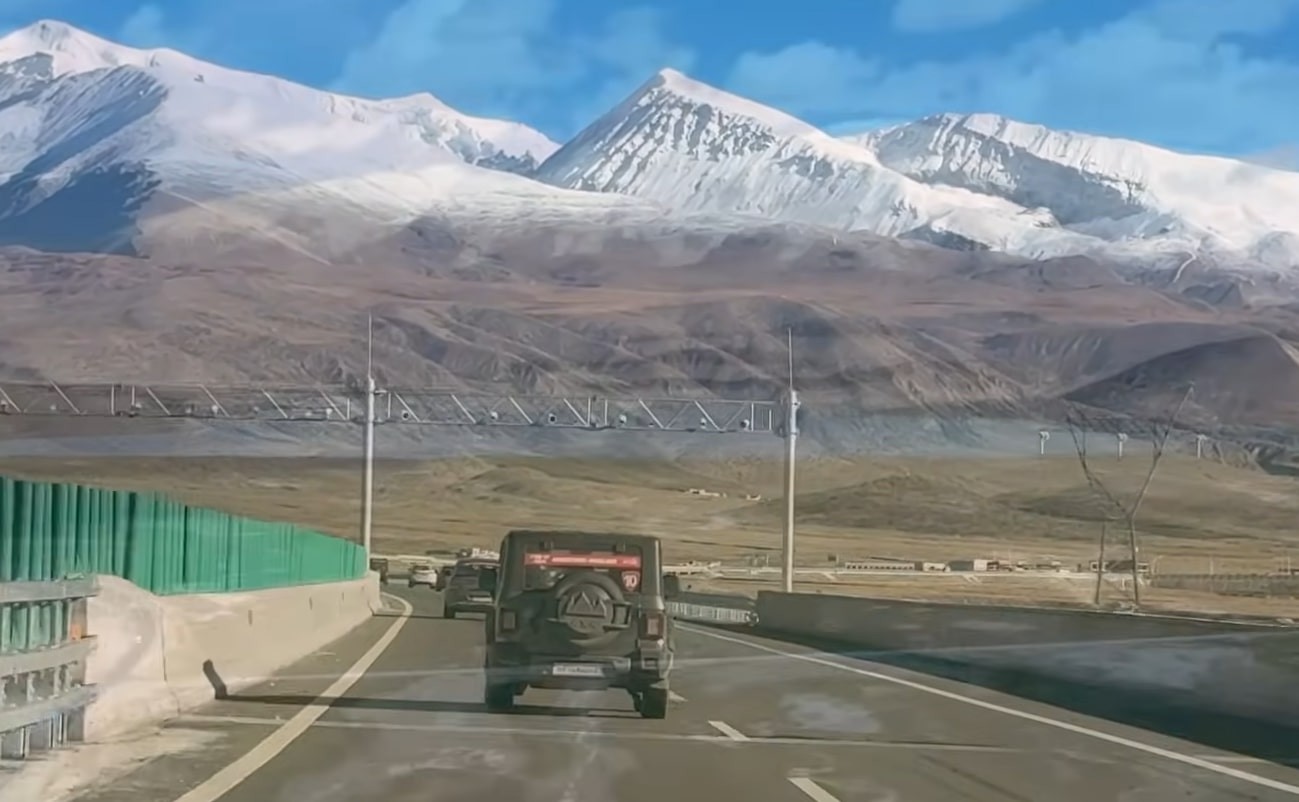
Crossing from Nepal into Tibet is more than a geographical transition—it's a journey between worlds. The lush greenery of Nepal's hills gives way to increasingly barren terrain as you ascend the Tibetan side. The air grows thinner and drier, the vegetation sparser, and the landscapes more austere. Yet this apparent barrenness holds its own stark beauty, with ochre and rust-colored mountains rising against impossibly blue skies.
The initial ascent takes you to Kyirong, a town that serves as the acclimatization stop just inside Tibet. At approximately 2,700 meters, Kyirong sits in a valley that's greener than most Tibetan landscapes, earning it the nickname "Valley of Happiness." This first night in Tibet is crucial for acclimatization, allowing your body to begin adjusting to higher elevations before continuing to the plateau proper. The town offers basic but comfortable accommodations and provides your first introduction to Tibetan food, culture, and the unique atmosphere of life on the plateau.
From Kyirong, the route climbs steadily toward Saga, a journey that reveals the true character of the Tibetan landscape. The road ascends through increasingly barren mountains, crossing several high passes where prayer flags snap in the constant wind. These passes, marked by cairns and flutter ing prayer flags, are considered sacred by Tibetans, who believe the wind carries the prayers and mantras printed on the flags across the land.
Saga, sitting at approximately 4,600 meters, represents your first experience of life at truly high altitude. This small town serves primarily as a transit point for travelers and traders, but it offers important insights into how Tibetans have adapted to life in one of Earth's most challenging environments. The buildings are low and thick-walled, designed to withstand fierce winds and extreme temperature variations. Solar panels are increasingly common, providing power where traditional infrastructure is difficult to maintain.
The landscape around Saga is quintessentially Tibetan—vast expanses of brown and ochre earth stretching to distant mountain ranges, with herds of yaks and sheep grazing on sparse vegetation. Nomadic camps, their black yak-hair tents staked against the wind, dot the landscape. These nomads maintain lifestyles that have changed little over centuries, moving with their herds according to seasonal grazing patterns. If you're fortunate, your journey might coincide with encounters with these nomadic families, offering glimpses into a way of life increasingly rare in our modern world.
The night in Saga is crucial for continued acclimatization. Many travelers experience some altitude effects here—mild headaches, slight breathlessness, or difficulty sleeping are common and normal. Drinking plenty of water, avoiding alcohol, and getting adequate rest help your body adjust. For those who have completed high-altitude treks in Nepal, such as the Everest Base Camp Trek or Annapurna Circuit Trek, these symptoms are often milder, demonstrating the value of proper preparation.
For many travelers, the Tibet Overland Tour includes a detour to visit Everest Base Camp from the Tibetan side, an experience that differs dramatically from the more famous approach from Nepal. The journey from Saga to Tingri takes you across high-altitude plains where the horizons seem endless and the sky dominates the landscape. Tingri, at 4,300 meters, offers one of the most spectacular mountain panoramas anywhere on Earth—on clear days, you can see five of the world's fourteen 8,000-meter peaks, including Everest, Cho Oyu, Makalu, and Lhotse.
The road from Tingri to Rongbuk Monastery and Everest Base Camp winds through increasingly barren terrain. This is the highest monastery in the world at 5,154 meters, positioned just eight kilometers from Everest Base Camp. The monastery, founded in 1902, has served as a base for numerous Everest expeditions and offers unobstructed views of Everest's massive north face. The sheer scale of the mountain is overwhelming—from base camp at 5,200 meters, the summit still rises another 3,648 meters above you.
Unlike the Nepal Everest Base Camp, which requires 12-14 days of trekking through Sherpa villages and Buddhist monasteries, the Tibetan base camp is accessible by vehicle. This accessibility allows travelers with limited time or physical constraints to stand before the world's highest peak. However, the high altitude means even the short walks from the parking area to the base camp proper can be challenging, leaving you breathless and emphasizing just how extreme this environment truly is.
The experience of standing at Everest Base Camp is profound and often emotional. The mountain's presence is overwhelming, dominating the entire northern horizon. The harsh environment—bitterly cold winds, thin air, and barren landscapes—provides visceral understanding of the challenges facing mountaineers who attempt to summit. Prayer flags flutter from every available point, their bright colors providing the only relief from the monochromatic landscape of rock, ice, and sky.
Returning from Everest, the route passes through Shegar (also known as New Tingri), a town notable for the dramatic ruins of Shegar Dzong (fortress) that crown the hill above. This fortress once protected an important position on the trade routes between Tibet, Nepal, and India. Though largely destroyed during the Cultural Revolution, the ruins remain impressive, their stone walls clinging to the rocky hilltop and offering sweeping views across the surrounding valleys.
Shegar represents the Tibet that existed before modern development—remote, isolated, and dependent on ancient trade routes for connection to the wider world. The town maintains much of its traditional character, with white-washed Tibetan houses lining narrow streets and prayer flags strung between buildings. Local markets offer insights into daily life on the plateau, with vendors selling everything from yak butter and cheese to traditional handicrafts and Chinese manufactured goods.
The journey through this region reveals how geography has shaped Tibetan culture. The harsh environment, extreme altitude, and isolation forced Tibetans to develop unique adaptations—from architectural styles that withstand fierce winds and temperature extremes to dietary practices based on available resources. Yak products—meat, milk, butter, cheese, and leather—remain central to Tibetan life, while barley (which grows at high altitudes) provides the basis for tsampa, the roasted barley flour that's a staple food throughout Tibet.
Shigatse, Tibet's second-largest city at 3,836 meters, represents a significant cultural and religious center. The city serves as the traditional seat of the Panchen Lama, the second-highest figure in Tibetan Buddhism after the Dalai Lama. The relationship between these two positions is complex and deeply meaningful within Tibetan Buddhism—the Panchen Lama plays a crucial role in recognizing the reincarnation of the Dalai Lama, and vice versa, creating a spiritual continuity that has sustained Tibetan Buddhism for centuries.
The centerpiece of Shigatse is undoubtedly Tashilhunpo Monastery, one of Tibet's most important religious institutions. Founded in 1447 by the First Dalai Lama, the monastery sprawls across the hillside above the city, its golden roofs gleaming in the intense sunlight. Unlike many Tibetan monasteries, Tashilhunpo escaped significant damage during the Cultural Revolution and remains remarkably intact, housing hundreds of monks who continue their religious studies and practices.
The monastery's most impressive feature is the Chapel of Maitreya, which contains a massive gilded statue of the Future Buddha standing 26.2 meters high. The statue, completed in 1914, required 279 kilograms of gold and countless other precious materials. The chapel's scale is breathtaking—the statue's face alone measures over 4 meters, and each fingernail is as large as a dinner plate. Standing before this colossal figure, surrounded by flickering butter lamps and drifting incense smoke, provides one of Tibet's most powerful spiritual experiences.
Beyond the Maitreya Chapel, Tashilhunpo contains numerous other temples, chapels, and assembly halls, each housing important Buddhist artifacts, scriptures, and statues. The tomb stupas of past Panchen Lamas, adorned with gold and precious jewels, demonstrate the reverence accorded to these high lamas. The monastery also contains an impressive library of Buddhist texts, including rare manuscripts that survived various historical upheavals.
Walking through Tashilhunpo, you'll encounter monks engaged in their daily routines—studying scriptures, debating Buddhist philosophy, performing rituals, and maintaining the monastery. Many monks are welcoming and curious about visitors, offering opportunities for meaningful cultural exchange. The monastery's festival calendar includes spectacular religious dances and ceremonies, and if your visit coincides with these events, you'll witness Tibetan Buddhism at its most vibrant and theatrical.
Beyond the monastery, Shigatse offers insights into contemporary Tibetan urban life. The city's markets blend traditional Tibetan goods with Chinese products, reflecting Tibet's complex cultural situation. Traditional sections sell yak butter, cheese, tsampa, and other Tibetan staples, alongside prayer wheels, religious artifacts, and traditional clothing. Tibetan merchants often wear traditional dress, particularly the distinctive chuba (long robe), and many still maintain customary hairstyles adorned with turquoise and coral ornaments.
The newer sections of Shigatse show increasing Chinese influence, with modern buildings, Chinese restaurants, and shops selling contemporary goods. This juxtaposition of ancient and modern, Tibetan and Chinese, characterizes much of contemporary Tibet. For travelers, it provides opportunities to witness how traditional cultures adapt to modernization while striving to maintain their unique identities.
The journey from Shigatse to Gyantse takes you through the fertile Nyang Chu Valley, one of Tibet's most productive agricultural regions. At 3,977 meters, Gyantse sits at a relatively moderate altitude (by Tibetan standards), allowing for more extensive agriculture than in higher regions. Barley fields, the primary crop, create patchworks of green and gold across the valley floor, particularly beautiful during harvest season in autumn.
Gyantse historically served as an important trading town on the routes connecting Lhasa with India and Nepal. This commercial importance funded the construction of impressive monasteries and civic buildings, many of which survive today. The town retains much of its traditional character, with narrow streets lined with white-washed Tibetan houses and the imposing Gyantse Dzong (fortress) crowning the hill above town.
Gyantse's primary attraction is the Pelkor Chode Monastery complex, which houses the famous Kumbum Stupa. This nine-story architectural marvel, built between 1427 and 1439, represents one of Tibet's most important artistic achievements. "Kumbum" translates as "100,000 images," and the stupa lives up to its name with 77 chapels containing thousands of murals and statues depicting Buddhist deities, mandalas, and historical scenes.
Each level of the Kumbum must be explored separately, with narrow stairs connecting the floors. As you ascend, you discover new chapels at every turn, each containing different artistic themes and styles. The murals, painted in vibrant mineral pigments, have retained their colors remarkably well over centuries. The overall effect is overwhelming—room after room of intricate Buddhist iconography, each image carrying layers of meaning within Tibetan Buddhist philosophy.
The Kumbum's architecture follows mandala principles, with its structure representing the Buddhist cosmos. The square base symbolizes earth, the circular midsection represents water, and the conical upper sections symbolize fire, air, and space. The entire structure functions as a three-dimensional teaching tool, guiding devotees through Buddhist cosmology and philosophy as they circumambulate and explore its many levels.
The Gyantse Dzong (fortress) offers panoramic views across the valley and provides insight into Tibet's martial history. Though much of the fortress was destroyed during the British invasion of Tibet in 1904, significant portions have been restored, allowing visitors to explore the defensive walls and imagine the fortress in its prime. The climb to the fortress summit, while challenging at altitude, rewards you with spectacular views across Gyantse and the surrounding Nyang Chu Valley.
From this vantage point, you can see how geography shaped Gyantse's importance—the town sits at a strategic junction where multiple valleys converge, making it a natural point for trade route consolidation. The fortress's commanding position allowed it to protect these valuable trade routes while also serving as an administrative center for the surrounding region.
The final leg of the overland journey takes you from Gyantse to Lhasa, passing through some of Tibet's most spectacular scenery. The route crosses the Kamba La Pass at 4,794 meters, which offers the first views of Yamdrok Lake, one of Tibet's four sacred lakes. The initial glimpse of Yamdrok is breathtaking—the turquoise water appears suddenly as you crest the pass, sprawling across the valley below in an irregular shape that resembles a scorpion when viewed on maps.
Yamdrok Lake (Yamdrok Tso in Tibetan) stretches for 72 kilometers at an altitude of 4,441 meters. Tibetans consider the lake sacred, believing it to be the transformation of a goddess. According to legend, if the lake dries up, Tibet will become uninhabitable. The lake's vivid turquoise color results from mineral content and the reflection of Tibet's intense blue sky. On clear days, the snow-capped peak of Mount Nojin Kangsang (7,191 meters) reflects perfectly in the calm waters.
The shoreline is dotted with small Tibetan villages where life continues much as it has for centuries. Black yak-hair tents house nomadic families during summer months, while permanent stone houses provide winter shelter. Herds of yaks and sheep graze on the sparse vegetation, tended by herders whose weathered faces tell stories of life at extreme altitude. The contrast between the vivid blue water and the brown, barren mountains creates a stark beauty that exemplifies the Tibetan landscape.
For photographers, Yamdrok Lake offers endless opportunities. The changing light transforms the scene throughout the day—morning light casts golden hues across the mountains, midday sun intensifies the lake's turquoise color, and evening light adds warmth to the entire landscape. Prayer flags flutter at the lakeside, adding splashes of color and spiritual significance to this already sacred place.
Your arrival in Lhasa marks the culmination of your overland journey. At 3,650 meters, Lhasa sits lower than much of the route you've traveled, making the air feel almost thick by comparison. The city combines ancient spiritual sites with modern development, creating a fascinating urban landscape where monks in traditional robes navigate streets alongside Chinese business people and Tibetan traders.
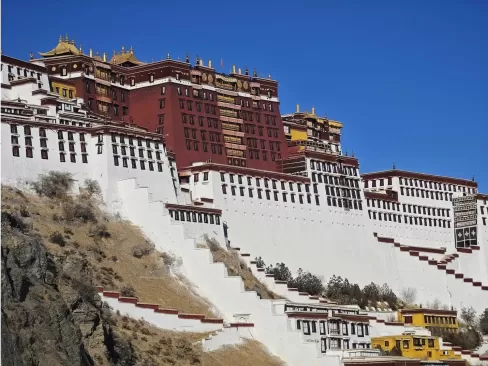
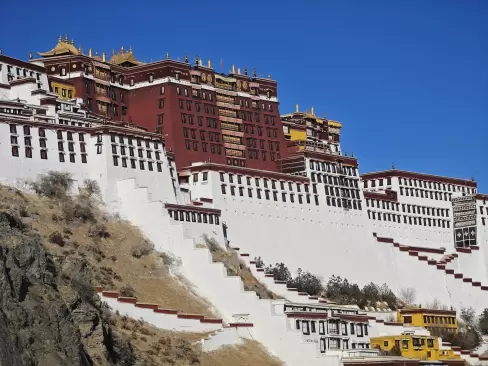
Dominating Lhasa's skyline, the Potala Palace represents Tibet's most iconic structure. This 13-story palace rises 117 meters above the valley floor, its white walls and golden roofs visible from throughout the city. Built primarily in the 17th century, though incorporating structures dating to the 7th century, the palace served as the winter residence of the Dalai Lamas and the seat of Tibetan government until 1959.
The palace contains over 1,000 rooms, including numerous chapels, living quarters, assembly halls, and libraries. The complex is divided into the White Palace (administrative and residential areas) and the Red Palace (dedicated to religious study and prayer). The climb to the palace entrance involves ascending numerous steps—a challenging climb at altitude that prepares visitors for the spiritual journey within.
Inside, the palace overwhelms with its artistic richness. Chapels contain thousands of statues, ranging from small clay figures to massive gilded representations of Buddha and various bodhisattvas. The most sacred areas include the tomb stupas of past Dalai Lamas, adorned with gold and precious stones. The Fifth Dalai Lama's stupa alone contains 3,721 kilograms of gold. The palace's library houses thousands of Buddhist texts, including rare manuscripts that survived various historical upheavals.
For travelers who have journeyed overland through Tibet, visiting the Potala Palace provides powerful context for everything you've witnessed. The palace represents the culmination of Tibetan Buddhist art, architecture, and spirituality—themes you've encountered throughout your journey in remote monasteries, village temples, and roadside shrines.
While the Potala Palace impresses with its scale and grandeur, the Jokhang Temple moves visitors with its profound spirituality. Built in the 7th century during King Songtsen Gampo's reign, the Jokhang houses the most sacred object in Tibetan Buddhism—a golden statue of the young Buddha (Jowo Rinpoche) brought to Tibet by Princess Wencheng from China over 1,300 years ago.
The atmosphere at Jokhang is intensely spiritual. Thousands of pilgrims visit daily, prostrating themselves repeatedly before the temple's entrance. Inside, the air is thick with yak butter smoke from thousands of flickering lamps, and the scent of juniper incense permeates everything. Pilgrims shuffle through the dark chapels, offering prayers and making offerings, their devotion creating an energy that affects even non-religious visitors.
The Barkhor Circuit, the pilgrimage path encircling the Jokhang, functions as both religious site and commercial hub. Pilgrims walk clockwise around the temple, spinning prayer wheels and murmuring mantras, while vendors sell everything from prayer flags and religious artifacts to traditional handicrafts and tourist souvenirs. This combination of devotion and commerce has characterized the Barkhor for centuries, creating one of Tibet's most authentic cultural experiences.
Lhasa's two great monasteries, Sera and Drepung, provide complementary experiences to the Potala and Jokhang. Sera Monastery, founded in 1419, is famous for its monk debates held daily in the monastery courtyard. These debates represent a core teaching method in Tibetan Buddhism, with senior monks posing questions to junior students about Buddhist philosophy, logic, and doctrine. The debates are theatrical and energetic, with dramatic gestures and hand clapping emphasizing points in the arguments.
Drepung Monastery, perched on Mount Gephel's slopes, was once the world's largest monastery, housing up to 10,000 monks at its peak. The monastery complex resembles a small town, with winding alleyways connecting various colleges, temples, and residential quarters. The main assembly hall can accommodate thousands of monks during important ceremonies, and the monastery's collection of Buddhist art and manuscripts represents centuries of accumulated knowledge and devotion.
Both monasteries remain active religious institutions, with hundreds of monks continuing their studies and practices. Visiting these sites after your overland journey provides deeper understanding of the remote monasteries you've encountered along the way. The philosophical debates, religious ceremonies, and daily monastic routines visible at Sera and Drepung represent the traditions maintained in small gompa (monasteries) throughout the Tibetan plateau.
The overland journey through Tibet provides unparalleled opportunities to understand Tibetan culture in ways impossible through brief fly-in visits. As you travel from the border to Lhasa, you pass through numerous small towns and villages where traditional lifestyles continue largely unchanged. These encounters reveal how Tibetans have adapted to one of Earth's most challenging environments while maintaining strong cultural and spiritual identities.
Throughout your journey, you'll encounter nomadic herders maintaining lifestyles that have sustained Tibetans for centuries. These nomads (called "drokpa" in Tibetan) follow seasonal patterns, moving their yaks, sheep, and goats to high summer pastures and lower winter grounds. Their traditional black yak-hair tents, though increasingly supplemented or replaced by more modern structures, remain iconic symbols of nomadic life.
The nomadic lifestyle reflects deep adaptation to Tibet's harsh environment. Yaks provide virtually everything needed for survival—meat for food, milk for butter and cheese, hair for tent material and rope, hide for leather, and dung for fuel (essential in a region with little wood). This complete utilization of available resources demonstrates the ingenuity required to thrive at extreme altitude.
Encounters with nomadic families offer profound cultural insights. Despite their remote lifestyles, many nomads are welcoming to travelers, offering yak butter tea and sharing glimpses of their daily routines. These interactions reveal the warmth and hospitality that characterize Tibetan culture, even in the harshest environments. For travelers interested in experiencing nomadic cultures, Nepal also offers opportunities with treks like the Tamang Heritage Trail, which visits remote Tamang communities maintaining traditional lifestyles in Nepal's high valleys.
Perhaps the most striking aspect of Tibetan culture is the depth of Buddhist devotion visible at every level of society. From nomad camps to urban centers, prayer flags flutter constantly, prayer wheels spin endlessly, and mantras are murmured by young and old alike. This omnipresent spirituality isn't merely ritualistic—it represents a complete worldview shaping how Tibetans understand existence, mortality, and their place in the cosmos.
The practice of kora (circumambulation) exemplifies this integration of spirituality into daily life. Pilgrims circumambulate holy sites—temples, stupas, sacred mountains, even entire lakes—walking clockwise while spinning prayer wheels and reciting mantras. These circuits can take hours, days, or even months, yet participants approach them with joy and devotion rather than as burdensome obligations.
Prostration represents an even more physically demanding form of devotion. Full-body prostrations require lying completely flat on the ground, then standing, taking a step forward, and prostrating again. Some devoted pilgrims prostrate the entire distance from their home villages to Lhasa—journeys that can take months or years. Witnessing this profound devotion often moves travelers deeply, regardless of their own religious backgrounds.
The overland journey provides opportunities to witness traditional Tibetan crafts that have sustained local economies for centuries. In Gyantse and other towns, you might see artisans creating traditional items using techniques passed down through generations. Thangka painting, in particular, represents one of Tibet's most refined art forms. These religious scroll paintings follow strict iconographic rules regarding proportions, colors, and symbolism, requiring years of training to master.
Traditional Tibetan jewelry, often incorporating turquoise, coral, and silver, serves both decorative and protective functions. Many pieces contain religious symbolism or are believed to offer spiritual protection to the wearer. The distinctive Tibetan silver work, with its intricate patterns and meaningful designs, makes unique souvenirs while supporting traditional craftspeople.
Tibetan carpets, traditionally woven from yak wool or sheep's wool, feature distinctive designs and vibrant colors. These carpets once served primarily functional purposes—providing insulation against cold floors and decoration in homes and monasteries. Today, carpet weaving sustains important cottage industries, with many families maintaining looms in their homes and selling finished products in local markets.
The Tibet Overland Tour requires more extensive permits than standard Tibet tours originating in Lhasa. All foreign visitors must obtain a Tibet Travel Permit (also called Tibet Entry Permit), but overland travelers also need an Alien's Travel Permit for areas outside Lhasa and a Military Permit for border regions. If your route includes Everest Base Camp, additional permits are required for that restricted area.
Individual independent travel is not permitted in Tibet—you must book through a registered tour operator who arranges your permits, guide, private vehicle, and accommodations. The permit application process requires submitting your passport and Chinese visa (or visa application) at least 20-30 days before your planned arrival. Regulations can change with little notice, so working with experienced operators like Explore Holiday Nepal is essential.
The overland route through Tibet involves sustained time at extreme altitude, often exceeding 4,500 meters for several days. While the gradual ascent from Nepal provides better acclimatization than flying directly to Lhasa, altitude sickness remains a serious concern. Proper physical preparation and realistic expectations about your capabilities are essential.
Many travelers prepare by completing high-altitude treks in Nepal before their Tibet journey. The Everest Base Camp Trek, Annapurna Circuit Trek, Manaslu Circuit Trek, or Three Passes Trek all provide excellent altitude training while showcasing Nepal's spectacular mountain scenery. These treks allow you to assess your personal altitude tolerance and build confidence in high-altitude environments.
Regardless of preparation, some altitude effects are almost inevitable. Mild headaches, slight breathlessness during exertion, and difficulty sleeping are common and usually manageable. However, severe symptoms—including extreme fatigue, confusion, severe headache unrelieved by medication, or difficulty breathing at rest—require immediate attention and possible descent.
Medications like acetazolamide (Diamox) can help with acclimatization, but should be prescribed by a doctor familiar with altitude medicine. Staying well hydrated, avoiding alcohol, eating light meals, and getting adequate rest all support acclimatization. Many travelers find that having previously experienced high altitude helps them recognize and respond appropriately to altitude symptoms.
The Tibet Overland Tour is possible from April through October, with each season offering distinct advantages and challenges. Spring (April-May) brings warming temperatures and generally clear skies, though some high passes may still have snow. The landscape remains brown and arid, but mountain views are typically excellent. Tourist numbers are moderate, and you'll have more authentic experiences than during peak season.
Summer (June-August) represents peak season, with the warmest temperatures and most comfortable conditions. However, summer is also the rainy season (though Tibet receives less rainfall than surrounding regions). Afternoon clouds and occasional showers can limit visibility, particularly for mountain views. Despite these drawbacks, summer's mild temperatures make high-altitude travel more comfortable, especially for overnight stays at places like Everest Base Camp.
Autumn (September-October) is arguably the best time for the overland tour. Temperatures remain comfortable, rainfall decreases significantly, and skies are remarkably clear, providing spectacular mountain views. The harvest season adds golden colors to barley fields around Gyantse and Shigatse. This is the second busiest tourist season, so booking well in advance is essential.
Winter travel (November-March) is possible but challenging. Temperatures are extremely cold, especially at night and at high elevations. However, winter sees few tourists, offering more authentic experiences. Some high passes may close temporarily due to snow, potentially affecting itineraries. Winter travelers need appropriate cold-weather gear but are rewarded with crystal-clear skies, pristine mountain views, and the opportunity to witness unique winter festivals.
Traveling through Tibet requires heightened cultural sensitivity and awareness. Tibetan Buddhism and traditional culture infuse every aspect of life, and respectful behavior is essential. Always walk clockwise around monasteries, stupas, and prayer wheels, following the direction of Buddhist circumambulation. Never touch anyone's head, as it's considered the most sacred part of the body. Avoid pointing your feet at people, religious objects, or altars.
Photography etiquette is particularly important. Many monasteries prohibit photography entirely, while others allow it for additional fees. Always ask permission before photographing people, and respect refusals graciously. Never photograph military installations, police stations, or government buildings. Political sensitivity surrounding Tibet means that conversations about the Dalai Lama, Tibetan independence, or political issues should be avoided, particularly in public or when conversing with Tibetans who might face consequences for such discussions.
Environmental responsibility is equally crucial. The Tibetan Plateau's high-altitude ecosystem is extremely fragile and vulnerable to degradation. Carry out all trash, minimize plastic use, and respect wildlife and vegetation. The increasing number of tourists impacts Tibet's environment and culture, so traveling responsibly helps ensure these treasures remain available for future generations.
Supporting local businesses and craftspeople ensures your tourism dollars benefit Tibetan communities. Purchase handicrafts directly from artisans when possible, eat at locally-owned restaurants, and consider bringing items like school supplies or books to donate to remote communities. These small actions contribute positively to local economies while fostering cultural exchange.
Planning and executing a successful Tibet Overland Tour requires extensive experience, detailed knowledge of regulations, and strong relationships with local partners. Explore Holiday Nepal brings years of expertise organizing Tibet tours, combined with deep understanding of Himalayan travel gained from operating treks throughout Nepal's mountain regions.
Our comprehensive approach handles every detail of your journey—from securing all necessary permits to arranging comfortable accommodations, experienced guides, and private transportation. We understand that successful Tibet travel depends on proper acclimatization, cultural preparation, and flexibility to adapt to changing conditions. Our itineraries build in appropriate rest days and maintain realistic daily schedules that prioritize your safety and comfort.
Our guides possess extensive knowledge of Tibetan culture, Buddhism, history, and geography. They're not merely tour leaders but cultural interpreters who enrich your experience with insights that independent research cannot provide. Many of our guides have traveled these routes dozens of times, developing relationships with local communities that provide authentic cultural encounters impossible for independent travelers.
We're committed to sustainable and responsible tourism that preserves Tibet's unique environment and culture while ensuring your visit benefits local communities. Our tours include visits to lesser-known sites alongside major highlights, providing balanced perspectives on Tibetan life. We maintain small group sizes to minimize environmental impact and enhance individual experiences.
Many of our clients combine Tibet tours with Nepal trekking adventures, creating comprehensive Himalayan experiences. Whether you're interested in challenging expeditions like the Everest Base Camp with Gokyo Lakes Trek or culturally immersive experiences like the Upper Mustang Trek, we design itineraries that integrate Tibet and Nepal seamlessly. Our experience across both destinations ensures smooth logistics and optimal timing for combined adventures.
The Tibet Overland Tour represents more than a vacation—it's a pilgrimage across one of Earth's most extraordinary landscapes, a cultural immersion into one of humanity's most spiritually rich civilizations, and an adventure that challenges and transforms in equal measure. From the moment you cross from Nepal's green hills into Tibet's stark highlands, every mile reveals new wonders—remote monasteries clinging to mountainsides, turquoise lakes reflecting snow-capped peaks, nomadic families maintaining ancient traditions, and spiritual devotion that permeates every aspect of life.
This journey isn't for everyone. The high altitudes, basic accommodations in remote areas, long driving days, and cultural unfamiliarity present real challenges. But for travelers willing to embrace these challenges, the rewards exceed imagination. You'll stand before Everest from its seldom-seen northern approach, walk through monasteries where monks have studied for centuries, witness devotion so profound it reshapes your understanding of faith, and traverse landscapes so beautiful and barren they seem almost extraterrestrial.
The overland journey provides something increasingly rare in modern travel—genuine adventure through regions where tourism remains secondary to traditional ways of life. Unlike destinations where centuries of tourism have polished away authenticity, Tibet remains raw, real, and profoundly itself. The Tibetan people you'll encounter maintain identities shaped by centuries of cultural continuity, spiritual devotion, and adaptation to extreme environments.
Your adventure awaits. The prayer flags are fluttering, the monasteries are chanting, the mountains are calling, and the vast Tibetan Plateau stretches before you—endless, mysterious, and utterly unforgettable. Are you ready to answer Tibet's call?
For more information about combining your Tibet Overland Tour with trekking adventures in Nepal, explore our complete range of trekking packages designed to create the ultimate Himalayan experience. Whether you choose the classic Langtang Valley Trek, the remote Kanchenjunga Base Camp Trek, or shorter options like the Mardi Himal Trek, we offer adventures for every skill level and interest, all designed to prepare you physically and spiritually for the wonders that await in Tibet.
Your Start Date is the day you land in Nepal, and your End Date is when you fly home.
If the set Tibet Overland Tour group dates don’t suit your schedule, we can offer alternative dates upon request.
The Tibet Overland Tour was a fantastic way to explore this mystical region. The drive through Tibet’s vast landscapes was incredibly scenic, and we visited several iconic monasteries and landmarks. Explore Holiday Nepal made everything seamless, ensuring a comfortable and unforgettable journey.
The Tibet Overland Tour offered by Explore Holiday Treks is a guided journey through some of the most iconic and culturally rich destinations in Tibet. This overland adventure will take you through Lhatse, Shigatse, Gyantse, Lhasa, and Shegar, allowing you to experience the mesmerizing landscapes, Buddhist heritage, and centuries-old monasteries of Tibet. Along the way, you’ll explore landmarks such as the Potala Palace, Jokhang Temple, Yamdrok Lake, and many more, providing you with an authentic Tibetan experience.
This overland tour covers some of the most beautiful and significant destinations in Tibet. Some of the key highlights include:
Lhasa: The capital city, home to the iconic Potala Palace and Jokhang Temple.
Shigatse: Tibet’s second-largest city, known for the Tashilhunpo Monastery and its stunning surroundings.
Gyantse: A historical town with the Pelkor Chode Monastery and the Gyantse Dzong fortress.
Lhatse: A small town offering views of the Himalayan ranges and Tibetan culture.
Shegar: A remote area surrounded by majestic mountains, perfect for travelers looking for serenity and breathtaking views.
Tibet is located at high altitudes, so travelers should be in good health and prepared for the altitude. While the tour does not require extensive physical exertion, it is recommended that you be in general good health to prevent altitude sickness. Our team will advise you on how to acclimatize properly, and we suggest taking it easy for the first few days to adjust to the altitude. If you have any concerns about your health or fitness, we recommend consulting with your doctor before embarking on the tour.
The duration of the Tibet Overland Tour typically lasts 8-11 days, depending on the specific itinerary you choose. This allows enough time for acclimatization, sightseeing, and exploration of the major cities and monasteries. However, you can discuss any customized duration with Explore Holiday Treks if you wish to adjust the trip according to your schedule.
Altitude sickness is a concern in Tibet due to its high elevation, particularly in cities like Lhasa and Gyantse. To minimize the effects, we recommend traveling slowly, staying hydrated, and avoiding strenuous activities during the first few days to allow your body to acclimatize. Our team at Explore Holiday Treks will assist you by organizing a gradual itinerary with proper acclimatization periods. If you start feeling unwell due to the altitude, please inform your guide immediately.
Explore Holiday Treks is a trusted and experienced tour operator with a deep knowledge of Tibet and its unique culture. Our expert guides, well-planned itineraries, and commitment to safety ensure that you have a memorable and enriching experience. We take care of all logistics, including permits, transportation, and accommodation, so you can focus on enjoying the stunning landscapes and cultural experiences Tibet has to offer. Our personalized approach to each tour ensures that every traveler’s needs are met with care and attention.
Booking your Tibet Overland Tour is simple with Explore Holiday Treks. You can visit our website or contact us directly through email or phone to inquire about the tour. We’ll assist you with creating a customized itinerary based on your preferences. Once you finalize the details, we will take care of all the necessary arrangements, including permits, transportation, and accommodation. After confirmation, we’ll handle everything so that you can enjoy a stress-free journey to Tibet.
Yes, traveling to Tibet requires a Tibet Travel Permit, which is distinct from a standard Chinese visa. As part of your booking with Explore Holiday Treks, we will help arrange the necessary permits required for your Tibet Overland Tour. These permits are a prerequisite for entering Tibet and must be obtained in advance. A valid Chinese visa is also required, which we can assist in procuring if needed.
The best time to take the Tibet Overland Tour is during the spring (April to June) and autumn (September to November) seasons. During these months, the weather is relatively mild, and the skies are clear, offering the best views of the Tibetan landscape. The winter months (December to February) are cold but peaceful, and summer (July to August) brings monsoon rains, which can make travel a bit challenging. However, the tour is available year-round, and our team will help you prepare for any seasonal variations.
Explore Holiday Treks provides comfortable accommodations throughout the Tibet Overland Tour, with options ranging from 3-star hotels to more basic guesthouses, depending on your preferences and the available facilities in each location. In Lhasa and Shigatse, you will stay in more modern and comfortable hotels, while in smaller towns like Lhatse and Gyantse, accommodations may be simpler but are chosen for their cleanliness and hospitality. We ensure that all accommodations meet international standards for safety and comfort.
Tibet is a generally safe destination for travelers. However, the high-altitude environment and remote areas require travelers to be mindful of their health. Explore Holiday Treks ensures your safety by providing professional guides who are well-versed in handling the altitude and guiding you through Tibet’s terrain. We also ensure that transportation is reliable, and your accommodation is secure. You will also be accompanied by an experienced guide throughout the journey, making the trip as smooth and safe as possible.
Packing for Tibet requires a few special considerations due to its high altitude and varied climate. Essential items to pack include:
Warm clothing, even during the summer months (temperatures can drop significantly, especially at night).
Comfortable shoes for walking and light trekking.
Sunglasses, sunscreen, and lip balm to protect against the strong UV rays at high altitude.
A camera to capture the incredible landscapes and cultural sites.
A travel adapter for charging electronics (Tibet uses Chinese-style plugs).
Personal medications and any required medical supplies.
A good quality water bottle to stay hydrated.


 (34)
(34) 