 Drive-In, Fly-Out Tibet Tour with Everest Base Camp: The Ultimate Overland Adventure
Imagine driving through the world's highest plateau, where ancient monasteries cling to mountainsides, prayer flags dance in the thin air, and the mighty Himalayas dominate every horizon. The Drive-In, Fly-Out Tibet Tour with Everest Base Camp offers exactly this—an extraordinary overland journey that takes you deep into the heart of Tibet before bringing you face-to-face with Mount Everest, the world's highest peak. This carefully designed adventure combines the romance of road travel with the convenience of a scenic mountain flight, creating an experience that appeals to cultural enthusiasts, adventure seekers, and photography lovers alike.
Unlike the fly-in approach, driving into Tibet allows you to witness the gradual transformation of landscapes, stop at hidden gems along the way, and truly absorb the vastness of the Tibetan plateau. You'll experience acclimatization naturally as you ascend through valleys and over mountain passes, interact with local communities in ways that rushed itineraries don't allow, and develop a deeper connection with this mystical land. The return flight to Kathmandu then offers a spectacular aerial perspective of the same mountains you've been traveling through, providing a perfect bookend to your journey.
The drive-in, fly-out format represents the ideal balance between immersive travel and practical efficiency. By entering Tibet overland from Nepal, you'll experience one of the world's most dramatic road journeys—the Friendship Highway that connects Kathmandu with Lhasa. This historic route has facilitated trade, pilgrimage, and cultural exchange for centuries, and traveling it allows you to follow in the footsteps of countless merchants, monks, and adventurers who have made this epic crossing.
Starting your journey by road means you'll climb gradually from Kathmandu's 1,400 meters to the heights of the Tibetan plateau over several days. This gradual ascent is medically superior for acclimatization compared to flying directly to Lhasa's 3,650-meter elevation. Your body adjusts to decreasing oxygen levels naturally, reducing the risk of altitude sickness—a crucial consideration when you'll eventually reach Everest Base Camp at over 5,000 meters.
The overland approach also provides flexibility that flights cannot match. Your journey can pause at viewpoints where the Himalayas spread across the horizon in breathtaking panoramas, stop at roadside villages where daily life unfolds unchanged for generations, and visit lesser-known monasteries and cultural sites that aren't on typical tourist routes. These unplanned moments often become the most memorable—sharing butter tea with a nomad family, watching yaks graze against a backdrop of snow-covered peaks, or stumbling upon a local festival in a remote village.
Similar to how trekkers appreciate the journey as much as the destination on routes like the Everest Base Camp Trek or Annapurna Circuit Trek, the drive through Tibet offers rewards at every turn of the road. The fly-out option then saves valuable time and energy for the return journey while treating you to one of the world's most spectacular mountain flights, soaring over the peaks you've been admiring from ground level.
Your adventure begins in Kathmandu, where the organized chaos of Nepal's capital provides a vibrant introduction to Himalayan culture. The drive north from Kathmandu follows the Arniko Highway, a winding mountain road that climbs out of the Kathmandu Valley through terraced hillsides and traditional Newari villages. The landscape here is lush and green, with subtropical vegetation and rice paddies creating a patchwork across the hillsides.
As you ascend, the road follows the Bhote Koshi River, which has carved a dramatic gorge through the mountains. The river, fed by glaciers high in the Himalayas, rushes turbulently below as the road winds along cliffsides offering increasingly spectacular views. Small settlements cling to seemingly impossible slopes, and suspension bridges span the gorge at dizzying heights.
The journey to the Tibet-Nepal border crossing at Gyirong (Kerung) takes you through diverse ecological zones. You'll pass through rhododendron forests that explode with color during spring, climb through alpine meadows where shepherds tend their flocks, and eventually reach the high-altitude border area where vegetation becomes sparse and the landscape takes on the stark beauty characteristic of the Trans-Himalayan zone.
The border crossing itself is an experience—completing immigration formalities, exchanging currencies, and stepping from one country into another in this remote mountain setting. Once in Tibet, the landscape changes dramatically. The greener, more humid Nepali side gives way to the arid, windswept character of the Tibetan plateau, where vast expanses of grassland stretch toward distant snow-covered peaks.
From the border, the journey continues across some of the most remote and spectacular landscapes on Earth. The Tibetan plateau, often called "the roof of the world," sits at an average elevation of over 4,000 meters. This vast elevated region is characterized by wide open spaces, dramatic mountain ranges, pristine lakes, and a unique ecosystem adapted to extreme altitude and harsh conditions.
The road passes through Tingri, a small town that serves as a gateway to the Everest region. From here, the Himalayas dominate the southern horizon—a wall of snow-covered giants that includes Cho Oyu (8,188m), Everest (8,849m), Lhotse (8,516m), and Makalu (8,485m). On clear days, the view is simply staggering, with four of the world's fourteen eight-thousand-meter peaks visible simultaneously.
Traditional Tibetan villages dot the landscape, their whitewashed houses with distinctive black borders and colorful prayer flags creating photogenic scenes against the mountain backdrop. Nomadic herders move with their yaks and sheep across vast grasslands, living in black yak-hair tents as their ancestors have for centuries. The sight of these nomads, the sound of yak bells echoing across valleys, and the fluttering of countless prayer flags create an atmosphere that feels both timeless and deeply spiritual.
The route takes you over several high mountain passes, each offering spectacular viewpoints. The Gyatso La (5,220m) provides perhaps the most famous view—a comprehensive panorama of the Himalayan chain that includes Everest. Standing at these passes, decorated with prayer flags that carry blessings on the wind, you'll feel the profound spirituality that Tibetans associate with these high places considered closer to the heavens.
These landscapes share similarities with Nepal's remote trekking regions like the Upper Mustang Trek and Nar Phu Valley Trek, where Tibetan Buddhist culture flourishes in high-altitude desert environments. However, the scale and emptiness of the Tibetan plateau exceeds anything found in Nepal, creating a sense of space and isolation that's truly unique.
After days of spectacular mountain scenery, arriving in Lhasa feels like discovering a hidden treasure. The city sits in a relatively fertile valley along the Kyichu River, providing a more sheltered environment than the exposed plateau you've been crossing. Lhasa's elevation of 3,650 meters is still significant, but by this point in your journey, your body will have acclimatized considerably during the gradual overland ascent.
Lhasa captivates visitors with its unique blend of ancient and modern, sacred and mundane. The old town preserves traditional Tibetan architecture and way of life, while newer districts reflect Chinese influence and development. But it's the spiritual sites that truly define Lhasa and draw travelers from around the world.
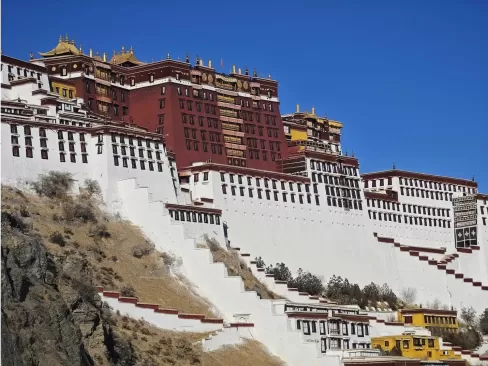
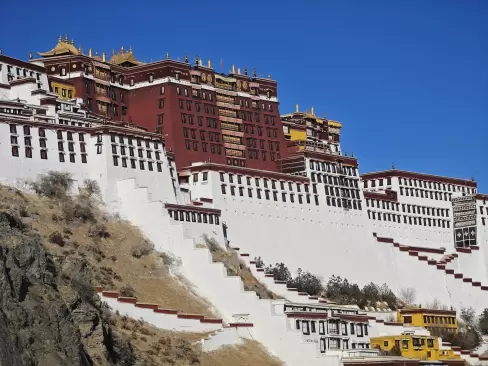
Potala Palace towers over the city, a thirteen-story architectural marvel that served as the Dalai Lama's winter palace for centuries. This UNESCO World Heritage Site contains over 1,000 rooms filled with sacred chapels, intricate murals, gold statues, and priceless artifacts. Climbing through its halls provides both a physical workout (the altitude makes the stairs challenging) and a journey through Tibetan history, religion, and artistry. Each chamber tells stories of devotion, political power, and the unique Tibetan synthesis of Buddhist philosophy with indigenous traditions.
The Jokhang Temple sits at the spiritual center of Tibetan Buddhism. Built in the 7th century, this temple houses the most revered object in Tibet—the Jowo Rinpoche statue of Buddha as a young prince. Pilgrims travel from across the Tibetan plateau to prostrate before this sacred image, and the devotion visible in their faces and actions is deeply moving. The temple's architecture blends Tibetan, Nepali, Chinese, and Indian influences, reflecting the cross-cultural exchanges that shaped Tibetan Buddhism.
Surrounding Jokhang Temple, the Barkhor circuit thrums with life. This circular street serves simultaneously as a pilgrimage route (which devotees circumambulate clockwise while spinning prayer wheels and chanting mantras) and as Lhasa's traditional marketplace. Here you'll find everything from yak butter and tsampa (roasted barley flour) to prayer flags, singing bowls, traditional medicines, and tourist souvenirs. The atmosphere is electric—a fascinating blend of commerce and devotion where the sacred and everyday coexist seamlessly.
Lhasa's great monasteries offer windows into Tibetan Buddhist scholarship and monastic life. Sera Monastery, famous for its afternoon debate sessions, provides one of the most engaging experiences in Tibet. Watching monks engage in animated philosophical discussions—punctuated by dramatic hand claps, gestures, and even laughter—makes abstract Buddhist philosophy come alive. The debates follow strict logical formats developed over centuries, and even without understanding Tibetan, the intellectual vigor and enthusiasm of the participants is evident and captivating.
Drepung Monastery sprawls across the hillside west of Lhasa. Once the world's largest monastery housing up to 10,000 monks, it functioned as a monastic city with its own economy, administration, and hierarchies. Although the monastic population is much smaller today, exploring Drepung's maze of chapels, assembly halls, living quarters, and courtyards gives visitors a sense of the scale and importance of monastic institutions in traditional Tibetan society.
These spiritual centers share philosophical connections with Buddhist sites you might visit on treks like the Everest Base Camp Trek, where monasteries like Tengboche serve Sherpa communities, or the Langtang Valley Trek, where Tamang Buddhist traditions flourish. However, Lhasa's monasteries represent the intellectual and institutional heart of Tibetan Buddhism, making them essential destinations for anyone interested in understanding this rich spiritual tradition.
Spending several days in Lhasa serves multiple purposes. Culturally, you need time to explore the city's numerous sacred sites, wander through the old town's atmospheric alleyways, visit local markets, and absorb the unique atmosphere of this high-altitude capital. Physically, these days allow crucial acclimatization before heading to even higher elevations at Everest Base Camp.
The gradual approach to altitude that began with your overland entry continues in Lhasa. By combining proper hydration, moderate activity levels, and adequate rest, your body produces more red blood cells to carry oxygen more efficiently. This physiological adaptation takes time but is essential for safely visiting extreme altitudes. The drive-in approach gives you this time naturally, making it medically superior to flying directly to Lhasa and then rushing to Everest Base Camp.
During your Lhasa stay, take opportunities to interact with local Tibetans. Share butter tea in a traditional tea house, watch artisans creating thangka paintings or metalwork using techniques unchanged for centuries, or simply observe daily life in the Barkhor area. These cultural encounters add depth to your journey, transforming it from mere sightseeing into genuine cross-cultural exchange.
From Lhasa, the route to Everest Base Camp takes you westward across the Tibetan plateau through historically and culturally significant regions. The journey passes through Gyantse, home to the stunning Kumbum Stupa with its nine stories containing 108 chapels adorned with thousands of Buddhist murals and statues. This architectural masterpiece represents Buddhist cosmology in three-dimensional form, and climbing through its levels provides an unparalleled education in Tibetan religious art.
Continuing west, you'll reach Shigatse, Tibet's second-largest city and traditional seat of the Panchen Lama. Tashilhunpo Monastery dominates Shigatse, its golden roofs visible from throughout the city. Founded in 1447, this massive monastic complex houses one of the world's largest gilded statues—a 26-meter-high representation of Maitreya Buddha (the future Buddha). The amount of gold used in this statue's creation is staggering, reflecting both the wealth that monastic institutions once commanded and the depth of devotion that motivated such projects.
Between major destinations, the journey reveals the raw beauty of the Tibetan landscape. You'll cross mountain passes decorated with thousands of colorful prayer flags, their prayers carried on the wind to the four directions. Sacred lakes like Yamdrok Tso shimmer impossibly turquoise against the brown and gold tones of the surrounding mountains—these lakes are considered sacred in Tibetan tradition, believed to be transformations of goddesses who protect the land.
The route takes you past glaciers descending from high peaks, through valleys where nomadic herders maintain traditional lifestyles, and across vast expanses where wildlife including Tibetan antelope, wild yaks, and occasional wolves still roam freely. This is landscape on a scale that dwarfs human presence, where nature remains powerful and largely unsubdued.
From Shigatse, the final leg to Everest Base Camp is both the longest drive and the most spectacular. The route covers approximately 350 kilometers, climbing gradually toward the Himalayan range that forms Tibet's southern boundary. As you travel, Everest and its neighboring giants grow increasingly massive on the horizon, their scale becoming more apparent with each passing kilometer.
The road conditions range from well-maintained paved sections to rougher stretches, particularly as you approach Everest. This is part of the adventure—bouncing along in a sturdy 4WD vehicle, watching the landscape grow increasingly barren and dramatic, feeling the air grow thinner. Small settlements appear occasionally, their simple stone houses and fluttering prayer flags the only signs of human habitation in this harsh environment.
Rongbuk Monastery at 5,000 meters holds the distinction of being the world's highest monastery. Positioned directly facing Everest's north face, it offers an unobstructed view of the mountain that has inspired countless climbers and pilgrims. The monastery has served both functions—as a spiritual outpost and as a base for mountaineering expeditions. Standing here, you're looking at Everest from a perspective very different from the Nepali side familiar from the Everest Base Camp Trek or Gokyo Lakes Trek.
From Rongbuk, it's a short drive to Everest Base Camp on the Tibetan side (approximately 5,200 meters). The camp sits on a barren, rocky plain with Everest's north face rising like a gigantic wall of rock and ice before you. The perspective here is more direct and dramatic than from Nepal's base camp—you're facing the mountain rather than looking up at it from the side. The north face represents one of mountaineering's ultimate challenges, and numerous expeditions can often be seen during the spring climbing season.
Standing at Everest Base Camp is a profound experience regardless of how you've arrived. The mountain's presence is overwhelming—its summit often creating its own weather systems, with plumes of snow blown by jet-stream winds streaming from the peak. The landscape is stark and beautiful in its desolation, painted in shades of brown, gray, and white, with the deep blue sky creating dramatic contrast.
The altitude here is extreme. At 5,200 meters, the air contains only about 50% of the oxygen available at sea level. Most visitors experience shortness of breath, headaches, and fatigue—normal responses to extreme altitude. This is why the gradual acclimatization during your overland journey is so important. Those who have flown directly to Lhasa and rushed to Everest often suffer more severe altitude symptoms, while the drive-in approach allows your body to adapt more completely.
The medical advantages of the drive-in approach cannot be overstated. Altitude sickness results from ascending too quickly to high elevations, not giving your body time to adapt to reduced oxygen levels. By driving from Kathmandu (1,400m) to the Tibetan border (2,800m) to Lhasa (3,650m) over several days, you're allowing natural acclimatization that significantly reduces health risks.
Compare this to flying directly to Lhasa at 3,650 meters—a jump that can trigger acute mountain sickness in many travelers. While spending days in Lhasa helps, you've still experienced a sudden altitude gain that stresses your body. The drive-in route avoids this initial shock, making the entire journey more comfortable and safer.
This gradual approach is similar to how experienced trekkers handle altitude on routes like the Manaslu Circuit Trek or Annapurna Base Camp Trek, where you ascend slowly with rest days built in for acclimatization. The principle is the same—giving your body time to produce more red blood cells and adjust its metabolism to function efficiently with less oxygen.
The overland journey provides countless opportunities for genuine cultural encounters that air travel simply cannot offer. Stopping at small villages along the Friendship Highway, you might share tea with a family running a roadside restaurant, watch farmers working terraced fields using traditional methods, or observe local festivals and ceremonies that happen to coincide with your passage.
These unplanned interactions often become the most memorable aspects of the journey. The nomad who invites you into his tent to share yak butter tea, explaining his seasonal migration patterns. The elderly monk at a remote monastery who opens a locked chapel to show you ancient murals. The children playing in a village courtyard who wave excitedly as you pass. These moments of human connection across language and cultural barriers create understanding and memories that photographs alone cannot capture.
Flying skips all of this, taking you directly from one city to another without witnessing the gradual cultural and geographic transitions that make overland travel so enriching. You miss the changing landscapes, the diversity of communities, and the sense of journey that comes from watching scenery transform kilometer by kilometer.
For photography enthusiasts, the drive-in route is incomparably superior to flying. You can stop at spectacular viewpoints, capture golden hour light painting mountains in warm hues, photograph traditional villages against mountain backdrops, and document the journey in ways impossible from an airplane window.
The changing light throughout the day creates different moods and opportunities—misty mornings when valleys fill with clouds, midday when the intense high-altitude sun creates sharp shadows and saturated colors, and evenings when alpenglow colors the snow-covered peaks in shades of pink and orange. Having flexibility to stop when conditions are perfect for photography adds immense value for anyone serious about capturing the journey.
The landscapes themselves deserve time and attention. The barren beauty of the Tibetan plateau, the turquoise lakes reflecting snow peaks, the prayer flags streaming from mountain passes, the architectural details of monasteries and villages—all of these benefit from being experienced at ground level where you can truly appreciate scale, texture, and detail.
After days or weeks of overland travel, the return flight from Lhasa to Kathmandu provides a spectacular conclusion to your journey. The flight path takes you directly over the Himalayan range, offering aerial views of the peaks you've been admiring from ground level. On clear days (most common during spring and autumn), the view is nothing short of spectacular.
From your airplane window, you'll see Everest and its neighbors from a completely different angle. The massive north faces, the glaciers flowing down from high ice fields, the pyramid summits puncturing the sky—all visible from a perspective that few people experience. The flight path typically passes close enough to Everest that it dominates your view, though it still takes considerable altitude to overfly an 8,849-meter mountain.
Beyond Everest, you'll see countless other peaks stretching in all directions. The aerial perspective reveals the true scale and extent of the Himalayan range—a massive wall of mountains forming the natural boundary between the Tibetan plateau and the Indian subcontinent. Rivers carve deep gorges through the mountains, glaciers flow like frozen rivers from high snowfields, and isolated valleys harbor communities connected to the outside world only by tenuous footpaths.
The fly-out portion offers several practical advantages beyond spectacular views. After spending considerable time at high altitude, the flight quickly returns you to lower elevations where oxygen levels are more comfortable. This is particularly appreciated if you've been dealing with altitude-related headaches, fatigue, or sleep disturbances—common experiences at extreme elevations.
The flight also saves considerable time and energy. The overland return from Lhasa to Kathmandu via the Friendship Highway would take 3-4 days of driving. While this would certainly be interesting, after you've already experienced the overland journey once, the return drive offers diminishing returns. Most travelers prefer spending those days either resting in Kathmandu or extending their adventure with additional activities.
For those planning to combine their Tibet tour with trekking in Nepal—perhaps the Everest Base Camp Trek to see Everest from both sides, the Island Peak Climbing expedition, or treks in other regions like Annapurna or Langtang—the time saved by flying out of Tibet is valuable. It allows you to pack more experiences into your available vacation time while still maintaining the benefits of the overland entry to Tibet.
Spring represents one of the premier seasons for this journey. As winter's grip releases, temperatures become more moderate, making travel more comfortable. Daytime temperatures in Lhasa range from 10-18°C (50-64°F), while nighttime temperatures drop to near or below freezing. At higher elevations like Everest Base Camp, expect significantly colder conditions with daytime temperatures around 0-5°C (32-41°F) and nighttime lows of -10 to -15°C (14-5°F).
The weather during spring tends toward clear, stable conditions—ideal for both overland travel and the return flight. Clear visibility allows for spectacular mountain views and excellent photography opportunities. April and May coincide with the main Everest climbing season, so visiting base camp during this period adds the excitement of seeing international expeditions preparing for summit attempts.
Spring also brings new life to lower-elevation areas. While the high plateau remains largely barren, valleys and hillsides show signs of emerging growth. Buddhist festivals and ceremonies often occur during spring, including Saga Dawa (typically in May), which commemorates Buddha's birth, enlightenment, and death—one of the most sacred dates in the Tibetan Buddhist calendar.
The main drawback of spring travel is popularity. April and May see significant numbers of tourists visiting Tibet, meaning monasteries and main attractions can be crowded. Accommodations and tour permits may require earlier booking. However, for most travelers, the excellent weather conditions and reliable visibility justify the increased tourist presence.
Autumn rivals spring as the optimal time for the Drive-In, Fly-Out Tibet Tour. Following the summer monsoon, the atmosphere clears completely, providing arguably the year's best visibility. The deep blue skies typical of post-monsoon autumn create stunning contrasts with white snow-covered peaks, making this the favorite season for photographers.
Temperatures in autumn remain comfortable during the day—similar to spring—while nights grow increasingly cold as winter approaches. October generally offers the most stable weather of the entire year, with minimal precipitation and consistent clear skies. These conditions make October particularly popular, though with that popularity comes crowds similar to spring.
The autumn season benefits from the summer's precipitation (though Tibet receives far less monsoon rain than the southern Himalayan slopes). Agricultural areas show the golden colors of harvest, and you may witness traditional farming celebrations and activities. The landscape takes on warm tones—browns and golds dominating the plateau's color palette.
For combining your Tibet tour with Nepal trekking, autumn is ideal. Classic treks like the Everest Base Camp Trek, Annapurna Base Camp Trek, Everest Three Passes Trek, and others all experience their peak seasons in October and November, allowing you to enjoy optimal conditions throughout your Himalayan adventure.
Summer (June to August) brings the monsoon season, though Tibet's position behind the Himalayan rain shadow means it receives significantly less precipitation than Nepal. Rain is possible, particularly in lower-elevation border areas, and cloud cover can obscure mountain views. However, summer offers advantages: fewer tourists, lusher landscapes in lower areas, and comfortable temperatures—often warmer during the day than spring or autumn, though nights remain cold at high elevations.
The main challenges of summer travel are unpredictable weather affecting both overland travel and the return flight, potential road conditions issues in border areas that receive more rain, and possible flight delays or cancellations due to weather. For travelers with flexible schedules who don't mind some uncertainty, summer can offer a more peaceful Tibet experience with dramatically lower tourist numbers.
Winter (November to March) presents significant challenges. Extreme cold makes travel uncomfortable, with temperatures frequently dropping to -15°C (5°F) or lower, especially at night and at higher elevations. Some areas may become inaccessible due to snow and ice on roads. Many tourist facilities reduce services or close entirely. The return flight can experience weather-related delays.
However, for the truly adventurous, winter offers unique rewards: crystal-clear air providing unmatched visibility, profound solitude with minimal tourists, and insights into how Tibetans live during the harshest season. Winter travel requires special preparation including warmer clothing and gear, flexibility with itineraries due to potential weather delays, and realistic expectations about comfort levels.
While this tour doesn't require the sustained physical exertion of multi-day treks like the Manaslu Circuit Trek or Kanchenjunga Base Camp Trek, good general health and reasonable fitness are important. Most activities involve relatively short walks around monasteries and cultural sites, but you'll be doing this at high altitude where even simple activities require more effort.
The primary challenge is altitude, which affects everyone differently regardless of fitness level. However, good cardiovascular conditioning helps your body utilize oxygen more efficiently. In the months before your trip, focus on aerobic exercises like hiking, jogging, cycling, or swimming to build your cardiovascular capacity.
Anyone with pre-existing health conditions, particularly heart or lung issues, should consult their doctor before undertaking high-altitude travel. Altitude can exacerbate many medical conditions, and extreme elevations above 5,000 meters present serious physiological challenges. Your doctor may recommend medications to assist with altitude acclimatization or advise against travel above certain elevations.
Traveling to Tibet requires specific permits beyond standard Chinese visas. The Tibet Travel Permit (also called Tibet Tourism Bureau Permit) is mandatory for all foreign visitors and must be arranged through a registered travel agency—independent travel is not permitted. Additional permits include the Alien Travel Permit for travel outside Lhasa and potentially a Military Permit for visiting certain restricted areas including regions near Everest.
All permits must be arranged well in advance—typically 30-45 days before your planned departure. Explore Holiday Treks handles all permit applications, coordinating with Tibetan and Chinese authorities to ensure proper documentation. You'll need to provide accurate passport information and Chinese visa application materials for this process.
The permit system, while initially seeming restrictive, actually simplifies logistics for travelers. Your tour operator manages all paperwork, and traveling with proper permits and guides ensures smooth passage through checkpoints that are common on Tibetan roads. This system contrasts with Nepal trekking, where most areas require only a TIMS card and national park permits that can be obtained more easily.
Packing for the Drive-In, Fly-Out Tibet Tour requires preparing for diverse conditions from the subtropical Kathmandu Valley to the extreme cold and altitude of Everest Base Camp. The key is layering—building a clothing system that can adapt to temperature variations throughout the day and journey.
Base layers should be moisture-wicking materials (merino wool or synthetic) that keep you dry and comfortable. Bring both lightweight and midweight options. Mid layers provide insulation—fleece jackets, down vests, or synthetic insulated jackets. Outer layers must be windproof and waterproof—a quality shell jacket and pants are essential for protection against wind, which can make even moderate temperatures feel extremely cold at altitude.
Extremity protection is crucial: warm hat that covers ears, sun hat with brim for sun protection, insulated gloves (consider bringing both lighter gloves for moderate conditions and heavier insulated mittens for extreme cold), and a buff or scarf for face and neck protection. Quality sunglasses with UV protection are absolutely essential—snow blindness is a real risk at high altitude.
Footwear should include comfortable hiking boots or sturdy walking shoes for exploring monasteries and cultural sites (you'll be removing shoes frequently when entering temples, so slip-on capable footwear is convenient), warm socks including some heavier options for cold conditions, and perhaps lightweight shoes or sandals for relaxing at accommodations.
Medical and personal items include comprehensive first-aid kit, altitude sickness medication (acetazolamide/Diamox) if prescribed by your doctor, pain relievers for altitude headaches, anti-diarrheal medication, hand sanitizer and antibacterial wipes, personal prescription medications in original containers, and toiletries including high-SPF sunscreen and SPF lip balm.
Electronics and accessories should include camera with extra batteries and memory cards (cold drains batteries quickly), power bank for keeping devices charged, headlamp with extra batteries, reusable water bottle or hydration system, and perhaps a book or e-reader for vehicle travel time.
Similar to preparations for high-altitude treks like Island Peak Climbing or Mera Peak Climbing, proper gear makes the difference between an enjoyable experience and an uncomfortable struggle. Invest in quality items, particularly for your outer layers and footwear.
Beyond physical preparation, mental readiness is important for a journey to Tibet. The vast, empty landscapes can feel isolating to those accustomed to busier environments. Accommodations, particularly in remote areas, are basic by Western standards. Services and facilities that you take for granted at home may be unavailable or unreliable.
Flexibility and patience are essential virtues for Tibet travel. Roads may be closed due to weather or maintenance, requiring route changes. Altitude symptoms might slow your pace. Permits might involve unexpected delays. Approach the journey with an open mind, accepting that challenges and inconveniences are part of the adventure rather than obstacles to enjoyment.
Cultural sensitivity is particularly important in Tibet, where religious devotion permeates daily life and where political sensitivities exist. Show respect at monasteries and sacred sites, ask permission before photographing people, dress modestly, and avoid sensitive political discussions. Your guides can help navigate appropriate behavior in different situations.
Explore Holiday Treks brings years of specialized experience organizing Tibet tours and Nepal treks to every journey we arrange. Our team includes guides who have traveled the Friendship Highway countless times, understand Tibetan culture and language, know which monasteries are worth extended visits versus quick stops, and can explain the historical and religious significance of sites you'll encounter.
This expertise extends to practical logistics: knowing which hotels offer the best combination of comfort and authentic character, understanding vehicle requirements for Tibet's challenging roads, maintaining relationships with permit authorities to ensure smooth documentation, and having contingency plans for the inevitable unexpected situations that arise during high-altitude travel.
Our experience with altitude-related challenges, gained through organizing countless high-altitude adventures including the Everest Base Camp Trek, Three Passes Trek, and various climbing expeditions like Island Peak, ensures we recognize altitude illness symptoms early and respond appropriately. Your safety is our paramount concern, and our protocols reflect current best practices for high-altitude travel.
From the moment you contact us about the Drive-In, Fly-Out Tibet Tour until you depart Kathmandu at journey's end, Explore Holiday Treks provides comprehensive support. We handle permit applications, coordinate with Tibetan authorities, arrange transportation including both the overland vehicles and return flight, book accommodations throughout the journey, provide experienced guides and drivers, and maintain communication systems for emergencies.
This all-inclusive approach allows you to focus entirely on experiencing and enjoying your journey rather than managing logistics. You don't need to worry about permit deadlines, vehicle arrangements, accommodation bookings, or navigation—we've managed all these details
Top Blogs About Trekking in the Everest Region
Uncover the best blogs about trekking in the Everest region, featuring expert advice, detailed itineraries, personal experiences, and essential tips for adventurers looking to explore the Himalayas.
Top 5 Everest Trekking Packages
Where is Mount Everest? Discover the World’s Highest Peak
Top 9 Reasons to Go on Everest Base Camp Trek
Accommodation During Everest Base Camp Trek
Shower and Laundry Facilities During the Everest Base Camp Trek
Elevation Facts for Everest Base Camp Trekking
Physical Fitness Requirements for Everest Base Camp Trek
The Best Ways to Trek to Everest Base Camp
When is the Best Time to Hike to Everest Base Camp?
Everest Base Camp Trek: Tips and FAQs
Why Sleeping at Everest Base Camp Is the Ultimate Trekking Experience ?
Which is the Better Lake Trek in Nepal: Gokyo or Tilicho Lake Trek?
Altitude Sickness on Nepal Treks: Symptoms, Treatment, and When to Descend (Complete Guide)
Everest Base Camp Toilet Problem: The Environmental Crisis on the World's Highest Mountain
Upon arrival at Tribhuvan International Airport in Kathmandu, you will be greeted by a representative from Explore Holiday Treks and transferred to your hotel. The day is free for you to relax and recover from your journey. You can explore the local area around Thamel or rest in your hotel. In the evening, enjoy a welcome dinner with your fellow travelers, where your trip will be briefed, and you will be given an overview of the coming days.
After breakfast, you will undertake on a sightseeing tour of Kathmandu Valley. Visit the UNESCO World Heritage Sites, including Swayambhunath Stupa (Monkey Temple), Pashupatinath Temple, and Boudhanath Stupa, which offer rich cultural and spiritual experiences. After lunch, return to your hotel, where the Explore Holiday Treks team will assist you with the necessary travel permits and documentation for your Tibet journey. You will also have time to finalize your packing and make any last-minute preparations.
Today marks the start of your overland journey to Tibet. After an early breakfast, you’ll begin the scenic drive from Kathmandu to the Kyirung border town. The drive takes around 6 to 7 hours, passing through picturesque villages, lush forests, and rivers. Upon arrival in Kodari, you will complete the necessary immigration and border formalities before crossing into Tibet. From the border, it’s a short drive to Kyirung, a small town where you will stay overnight to acclimatize and rest.
After breakfast in Kyirung, continue your drive towards Tingri, a town located at an altitude of 4,300 meters. The drive takes you through spectacular landscapes, including the Tibetan plateau and scenic valleys, with stunning views of the surrounding mountains. You will also pass through several Tibetan villages and monasteries. Upon arrival in Tingri, check into your hotel and take the rest of the day to rest and acclimatize to the higher altitude.
Today is one of the most exciting days of the trip. You’ll begin your drive early in the morning towards Rongbuk Monastery, situated at 5,200 meters, where you’ll be able to enjoy spectacular views of Mount Everest. From here, you’ll take a short excursion to the Everest Base Camp, where you will have the chance to gaze up at the world’s highest peak. After spending some time at the base camp, you’ll continue your journey to Shigatse, the second-largest city in Tibet. The drive is approximately 6 to 7 hours. Upon arrival in Shigatse, you will check into your hotel for the night.
After breakfast, drive from Shigatse to Gyantse, a scenic town known for its rich cultural history. The drive takes around 3 hours, passing through the Tibetan countryside with beautiful views of the Himalayas and traditional Tibetan settlements. Once in Gyantse, you’ll visit the Pelkhhor Chode Monastery and the famous Kumbum Stupa, a unique multi-storied structure with intricately painted chapels. In the evening, you’ll have time to explore the town or relax in your hotel.
Today’s journey takes you from Gyantse to Lhasa, the spiritual and cultural heart of Tibet. The drive will take approximately 5 to 6 hours, and along the way, you’ll pass by stunning landscapes and high-altitude lakes. Upon arrival in Lhasa, you will check into your hotel and take some time to rest. Lhasa is located at a higher altitude, so it’s important to take it easy and allow your body time to acclimatize to the environment.
After a restful night, you’ll begin your exploration of Lhasa. Visit the world-renowned Potala Palace, the former winter residence of the Dalai Lama, and a UNESCO World Heritage Site. Later, head to the Jokhang Temple, the most sacred temple in Tibetan Buddhism, and wander around Barkhor Bazaar, where you can shop for local Tibetan crafts. In the afternoon, visit Drepung Monastery, once the largest monastery in Tibet. The day will end with an opportunity to explore the city at your own pace.
This morning, enjoy a leisurely breakfast before driving to Lhasa Gonggar Airport for your flight back to Kathmandu. Upon arrival in Kathmandu, you will be transferred to your hotel, where you can relax, reflect on your trip, or explore any sites you may have missed earlier in your stay. The evening is free for you to do as you please, whether it’s shopping for souvenirs or enjoying a farewell dinner with your group.
After breakfast, your representative from Explore Holiday Treks will assist you with your transfer to Tribhuvan International Airport for your onward flight. With unforgettable memories of your overland Tibet adventure, you will bid farewell to Nepal, concluding your trip with Explore Holiday Treks.
Your Start Date is the day you land in Nepal, and your End Date is when you fly home.
If the set Drive In Fly Out Tibet Tour with Everest Base Camp group dates don’t suit your schedule, we can offer alternative dates upon request.
This tour offered the best of both worlds—an incredible road trip into Tibet followed by a thrilling flight out. The drive through the Tibetan landscape was stunning, and the Everest Base Camp experience was surreal. Explore Holiday Nepal took great care of us with excellent logistics and knowledgeable guides. Highly recommended!
The Drive-In, Fly-Out Tibet Tour with Everest Base Camp, offered by Explore Holiday Treks, is an exclusive travel experience that allows you to explore Tibet’s cultural highlights and the breathtaking landscapes of Everest Base Camp without the need for an overland journey both ways. You’ll start your adventure by driving into Tibet from Kathmandu, Nepal, through the stunning Tibetan plateau, and then fly back to Kathmandu from Lhasa after completing the tour. This tour is designed for those looking for an adventurous yet efficient way to visit Everest Base Camp while enjoying the best of Tibet’s scenic and cultural beauty.
The Drive-In, Fly-Out Tibet Tour typically lasts between 10 to 12 days. This duration includes time for the scenic drive to Everest Base Camp, visits to major Tibetan landmarks like the Potala Palace, Jokhang Temple, and Barkhor Street, as well as the drive and trek to Everest Base Camp. The final leg of the trip involves a flight back to Kathmandu. The itinerary is designed to allow for proper acclimatization while also covering all the must-see spots in Tibet.
For this tour, you will begin your journey with a scenic drive from Kathmandu to Tibet, crossing the border at the famous Zhangmu or Kerung border post. From there, you’ll travel through the Tibetan plateau, passing through the town of Shigatse, and continue to Lhasa, with stunning views of the Himalayas, including Mount Everest. Along the way, you’ll stop to explore Tibet’s rich culture, monasteries, and natural landscapes.
After your time in Lhasa, you will travel by jeep along the Friendship Highway to Everest Base Camp. The journey offers breathtaking views of the Tibetan landscape and the snow-capped peaks of the Himalayas. At Everest Base Camp, you’ll have the opportunity to enjoy panoramic views of Mount Everest and the surrounding peaks, including the famous North Face of Everest. Depending on your itinerary, you may also enjoy a short trek or hike in the area before heading back to Lhasa.
Lhasa sits at an altitude of 3,650 meters (12,000 feet), and Everest Base Camp is at approximately 5,360 meters (17,600 feet). To ensure your safety and comfort, the itinerary is designed with careful acclimatization days. These rest days allow your body to adjust to the higher altitudes gradually, reducing the risk of altitude sickness. Our expert guides will monitor your condition throughout the tour and provide guidance on how to handle any symptoms of altitude sickness.
Yes, the Drive-In, Fly-Out Tibet Tour is suitable for both first-time travelers and beginners. While the high altitudes and mountainous terrain may be challenging, the itinerary is designed to provide ample time for acclimatization. The drive and flight components of the tour make it more accessible for travelers who prefer not to trek long distances. Additionally, our experienced guides ensure that everyone is comfortable and safe during the journey.
The ideal time for the Drive-In, Fly-Out Tibet Tour is from April to October. During this period, the weather is more favorable for both driving and trekking, with clear skies, moderate temperatures, and better accessibility to Everest Base Camp. The winter months, from November to March, can bring harsher weather conditions and snow that may limit access to certain regions, so it is best to avoid traveling during this time.
Accommodation during the Drive-In, Fly-Out Tibet Tour varies based on location. In Lhasa, you will stay in well-equipped, comfortable hotels with modern amenities. As you venture toward Everest Base Camp, accommodations will become more basic, consisting of guesthouses and Tibetan-style lodges. These are clean and comfortable but may not have the same luxuries as city hotels. However, the focus of the tour is on the stunning surroundings and the adventure itself, making the accommodations simple but suitable for the journey.
Yes, a Tibet Travel Permit is required for foreign nationals visiting Tibet. As part of the Drive-In, Fly-Out Tibet Tour, Explore Holiday Treks will arrange the necessary permits on your behalf. The permit process involves approval from the Chinese government, and we will ensure that you have all the required documentation to travel to Tibet. Note that independent travel is not permitted in Tibet; travelers must be part of an organized tour like this one.
For the Drive-In, Fly-Out Tibet Tour, it’s important to be prepared for a range of weather conditions. Essential items include warm clothing for the higher altitudes, including a waterproof jacket, gloves, hats, and sturdy hiking boots. You should also bring sunscreen, sunglasses, and a good camera to capture the amazing views. A packing list with additional recommendations will be provided after booking your tour to ensure you are fully prepared for the trip.
Yes, your safety is our top priority. Explore Holiday Treks has years of experience organizing tours in Tibet, and our guides are trained in high-altitude trekking, emergency response, and first aid. We adhere to strict safety protocols to ensure a smooth and secure journey. Our team will assist you throughout the trip, providing advice on acclimatization, health, and safety during your travels in Tibet.
Booking the Drive-In, Fly-Out Tibet Tour is easy. Simply contact Explore Holiday Treks through our website or by phone. Our team will provide you with all the information you need, assist with your booking, and answer any questions you may have. We recommend booking early to secure your spot on this popular tour.



 (34)
(34) 