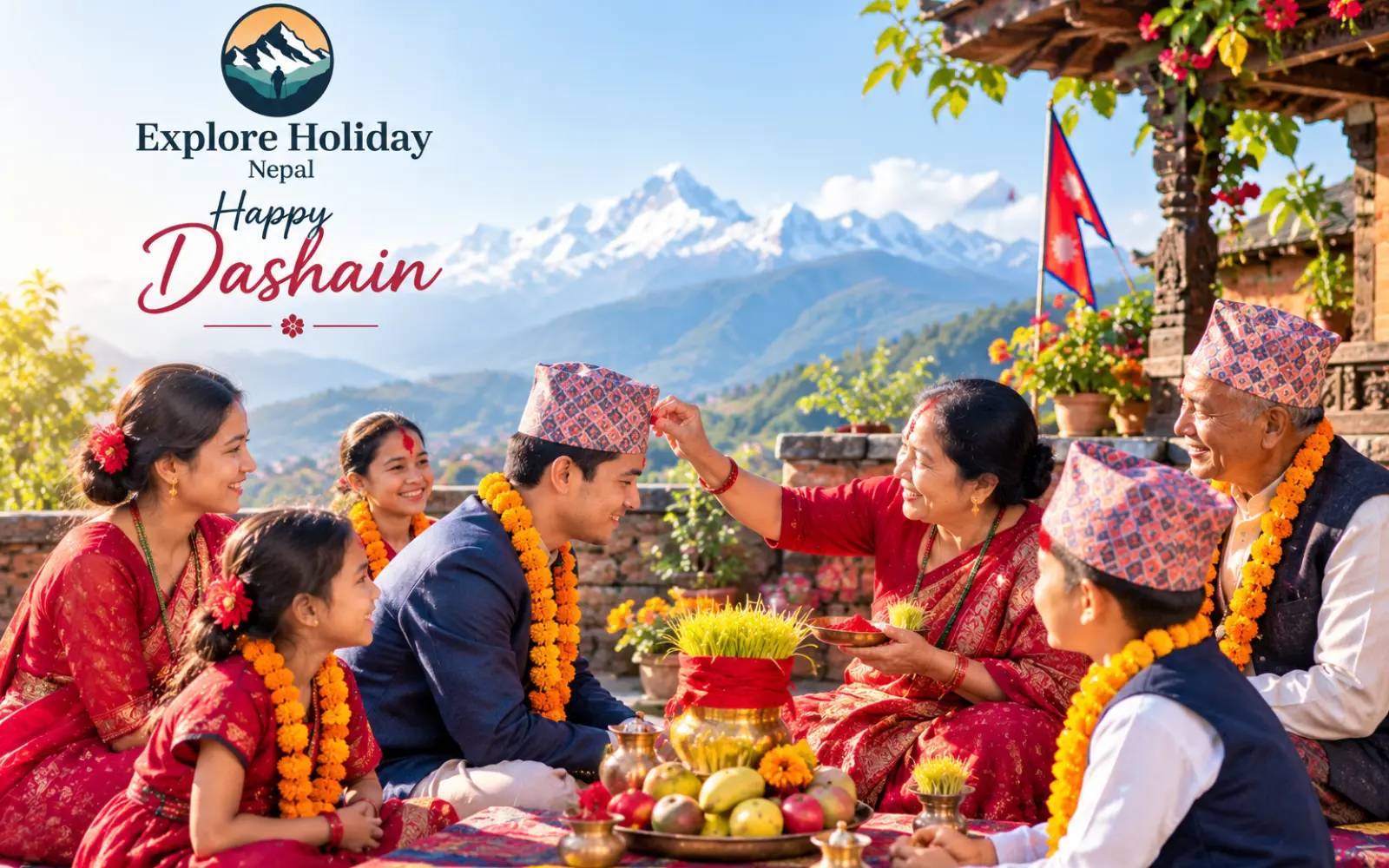
Discover Nepal’s Biggest Hindu Festival with Explore Holiday Nepal
SEO Title: Dashain Festival in Nepal 2026: History, Meaning, Traditions and Celebration Guide
Meta Description: Discover the story of Dashain Festival in Nepal, its religious significance, traditions, tika and jamara rituals, family celebrations, cultural experiences and travel tips for 2026 with Explore Holiday Nepal.
Focus Keywords: Dashain Festival in Nepal, Dashain 2026, Nepal festivals, history of Dashain, meaning of Dashain, how to celebrate Dashain in Nepal, Nepali culture and traditions, Nepal cultural tours.
Dashain is the biggest and one of the most important festivals celebrated in Nepal. It is a joyful celebration of the victory of good over evil, the power of the goddess Durga, family unity, blessings, prosperity and new beginnings. For Nepali people, Dashain is much more than a religious festival. It is a special time when families come together, elders bless younger generations, people return to their hometowns, and communities celebrate their cultural identity.
The festival is celebrated with great enthusiasm throughout Nepal, from the busy streets of Kathmandu to the peaceful villages of the Himalayas and the beautiful hills of rural Nepal. Homes are cleaned and decorated, temples become busy with worshippers, markets fill with shoppers, and families prepare traditional meals. Children enjoy flying kites, playing on traditional bamboo swings and receiving new clothes, gifts and blessings.
Dashain is usually celebrated in September or October, according to the Nepali lunar calendar. The main celebrations continue for fifteen days, beginning with Ghatasthapana and reaching their most important moments on Maha Ashtami, Maha Navami, Vijaya Dashami and Kojagrat Purnima.
For travelers visiting Nepal, Dashain offers a wonderful opportunity to discover the country's living traditions, religious beliefs, hospitality and family-centered culture.
At Explore Holiday Nepal, we believe that understanding local festivals makes a journey more meaningful. Whether you are planning a cultural tour in Kathmandu, a village homestay, a Himalayan trekking adventure or a longer holiday in Nepal, learning about Dashain will help you appreciate the heart of Nepali culture.
One of the most famous stories associated with Dashain comes from Hindu mythology and describes the battle between Goddess Durga and the powerful demon Mahishasura.
According to the traditional story, Mahishasura was a mighty demon who received a boon that made him extremely difficult to defeat. Confident in his power, he began to threaten the gods and disturb the balance of the universe. His growing strength allowed him to challenge the heavenly realms, and the gods struggled to stop him.
Realizing that Mahishasura's power had become dangerous, the gods united their divine energies to create Goddess Durga, a powerful manifestation of the Divine Mother. She was given divine weapons and the strength necessary to fight the demon.
Durga rode a lion or tiger and entered a fierce battle against Mahishasura. The battle continued for days, symbolizing the struggle between righteousness and evil, wisdom and ignorance, and harmony and destruction.
Finally, Goddess Durga defeated Mahishasura and restored balance to the universe.
This victory is one of the central religious meanings of Dashain. It reminds people that evil may appear powerful, but truth, courage, righteousness and divine strength can ultimately overcome it.
During Dashain, devotees worship Goddess Durga in her different forms and ask for protection, strength, prosperity and happiness for their families.
The story also carries a message for everyday life: people should stand against injustice, control negative thoughts and actions, and work toward a more peaceful and compassionate society.
Goddess Durga represents feminine divine power, often called Shakti. She symbolizes courage, protection, determination and the strength to overcome difficulties.
During the festival, many Nepali families visit Durga temples, offer flowers and prayers, and seek blessings for their loved ones. In Kathmandu Valley, temples and shrines associated with the goddess become especially significant during the festival.
For many worshippers, the story of Durga is not only about an ancient battle. It is also a reminder that courage and goodness can overcome challenges in personal life and society.
Another important story connected with Dashain comes from the Hindu epic Ramayana.
According to this tradition, Lord Rama, an incarnation of Lord Vishnu, fought against Ravana, the powerful king of Lanka, to rescue his wife Sita, who had been abducted by Ravana.
With the support of Hanuman, Lakshmana and an army of allies, Rama fought a great battle against Ravana and ultimately defeated him.
The victory represents the triumph of righteousness over wrongdoing, truth over deception and justice over injustice.
This story is especially associated with the festival of Dussehra in many parts of India. In Nepal, Dashain is also understood within the wider Hindu tradition of celebrating the victory of good over evil, although local customs and the central role of Goddess Durga give the Nepali festival its own distinctive character.
Together, these stories communicate a powerful message: no matter how difficult a challenge may seem, goodness, courage and determination remain essential values.
The word Dashain is commonly associated with Dashami, the tenth day of the festival, when the major Vijaya Dashami celebrations take place.
Vijaya Dashami means the victorious tenth day and is connected with the victory of divine forces over evil.
For Nepali people, Dashain represents several important values:
Although Dashain has deep roots in Hindu religious traditions, its celebrations also have a wider cultural and social importance in Nepal. Many people from different communities participate in family gatherings, public holidays and festive activities in their own ways.
Dashain is traditionally observed over fifteen days, beginning with Ghatasthapana and ending with Kojagrat Purnima.
Each day has its own significance, although the level of celebration varies among families, regions and religious communities.
Ghatasthapana marks the beginning of Dashain.
Families prepare a sacred space for worship, usually in a clean room or prayer area. A vessel called a kalash is established as part of the ritual, and barley seeds are planted in sand or soil to grow the sacred yellow shoots known as jamara.
The seeds are kept in a protected place, often away from direct sunlight, and watered carefully. Over the following days, the shoots grow and become an important part of the Vijaya Dashami tika ceremony.
Ghatasthapana symbolizes the beginning of worship, hope, renewal and prosperity.
In many households, the ritual is performed by a family priest or a knowledgeable family member.
During the early days of Dashain, families continue their prayers and prepare for the main celebrations.
People clean their houses, purchase clothes, buy gifts and visit local markets. Shops and streets become lively as families prepare festive meals and make arrangements for relatives to return home.
For children, these days often bring excitement about new clothes, family visits, kite flying and the arrival of cousins and grandparents.
In rural areas, people may travel long distances by bus, motorcycle or on foot to reunite with family members in their ancestral villages.
Fulpati is an important day during Dashain, traditionally associated with bringing sacred plants and offerings into the home or worship area.
The word is commonly understood as referring to sacred flowers and plants used in the rituals. The exact plants and customs can differ by region and tradition.
Fulpati is also marked by ceremonial observances in Nepal, including historic traditions associated with the former royal palace and the capital.
For many families, it marks the beginning of the festival's more intense celebrations.
Maha Ashtami is dedicated to the worship of Goddess Durga and her powerful forms.
Devotees visit temples, perform prayers and make offerings. In some Hindu traditions and households, animal sacrifices are performed as religious offerings, while other families worship without sacrifice and may offer fruit, flowers, sweets or other symbolic items instead.
The practices vary significantly according to local customs, religious beliefs and family traditions.
In Kathmandu Valley, important temples and religious sites attract devotees during this period. Visitors should observe local customs, dress respectfully and follow instructions from temple authorities.
Maha Navami is another major day dedicated to Goddess Durga.
Families continue worship and seek blessings for protection, prosperity and success. In some traditions, vehicles, tools, machinery and instruments associated with work are worshipped as symbols of livelihood and protection.
Businesses and households may perform special puja ceremonies, while temples become important gathering places for devotees.
Maha Navami reflects the belief that divine blessings can support people in their daily responsibilities, occupations and challenges.
Vijaya Dashami is the most important day of Dashain for many Nepali families.
On this day, elders apply red or mixed-colored tika to the foreheads of younger family members and place sacred yellow jamara behind their ears or on their heads. They also offer blessings for a long life, good health, success, happiness and prosperity.
Family members visit parents, grandparents, uncles, aunts and other respected relatives to receive tika and blessings.
A traditional blessing may express the wish that a younger person will grow in strength, wisdom, good fortune and success. The wording varies among families and regions.
For people living away from home, Vijaya Dashami can be an emotional day. It is often the moment when they most strongly feel the importance of family, belonging and cultural identity.
The day also symbolizes the victory of good over evil and the hope of beginning a new chapter with positive intentions.
In many Nepali households, Dashain celebrations continue after Vijaya Dashami.
People travel to visit relatives, receive tika from additional family members and share meals. Children enjoy their holidays, and adults take time away from their regular work to reconnect with loved ones.
These days are especially important for families whose relatives live in different districts or regions of Nepal.
Kojagrat Purnima marks the full-moon day traditionally associated with the conclusion of Dashain.
In Hindu traditions, this night is connected with Goddess Lakshmi, who represents wealth, prosperity and good fortune.
Some families perform Lakshmi puja and observe customs related to prosperity and spiritual awareness. The exact rituals vary from household to household.
Although the principal festival period concludes on this day, family gatherings and related celebrations may continue according to local custom.
Two of the most recognizable symbols of Dashain in Nepal are tika and jamara.
Tika is a mark applied to the forehead during religious and family ceremonies. During Dashain, it is commonly prepared using rice grains and a mixture that may include red vermilion powder, yogurt and other ingredients, depending on family tradition.
In many Nepali households, elders apply tika to younger family members while offering blessings for happiness, good health, long life and prosperity.
The color and ingredients can vary. Some families use red tika, while others use mixtures that produce different shades.
Receiving tika is a meaningful expression of respect, affection and family connection.
Jamara consists of young barley shoots grown during Ghatasthapana.
The seeds are traditionally planted in a prepared container of sand or soil and kept in a sacred area. As they grow, the shoots become yellowish because they are protected from strong sunlight.
On Vijaya Dashami, jamara is placed on the head or behind the ears along with tika.
It symbolizes life, growth, fertility, prosperity and blessings for the future.
Together, tika and jamara represent a connection between religious devotion, family relationships and the hope for a prosperous life.
Dashain is celebrated in many different ways across Nepal. Traditions differ between communities, geographical regions and individual households, but several activities are widely associated with the festival.
Family reunions are at the heart of Dashain.
Many Nepalis who work or study in Kathmandu, Pokhara or other cities travel to their hometowns. Others return from abroad when circumstances allow.
Children visit elders to receive tika, jamara and blessings. Relatives exchange greetings, share meals and spend time together.
For families separated by work, education or migration, Dashain provides a valuable opportunity to reconnect.
Buying new clothes is a popular Dashain tradition, especially for children.
Markets and shopping areas become busy in the weeks before the festival. Parents and relatives may buy clothes, shoes and other gifts for younger family members.
Wearing new clothes symbolizes celebration, happiness and a fresh beginning.
Kite flying is one of the most recognizable outdoor activities associated with Dashain.
Children, teenagers and adults gather on rooftops, open spaces and village grounds to fly colorful kites against the autumn sky.
Kite flying is enjoyed as a form of recreation and social interaction. However, participants should avoid dangerous rooftop edges, power lines and unsafe locations.
Traditional bamboo swings, commonly known as ping, are a familiar sight in many parts of Nepal during Dashain.
Local communities build these swings using bamboo, rope and sturdy supports. Children and adults take turns swinging while friends and family gather nearby.
The swings are a beloved part of rural festive life and reflect Nepal's connection with community traditions.
Food is central to Dashain celebrations.
Families prepare special meals and invite relatives to eat together. The exact dishes vary by region, household and dietary tradition.
Popular foods may include:
Some families prepare vegetarian meals, while others include meat dishes. Food traditions depend on personal preferences, religious practices and regional customs.
Sharing food is one of the simplest and most meaningful ways to experience the hospitality of Nepali families.
Many devotees visit temples dedicated to Goddess Durga and other Hindu deities during Dashain.
They offer prayers, flowers, fruits and other religious offerings. Some families perform puja at home, while others consult priests for specific ceremonies.
Visitors interested in religious sites should remember that certain areas may be restricted during rituals and that photography may not be permitted everywhere.
Dashain is a time for generosity and goodwill.
Families may exchange clothes, money, food and other gifts. Adults often give money to children as part of the celebration.
People also visit neighbors and relatives, share meals and exchange festive greetings.
These traditions strengthen relationships and create lasting memories.
Dashain has religious, cultural, emotional and social significance. Its importance extends beyond temple worship and festive entertainment.
Dashain honors Goddess Durga and celebrates the victory of divine power over destructive forces.
For worshippers, it is a time to pray for protection, strength, peace and prosperity. The stories of Durga and Lord Rama also reinforce the importance of righteousness and courage.
Dashain helps preserve Nepal's traditional practices, including tika, jamara, family blessings, special meals, temple visits, bamboo swings and community celebrations.
These customs connect younger generations with the traditions of their parents and grandparents.
Family unity is one of the festival's most powerful themes.
People often make considerable efforts to return home and spend time with relatives. For those living far away, the festival can be an opportunity to renew family relationships and express gratitude to elders.
Dashain encourages people to reconnect with their communities.
Families exchange invitations, neighbors share food, and people make time for social visits. These interactions strengthen relationships and foster a sense of belonging.
Dashain is also a major period of economic activity in Nepal.
Retail shops, clothing stores, transport services, food businesses, markets and many tourism-related enterprises may experience changes in demand during the festival period.
The effects differ by location and business type, and some shops and services close temporarily so staff can celebrate with their families.
For many people, Dashain brings memories of childhood, grandparents, village life, traditional food and family reunions.
The festival encourages gratitude, hope and reflection. It gives people a chance to pause, reconnect and look toward the future with renewed optimism.
Although Dashain is celebrated throughout Nepal, its atmosphere and local traditions vary.
Kathmandu, Bhaktapur and Lalitpur offer opportunities to observe religious traditions, visit historic temples and explore traditional neighborhoods.
The city becomes busy before the festival as residents shop for clothes, gifts and food. Families perform puja and travel to visit relatives.
Durbar squares and religious sites provide important cultural context, although access, opening hours and crowd conditions may change during the holidays.
Pokhara combines urban festivities with views of the Annapurna mountain range, lakeside scenery and nearby traditional settlements.
Visitors may experience the festival atmosphere in local neighborhoods, enjoy Nepali food and use Pokhara as a base for short cultural excursions or trekking trips, subject to current transport and trail conditions.
Rural Nepal often offers a more intimate view of Dashain.
Families may gather in ancestral homes, children play on traditional swings, and neighbors exchange food and festive greetings.
In some villages, local customs include traditional music, community gatherings and special religious observances.
A homestay arranged with a local host can help visitors understand these traditions more respectfully than simply observing from a distance.
Dashain is observed in many Himalayan communities, although practices differ according to ethnicity, religion and local history.
Travelers may encounter a combination of Hindu traditions, Buddhist customs and distinct local cultural practices. It is important not to assume that every Himalayan community celebrates Dashain in the same way.
Visitors should follow the guidance of local hosts and respect the beliefs and customs of the community they visit.
Yes. Dashain can be a memorable time to visit Nepal, particularly for travelers interested in culture, history, religious traditions and everyday Nepali life.
However, it is important to understand that Dashain is primarily a family and religious festival rather than a large tourist event designed specifically for visitors.
International travelers can experience the festival respectfully by exploring cultural sites, enjoying local food, visiting permitted public spaces and learning about the meaning of the rituals.
Explore Kathmandu's heritage sites
Visit historic areas such as Kathmandu Durbar Square, Patan Durbar Square and Bhaktapur Durbar Square. Check current opening hours and access arrangements because holiday schedules may differ.
Learn about Hindu traditions
With a knowledgeable local guide, learn about Goddess Durga, the symbolism of tika and jamara, and the importance of religious observances.
Try traditional Nepali food
Visit restaurants or arrange a meal with a local host to enjoy dishes such as dal bhat, sel roti and other seasonal specialties.
Experience village life
A responsible village visit or homestay may offer insight into family traditions, rural hospitality and the importance of community during Dashain. Participation should always be arranged with the host's consent.
Explore Nepal's landscapes
Depending on the weather, trail conditions, transport availability and local holiday schedules, travelers may combine cultural experiences with sightseeing or trekking.
Yes, if the family or host willingly invites you to participate.
In some households, visitors may be welcomed to receive tika and jamara as a gesture of hospitality and blessing. Other families may prefer to keep the ceremony private.
Ask your host or guide before joining a ritual, and accept or decline respectfully according to your own beliefs and comfort.
You do not need to be Hindu to learn about Dashain or appreciate its cultural significance.
Dashain can be an excellent time for cultural travel, but visitors should plan ahead.
Many Nepalis travel to their hometowns during Dashain, so long-distance buses and other transport services can become busy around the main festival dates.
Book essential journeys early and allow extra time for travel.
Some family-run shops, restaurants and local businesses may close for part of the festival.
Major tourist areas may continue serving visitors, but opening hours and service availability vary. Confirm arrangements before traveling.
Dashain takes place during the autumn travel season, which is popular for trekking in Nepal. Some trekking routes may be suitable during this period, but conditions depend on the specific trail, weather, recent natural hazards and local access.
If you plan to trek, check current trail conditions, transport schedules, accommodation availability and relevant permits before departure. Do not assume that every trekking route is open or safe simply because it is the festival season.
Wear clothing that covers your shoulders and knees when visiting temples or other religious locations where modest dress is expected.
Remove your shoes when required and follow signs or guidance from temple staff.
Always seek permission before photographing people during private family ceremonies. Photography may be restricted at some temples or religious events.
Dashain is a family-centered festival, so some services may operate on reduced schedules.
A flexible itinerary gives you more time to enjoy cultural experiences without becoming frustrated by temporary closures or transport delays.
Some smaller businesses may have limited payment options during the holiday period. Carry an appropriate amount of cash and confirm essential transport, accommodation and guiding arrangements in advance.
Dashain follows the Nepali lunar calendar, so its dates change each year in the Gregorian calendar.
For travel planning, it is important to verify the official Nepali calendar for the exact dates of Ghatasthapana, Fulpati, Maha Ashtami, Maha Navami, Vijaya Dashami and Kojagrat Purnima in 2026.
Travelers should pay particular attention to Vijaya Dashami, when many families conduct the main tika ceremony, and the surrounding days, when transport and business schedules may change.
If you are arranging a cultural tour or trekking holiday with Explore Holiday Nepal, confirm the intended travel dates, services and local holiday arrangements before finalizing your itinerary.
During Dashain, Nepali people commonly exchange greetings wishing one another happiness, health, peace and prosperity.
Here are some useful greetings:
In English:
In Nepali:
These greetings are appropriate for friends, relatives, colleagues, guides, hosts and business partners.
Dashain is one of Nepal's most important festivals. It celebrates the victory of good over evil and is marked by worship, family reunions, tika, jamara, traditional food and blessings from elders.
The festival is closely associated with the victory of Goddess Durga over Mahishasura and, in the wider Hindu tradition, the victory of Lord Rama over Ravana. It also celebrates family unity, prosperity, courage and new beginnings.
Dashain is traditionally observed over fifteen days, from Ghatasthapana to Kojagrat Purnima. The principal family celebration for many households takes place on Vijaya Dashami.
Tika is a sacred mark applied to the forehead, while jamara consists of young barley shoots grown during Ghatasthapana. Together, they symbolize blessings, prosperity, growth and well-being.
Yes. International visitors can learn about the festival, enjoy traditional food, visit permitted cultural sites and join family celebrations when invited. Respect for religious practices and local customs is essential.
Tourism does not stop throughout the country during Dashain, but transport, shops and some services may operate on altered schedules. Travelers should confirm essential arrangements in advance.
Dashain often falls during Nepal's autumn trekking season. However, suitability depends on the specific route, current weather, trail conditions, accommodation and transport availability. Check current conditions before starting a trek.
Traditional foods vary by household and region. Common festive choices include meat curries, rice, sel roti, vegetables, pickles, sweets and fruit. Vegetarian meals are also important in many families.
Comfortable, modest clothing is a good choice, especially when visiting temples or attending religious ceremonies. Follow local guidance about footwear, dress and photography.
At Explore Holiday Nepal, we believe that traveling is not only about seeing mountains, visiting famous landmarks or reaching a trekking destination. It is also about understanding the people, stories, traditions and values that make Nepal special.
Dashain provides a unique opportunity to appreciate the warmth of Nepali hospitality and the importance of family, faith and community.
Whether you want to explore the historic temples of Kathmandu Valley, discover traditional village life, enjoy Nepali cuisine or combine cultural sightseeing with a Himalayan adventure, our team can help you plan a trip that reflects your interests and schedule.
With local knowledge and experience in Nepal's tourism industry, Explore Holiday Nepal aims to provide thoughtful travel planning, reliable communication and meaningful cultural experiences.
We encourage every visitor to approach Dashain with curiosity, respect and an open mind. By learning about the traditions and listening to local people, you can gain a deeper appreciation of Nepal beyond its famous mountains.
Contact Explore Holiday Nepal to discuss your Nepal holiday, cultural tour or trekking itinerary.
Explore Holiday Nepal — Discover the Mountains, Experience the Culture, and Feel the Heart of Nepal.
Dashain is a celebration of faith, courage, family unity, gratitude and hope. The stories of Goddess Durga and Lord Rama remind people of the importance of righteousness and the victory of good over evil.
Through tika and jamara, family reunions, traditional meals, temple visits and community celebrations, Nepali people preserve a rich cultural heritage that continues to connect generations.
For international travelers, experiencing Dashain can provide a deeper understanding of Nepal's identity and hospitality. It offers a chance to see not only the country's natural beauty but also the traditions and relationships that make life in Nepal so meaningful.
Whether you visit Nepal during Dashain or learn about the festival from abroad, its central message remains timeless: choose goodness, respect others, appreciate your family and welcome the future with hope.
Plan your cultural journey with Explore Holiday Nepal and discover the traditions, landscapes and warm hospitality that make Nepal unforgettable.

Nepal, a landlocked gem nestled in the lap of the majestic Himalayas, is a paradise for travelers seeking a harmonious blend of nature, culture, and spirituality. In this comprehensive guide, we will embark on a detailed exploration of the mesmerizing tour places that make Nepal a unique and captivating destination.
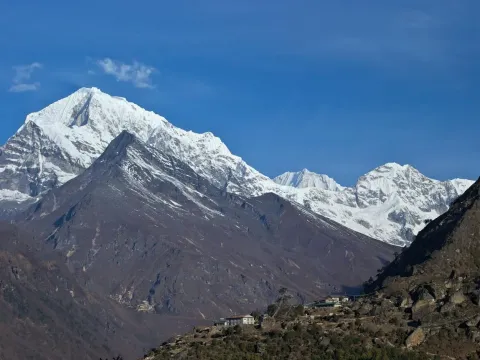
Nepal, nestled in the lap of the Himalayas, offers an unparalleled experience for trekkers and travelers seeking adventure, natural beauty, and cultural richness. One of the foremost reasons to choose trekking in Nepal is its breathtaking landscapes.

Nepal is a treasure trove of natural beauty and biodiversity, offering an unparalleled experience for wildlife enthusiasts and nature lovers alike. Nestled between the towering Himalayas and the lush plains of the Terai, Nepal’s landscapes range from snow-capped peaks to dense jungles
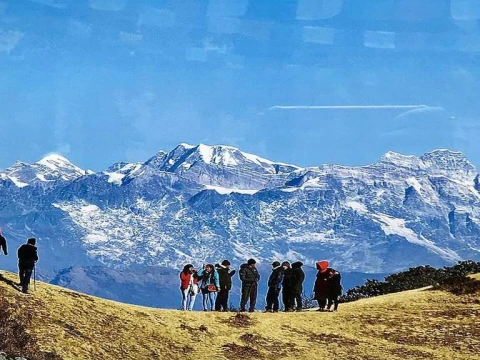
Best Time for Trekking in Nepal Everest Base Camp Trek


 (34)
(34) 