
Kanchenjunga South Base Camp Trekking
| Trip code | |
| Package name | Kanchenjunga South Base Camp Trekking |
| Duration | 13 |
| Max. elevation | 4160 m |
| Level | Difficult |
| Transportation | Domestic flight as per Itinerary and all around transportation |
| Accomodation | Hotel in Kathmandu and Tea House / Lodge during the trek |
| Starts at | Kathmandu |
| Ends at | Kathmandu |
| Trip route | |
| Cost | USD 0 per person |
Highlights
- The trek offers close-up views of the majestic Kanchenjunga South Face, with panoramic vistas of surrounding peaks like Jannu, Makalu, and Kumbhakarna.
- A less-traveled route, ideal for trekkers looking to avoid crowds and experience a more tranquil and remote wilderness.
- Trek through traditional villages of the Limbu and Rai communities, offering a unique glimpse into local life and customs.
- The trek passes through lush forests with rich wildlife, including the possibility of spotting red pandas and Himalayan tahr.
- A challenging route that includes steep ascents, remote alpine landscapes, and high-altitude terrain, culminating at the Kanchenjunga South Base Camp (4,600m).
- As you ascend, enjoy vibrant rhododendron forests and rich green valleys in the lower sections.
- The Kanchenjunga region remains less commercialized, offering a peaceful trekking experience in the heart of the Himalayas.
Overview
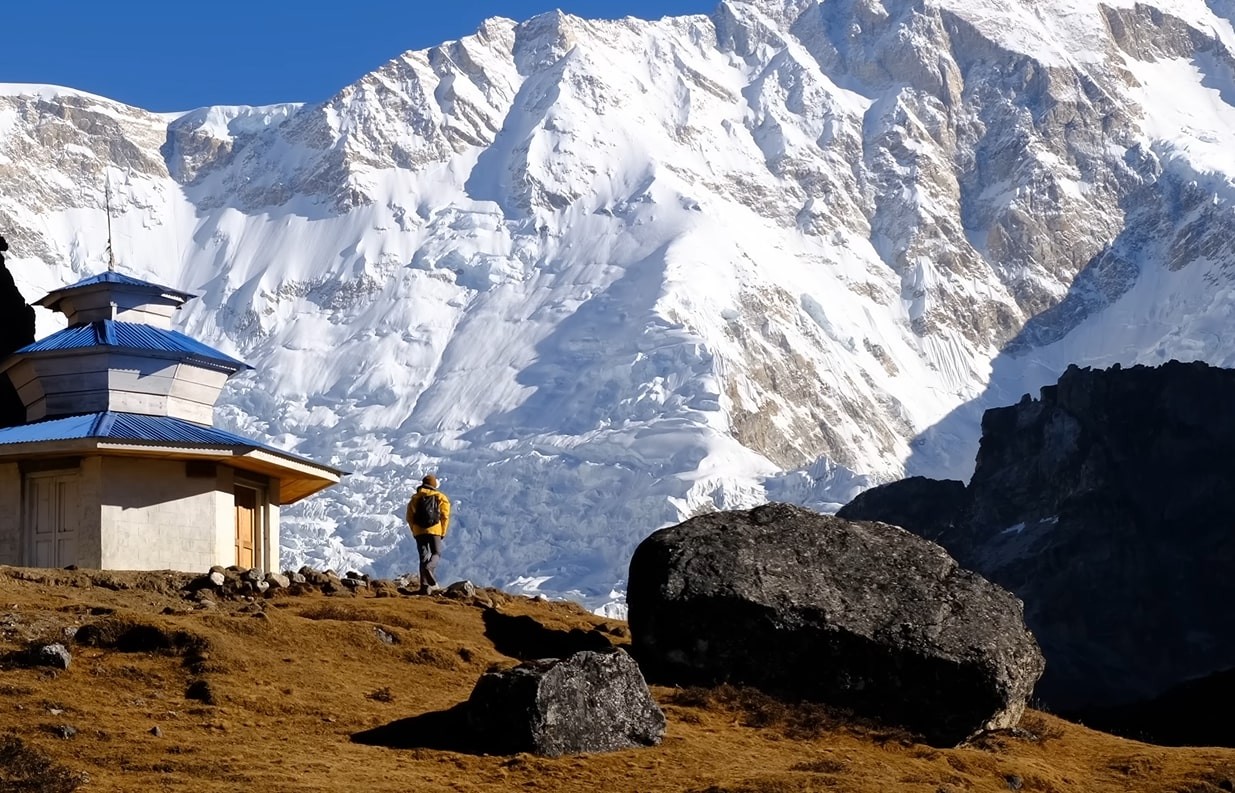
Kanchenjunga South Base Camp Trek: Journey to Nepal's Last Frontier
Standing at 8,586 meters, Kanchenjunga commands respect as the world's third-highest mountain and Nepal's most remote major trekking destination. The Kanchenjunga South Base Camp Trek offers adventurers something increasingly rare in modern Nepal—a genuine wilderness experience where solitude, pristine nature, and ancient cultures converge far from the well-trodden paths of commercial tourism. This isn't just another trek; it's an expedition into one of the Himalayas' last untouched corners, where the rhythm of life has remained unchanged for centuries.
Located in the far eastern reaches of Nepal, bordering Sikkim and Tibet, the Kanchenjunga region sees fewer trekkers in an entire year than Everest Base Camp receives in a single week. This isolation has preserved both the environment and the traditional cultures of the Limbu, Sherpa, Rai, and Tamang peoples who call these mountains home. The trek rewards those willing to venture off the beaten path with unparalleled mountain scenery, rich biodiversity, and cultural encounters that feel authentic rather than staged for tourists.
Why Kanchenjunga Stands Apart from Other Treks
The name Kanchenjunga translates to "Five Treasures of Snow," referring to the mountain's five distinct peaks. Local legend holds that these peaks represent the five repositories of God: gold, silver, gems, grain, and holy books. The mountain holds deep spiritual significance for the people of the region, and this reverence permeates every aspect of trekking here. Unlike more commercialized routes, the Kanchenjunga region maintains a sacred quality that demands respect and mindful travel.
What truly distinguishes this trek is its genuine remoteness. While treks like the Manaslu Circuit Trek or Annapurna Circuit have grown in popularity over recent decades, Kanchenjunga remains delightfully uncrowded. You might go entire days seeing only your own group and perhaps one or two other trekking parties. The lodges are family-run affairs where you'll eat meals with your hosts, share stories around wood-burning stoves, and experience Nepali hospitality in its purest form.
The conservation area protects some of Nepal's most important biodiversity hotspots. The dramatic elevation change—from subtropical forests at 1,000 meters to alpine zones above 5,000 meters—creates diverse ecosystems home to red pandas, snow leopards, Himalayan black bears, and over 250 bird species. The trek passes through pristine rhododendron forests that explode with color during spring, ancient temperate forests draped in moss and lichen, and stark high-altitude landscapes where only the hardiest plants survive.
Understanding the Geography and Route Options
The Kanchenjunga region offers two main trekking routes: the South Base Camp trek and the North Base Camp trek. Some ambitious trekkers combine both in a comprehensive circuit, though this requires 20-25 days and excellent fitness. The South Base Camp route, which this guide focuses on, is generally considered more scenic and culturally rich, though both offer extraordinary experiences.
The trek typically begins with a flight from Kathmandu to Bhadrapur, followed by a long drive to Taplejung or sometimes directly to Mitlung or Chiruwa, depending on road conditions. These drives, while bumpy and time-consuming, offer fascinating glimpses of eastern Nepal's terraced hillsides, river valleys, and rural villages that see few foreign visitors. The region feels distinctly different from the more-visited parts of Nepal—more lush, more isolated, more traditional.
From the trailhead, the route follows the Kabeli Khola (river) valley before climbing through forests and villages toward the Yalung Glacier and eventually to Ramche, which serves as the primary South Base Camp viewpoint. The highest point most itineraries reach is Oktang viewpoint at approximately 4,730 meters, which provides stunning close-up views of Kanchenjunga's south face, along with neighboring giants like Kabru, Rathong, and the spectacular pyramid of Jannu (7,710m).
The route passes through several distinct climate zones and cultural areas. The lower sections feature Rai and Limbu villages where Hinduism and animist traditions blend with Buddhism. As you ascend, Sherpa influence becomes dominant, with Buddhist monasteries, prayer flags, and chortens marking the landscape. The vegetation transitions from subtropical bamboo and rhododendron forests through temperate oak and pine woods to alpine juniper scrub and finally to barren high-altitude terrain.
Physical Demands and Fitness Requirements
Make no mistake—the Kanchenjunga South Base Camp Trek is genuinely challenging and should not be undertaken lightly. This isn't a trek for beginners or those with limited high-altitude experience. The combination of remote location, significant daily elevation changes, high-altitude exposure, and basic facilities requires both physical fitness and mental resilience.
Daily walking times typically range from 6 to 8 hours, with some days extending to 9 or 10 hours depending on conditions and your group's pace. The trails are often steep, with lung-busting ascents followed by knee-jarring descents. Unlike more developed trekking routes where trails are carefully maintained, paths here can be rough, rocky, muddy, or covered in tree roots. Good balance and sure footing are essential, especially in monsoon season when trails become slippery.
Altitude presents the most significant challenge. You'll spend multiple days above 4,000 meters, and reaching Oktang viewpoint takes you to nearly 4,800 meters. At these elevations, the air contains roughly half the oxygen available at sea level. Even extremely fit athletes can suffer from altitude sickness if they ascend too quickly or if their bodies simply don't acclimatize well. Cardiovascular fitness helps, but it doesn't guarantee immunity to altitude issues.
Preparing for this trek should begin at least three months in advance. Focus on building cardiovascular endurance through running, cycling, swimming, or stair climbing. Include elevation gain in your training if possible—hiking with a weighted backpack on progressively steeper trails simulates trekking conditions effectively. Leg strength is crucial for both ascents and descents; exercises like squats, lunges, and step-ups help build the muscles you'll rely on daily.
Don't neglect flexibility and balance training. Yoga or stretching routines improve your ability to navigate uneven terrain and reduce injury risk. Core strength is equally important for maintaining good posture while carrying a daypack for hours. If you have access to altitude training facilities or can train at elevation, take advantage of them, though most trekkers prepare entirely at sea level and acclimatize during the trek itself.
Acclimatization Strategy and Altitude Sickness Prevention
Proper acclimatization is absolutely critical for a safe and successful Kanchenjunga trek. The remote location means that medical help is far away, and helicopter evacuation is expensive and weather-dependent. Prevention of altitude illness should be your primary health concern.
Well-designed itineraries include multiple acclimatization days, particularly before and after crossing 4,000 meters. These aren't rest days in the sense of doing nothing; rather, you'll take short hikes to higher elevations before returning to sleep at lower altitudes. This "climb high, sleep low" strategy stimulates your body's altitude adaptations while minimizing risk.
The symptoms of Acute Mountain Sickness (AMS) include headache, nausea, dizziness, fatigue, and difficulty sleeping. These symptoms are common and not necessarily dangerous if recognized early and managed appropriately. The key is to not ascend further while symptomatic. If symptoms persist or worsen despite rest and medication, descending even a few hundred meters usually brings rapid improvement.
More serious altitude illnesses—High Altitude Pulmonary Edema (HAPE) and High Altitude Cerebral Edema (HACE)—are medical emergencies requiring immediate descent and evacuation. Signs include extreme fatigue, breathlessness even at rest, confusion, loss of coordination, and severe headaches that don't respond to medication. Experienced guides recognize these symptoms and will insist on descent if necessary, even if you want to continue.
Hydration plays a vital role in acclimatization. Drink 3-4 liters of water daily, even if you don't feel particularly thirsty. The dry mountain air and increased respiration at altitude cause significant fluid loss through breathing alone. Urine should be clear or pale yellow—dark urine indicates dehydration. Avoid alcohol and limit caffeine, as both interfere with acclimatization and worsen dehydration.
Some trekkers use acetazolamide (Diamox) to aid acclimatization. This medication helps your body adapt to altitude more quickly and can reduce AMS symptoms. However, it's not a substitute for proper acclimatization—you still need to ascend gradually. Consult your doctor before the trek about whether Diamox is appropriate for you, and always carry it along with other altitude medications as part of your first-aid kit.
Best Time to Trek Kanchenjunga South Base Camp
The Kanchenjunga region experiences distinct seasons that dramatically affect trekking conditions. Choosing the right time for your trek can mean the difference between a spectacular experience and a miserable slog through mud and clouds.
Autumn (September to November) stands as the most popular and arguably best season for this trek. The monsoon rains have cleared the air, creating crystalline visibility perfect for photography. Daytime temperatures are comfortable in the lower valleys, though mornings and evenings grow cold, and high-altitude camps can drop well below freezing at night. The weather is generally stable, with clear skies dominating. The main disadvantage is that this is peak season, meaning you'll encounter more trekkers (though "crowded" here still means very few people compared to popular routes).
Spring (March to May) offers the second-best window for trekking. Temperatures are slightly warmer than autumn, and the rhododendron forests burst into spectacular bloom, painting entire mountainsides in shades of red, pink, and white. The displays can be absolutely stunning, rivaling anything seen on the Annapurna Base Camp Trek. However, spring weather is less stable than autumn—afternoon clouds often build up, potentially obscuring mountain views. Visibility can also be hazier due to dust in the air. Spring sees fewer trekkers than autumn, offering even more solitude.
Winter (December to February) is possible for experienced trekkers comfortable with harsh conditions and willing to accept significant challenges. Temperatures plunge brutally—nights at high camps can reach -25°C or colder. Heavy snowfall may block high passes and trails, sometimes making the trek impossible. Most lodges in upper elevations close for the season, limiting accommodation options. However, winter rewards hardy souls with pristine snow-covered landscapes, absolutely clear skies, and virtually no other trekkers. The mountains appear especially dramatic against winter's deep blue skies.
Monsoon (June to August) is generally avoided and not recommended. Heavy rainfall makes trails muddy, slippery, and sometimes dangerous due to landslide risk. Leeches proliferate in lower elevations, attaching to any exposed skin. Mountain views are frequently obscured by clouds and rain. The high humidity makes the heat in lower valleys oppressive. That said, the landscape is incredibly green and lush during this period, and if you don't mind the challenges, you'll have the trails almost entirely to yourself.
Required Permits and Regulations
Trekking in the Kanchenjunga region requires several permits due to its restricted area status and conservation priorities. Understanding these requirements helps avoid delays and ensures legal compliance.
The Kanchenjunga Conservation Area Permit (KCAP) is mandatory for entering the protected area. This permit helps fund conservation efforts and community development projects. The fees support ranger patrols, trail maintenance, wildlife protection, and local schools and health posts. The conservation area spans 2,035 square kilometers and protects critical habitats for endangered species while preserving the traditional lifestyles of local communities.
The Restricted Area Permit is also required because Kanchenjunga borders sensitive frontier regions with India and Tibet/China. This permit must be obtained through a registered trekking agency—independent trekking is not allowed in restricted areas. The regulation ensures trekker safety and security while limiting numbers to reduce environmental impact.
The TIMS card (Trekkers' Information Management System) is mandatory for all trekkers in Nepal. This card helps authorities track trekker movements for safety purposes and provides valuable data for rescue operations if needed. While some argue the TIMS system adds bureaucracy, it has genuinely improved trekker safety in remote regions where people can go missing without anyone knowing their planned route.
All permits can be arranged through your trekking agency like Explore Holiday Nepal, which handles the paperwork and ensures everything is in order before your trek begins. This service saves you time and potential headaches navigating Kathmandu's bureaucracy. Permits must be carried with you during the trek, as there are multiple checkpoints where officials verify documentation.
The restricted area requirement means you must trek with a registered guide from a licensed trekking company. While this adds cost compared to independent trekking, it provides significant benefits: local knowledge, safety support, logistical handling, cultural interpretation, and emergency assistance. In a region this remote, having experienced support is not just advisable—it's essential.
Accommodation and Facilities Along the Route
Accommodation on the Kanchenjunga South Base Camp Trek is decidedly basic compared to more developed routes like the Everest Base Camp or Annapurna Circuit. The lodges here are typically family homes with a few extra rooms designated for trekkers, offering genuine homestay experiences rather than commercial guesthouses.
Rooms are simple—usually twin-sharing with basic beds and thin mattresses. Blankets are provided but may not be sufficient at high altitudes, making a warm sleeping bag essential. Attached bathrooms are rare; most lodges have shared toilet facilities outside the main building. These toilets are typically squat-style, and conditions vary from reasonably clean to fairly basic. Running water is available in lower elevations but becomes scarce higher up.
Hot showers exist in some lower-elevation lodges, usually heated by solar panels or wood-burning boilers and available for an additional fee. As you ascend, hot water becomes rare or nonexistent. Many trekkers resort to bucket washes or wet wipe baths for days at a time. While this might sound uncomfortable, you'll be surprised how quickly you adapt and how little it bothers you when everyone is in the same situation.
The lodges' common areas become social centers where trekkers, guides, and sometimes local families gather around wood-burning stoves. These spaces provide warmth, charging facilities (for a fee), and opportunities for conversation and camaraderie. Don't expect WiFi or reliable internet—connectivity is limited or nonexistent through most of the trek, creating a wonderful digital detox experience.
Electricity availability varies dramatically. Lower villages may have grid power for a few hours daily, while middle elevations rely on solar panels or small hydroelectric generators. High-altitude lodges may have very limited electricity or none at all. Bring multiple power banks to keep essential devices charged, and expect to pay for charging facilities where available.
The lodge density decreases significantly as you ascend. In lower sections, you might have choices between several teahouses in each village. Higher up, there might be only one or two lodges serving trekkers, sometimes with very limited capacity. This is why going with an organized trekking agency is advantageous—they communicate ahead to secure accommodations, especially during peak season.
Food and Nutrition on the Trail
The menu options on the Kanchenjunga trek reflect the remote location and limited supply chains. While lower elevations offer reasonable variety, choices narrow considerably as you climb higher. The staple is dal bhat—rice with lentil soup, vegetable curry, and sometimes a small portion of meat or egg. This quintessential trekking meal is nutritionally balanced, provides sustained energy, and crucially, most lodges offer unlimited refills.
Other common menu items include Tibetan bread (a fried flatbread), chapati (unleavened bread), rice and noodle dishes (fried rice, chow mein), momos (steamed or fried dumplings), various soups, porridge, and pancakes. Some lodges attempt Western dishes like pasta, pizza, or french fries, though results are mixed, especially at higher elevations where ingredients are limited and cooking at altitude affects preparation.
Fresh vegetables become scarce above 3,500 meters, with lodges relying on dried or canned vegetables for curries. Fresh meat is generally unavailable at high altitudes—any meat dishes use dried or canned meat. Eggs are available but become expensive as you climb since porters must carry them from lower villages. The limited fresh produce isn't about poor lodge management; it's simply the reality of remote mountain living where everything must be carried on human backs for days.
Hot drinks are a blessing in the cold mountain air. Tea (milk tea, black tea, lemon tea), coffee (instant), hot chocolate, and soups provide warmth and hydration. Garlic soup is particularly popular among trekkers, believed to help with acclimatization, though scientific evidence is limited. These hot beverages become comforting rituals, marking meals and rest stops throughout the day.
Bringing supplementary snacks is highly recommended. Energy bars, trail mix, dried fruits, chocolate, and hard candy provide quick energy boosts and are especially valuable when your appetite decreases at altitude. These treats can also lift spirits during particularly challenging days. Choose high-calorie, nutrient-dense options that pack small but provide significant energy.
Appetite suppression at altitude is completely normal. Even if you don't feel hungry, force yourself to eat regularly—your body needs fuel for the intense physical activity and to maintain body temperature in the cold. Focus on carbohydrates which provide quick energy and are easier to digest at altitude than heavy protein or fat-rich meals. Small, frequent snacks work better than trying to force down large meals.
Water safety deserves careful attention. Lower elevations might have safe tap water, but higher up, water sources become questionable. Always treat water through boiling, purification tablets, filtration, or UV sterilization. Most lodges provide boiled water for a small fee—a good option that's environmentally better than buying countless plastic bottles. Carrying a reusable water bottle and purification method is essential.
Cultural Encounters and Local Communities
The Kanchenjunga region is home to diverse ethnic groups, each contributing unique cultural elements to the trekking experience. Understanding and respecting these cultures enriches your journey immeasurably.
The Limbu people dominate lower elevations, particularly around Taplejung and the initial trekking days. They practice a unique blend of Hinduism and animist traditions called Yumaism, which centers on nature worship and ancestor veneration. The Limbu are known for their distinctive traditional dress, fermented millet drink (tongba), and colorful festivals. Their villages feature traditional houses with thatched roofs and intricate woodwork.
Rai communities also inhabit lower sections, known for their agricultural expertise and distinctive shamanic traditions. The Rai celebrate numerous festivals throughout the year, and if your trek timing aligns, witnessing these celebrations offers incredible cultural insights. Both Rai and Limbu peoples have rich oral traditions, with stories and songs passed down through generations.
Sherpa influence grows dominant as you ascend. The Sherpas migrated from Tibet centuries ago, bringing Tibetan Buddhism with them. Their villages feature characteristic white-washed stone houses with colorful painted wooden window frames, prayer flags strung between buildings, and always a Buddhist monastery or shrine at the village center. The Sherpas' legendary mountaineering reputation is well-founded—they're exceptionally strong at altitude and possess intimate knowledge of the mountains.
Buddhist practices pervade daily life in upper elevations. You'll see prayer wheels that locals spin clockwise while walking, chortens (stone stupas) that mark auspicious locations, and mani walls with carved prayers that must be passed on the left (keeping them on your right side). Prayer flags in five colors—blue (sky), white (air), red (fire), green (water), and yellow (earth)—flutter constantly, sending prayers on the wind.
Monasteries serve as both spiritual centers and community gathering places. If you're fortunate to visit during morning or evening prayers, the experience is profound—the deep chanting of monks, the scent of juniper incense, the glow of butter lamps, and the ancient murals depicting Buddhist teachings create an atmosphere of timeless spirituality. Always ask permission before photographing inside monasteries and respect any restrictions on entering certain areas.
Interaction with locals provides some of the trek's most memorable moments. The people here are genuinely welcoming, curious about visitors, and proud to share their culture. Learning a few basic Nepali phrases—"namaste" (hello/goodbye), "dhanyabad" (thank you), "mitho cha" (delicious)—goes a long way toward building connections. Lodge owners often invite trekkers to join family meals or share butter tea, opportunities for authentic cultural exchange.
Wildlife and Natural Environment
The Kanchenjunga Conservation Area protects extraordinary biodiversity across multiple altitude zones. While large mammals are generally shy and difficult to spot, the region supports impressive wildlife populations.
The red panda, one of Nepal's most charismatic endangered species, inhabits the temperate forests between 2,500 and 4,000 meters. These adorable animals are primarily active at dawn and dusk, feeding on bamboo leaves. Spotting one requires patience and luck, but even the possibility adds excitement to forest sections. The conservation area represents critical habitat for red panda survival.
Snow leopards prowl the high-altitude regions above 3,500 meters, though these elusive cats are almost never seen. The Kanchenjunga region supports one of Nepal's healthiest snow leopard populations, with estimated numbers around 120-150 individuals. While you probably won't see one, knowing these magnificent predators hunt nearby adds a thrill to the landscape. You might spot pugmarks (paw prints) in snow or dust if you're observant.
Himalayan black bears inhabit forested areas, particularly in autumn when they're fattening up for winter hibernation. Keep food secured and make noise while walking through dense forest to avoid surprising bears. Attacks are extremely rare—bears typically flee from humans—but caution is warranted. Your guide will know bear-aware practices and can advise on safety.
Other mammals include musk deer, Himalayan tahr, serow, ghoral (mountain goats), yellow-throated martens, and numerous small mammals like pikas and voles that provide prey for predators. The variety reflects the ecosystem's health and the protection afforded by conservation area status.
Birdwatching can be exceptional for enthusiasts. The area hosts over 250 recorded bird species, including the endangered Satyr tragopan (a spectacular pheasant), blood pheasant, various eagles and vultures, laughing thrushes, sunbirds, and at lower elevations, colorful species like scarlet minivets. Spring mornings come alive with bird songs and activity. Bringing binoculars and a bird identification guide enhances this aspect of the trek.
The flora changes dramatically with elevation. Subtropical forests at lower elevations feature sal trees, bamboo, ferns, and orchids. Temperate zones showcase magnificent rhododendron forests—Nepal's national flower—along with oak, maple, birch, and magnolia. These forests are often draped in moss and lichens, creating an almost primordial atmosphere. In spring, the rhododendron bloom is simply spectacular, transforming entire mountainsides into explosions of color.
Alpine zones above 4,000 meters support only hardy plants—dwarf rhododendrons, junipers, grasses, and hundreds of wildflower species including primulas, gentians, edelweiss, and blue poppies. The harsh conditions—intense UV radiation, extreme temperature swings, strong winds, thin air—mean only specialized plants survive, but those that do are often strikingly beautiful.
Comparing Kanchenjunga with Other Nepal Treks
Understanding how Kanchenjunga compares to other major treks helps you choose the right adventure for your goals and abilities.
Versus Everest Base Camp: Everest Base Camp is more accessible, shorter, and has far better facilities but also sees massive crowds. Kanchenjunga offers solitude and pristine conditions that Everest lost decades ago. Both reach similar maximum altitudes and offer spectacular mountain views. If you've done Everest and crave something more adventurous, Kanchenjunga is an excellent next step.
Versus Manaslu Circuit: The Manaslu Circuit Trek provides a middle ground—more remote than Annapurna or Everest but less so than Kanchenjunga. Manaslu is slightly shorter and has somewhat better facilities. Kanchenjunga offers richer biodiversity and more cultural diversity. Both are excellent choices for trekkers seeking to escape crowds while still having good support infrastructure.
Versus Annapurna Circuit: The Annapurna Circuit offers diverse landscapes and excellent facilities but has become quite commercialized. Kanchenjunga provides a much more adventurous experience with far fewer amenities but genuine wilderness. Annapurna is more accessible for first-time Nepal trekkers, while Kanchenjunga suits those wanting a serious expedition.
Versus Upper Mustang: The Upper Mustang Trek also requires restricted area permits and offers cultural immersion in Tibetan Buddhist culture. However, Mustang is a rain-shadow desert with stark landscapes, while Kanchenjunga features lush forests and verdant valleys. Both are remote and culturally rich, but the environments are completely different.
Versus Three Passes Trek: The Three Passes Trek in the Everest region is similarly challenging with multiple high passes, but sees more trekkers and has better facilities. Kanchenjunga offers more authentic cultural experiences and better wildlife viewing opportunities but requires more commitment in terms of time and remoteness.
For those building up experience, consider starting with more accessible treks like Langtang Valley Trek or Ghorepani Poon Hill Trek before attempting Kanchenjunga. These shorter treks help you understand your altitude response and trekking preferences before committing to such a remote expedition.
Essential Packing List for Kanchenjunga
Packing appropriately for this remote trek is crucial since you can't easily replace forgotten or damaged items.
Clothing layers: The key to comfort is a flexible layering system. Base layers should be moisture-wicking synthetic or merino wool—bring at least two sets so you can wash one while wearing the other. Mid-layers provide insulation; fleece jackets or down vests work well. Your outer shell should be fully waterproof and windproof, protecting you from rain and harsh winds at high elevations. Down jackets rated for -10°C or colder are essential for evenings and high camps.
Footwear: Well-broken-in hiking boots with good ankle support and aggressive tread are non-negotiable. Boots should be waterproof but breathable. Bring multiple pairs of hiking socks, including thicker ones for cold sections. Camp shoes or sandals give your feet relief in the evenings and are useful for nighttime bathroom trips. Gaiters help keep moisture, mud, and leeches out of your boots.
Sleeping gear: A sleeping bag rated to -10°C or colder is essential, as teahouse blankets alone won't suffice at high altitudes. A sleeping bag liner adds warmth and hygiene. Consider bringing a down jacket that can serve as extra insulation on particularly cold nights.
Trekking essentials: Quality trekking poles significantly reduce knee stress on descents and help with balance on difficult terrain. A comfortable daypack (30-40 liters) carries your daily essentials while porters carry your main duffel. Water bottles or hydration system plus purification method (tablets, filter, or UV sterilizer) ensure safe drinking water. Headlamp with extra batteries is essential for early morning starts and evening activities.
Sun protection: UV radiation intensifies dramatically with altitude. Bring high-SPF sunscreen (50+), lip balm with SPF, and quality sunglasses that block UV rays. A sun hat with neck protection prevents sunburn during long days on the trail.
Personal items: First-aid kit including altitude sickness medication (Diamox), pain relievers, blister treatment, bandages, and any personal medications. Toiletries should be minimal and biodegradable where possible. Hand sanitizer and wet wipes become invaluable when hot water is scarce. Quick-dry towel saves weight and space.
Electronics: Camera with extra batteries and memory cards captures spectacular scenery. Power bank (or multiple) keeps devices charged when electricity is unavailable. Nepal uses plug types C, D, and M, so bring appropriate adapters. Consider whether you really need devices—limited connectivity makes this an excellent digital detox opportunity.
Documents: Passport, permits, insurance documents, and emergency contact information should be kept in a waterproof pouch. Bring both physical and digital copies (stored on phone/tablet) as backup.
Optional but recommended: Book or e-reader for evening entertainment, playing cards for socializing, duct tape and safety pins for repairs, earplugs for snoring roommates or loud animals, and a stuff sack for organizing dirty clothes.
Safety Considerations and Emergency Preparedness
Trekking in such a remote region requires serious safety awareness. Unlike popular routes where help is hours away, assistance here can take days.
Comprehensive travel insurance is absolutely mandatory. Your policy must specifically cover trekking at high altitude (confirm the elevation limits) and include helicopter evacuation. Medical treatment and especially helicopter rescue are extremely expensive—tens of thousands of dollars—and providers require payment guarantees before services. Read policy fine print carefully and ensure it covers your specific trek.
Communication is limited but possible. Some lodges have satellite phones for emergencies. Mobile phone coverage exists sporadically in lower elevations but disappears entirely in upper regions. Some trekkers carry personal satellite communication devices (like Garmin inReach) that can send distress signals and messages regardless of cell coverage. These devices provide significant peace of mind for solo trekkers or those with concerned families.
Altitude sickness prevention was discussed earlier, but it bears repeating: this is your primary health concern. Descend immediately if symptoms worsen or don't improve with rest. Never continue ascending with AMS symptoms. Pride and summit fever have caused numerous tragedies—listen to your body and your guide.
Weather hazards include landslides during monsoon, avalanche risk in snow conditions, and exposure to extreme cold and wind at high elevations. Check weather forecasts before departing and be prepared to adjust plans if conditions deteriorate. Your guide's local knowledge is invaluable for reading weather patterns.
Trail hazards like suspension bridges, steep drop-offs, loose rocks, and river crossings require constant attention. Don't become complacent even on easier sections—most accidents happen when people let their guard down. Trek poles help immensely with balance and stability.
Wildlife encounters are generally safe if you follow guidelines. Make noise in forested areas to avoid surprising animals, secure all food, and never approach wildlife for photographs. Your guide will know appropriate responses to different animal encounters.
Responsible Trekking and Environmental Ethics
Trekking responsibly ensures the region remains pristine for future generations and benefits local communities.
Leave No Trace principles apply fully here. Pack out all non-biodegradable waste—don't trust that lodges can properly dispose of your garbage. Burn toilet paper rather than leaving it (where safe to do so), or better yet, pack it out. Use designated toilet facilities rather than going in nature. Stay on established trails to prevent erosion.
Water pollution prevention means never washing directly in streams or rivers. Use a bucket away from water sources and scatter the gray water. Avoid soaps and shampoos entering water systems—they harm aquatic life even if labeled "biodegradable." Minimize washing where possible and use only truly necessary amounts of any cleaning products.
Energy conservation helps lodges manage limited resources. Turn off lights when leaving rooms, limit hot water use, and don't waste electricity charging unnecessary devices. Solar panels and hydroelectric generators are expensive investments for lodge owners; respect their constraints.
Cultural respect means dressing modestly (covered shoulders and knees in villages), removing shoes before entering homes and religious sites, asking permission before photographing people, and not giving children money or candy (which creates begging behavior). Learn about local customs and follow your guide's advice about appropriate behavior.
Support local economies by purchasing handicrafts directly from artisans, hiring local guides and porters through ethical agencies, and eating at local lodges rather than bringing all your own food. Your tourism dollars provide essential income for mountain communities, but only if spent thoughtfully.
Porter welfare deserves special attention. Ethical trekking companies limit porter loads to 25 kg maximum, provide appropriate clothing and gear for porters, include porters in insurance coverage, and pay fair wages. Unfortunately, some companies exploit porters terribly. Choosing responsible operators like Explore Holiday Nepal ensures your trek doesn't contribute to poor labor practices.
Final Preparations and Practical Tips
Physical and mental preparation: Beyond fitness training, prepare mentally for discomfort, basic facilities, and challenging days. This isn't a luxury experience—it's an expedition requiring resilience and flexibility. Embrace the adventure mindset rather than expecting hotel standards.
Pre-trek days in Kathmandu: Allow at least 2-3 days before your trek for permit arrangements, gear checks, meeting your guide, and acclimatization to Nepal's elevation (1,400m). This buffer also helps if flights to Bhadrapur are delayed—common during monsoon season.
Banking and money: Bring sufficient cash (Nepali rupees) for the entire trek. ATMs exist in Taplejung but are unreliable higher up. Budget for lodge charges, snacks, drinks, charging fees, hot showers, and tips for guides and porters. Prices increase with altitude due to transportation costs.
Flexibility is essential: Weather, trail conditions, or health issues may require itinerary changes. Don't have inflexible return flights leaving immediately after your scheduled trek end date—build in buffer days for delays. Mountain travel rarely goes exactly as planned.
Group dynamics: If joining a group trek, you'll spend weeks with the same people in intimate conditions
Top Blogs About Trekking in the Kanchenjunga Region:
Uncover the best blogs about trekking in the Kanchenjunga region, featuring expert advice, detailed itineraries, personal experiences, and essential tips for adventurers looking to explore the Himalayas.
Altitude Sickness on Nepal Treks: Symptoms, Treatment, and When to Descend (Complete Guide)
Ultimate Kanchenjunga Circuit Trek Guide
Amazing Facts About the Kanchenjunga Circuit Trek
Kanchenjunga North vs. South Base Camp: Which is Better?
Trekking Kanchenjunga Circuit: Routes, Planning & Survival Tips for Adventurers
Amazing Top Facts of Mount Kanchenjunga
Nepal Trekking Permits: Costs, Types, and How to Get Them
Nepal Trekking: What’s the Best Time to Go?
Budget Trekking in Nepal: Tips, Trails, and Tricks
Exploring Nepal’s Wildlife and Nature
Trekking Through Nepal: A Journey into the Himalayas
Top 10 Mountain Peaks in Nepal
Monastery Life in Nepal: Finding Peace in the Heart of the Himalayas
Altitude Sickness on Nepal Treks: Symptoms, Treatment, and When to Descend (Complete Guide)
Dal Bhat Power 24 Hour: The Science and Soul Behind Nepal's Mountain Fuel
Solo Female Trekking in Nepal: A Complete Safety and Empowerment Guide for 2026
Complete Fitness Training Guide for Nepal Trekking 2026: From Couch to Base Camp in 12 Weeks
Trip Preparation
- Thermal underwear (top and bottom)
- Moisture-wicking t-shirts (long-sleeved)
- Moisture-wicking underwear
- Fleece jacket or pullover
- Insulated down or synthetic jacket
- Waterproof, windproof jacket (Gore-Tex or similar)
- Waterproof, windproof pants (Gore-Tex or similar)
- Warm beanie or hat
- Sun hat or cap
- Neck gaiter or scarf
- Trekking pants (convertible preferred)
- Waterproof trousers
- Lightweight gloves (inner)
- Insulated gloves or mittens (outer)
- Hiking boots (broken in and waterproof)
- Comfortable camp shoes (e.g., sneakers or sandals)
- Trekking backpack (30-40 liters) with waterproof cover
- Sleeping bag (rated for cold temperatures)
- Sleeping pad or mattress (insulated)
- Adjustable trekking poles
- Insulated water bottles or hydration bladder (2 liters capacity)
- Travel-sized toiletries
- Biodegradable soap
- Quick-dry towel
- Medications for altitude sickness, pain relief, and common ailments
- Sun protection cream, wet wipes, and hand sanitizer
- Camera and batteries
- Notebook and pen
- Earplugs (for sleeping in lodges)
- Portable solar charger
- Headlamp, power bank, and extra batteries
Trip Itinerary
Day 1 : Kathmandu to Bhadrapur (Flight) to Ilam (Drive)
Your Kanchenjunga adventure starts with an early morning wake-up call and a short drive to Kathmandu's domestic airport. The 50-minute flight to Bhadrapur is spectacular on clear days, offering aerial views of the eastern Himalayas, terraced hillsides, and winding rivers far below. This flight alone gives you a sense of Nepal's incredible topography. After landing in Bhadrapur, located in the lowland Terai region, you'll notice the warmer temperatures and different vegetation compared to Kathmandu. From here, a scenic five-hour drive takes you upward to Ilam, a charming hill station famous throughout Nepal for its tea plantations. The road winds through lush countryside, passing small towns and offering glimpses of rural eastern Nepal that few foreign visitors experience. Ilam sits at a comfortable elevation where the air is fresh and cool. You'll check into a local guesthouse for the night, and if time permits, take a stroll through the tea gardens that blanket the surrounding hillsides in vibrant green. The evening brings a sense of anticipation as tomorrow you'll head deeper into the mountains.
Day 2 : Ilam to Taplejung (Drive)
After a hearty breakfast featuring perhaps some locally-grown tea, you'll continue your journey toward the mountains with a five-hour drive to Taplejung. This district headquarters serves as the primary jumping-off point for Kanchenjunga treks, and you'll feel the excitement building as you approach. The road follows river valleys and climbs through increasingly mountainous terrain, offering spectacular views around nearly every corner. You'll pass through small bazaar towns where locals shop for weekly supplies, and see children in uniforms walking to school along the roadside. The architecture and faces begin to reflect the diverse ethnic groups of this region—Limbu, Rai, Sherpa, and others. Taplejung itself sits at about 1,820 meters, noticeably cooler than Bhadrapur and Ilam. The town has a frontier feel, with shops selling trekking supplies and provisions being carried up to remote villages. Your lodge tonight will be simple but comfortable, and you'll meet your trekking crew—guides and porters who will accompany you for the next several days. Use the evening to do final gear checks, ensure everything is packed properly, and get a good night's sleep before tomorrow's first day on the trail.
Day 3 : Taplejung to Lali Kharka
This morning marks your first real day of trekking, and there's always something magical about those initial steps into the mountains. After breakfast and final preparations, you'll leave Taplejung behind and begin the climb toward Lali Kharka. The trail initially descends through terraced farmland where locals grow millet, corn, and vegetables on impossibly steep hillsides. You'll cross suspension bridges over rushing rivers and climb stone staircases through villages where curious children might follow you for a stretch, practicing their English. The route takes you through dense subtropical forests where birds call from the canopy and butterflies flutter across the path. After about six hours of walking—your legs slowly finding their trekking rhythm—you'll arrive at Lali Kharka, a small settlement with a handful of lodges catering to trekkers. The name means "Red Hill," and from here you can see your first distant views of the peaks you're heading toward. Your lodge tonight will be family-run and basic but welcoming. After washing off the day's dust and enjoying a plate of dal bhat, you'll sleep soundly to the sounds of the forest around you.
Day 4 : Lali Kharka to Khesewa
Today's trek continues your gradual journey deeper into the Kanchenjunga region. The trail from Lali Kharka to Khesewa winds through mixed forests and across ridgelines offering occasional glimpses of the valleys below. You're gaining elevation steadily but not dramatically, giving your body time to adjust. The six-hour walk takes you through several small hamlets where traditional life continues much as it has for generations—women carrying enormous loads in doko baskets supported by headstraps, men tending to crops or repairing trails, elderly folks spinning prayer wheels outside their homes. The trail can be muddy in places, especially if there's been recent rain, and you'll be grateful for your waterproof boots and trekking poles. Around midday, you'll stop at a teahouse for lunch, probably enjoying noodle soup or fried rice while resting your legs. The afternoon brings you to Khesewa, a pleasant village with several lodges spread along the trail. Tonight's accommodation offers similar comforts to yesterday—basic rooms, shared facilities, and warm hospitality. The evening meal brings together trekkers heading both up and down the trail, creating opportunities to share experiences and advice. You'll notice your appetite is good at this moderate elevation, so eat well to fuel tomorrow's trek.
Day 5 : Khesewa to Pumphe Danda
This is a slightly shorter trekking day at about five hours, which comes as a welcome relief as your body continues adjusting to daily hiking. The trail climbs toward Pumphe Danda, which sits on a prominent ridge offering spectacular views in clear weather. The route takes you through beautiful rhododendron forests—if you're trekking in spring, these massive trees will be covered in brilliant red, pink, and white blooms, creating one of Nepal's most stunning natural displays. Even outside flowering season, these ancient forests have an almost magical quality with their gnarled trunks and twisted branches draped in moss and lichen. You'll cross several streams on log bridges and climb through terraced fields where villagers tend their crops. As you approach Pumphe Danda, the ridge position becomes evident and the views open up dramatically. On clear days, you can see far across the valleys and catch glimpses of high peaks in the distance. The village has just a few lodges, creating an intimate atmosphere where you'll likely get to know your fellow trekkers well. The evening air is crisp and cool this high up, perfect for gathering around the lodge's wood-burning stove and sharing stories before an early bedtime.
Day 6 : Pumphe Danda to Yamphuding
Today brings you to Yamphuding, one of the larger villages along this route and an important settlement for the region. The six-hour trek involves both ups and downs as the trail contours along hillsides, drops into valleys, and climbs out the other side. You'll cross rivers on suspension bridges that sway gently as you walk across—thrilling at first, routine by now. The vegetation remains lush, with clearings offering cultivation alternating with dense forest sections. You might spot monkeys playing in the treetops or hear the distinctive calls of exotic birds. Yamphuding, when you arrive, feels almost urban after the small hamlets you've been passing through. The village has a school, a monastery, several shops, and multiple lodges with decent facilities. This is the last substantial settlement before you head into more remote territory, so some trekkers take the opportunity to purchase any last-minute supplies—extra batteries, snacks, or trekking essentials. The village sits at a comfortable elevation where acclimatization isn't yet a concern. Enjoy a good meal tonight and perhaps explore the village in the late afternoon, visiting the monastery or chatting with locals who are always curious about where you've come from and where you're headed.
Day 7 : Yamphuding to Torongding
This is your longest and most challenging day yet, with about seven hours of trekking that takes you significantly higher in elevation. You'll feel the trail getting more serious as you leave the relatively gentle lower sections behind and enter proper mountain terrain. The path climbs steadily through increasingly spectacular forests, following rivers and crossing tributaries on log or stone bridges. You're gaining altitude noticeably now—take your time, walk slowly, and breathe deeply to help your body adjust. Around midday, you'll stop for lunch at a basic teahouse, one of the last facilities before the really remote sections. The afternoon brings more climbing through changing vegetation zones. Trees become shorter and hardier, adapted to the harsher conditions at higher elevations. Prayer flags begin appearing more frequently, and you might pass chortens and mani walls marking the increasing Buddhist influence. By late afternoon, you'll reach Torongding, a small settlement that feels wonderfully isolated in the mountains. The lodge here is basic—don't expect luxuries—but the views are stunning and the sense of accomplishment is palpable. Tonight you're sleeping above 3,000 meters for the first time, so drink plenty of water and avoid alcohol to help with acclimatization. The thin air might affect your sleep slightly, which is completely normal.
Day 8 : Torongding to Cheram
Today's five-hour trek takes you deeper into alpine country where the landscape opens up and the mountains dominate the skyline. The trail from Torongding to Cheram climbs through juniper and rhododendron scrub, with the trees becoming noticeably smaller and more twisted as you gain altitude. You're now trekking through yak pastures where herders bring their animals during summer months. The terrain is rockier, the air noticeably thinner, and you'll find yourself breathing harder on uphill sections—this is normal and to be expected. Take regular breaks, hydrate frequently, and maintain a slow, steady pace. The landscape has a raw, wild beauty that's quite different from the lush lower valleys. Around midday, you'll reach Cheram (also called Tseram), a small seasonal settlement with a few stone lodges built specifically for trekkers. This is one of the last stops before base camp, so it has a frontier atmosphere with hardy lodge keepers and yak herders who spend months at a time in these high, isolated places. The views from Cheram are magnificent—massive peaks surrounding you on multiple sides, glaciers visible in the distance. Tonight's lodge will be cold, so bring all your warm layers to the dining room and your sleeping bag will get serious use. The altitude here (around 3,870 meters) means some trekkers experience mild headaches or sleep disturbances—completely normal as your body adjusts.
Day 9 : Cheram to Ramche
This is a short but spectacular day, with just three hours of trekking that brings you to Ramche, your highest overnight stop. The trail follows the lateral moraine of the Yalung Glacier, walking through boulder fields and across streams running with glacial meltwater. The landscape is stark and beautiful—mostly rock, ice, and hardy alpine plants clinging to life in this harsh environment. You're now at serious altitude (around 4,580 meters), and you'll definitely notice the thin air making every step require more effort. The reward for this effort is absolutely spectacular. Ramche sits in an incredible position with close-up views of Kanchenjunga's south face, along with neighboring peaks like Kabru, Rathong, and other giants. The lodges here are extremely basic—stone buildings with minimal facilities and very cold rooms. But the location is absolutely stunning. After settling in and resting, you might take a short walk around the area to explore, but don't overexert yourself at this altitude. Tomorrow you'll push even higher to the viewpoint, so use this afternoon to rest, hydrate, and let your body acclimatize. The sunset on Kanchenjunga from here is something you'll remember for the rest of your life—the peaks turning shades of gold, orange, and pink as the sun drops below the horizon. Bundle up warmly tonight as temperatures will drop well below freezing.
Day 10 : Ramche to Torongding
Today is the highlight of your entire trek—pushing to Oktang viewpoint for the closest possible views of Kanchenjunga. You'll start very early, perhaps 5 or 6 AM, to take advantage of clear morning weather before afternoon clouds roll in. The climb to Oktang takes about 2-3 hours, gaining roughly 150 meters to reach approximately 4,730 meters. This is your highest point, and the thin air means progress is slow—you'll take frequent breaks to catch your breath and let your heart rate settle. But with every step, the views become more spectacular. When you finally reach Oktang, the panorama is simply breathtaking. Kanchenjunga's massive south face towers directly before you, an imposing wall of ice and rock. Surrounding peaks stretch in every direction—Jannu's elegant pyramid, Kabru's bulk, Rathong's sharp ridges. You'll spend time here taking photos, simply sitting and absorbing the majesty of being in such an incredible place. Then comes the long descent—first back to Ramche for a brief rest, then continuing all the way down to Torongding, about 6-7 hours total. The descent is hard on your knees but psychologically easier as you're dropping to thicker air where breathing becomes easier. You'll arrive at Torongding tired but exhilarated, having accomplished the trek's main objective. Tonight's sleep comes easy after such a big day.
Day 11 : Torongding to Yamphuding
With your main objective accomplished, you're now retracing your steps back toward civilization. The seven-hour trek from Torongding to Yamphuding is long but mostly downhill, which your lungs appreciate even as your knees and thighs work hard controlling your descent. The familiar trail looks different from this direction—you notice details you missed on the way up, and you're moving faster now that you're acclimatized and heading downhill. It's fascinating how the landscape transforms as you lose altitude—trees gradually get larger, vegetation becomes lusher, the air feels thicker and warmer. You'll stop for lunch at a teahouse along the way, perhaps the same one you used on the ascent. By late afternoon, you'll arrive back in Yamphuding, which now feels almost bustling after the isolated high camps. The lodge tonight offers familiar comforts—maybe even a hot shower if you're willing to pay for it, which sounds absolutely wonderful after so many days with limited washing facilities. Celebrate your successful trek with your guides and porters over dinner, sharing favorite moments and laughing about the challenges overcome. You might even enjoy a beer or local rakshi (rice wine) now that you're at a safe elevation where alcohol won't interfere with acclimatization. There's a bittersweet feeling as the adventure winds down, but also satisfaction in knowing you've accomplished something genuinely challenging.
Day 12 : Trek Yamphuding to Ranipul and Drive Ranipul to Phidim
Today combines trekking and driving as you transition back toward the outside world. The morning brings about four hours of hiking from Yamphuding down to Ranipul, following the trail through forests and villages that now feel familiar. The descent is steady and straightforward, giving you time to reflect on your journey and soak in the final hours on the trail. Your trekking poles get their last workout, and you savor the simple pleasure of walking through these beautiful mountains. Arriving at Ranipul marks the official end of your trekking—you'll say goodbye to your porters here, tipping them generously for their hard work carrying your gear through such challenging terrain. From Ranipul, a vehicle picks you up for the drive to Phidim, a district headquarters with more substantial facilities than you've seen since Taplejung. The drive takes several hours along winding mountain roads, but feels comfortable after so many days of walking. Phidim has real hotels with proper beds, hot showers, and even WiFi in some places—luxury after the basic mountain lodges. You might finally be able to call home and share news of your successful trek. Tonight's dinner might include fresh vegetables and perhaps even meat that hasn't been carried up mountains on someone's back. The contrast with the simplicity of mountain life is stark but not unwelcome.
Day 13 : Phidim to Bhadrapur (Drive) and Fly to Kathmandu
Your final day involves a long but scenic 10-hour drive from Phidim down to Bhadrapur. The road winds through the hills of eastern Nepal, gradually descending from cooler elevations to the warm lowlands. You'll pass through numerous villages and towns, watching the landscape transform from mountain scenery to the flatter Terai region. It's a good day for processing the experience—looking through photos, making journal entries, or simply watching the countryside roll by. By late afternoon, you'll arrive in Bhadrapur, a bustling town that feels almost overwhelming after the quiet mountains. After checking in for your flight, you'll board the short flight back to Kathmandu. The aerial perspective shows you just how far you traveled and how massive the Himalayas truly are. Landing in Kathmandu completes your journey—the capital's chaos, traffic, and crowds are shocking after the serene mountains. Your trekking company will transfer you to your hotel, where a hot shower, comfortable bed, and perhaps a celebratory dinner await. As you settle in for the night, you'll find your mind drifting back to the mountains—the towering peaks, the friendly locals, the challenging trails, and that spectacular view from Oktang that made every difficult step worthwhile. The Kanchenjunga trek will remain one of your life's defining adventures.
Inclusions
What is included?
- All arrival and departure transportation (airport to hotel and vice versa).
- Accommodation in Kathmandu with breakfast.
- Guided Kathmandu city tour.
- Domestic flights Kathmandu-Bhadrapur-Kathmandu.
- All necessary trekking permits (including Kanchenjunga Conservation Area Permit).
- Full board during the trek (meals: breakfast, lunch, dinner).
- Trek guide and porters (with wages, meals, accommodation, and insurance).
- Group dinner upon arrival or departure with a trek briefing.
- Comprehensive medical kit with guide.
- Private vehicles for sightseeing (based on group size) with a city guide.
What isn't included?
- Nepal visa and medical/travel insurance.
- Single room accommodation (if preferred) at extra cost.
- Emergency evacuation (any transport/helivac services).
- Personal trek gear (sleeping bag, jackets, duffel bag, etc.).
- Additional snacks, refreshments, and drinking water.
- Extra costs for early trek departure (personal reasons/illness).
- Personal medical kit based on doctor's advice.
Complimentary
Best Time for Kanchenjunga South Base Camp Trekking
Transportation (Bhadrapur (Flight) to Ilam (Drive))
Trip and the Weather
Food and Accommodation
Communication and Networking
Kanchenjunga South Base Camp Trekking Permits
Kanchenjunga South Base Camp Trekking Difficulty
Best Time for Kanchenjunga South Base Camp Trekking
Explore Holiday Treks Team for Kanchenjunga South Base Camp Trek
Kanchenjunga South Base Camp Trek Starting and Ending Points
Important Note