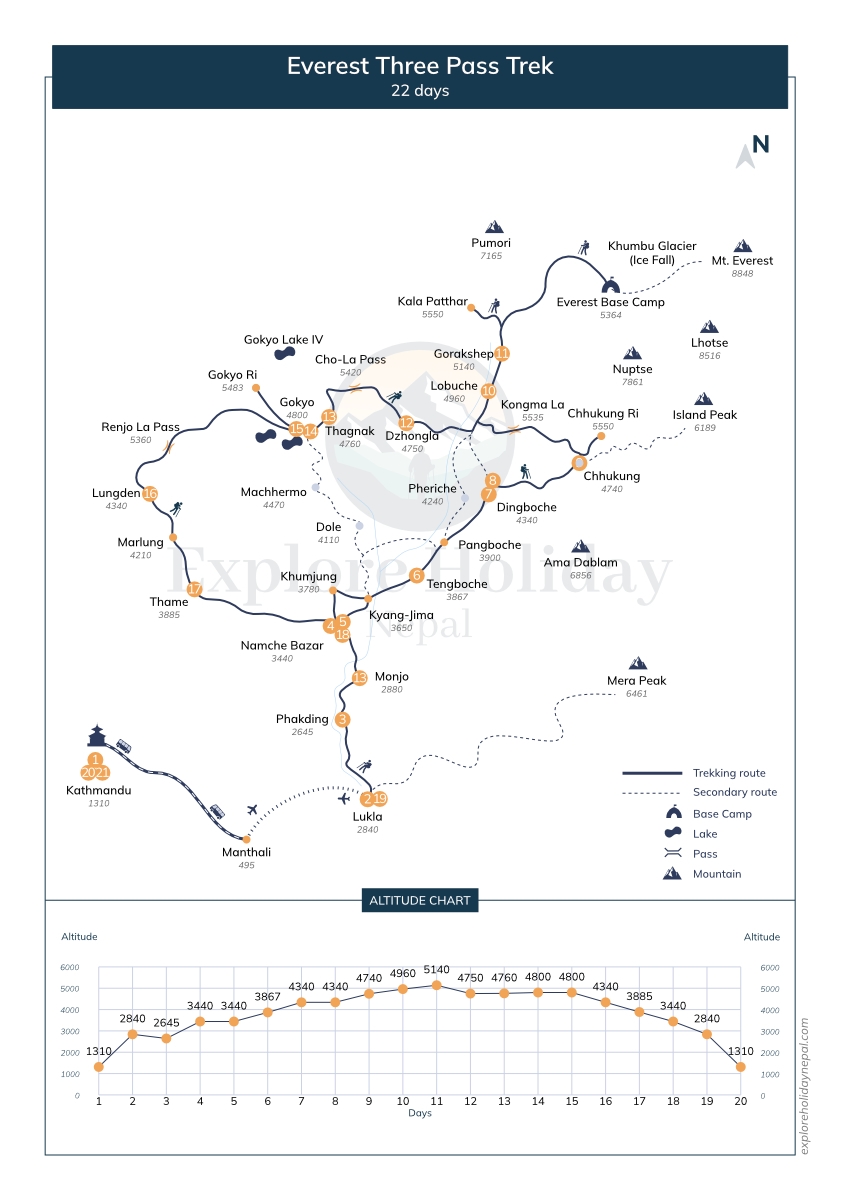
Everest Three pass Trek
| Trip code | |
| Package name | Everest Three pass Trek |
| Duration | 22 |
| Max. elevation | 5643 m |
| Level | Difficult |
| Transportation | Domestic flight as per Itinerary and all around transportation |
| Accomodation | Hotel in Kathmandu and Tea House / Lodge during the trek |
| Starts at | Kathmandu |
| Ends at | Kathmandu |
| Trip route | Kathmandu - Lukla - Namche - Tengboche - Dingboche - Chukung - Lobuche - EBC - Kala Patthar - Thagnak - Gokyo Lake - Lungden - Thame village - Namche - Lukla - Kathmandu |
| Cost | USD 1,795 per person |
Highlights
- The first of the three high mountain passes, providing breathtaking views of the Everest region from a significant elevation.
- The highest of the three passes, offering a vantage point with unparalleled views of the surrounding peaks.
- Trekkers traverse three high mountain passes – Renjo La Pass (5,360 meters), Cho La Pass (5,420 meters), and Kongma La Pass (5,535 meters) – each offering breathtaking panoramic views of the Everest region.
- Panoramic vistas of prominent peaks including Everest, Lhotse, Nuptse, and Makalu, providing a feast for the eyes.
- Interaction with the local Sherpa communities, known for their warm hospitality, provides a cultural immersion during the trek.
Overview

Everest Three Pass Trek – The Ultimate High-Altitude Adventure in the Khumbu Region
The Everest Three Pass Trek is an exhilarating adventure that challenges even seasoned trekkers with its demanding terrain and high-altitude passes. This trek, considered one of the most challenging and rewarding in the Everest region of Nepal, involves crossing three major high mountain passes: Renjo La Pass (5,360 meters), Cho La Pass (5,420 meters), and Kongma La Pass (5,535 meters). Each pass offers breathtaking panoramic views and a unique perspective of the Everest region’s stunning landscapes.
The trek typically begins and concludes in Lukla, the gateway to the Everest region, following the classic Everest Base Camp route. However, instead of returning from Everest Base Camp, the Three Pass Trek takes a more adventurous path, traversing the three high passes and extending the journey through some of the most spectacular and remote areas of the Himalayas. This route not only increases the trek’s difficulty but also adds a thrilling dimension of exploration and discovery.
Top Blogs About Trekking in the Everest Region
Uncover the best blogs about trekking in the Everest region, featuring expert advice, detailed itineraries, personal experiences, and essential tips for adventurers looking to explore the Himalayas.
Top 5 Everest Trekking Packages
Where is Mount Everest? Discover the World’s Highest Peak
Top 9 Reasons to Go on Everest Base Camp Trek
Accommodation During Everest Base Camp Trek
Shower and Laundry Facilities During the Everest Base Camp Trek
Elevation Facts for Everest Base Camp Trekking
Physical Fitness Requirements for Everest Base Camp Trek
The Best Ways to Trek to Everest Base Camp
When is the Best Time to Hike to Everest Base Camp?
Everest Base Camp Trek: Tips and FAQs
Why Sleeping at Everest Base Camp Is the Ultimate Trekking Experience ?
Which is the Better Lake Trek in Nepal: Gokyo or Tilicho Lake Trek?
Altitude Sickness on Nepal Treks: Symptoms, Treatment, and When to Descend (Complete Guide)
Everest Base Camp Toilet Problem: The Environmental Crisis on the World's Highest Mountain
Monastery Life in Nepal: Finding Peace in the Heart of the Himalayas
Altitude Sickness on Nepal Treks: Symptoms, Treatment, and When to Descend (Complete Guide)
Dal Bhat Power 24 Hour: The Science and Soul Behind Nepal's Mountain Fuel
10 Essential Everest Trekking Tips Every First-Time Trekker Must Know
The 3 AM Wake-Up Call Nobody Tells You About: Real Stories from Everest Base Camp
Solo Female Trekking in Nepal: A Complete Safety and Empowerment Guide for 2026
Complete Fitness Training Guide for Nepal Trekking 2026: From Couch to Base Camp in 12 Weeks
The Everest Three Pass Trek is widely regarded as one of the most demanding and rewarding trekking experiences in Nepal. Designed for trekkers who want more than just Everest Base Camp, this legendary route takes you deep into the heart of the Khumbu region, crossing three formidable Himalayan passes while offering unmatched mountain scenery, cultural immersion, and a true sense of exploration.
Unlike standard trekking routes, the Everest Three Pass Trek connects remote valleys, ancient Sherpa settlements, turquoise glacial lakes, and high mountain viewpoints. It is a journey that challenges both physical endurance and mental resilience while rewarding trekkers with some of the most dramatic landscapes in the Himalayas.
This trek is ideal for experienced trekkers seeking a comprehensive Himalayan experience that combines adventure, solitude, and iconic mountain views—including Mount Everest, Lhotse, Makalu, Cho Oyu, Ama Dablam, and countless unnamed peaks.
Trekking Route Overview and Major Highlights
The adventure begins with a scenic flight to Lukla, often described as one of the most thrilling mountain airstrips in the world. From Lukla, the trail gradually winds through traditional Sherpa villages, prayer walls, suspension bridges, and pine forests before reaching the vibrant trading hub of Namche Bazaar.
Namche Bazaar serves as the cultural and commercial center of the Khumbu region and is an essential acclimatization stop. Here, trekkers can explore local markets, bakeries, museums, and viewpoints while adjusting to the increasing altitude. Many travelers also choose to explore nearby viewpoints for panoramic views of Everest and Ama Dablam.
From Namche, the trail diverges from the classic Everest Base Camp route, heading toward quieter valleys and high alpine terrain. Trekkers journey toward Tengboche Monastery, the most important spiritual site in the Everest region. Perched on a forested ridge, the monastery offers sweeping views of Everest, Lhotse, and Ama Dablam, creating a peaceful yet awe-inspiring atmosphere.
The route then leads toward the Gokyo Valley, home to the stunning Gokyo Lakes, a series of glacial lakes revered for their striking turquoise color. These lakes are considered sacred by local communities and are among the highest freshwater lake systems in the world.
A highlight of the trek is the ascent of Gokyo Ri (5,357 meters). From its summit, trekkers are rewarded with one of the finest panoramic views in Nepal, including Everest, Cho Oyu, Lhotse, Makalu, and the massive Ngozumpa Glacier.
Crossing the Three High Himalayan Passes
The defining feature of this trek is the crossing of three high mountain passes. Each pass presents a unique challenge, demanding careful navigation, physical strength, and proper acclimatization.
Renjo La Pass (5,388 meters)
Often considered the most scenic of the three passes, Renjo La offers a dramatic transition between the Gokyo Valley and the remote Bhote Koshi region. The ascent involves a steady climb over rocky terrain, but the reward at the top is extraordinary.
From the summit, trekkers enjoy panoramic views of Everest, Lhotse, Makalu, Cho Oyu, and the shimmering Gokyo Lakes below. The descent toward Thame introduces trekkers to quieter villages that preserve traditional Sherpa culture and a slower pace of life.
You may want to internally link this section to Gokyo Valley Trek or Renjo La Pass Trek.
Cho La Pass (5,420 meters)
Cho La Pass is often considered the most technically demanding section of the trek. The approach involves rocky trails, steep ascents, and glacial crossings, particularly during colder months when ice and snow are present.
Despite the challenge, Cho La is incredibly rewarding. The pass connects the Gokyo region with the Khumbu Valley, offering close-up views of the Khumbu Glacier and towering icefalls. Proper timing, experienced guidance, and caution are essential while crossing this pass.
This section connects naturally with popular routes such as Everest Base Camp Trek and Gokyo Lakes Trek.
Kongma La Pass (5,535 meters)
The highest of the three passes, Kongma La, delivers a true sense of wilderness and accomplishment. The ascent is steep and physically demanding, often starting early in the morning to avoid strong winds.
From the top, trekkers are rewarded with sweeping views of the Khumbu Glacier, Nuptse, Lhotse, and surrounding peaks. The descent leads toward the Everest Base Camp area, making Kongma La the final and most symbolic challenge of the trek.
This section can be internally linked with Kongma La Pass or Everest Base Camp via Three Pass.
Best Seasons for the Everest Three Pass Trek
Choosing the right season plays a critical role in the success and enjoyment of the Everest Three Pass Trek.
Spring Season (March to May)
Spring is one of the most popular seasons for this trek. Temperatures are moderate, and rhododendron forests bloom at lower elevations. Snow remains on higher passes, but conditions are generally stable with clear skies and excellent visibility.
Autumn Season (September to November)
Autumn offers crisp air, dry trails, and some of the clearest mountain views of the year. After the monsoon clears dust and haze, the Himalayas appear sharp and vibrant. This is the most reliable season for crossing all three passes safely.
Winter and monsoon seasons are generally not recommended due to heavy snowfall, extreme cold, and poor trail conditions.
You may internally link this section with Best Time to Trek in Nepa.
Difficulty Level and Physical Demands
The Everest Three Pass Trek is classified as challenging to strenuous. It is not suitable for beginners or those without prior trekking experience. Trekkers must be comfortable walking for extended hours at high altitude, often over rugged and uneven terrain.
Key challenges include:
- High altitude exposure above 5,000 meters
- Long trekking days with steep ascents and descents
- Cold temperatures and unpredictable weather
- Glacier crossings and rocky trails
Proper acclimatization, gradual ascent, hydration, and mental preparation are essential. Previous experience on treks such as Everest Base Camp Trek or Manaslu Circuit Trek is highly beneficial.
Accommodation During the Trek
Accommodation along the Everest Three Pass Trek is primarily in teahouses and mountain lodges operated by local Sherpa families. These lodges provide basic yet comfortable facilities, including beds, blankets, and communal dining areas.
At lower elevations, rooms may include private bathrooms and heated dining halls. As altitude increases, facilities become simpler due to remoteness and limited resources. Despite the simplicity, Sherpa hospitality remains warm and welcoming throughout the journey.
Food and Meals on the Trail
Teahouses serve a variety of meals designed to meet the nutritional needs of trekkers. Traditional Nepali dishes such as dal bhat are widely available and provide a balanced mix of carbohydrates and protein.
Common food options include:
- Rice, noodles, potatoes, and soups
- Momo (dumplings)
- Pancakes, eggs, and bread
- Hot drinks like tea, coffee, and ginger lemon honey
As altitude increases, food choices may become limited, but meals remain hearty and energy-rich.
Communication, Internet, and Charging Facilities
Communication in the Everest region is limited but improving. Many teahouses offer Wi-Fi services, though connectivity can be slow and unreliable at higher altitudes. Mobile network coverage is available in major villages but becomes inconsistent beyond certain points.
Charging electronic devices is usually available for an additional fee, often using solar power. Trekkers are advised to carry power banks and inform family members about limited connectivity before starting the trek.
Safety, Acclimatization, and Altitude Awareness
Altitude sickness is a serious concern on the Everest Three Pass Trek. Proper acclimatization days, gradual ascent, hydration, and rest are crucial for safety.
Common altitude symptoms include headaches, nausea, dizziness, and fatigue. Trekkers should communicate openly with guides and never ignore symptoms. Descending is the most effective treatment if symptoms worsen.
This section can link to Altitude Sickness in Nepal.
Why Choose Explore Holiday Treks for Everest Three Pass Trek
Explore Holiday Treks brings deep local expertise and years of Himalayan trekking experience to every journey. Our professional guides are trained in high-altitude safety, first aid, and route navigation, ensuring a smooth and well-managed trekking experience.
We focus on:
- Responsible and sustainable trekking
- Proper acclimatization planning
- Experienced local guides and porters
- Cultural respect and environmental care
With Explore Holiday Treks, trekkers experience the Everest region beyond the standard routes, gaining insight into Sherpa culture, remote valleys, and high mountain landscapes that few travelers reach.
You may internally link here to About Explore Holiday Treks
Conclusion – A True Himalayan Expedition
The Everest Three Pass Trek is more than a trek—it is a full Himalayan expedition that pushes physical limits while delivering unmatched rewards. From remote valleys and sacred monasteries to high mountain passes and iconic Himalayan views, this journey represents the ultimate adventure in Nepal’s Everest region.
For trekkers seeking depth, challenge, and authenticity, the Everest Three Pass Trek stands as one of the most complete and unforgettable trekking experiences in the world. With careful preparation, the right guidance, and a spirit of adventure, this trek leaves lasting memories etched against the backdrop of the world’s highest mountains.
Trip Preparation
- Thermal underwear (top and bottom)
- Moisture-wicking t-shirts (long-sleeved)
- Moisture-wicking underwear
- Fleece jacket or pullover
- Insulated down or synthetic jacket
- Waterproof, windproof jacket (Gore-Tex or similar)
- Waterproof, windproof pants (Gore-Tex or similar)
- Warm beanie or hat
- Sun hat or cap
- Neck gaiter or scarf
- Trekking pants (convertible preferred)
- Waterproof trousers
- Lightweight gloves (inner)
- Insulated gloves or mittens (outer)
- Hiking boots (broken in and waterproof)
- Comfortable camp shoes (e.g., sneakers or sandals)
- Trekking backpack (30-40 liters) with waterproof cover
- Sleeping bag (rated for cold temperatures)
- Sleeping pad or mattress (insulated)
- Adjustable trekking poles
- Insulated water bottles or hydration bladder (2 liters capacity)
- Travel-sized toiletries
- Biodegradable soap
- Quick-dry towel
- Medications for altitude sickness, pain relief, and common ailments
- Sun protection cream, wet wipes, and hand sanitizer
- Camera and batteries
- Notebook and pen
- Earplugs (for sleeping in lodges)
- Portable solar charger
- Headlamp, power bank, and extra batteries
Trip Itinerary
Day 1 : Arrival in Kathmandu and Transfer to Hotel
Upon arrival in Kathmandu, the gateway to the Himalayas, you’ll be warmly greeted by your Explore Holiday Treks representative and transferred to your hotel. Take a moment to settle in, relax, and refresh after your flight.
If you wish, explore Thamel, Kathmandu’s bustling heart, where you can shop for trekking gear, sample local cuisine like momos and dal bhat, or enjoy the lively streets filled with music and culture. In the evening, attend a welcome dinner to meet your guides and fellow trekkers. Here, you’ll discuss the upcoming trek, get essential tips, and ensure all permits and equipment are ready. This day is about getting comfortable, soaking in the city’s energy, and building excitement for the adventure ahead.
Day 2 : Morning Tour of Kathmandu Heritage Sites, Afternoon Drive to Manthali/Ramechap for Flight to Lukla
Kathmandu, the vibrant capital of Nepal, is a city steeped in history and culture. Nestled within its bustling streets and alleys are several UNESCO World Heritage Sites that showcase the rich heritage of the region. Let's delve into the cultural gems that make up the Kathmandu Heritage Sites:
1. Swayambhunath Stupa (Monkey Temple):
Perched atop a hill, Swayambhunath Stupa offers a panoramic view of Kathmandu Valley. The iconic stupa, adorned with prayer flags and watched over by wise monkeys, is a symbol of harmony and enlightenment.
2. Boudhanath Stupa:
Boudhanath, one of the largest stupas in Nepal, stands as a majestic beacon of Tibetan Buddhism. The colossal mandala and the watchful eyes of Buddha draw pilgrims and visitors alike, creating a serene ambiance.
3. Pashupatinath Temple:
A sacred Hindu temple, Pashupatinath is situated on the banks of the Bagmati River. This revered site is dedicated to Lord Shiva and attracts devotees from around the world. The intricately carved pagoda-style architecture is a testament to Nepal's religious diversity.
4. Kathmandu Durbar Square:
The heart of the old city, Kathmandu Durbar Square, is a historical marvel featuring ancient palaces, courtyards, and temples. The Kumari Ghar, home to the living goddess Kumari, is a focal point, and the intricately carved wooden architecture is a visual feast.
In the afternoon, a scenic drive to Manthali/Ramechap sets the stage for the flight to Lukla the next morning, an essential gateway to the Everest Three pass.
Day 3 : Fly to Lukla (2,820 m) and Trek to Phakding (2,645 m - 04 hrs)
An early morning flight to Lukla marks the start of your trek. The flight itself is an adventure, with stunning aerial views of the Himalayan peaks and deep valleys. Upon arrival at Lukla (2,820 meters), meet your trekking team and begin walking towards Phakding, approximately 4 hours away.
The trail is gentle and scenic, following the Dudh Koshi River, passing small Sherpa villages, prayer flags, and terraced fields. Along the way, enjoy the crisp mountain air and take in the first glimpses of the towering peaks. Phakding is a cozy village with tea houses, perfect for your first night in the mountains, and a good opportunity to bond with your trekking team.
Day 4 : Trek to Namche Bazaar (3,440 m / 11,350 feet - 06 hrs)
From Phakding, trek to Namche Bazaar (3,440 meters), the vibrant hub of the Khumbu region. The trail takes about 6 hours, passing suspension bridges, rhododendron forests, and rushing rivers.
Namche Bazaar is lively and colorful, with shops, cafés, and local markets. Here, you can experience Sherpa culture, try local delicacies, and enjoy views of Everest, Lhotse, and Ama Dablam. The town is also a checkpoint for trekking permits and park entry, and a perfect spot to rest and acclimatize before venturing higher.
Day 5 : At Namche for Acclimatization and a Short Scenic Hike
This day is dedicated to acclimatization, allowing your body to adjust to higher altitudes. Take a leisurely stroll around Namche, visiting local markets, monasteries, and viewpoints.
For the adventurous, a short hike to Everest View Hotel or nearby trails provides panoramic views of Everest and surrounding peaks, offering great photography opportunities. Enjoy a cup of tea at a mountain café, soak in the atmosphere, and prepare for the challenging yet rewarding trek ahead.
Day 6 : Trek to Tengboche (3,867 m - 05 hrs)
Today, trek to Tengboche (3,867 meters) over approximately 5 hours. The trail winds through rhododendron forests, pine trees, and quaint villages, offering glimpses of the Himalayan giants along the way.
The Tengboche Monastery is a highlight, known as the spiritual heart of the Khumbu region. The monastery, surrounded by Ama Dablam and other peaks, offers a serene atmosphere and a chance to witness local rituals. Spend time exploring, taking photographs, and enjoying the peaceful surroundings before resting for the night.
Day 7 : Trek to Dingboche (4,340 m - 05 hrs)
Continue to Dingboche, a beautiful alpine village nestled among snow-capped peaks, over a 5-hour trek. Pass through traditional villages, terraced fields, and glacial landscapes, experiencing the diverse natural beauty of the region.
Dingboche is known for its friendly locals, cozy tea houses, and spectacular views of Island Peak and Ama Dablam. It’s a great spot to rest, take photos, and enjoy the crisp mountain air before tackling higher altitudes.
Day 8 : Rest Day in Dingboche for Acclimatization and Short Excursion
Take a rest day to acclimatize at Dingboche. Options include exploring the village, short hikes to nearby ridges, or simply enjoying the views. This day is crucial for preparing your body for higher-altitude trekking.
Trekkers can also interact with locals, observe daily Sherpa life, and enjoy serene sunrises and sunsets over the Himalayan peaks, creating memorable moments of peace and reflection.
Day 9 : Trek to Chukung (4,740 m - 04 hrs)
Trek to Chukung (4,730 meters) over about 4 hours, ascending gradually. This section takes you through alpine landscapes, glacial moraines, and high-altitude valleys, offering spectacular photo opportunities.
Chukung is a small, peaceful village, perfect for a short rest and acclimatization. Enjoy panoramic views of towering peaks like Lhotse and Ama Dablam, and take in the serenity of this high Himalayan region.
Day 10 : Trek to Lobuche (4,960 m) via Khoma-La Pass (5,535 m - 08 hrs)
A challenging day as you trek to Lobuche, crossing Khoma-La Pass at 5,535 meters. The trek lasts approximately 8 hours, providing dramatic views of glaciers, snowfields, and rugged mountains.
Reaching Lobuche gives a strong sense of achievement. The village is a quiet, high-altitude settlement, offering cozy tea houses and rest for the night. Take time to reflect on your journey and enjoy the breathtaking scenery.
Day 11 : Trek to Everest Base Camp (5,364 m) and Back to Gorakshep (06 hrs)
This is a highlight of the trek as you reach Everest Base Camp at 5,364 meters. After soaking in the incredible views, trek back to Gorakshep, covering a distance of approximately 6 hours.
Everest Base Camp (EBC), positioned at an elevation of approximately 17,600 feet (5,364 meters), serves as the launching pad for expeditions aiming to conquer the summit of Mount Everest. Beyond its strategic mountaineering significance, EBC captivates visitors with awe-inspiring panoramic views of the surrounding Himalayan peaks, including the towering Everest. The landscape unfolds in a breathtaking tapestry, encompassing diverse terrains from lush forests to barren glacial expanses. This iconic base camp not only provides a platform for aspiring climbers but also offers an unparalleled experience, immersing trekkers in the natural grandeur of one of the world's most spectacular mountainous regions.
Day 12 : Climb Kalapathar (5,643 m / 18,514 feet) and Trek to Dzongla (4,750 m)
Ascend Kalapathar, reaching an impressive altitude of 5,643 meters. Following this exhilarating climb, trek to Dzongla at 4,750 meters, providing a change of scenery.
Kala Patthar, standing at an elevation of approximately 18,514 feet (5,643 meters), is a renowned viewpoint near Everest Base Camp in the Himalayas. Known for its stunning panoramic vistas, Kala Patthar offers a breathtaking 360-degree view of the Everest massif, including the majestic Mount Everest itself. The landscape is characterized by rugged terrains, icy glaciers, and towering peaks, providing trekkers with a captivating and memorable experience in the heart of the Khumbu region. A trek to Kala Patthar is a popular side excursion for those seeking unparalleled views of the world's highest mountain and the surrounding Himalayan landscape.
Day 13 : Trek to Thagnak (4,760 m) via Cho-La Pass (5,420 m - 08 hrs)
Cross the Cho-La Pass (5,420 meters) on your way to Thagnak, a demanding but rewarding 8-hour trek. The trail offers snowfields, glaciers, and dramatic mountain views.
Thagnak provides a peaceful stop, allowing trekkers to rest, admire the peaks, and reflect on the challenges conquered so far.
Day 14 : Trek to Gokyo Lake (4,800 m - 04 hrs)
The trek leads to the stunning Gokyo Lake at 4,800 meters, a picturesque destination offering tranquility and breathtaking views. The day's trek takes around 4 hours.
Situated at an elevation of around 15,584 feet (4,750 meters), Gokyo Lake is a pristine alpine lake nestled in the Gokyo Valley of the Himalayas, Nepal. Renowned for its crystal-clear turquoise waters, Gokyo Lake offers a stunning reflection of the surrounding snow-capped peaks, including Cho Oyu, the sixth-highest mountain in the world. The landscape is characterized by dramatic mountain scenery, with glaciers and rugged terrain contributing to the allure of this high-altitude destination. Trekkers are drawn to Gokyo Lake for its serene beauty and the opportunity to immerse themselves in the captivating Himalayan environment.
Day 15 : Gokyo, Rest Day Options for Hike to Gokyo-Ri
Enjoy a rest day at Gokyo, allowing acclimatization and relaxation. Hike to Gokyo Ri for panoramic views of Everest, Makalu, Cho Oyu, and surrounding peaks. Capture breathtaking sunrise or sunset photos and enjoy the calm and beauty of the Gokyo Valley.
Day 16 : Trek to Lungden (4,340 m) via Renjo-La (5,360 m - 07 hrs)
Trek to Lungden, crossing the Renjo-La Pass (5,360 meters) over approximately 7 hours. The trail features breathtaking high-altitude landscapes, sweeping valley views, and glacial formations.
Lungden is a quiet, remote village, perfect for resting and reflecting on the trek, with friendly locals and cozy tea houses to make your stay comfortable.
Day 17 : Trek to Thame Village (3,885 m - 06 hrs)
Proceed to Thame Village (3,885 meters) in about 6 hours, passing through terraced fields, traditional villages, and alpine landscapes. Thame is known for its Sherpa culture, monasteries, and stunning mountain backdrop. Explore the village, meet locals, and enjoy a peaceful night surrounded by the Himalayas.
Day 18 : Trek to Namche Bazaar (3,440 m - 04 hrs)
Descend to Namche Bazaar, taking about 4 hours. Enjoy the changing scenery, suspension bridges, and alpine forests along the way. Reflect on your memorable journey and achievements, and enjoy a relaxing evening in the lively town.
Day 19 : Trek to Lukla (2,820 m - 07 hours)
Complete the trek with a 7-hour walk back to Lukla. Celebrate your incredible achievement and savor the mountain vistas, villages, and rivers one last time. Lukla offers comfortable tea houses for your final night in the mountains.
Day 20 : Fly to Manthali/Ramechap and Drive to Kathmandu (05 hrs)
Take a scenic flight from Lukla, followed by a 5-hour drive to Kathmandu. Reflect on the unforgettable landscapes, villages, and Himalayan experiences. This final leg is perfect for cherishing memories and celebrating the trek.
Day 21 : Free day for contingency and individual activities
Enjoy a flexible free day to explore the city, shop for souvenirs, or relax. Revisit favorite spots, try local delicacies, or enjoy a peaceful stroll. It’s a perfect way to soak in the last moments of your Nepal adventure.
Day 22 : International Departure
Bid farewell to Nepal as you depart for home, carrying the memories of towering peaks, serene villages, and extraordinary experiences. This trek will remain in your heart forever.
- 1 - 1 pax US$ 2,000
- 2 - 5 pax US$ 1,855
- 6 - 9 pax US$ 1,835
- 10 - 15 pax US$ 1,815
- 16 - 20 pax US$ 1,795
Inclusions
What is included?
- All arrival and departure transportation from the airport to hotel and vice versa.
- All ground transportations
- Accommodation in a hotel in Kathmandu with breakfast included.
- A guided tour of Kathmandu.
- Domestic flights from Kathmandu to Lukla and back.
- All necessary permits for trekking, including fees for Sagarmatha National Park.
- Full board during the trek, which means meals (breakfast, lunch, and dinner).
- The trek includes a guide who will receive daily wages, meals, accommodation, transportation allowance, and medical insurance (only for field staff/porters).
- A group dinner upon arrival or departure, with a briefing about the trek.
- A comprehensive medical kit carried by our guide during the entire trek.
- Private vehicles for sightseeing tours based on the group size, accompanied by a city guide.
- government tax and service charge.
What isn't included?
- Nepal visa and medical/travel insurance are not included.
- Meals in Kathmandu and personal expenses like laundry are not covered.
- If you prefer a single room in Kathmandu or during treks (where available), there's an additional cost.
- Emergency evacuation, whether by any means of transportation or helicopter service, is an extra expense.
- You need to bring your personal trek gear, including sleeping bags, duvet/down jackets, and kit/duffel bags.
- Additional snacks, refreshments, and drinking water are at your own cost.
- If you have to return early from the trek due to personal reasons or sickness, you'll need to cover the extra expenses yourself (can be claimed from your insurance).
- Bring a personal medical kit based on your doctor's advice.
- TIPS and donations
Complimentary
Booking Terms and Conditions
Booking, Cancellation, and Refund Policy
Transportation
Trip and the Weather
Major Trips for Everest Three Pass Trek
Best Time for Everest Three Pass Trek
Everest Three Pass Trekking Difficulty
Food and Accommodation
Communication and Networking
Explore Holiday Treks Team for Everest Three Pass Trek
Everest Three Pass Trek Starting and Ending Points
Important Note
Why with Explore Holiday Treks