Everest Base Camp Trek
| Trip code | |
| Package name | Everest Base Camp Trek |
| Duration | 15 |
| Max. elevation | 5643 m |
| Level | Moderate |
| Transportation | Domestic flight as per Itinerary and all around transportation |
| Accomodation | Hotel in Kathmandu and Tea House / Lodge during the trek |
| Starts at | Kathmandu |
| Ends at | Kathmandu |
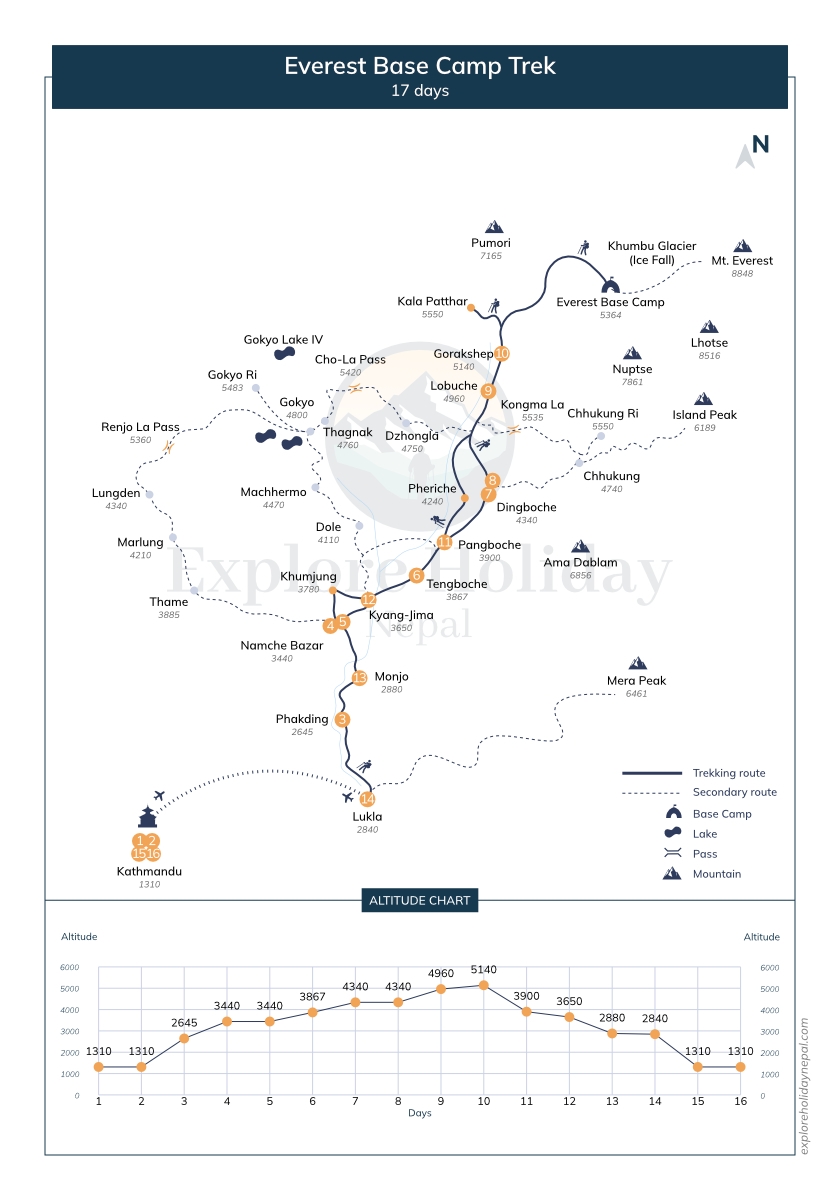
| Trip route | Kathmandu - Lukla - Namche - Tengboche - Dingboche - Lobuche - EBC - Kala Pathar - Kyang Jima - Monjo - Lukla - Kathmandu |
| Cost | USD 1,158 per person |
Highlights
- Witness the awe-inspiring grandeur of the world's highest point, Mount Everest Base Camp.
- Explore the cultural richness at Tengboche Monastery, a spiritual gem on the trek.
- Immerse in the vibrant Sherpa culture at Namche Bazar, the bustling capital of the Sherpa community.
- Visit the Hillary Museum, commemorating the first ascent of Everest by Sir Edmund Hillary and Tenzing Norgay in 1953.
- Marvel at Nepal's largest Khumbu Glacier and trek along the longest Ngozumpa Glacier.
- Ascend Kalapatthar for a breathtaking panoramic view of Everest and surrounding peaks.
- Elevate your experience with a helicopter flight offering a bird's-eye view of the majestic Himalayan range.
- Explore on an adventure combining Everest Base Camp trek with peak climbing for an added thrill.
- Engage in a variety of outdoor activities, from trekking to climbing, surrounded by the Himalayan wilderness.
Overview
Exploring on the Everest Base Camp trek with Explore Holiday Treks offers a unique opportunity to experience the grandeur of Mount Everest up close. Nestled in the Solukhumbu district of Nepal, Everest, at 8,848 meters (29,029 feet), is the highest peak on Earth. This iconic mountain straddles the border between Nepal and Tibet, offering two primary climbing routes—the classic southeast route from Nepal and the northern route from Tibet. Named after Sir George Everest, the 19th-century British surveyor, Everest is known as Chomolungma in Tibetan, meaning "Mother Goddess of the World," and Sagarmatha in Nepali, translating to "Peak of Heaven."
The trek to Everest Base Camp is more than just a physical challenge; it's a pilgrimage that attracts adventurers from around the world. This journey allows trekkers to immerse themselves in the natural beauty and rich cultural tapestry of the Himalayas while confronting the formidable obstacles of high-altitude trekking. Explore Holiday Treks, renowned for its expert guides and well-planned itineraries, ensures that every aspect of this unforgettable experience is catered to with the utmost care and professionalism.

Top Blogs About Trekking in the Everest Region
Uncover the best blogs about trekking in the Everest region, featuring expert advice, detailed itineraries, personal experiences, and essential tips for adventurers looking to explore the Himalayas.
Top 5 Everest Trekking Packages
Where is Mount Everest? Discover the World’s Highest Peak
Top 9 Reasons to Go on Everest Base Camp Trek
Accommodation During Everest Base Camp Trek
Shower and Laundry Facilities During the Everest Base Camp Trek
Elevation Facts for Everest Base Camp Trekking
Physical Fitness Requirements for Everest Base Camp Trek
The Best Ways to Trek to Everest Base Camp
When is the Best Time to Hike to Everest Base Camp?
Everest Base Camp Trek: Tips and FAQs
Why Sleeping at Everest Base Camp Is the Ultimate Trekking Experience?
Which is the Better Lake Trek in Nepal: Gokyo or Tilicho Lake Trek?
Altitude Sickness on Nepal Treks: Symptoms, Treatment, and When to Descend (Complete Guide)
Everest Base Camp Toilet Problem: The Environmental Crisis on the World's Highest Mountain
Monastery Life in Nepal: Finding Peace in the Heart of the Himalayas
Altitude Sickness on Nepal Treks: Symptoms, Treatment, and When to Descend (Complete Guide)
Dal Bhat Power 24 Hour: The Science and Soul Behind Nepal's Mountain Fuel
10 Essential Everest Trekking Tips Every First-Time Trekker Must Know
The 3 AM Wake-Up Call Nobody Tells You About: Real Stories from Everest Base Camp
Solo Female Trekking in Nepal: A Complete Safety and Empowerment Guide for 2026
Complete Fitness Training Guide for Nepal Trekking 2026: From Couch to Base Camp in 12 Weeks
The Trekking Experience
The Everest Base Camp Trek begins with one of the most exhilarating flights in the world—from Kathmandu to Lukla. This short mountain flight sets the tone for the adventure ahead, landing on a cliffside airstrip that marks the gateway to the legendary Khumbu region. Depending on the chosen route and acclimatization plan, the trek typically takes 12 to 16 days, offering a balanced pace for safety and enjoyment.
From Lukla, the trail winds through lush pine and rhododendron forests, terraced farmlands, and traditional Sherpa settlements. As trekkers move deeper into the Khumbu Valley, the landscape gradually transforms—lush greenery gives way to alpine terrain, glacial rivers, and towering Himalayan giants. Along the way, breathtaking views of Mount Everest, Lhotse, Nuptse, and Ama Dablam become constant companions.
Key cultural and logistical hubs such as Namche Bazaar play an important role in the journey. Known as the heart of the Everest region, Namche offers a blend of modern comforts and traditional Sherpa culture. The trail then leads toward spiritual landmarks like Tengboche Monastery, one of the most significant Buddhist monasteries in the Himalayas, framed by dramatic mountain backdrops.
The journey culminates at Everest Base Camp (5,364m), where trekkers stand at the foot of the world’s highest mountain. Surrounded by the Khumbu Icefall and massive glacial formations, reaching base camp is both a physical achievement and an emotional milestone. Many trekkers also include a sunrise ascent of Kala Patthar for the most iconic close-up views of Everest.
For travelers seeking alternatives or extensions, this trek pairs well with routes such as the Everest Gokyo Lakes Trek, Everest Three Passes Trek, or the shorter Everest View Trek.
Climate and Weather in the Everest Region
The weather in the Everest region is highly variable and can change quickly, even during peak trekking seasons.
Best Seasons for Everest Base Camp Trek (Featured Snippet)
- Spring (March–May): Mild temperatures, blooming rhododendrons, excellent visibility
- Autumn (September–November): Stable weather, crisp mountain views, best overall conditions
During peak trekking seasons, temperatures at Everest Base Camp range between -10°C to -20°C, especially at night. While days can be sunny and comfortable, cold winds and sudden snowfall are always possible.
The monsoon season (June–August) brings heavy rainfall, slippery trails, and frequent cloud cover, while winter (December–February) offers fewer crowds but extremely cold temperatures and higher risks of snow accumulation.
Compared to lower-altitude treks like the Annapurna Base Camp Trek or Ghorepani Poon Hill Trek, weather in the Everest region demands greater preparation and flexibility.
Local Culture and Religion
The Everest region is home to the Sherpa community, renowned worldwide for their mountaineering expertise and deep-rooted Himalayan traditions. Sherpa culture is closely connected to Tibetan Buddhism, which shapes daily life, festivals, and architecture throughout the region.
Along the trail, trekkers encounter:
- Gompas (monasteries)
- Chortens and prayer wheels
- Mani stone walls carved with sacred mantras
These spiritual landmarks are not merely decorative—they reflect the Sherpa belief in harmony between humans and nature. Similar cultural depth can also be experienced on treks such as the Manaslu Circuit Trek and Upper Mustang Trek, though the Everest region remains the most iconic.
Food and Cuisine on the Trail
High-altitude trekking demands proper nutrition, and teahouses along the Everest Base Camp route provide filling, energy-rich meals.
Common Foods Available:
- Dal bhat (rice, lentils, vegetables) – the most reliable and nutritious option
- Momo (dumplings)
- Thukpa (Tibetan noodle soup)
- Pasta, fried rice, pancakes, potatoes
As altitude increases, food variety becomes more limited, but meals remain hearty and freshly prepared. Warm drinks such as ginger tea, lemon tea, and coffee are widely available and help with hydration and warmth.
Accommodation During the Everest Base Camp Trek
Accommodation along the route primarily consists of teahouses and mountain lodges operated by local families. These lodges provide:
- Simple yet comfortable rooms
- Shared bathrooms
- Heated dining areas
- Charging and Wi-Fi (limited at higher altitudes)
Facilities become more basic as altitude increases, but the hospitality remains warm and welcoming. Compared to remote expeditions like the Kanchenjunga Circuit Trek, accommodation on the Everest Base Camp trail is relatively well-developed.
Travel Insurance – A Critical Requirement
Due to the remote terrain and high altitude, comprehensive travel insurance is essential for the Everest Base Camp Trek.
Your policy should include:
- High-altitude trekking coverage
- Emergency medical treatment
- Helicopter evacuation
- Trip interruption or cancellation
In the event of severe altitude sickness or injury, helicopter evacuation may be the only option, making insurance non-negotiable.
Guides and Porters
Explore Holiday works with licensed, experienced guides and porters who are familiar with the terrain, altitude challenges, and local culture. Their role is vital in ensuring safety, pacing, and a smooth trekking experience.
- Guides manage acclimatization, route decisions, and cultural interpretation
- Porters carry heavy loads, allowing trekkers to walk comfortably
Employing local staff also supports the regional economy and promotes ethical trekking practices.
Altitude Sickness and Safety
Altitude sickness is one of the biggest concerns on the Everest Base Camp Trek.
How to Reduce the Risk (Featured Snippet)
- Ascend gradually
- Take acclimatization days seriously
- Drink plenty of water
- Avoid alcohol and smoking
- Inform your guide immediately if symptoms appear
Common symptoms include headaches, nausea, fatigue, and dizziness. Severe cases can lead to HAPE or HACE, which require immediate descent and medical attention
Conclusion – Why Choose Everest Base Camp Trek?
The Everest Base Camp Trek with Explore Holiday Treks is more than a physical journey—it is a deeply immersive experience through one of the most legendary landscapes on Earth. From the dramatic flight to Lukla and the vibrant Sherpa culture of Namche Bazaar to the spiritual calm of Tengboche and the raw grandeur of Everest Base Camp, every step carries meaning.
For travelers seeking a life-changing Himalayan adventure supported by experienced professionals, this trek remains one of the most rewarding journeys Nepal has to offer.
Trip Preparation
- Thermal underwear (top and bottom)
- Moisture-wicking t-shirts (long-sleeved)
- Moisture-wicking underwear
- Fleece jacket or pullover
- Insulated down or synthetic jacket
- Waterproof, windproof jacket (Gore-Tex or similar)
- Waterproof, windproof pants (Gore-Tex or similar)
- Warm beanie or hat
- Sun hat or cap
- Neck gaiter or scarf
- Trekking pants (convertible preferred)
- Waterproof trousers
- Lightweight gloves (inner)
- Insulated gloves or mittens (outer)
- Hiking boots (broken in and waterproof)
- Comfortable camp shoes (e.g., sneakers or sandals)
- Trekking backpack (30-40 liters) with waterproof cover
- Sleeping bag (rated for cold temperatures)
- Sleeping pad or mattress (insulated)
- Adjustable trekking poles
- Insulated water bottles or hydration bladder (2 liters capacity)
- Travel-sized toiletries
- Biodegradable soap
- Quick-dry towel
- Medications for altitude sickness, pain relief, and common ailments
- Sun protection cream, wet wipes, and hand sanitizer
- Camera and batteries
- Notebook and pen
- Earplugs (for sleeping in lodges)
- Portable solar charger
- Headlamp, power bank, and extra batteries
Trip Itinerary
Day 1 : Arrival in Kathmandu then transfer to hotel
Upon your arrival in Kathmandu, you will be greeted by a representative from Explore Holiday Treks who will transfer you to your hotel. After settling in, take the rest of the day to relax or explore the vibrant Thamel district. Here, you can enjoy local cuisine, shop for trekking gear, or immerse yourself in the rich culture of Nepal. In the evening, a welcome dinner will be hosted to discuss the trek ahead and ensure you have everything you need for an unforgettable journey.
Day 2 : Fly to Lukla (2,846 m) and Trek to Phakding (2,645 m - 04 hrs)
Option 1: Direct Flight to Lukla
After an early breakfast, you will take a scenic flight from Kathmandu to Lukla Airport, a small but iconic mountain airstrip perched at 2,846 meters. The flight is approximately 30–35 minutes, offering spectacular aerial views of the Himalayan peaks, including snow‑capped mountains, deep valleys, and rugged terrain as you approach the Everest region.
Upon landing, you will meet your trekking crew and begin the trek to Phakding (2,645 meters). The hike takes about four hours, weaving through charming Sherpa villages, lush pine forests, and alongside the glistening Dudh Kosi River.
Arriving in Phakding, you can relax at your lodge and enjoy the peaceful mountain ambiance, preparing for the adventure ahead.
Note: Direct flights from Kathmandu to Lukla may be less common during peak trekking seasons (spring and autumn), as most flights are now scheduled from Ramechhap due to air traffic management and better weather windows.
Option 2: Ramechhap Flight to Lukla (with Road Transfer)
Alternatively, you can begin your trek with a flight to Lukla via Ramechhap (Manthali Airport), which has become the standard route during high trekking seasons (typically spring and autumn) to reduce flight delays and improve reliability.
After breakfast, you will depart Kathmandu early in the morning by road to Ramechhap, located about 130–140 km east of the capital. The drive takes approximately 4–6 hours, allowing you to enjoy scenic countryside landscapes, terraced farmlands, and glimpses of rural Nepal before reaching Manthali Airport for your flight to Lukla.
From Ramechhap, take a short flight of around 15–20 minutes to Lukla, offering thrilling views of the Himalayan foothills and towering peaks as you descend into the Solukhumbu region.
After landing, you will meet your trekking team and begin the walk to Phakding (2,645 meters)—an approximately four‑hour trek through scenic villages, forests, and along the Dudh Kosi River.
This Ramechhap route is popular because it reduces delays and increases the chances of a timely flight, especially when weather conditions change quickly in the mountains.
Day 3 : Trek to Namche Bazaar (3,440 m / 11,350 feet - 06 hrs)
Today’s trek will lead you to the bustling town of Namche Bazaar (3,440 meters), often referred to as the gateway to the Everest region. The trek lasts approximately six hours, with a challenging ascent as you pass through the stunning landscapes of Sagarmatha National Park. Along the way, enjoy views of the magnificent peaks and the vibrant local culture. Once in Namche, you’ll have the chance to explore the local market, enjoy a hot meal, and prepare for the next day's adventures.
Day 4 : Acclimatization Day in Namche, Short Scenic Hike
Acclimatization is crucial for your body to adjust to the altitude, so today is set aside for a well-deserved rest. You can take a short scenic hike to the Everest View Hotel for breathtaking panoramic views of Everest and other surrounding peaks. This hike will help you acclimatize while offering opportunities for photography and cultural encounters with local Sherpa people. Spend the evening relaxing in Namche and preparing for the journey ahead.
Day 5 : Trek to Tengboche (3,867 m - 05 hrs)
Leaving Namche, you will undertake on a five-hour trek to Tengboche (3,867 meters), known for its famous monastery. The trail descends through lush forests and crosses the Dudh Kosi River before climbing to Tengboche, where you can visit the monastery and witness a local Buddhist ceremony if the timing aligns. The stunning backdrop of Ama Dablam adds to the spiritual atmosphere. After exploring, you will settle into your lodge for the night, enjoying the tranquility of this remarkable location.
Day 6 : Trek to Dingboche (4,340 m - 05 hrs)
Your trek today takes you to Dingboche (4,340 meters), approximately a five-hour journey. You will follow the trail along the Imja Khola, passing through scenic valleys and impressive vistas. The landscape transitions to a more rugged terrain as you gain altitude. Upon arrival in Dingboche, take time to acclimatize and enjoy views of the surrounding peaks, including Lhotse and Island Peak, before resting in your lodge.
Day 7 : Rest Day in Dingboche for Acclimatization and Short Excursion
Today is another acclimatization day. You can choose to hike up to Nagarjun Hill for breathtaking views of the Himalayas, or simply relax and explore the charming village. Engaging in light activities helps your body adapt to the altitude while offering more opportunities to appreciate the stunning scenery. Take advantage of this downtime to prepare for the next stages of your trek.
Day 8 : Trek to Lobuche (4,960 m - 05 hrs)
The trek to Lobuche (4,960 meters) will take about five hours. You will traverse the rocky paths and enjoy magnificent views of the Khumbu Glacier. As you approach Lobuche, the towering peaks of Nuptse and Pumori will dominate your surroundings. Arriving at Lobuche, settle into your lodge and prepare for the highlight of your trek in the coming days.
Day 9 : Trek to Everest Base Camp (5,364 m) and Back to Gorakshep (06 hrs)
The pinnacle of the trek unfolds as you reach Everest Base Camp, a symbolic achievement. After soaking in the awe-inspiring surroundings, trace your steps back to Gorakshep, where a sense of accomplishment fills the air.
Everest Base Camp (EBC), positioned at an elevation of approximately 17,600 feet (5,364 meters), serves as the launching pad for expeditions aiming to conquer the summit of Mount Everest. Beyond its strategic mountaineering significance, EBC captivates visitors with awe-inspiring panoramic views of the surrounding Himalayan peaks, including the towering Everest. The landscape unfolds in a breathtaking tapestry, encompassing diverse terrains from lush forests to barren glacial expanses. This iconic base camp not only provides a platform for aspiring climbers but also offers an unparalleled experience, immersing trekkers in the natural grandeur of one of the world's most spectacular mountainous regions.
Day 10 : Climb Kalapathar (5,545 m) and Trek to Pangboche (3,900 m - 06 hrs)
Awake early for a sunrise hike to Kalapathar (5,545 meters), where you’ll witness one of the most stunning views of Everest. After descending, you’ll trek back to Gorakshep for breakfast and then continue to Pangboche (3,900 meters), a six-hour trek that offers a mix of rugged trails and serene landscapes. Upon arrival in Pangboche, you’ll settle into your lodge and reflect on the incredible experiences of the past days.
Day 11 : Trek to Kyang-Jima (3,650 m) via Thyangboche (06 hrs)
Today's trek takes you to Kyang-Jima (3,650 meters), with a stop at Thyangboche Monastery. This six-hour hike will offer a combination of ascents and descents through lush forests and picturesque villages. In Thyangboche, take time to explore the monastery and enjoy the stunning mountain views before continuing to Kyang-Jima, where you can relax and enjoy the peaceful surroundings.
Day 12 : Trek to Monjo (2,880 m) via Namche Bazaar (05 hrs)
Leaving Kyang-Jima, you will trek back to Monjo (2,880 meters) via Namche Bazaar, taking approximately five hours. The return journey allows you to enjoy the landscapes from a different perspective as you descend. Arriving in Monjo, take the opportunity to reflect on your journey while enjoying a hot meal and a comfortable night’s stay.
Day 13 : Trek to Lukla (2,846 m - 04 hours)
On your final trekking day, you will make your way back to Lukla (2,846 meters), a pleasant four-hour hike. As you retrace your steps, enjoy the beauty of the Khumbu region one last time. Upon reaching Lukla, celebrate your achievement with your trekking team and prepare for your flight back to Kathmandu the next day.
Day 14 : Fly from Lukla to Kathmandu with Afternoon Free at Leisure
After breakfast, you’ll catch a morning flight from Lukla back to Kathmandu. Upon arrival, you’ll have the afternoon free to relax or explore the city further. Consider visiting cultural sites like Swayambhunath Stupa or the historic Durbar Square. In the evening, Explore Holiday Treks will host a farewell dinner to celebrate the completion of your trek.
Day 15 : International Departure
On your final day, you’ll have time for any last-minute shopping or sightseeing in Kathmandu before your departure. A representative from Explore Holiday Treks will assist you with your transfer to the airport, ensuring you leave with wonderful memories of your Everest Base Camp adventure. Safe travels!
- 1 - 1 pax US$ 1,500
- 2 - 5 pax US$ 1,355
- 6 - 9 pax US$ 1,255
- 10 - 15 pax US$ 1,199
- 16 - 20 pax US$ 1,158
Inclusions
What is included?
- All arrival and departure transportation from the airport to hotel and vice versa.
- all ground private transportations based on group size.
- 3* Accommodation in a hotel in Kathmandu with breakfast included.
- A guided tour of Kathmandu.
- Domestic flights from Kathmandu to Lukla and back. (manthali -lukla-manthali)
- All necessary permits for trekking, including fees for Sagarmatha National Park.
- Full board during the trek, which means meals (breakfast, lunch, dinner and accommodations in mountain ).
- The trek includes a guide who will receive daily wages, meals, accommodation, transportation allowance, and medical insurance (only for field staff/porters).
- A group dinner upon arrival or departure, with a briefing about the trek.
- A comprehensive medical kit carried by our guide during the entire trek.
- Private vehicles for sightseeing tours based on the group size.
- All Government tax and vat
What isn't included?
- Nepal visa and medical/travel insurance are not included.
- Meals in Kathmandu and personal expenses like laundry are not covered.
- If you prefer a single room in Kathmandu or during treks (where available), there's an additional cost.
- Emergency evacuation, whether by any means of transportation or helicopter service, is an extra expense.
- You need to bring your personal trek gear, including sleeping bags, duvet/down jackets, and kit/duffel bags.
- Additional snacks, refreshments, and drinking water are at your own cost.
- If you have to return early from the trek due to personal reasons or sickness, you'll need to cover the extra expenses yourself (can be claimed from your insurance).
- Bring a personal medical kit based on your doctor's advice.
- TIPS and donations
Complimentary
Booking Terms and Conditions
When you choose to trek with Explore Holiday Treks for the Everest Base Camp Trek, you agree to our booking terms and conditions, which ensure a smooth and enjoyable experience. To secure your spot, a deposit is required at the time of booking, with the balance due before the trek begins. It is essential to provide accurate personal information, including passport details, and to read and understand our policies regarding changes, cancellations, and other aspects of the trek. By making a reservation, you acknowledge that you are physically fit to participate in this high-altitude trek and understand the associated risks.
Our terms also cover the responsibilities of both parties, detailing the rights and obligations of Explore Holiday Treks as your guiding service and those of the trekker. This includes adherence to safety guidelines, the importance of following the trek itinerary, and maintaining respect for the local culture and environment. We believe that transparency in our terms fosters a positive trekking experience for all participants.
Booking, Cancellation, and Refund Policy
Explore Holiday Treks offers a straightforward booking process for the Everest Base Camp Trek. To initiate your booking, you can fill out our online form or contact us directly. After confirming your details, a deposit will secure your reservation. In the event of a cancellation, our policy allows for a full refund of the deposit if canceled more than 30 days prior to the trek. Cancellations made within 30 days are subject to a percentage fee based on the proximity of the trek date.
We understand that unexpected circumstances can arise, so we encourage trekkers to consider travel insurance that covers cancellations, medical emergencies, and trekking-related incidents. Refunds for unused services or changes to the itinerary will be evaluated on a case-by-case basis. Our goal is to provide clear communication and support throughout the booking process, ensuring that trekkers feel informed and confident in their plans.
Transportation
Transportation to the Everest Base Camp Trek typically involves a combination of domestic flights and road travel. Most trekkers begin their journey with a flight from Kathmandu to Lukla, a small airport nestled in the Himalayas. This flight offers breathtaking views of the mountains and sets the tone for the adventure ahead. Upon landing in Lukla, trekkers will be greeted by our local team, who will assist with the logistics of the trek.
During the trek, transportation is primarily on foot, as the Everest region is accessible only by trekking routes. Our team will provide support, including porter services for your luggage, allowing you to focus on the experience. At the end of the trek, a return flight from Lukla to Kathmandu will complete your journey, offering another opportunity to take in the stunning Himalayan vistas.
Trip and the Weather
The Everest Base Camp Trek is renowned for its dramatic landscapes and breathtaking views, but the weather can be unpredictable. Trekkers should be prepared for varying conditions, from sunny days to sudden rain or snow, particularly at higher elevations. The temperature can fluctuate significantly, with warmer days at lower altitudes and much colder conditions as you ascend toward base camp.
Understanding the weather patterns is crucial for a successful trek. We provide detailed information about expected conditions, ensuring trekkers are equipped with appropriate clothing and gear. Staying informed about daily weather forecasts during the trek allows our team to adjust itineraries as needed for safety and enjoyment.
Best Time for Everest Base Camp Trek
The best time for the Everest Base Camp Trek is during the pre-monsoon (March to May) and post-monsoon (September to November) seasons. During the pre-monsoon period, temperatures are rising, and the skies are generally clear, providing optimal conditions for trekking. This season is also marked by blooming flora, enhancing the beauty of the trail.
The post-monsoon season offers similar benefits, with clear skies and stable weather, making it a popular time for trekkers. However, temperatures begin to drop, especially at night, so proper gear is essential. Trekkers should avoid the monsoon season (June to August) due to heavy rains and the risk of landslides, as well as winter months (December to February) when cold temperatures and snow can restrict access to the trail.
Everest Base Camp Trekking Difficulty
The Everest Base Camp Trek is considered moderately difficult, suitable for trekkers with a reasonable level of fitness and some prior trekking experience. The trek involves long days of walking, typically 5 to 8 hours per day, with significant elevation gains. Trekkers will ascend to a maximum altitude of 5,364 meters (17,598 feet) at Everest Base Camp, making acclimatization crucial to avoid altitude sickness.
The trails vary from well-marked paths to rocky and steep sections, requiring stamina and resilience. Proper preparation, including physical training and acclimatization techniques, can significantly enhance your trekking experience. Our guides are trained to assist trekkers in managing their pace and adjusting plans as needed to ensure safety and enjoyment throughout the journey.
Food and Accommodation
During the Everest Base Camp Trek, trekkers can expect a mix of traditional Nepali and international cuisine. Meals typically include dal bhat (lentil soup with rice), momos (dumplings), and various vegetable curries. Most tea houses and lodges along the route provide hearty meals designed to refuel trekkers after long days on the trail. Vegetarian options are widely available, catering to various dietary preferences.
Accommodation primarily consists of tea houses, which offer basic but comfortable lodging. Rooms usually come with shared bathrooms, and while amenities may be simple, our team strives to ensure cleanliness and comfort. We emphasize the importance of supporting local businesses and providing trekkers with a genuine experience of the hospitality of the Sherpa people.
Communication and Networking
In the Everest region, communication options are improving, with many tea houses offering Wi-Fi services for trekkers. Local SIM cards can be purchased in Kathmandu, allowing access to mobile networks during the trek. However, connectivity can be intermittent in remote areas, so it’s advisable to inform family and friends of potential limitations.
Networking opportunities abound, as trekkers often meet fellow adventurers from around the globe along the trail. Engaging with local guides and porters not only enriches the experience but also fosters cultural exchange. The camaraderie among trekkers creates a welcoming atmosphere, making it easy to share stories and form lasting friendships throughout the journey.
Explore Holiday Treks Team for Everest Base Camp Trek
At Explore Holiday Treks, our team is composed of experienced and dedicated professionals committed to making your Everest Base Camp Trek an unforgettable adventure. Our guides are well-versed in high-altitude trekking, possessing in-depth knowledge of the region's geography, culture, and safety protocols. They are also trained in first aid and acclimatization strategies, ensuring that trekkers are well taken care of throughout the journey.
In addition to our guides, our support staff, including porters and cooks, play a vital role in enhancing your experience. They are familiar with the local customs and work diligently to provide excellent service, ensuring that you can focus on the trek itself. We believe that a well-prepared and knowledgeable team is essential for a successful expedition, and we pride ourselves on the professionalism and friendliness of our staff.
Everest Base Camp Trek Starting and Ending Points
The Everest Base Camp Trek typically begins and ends in Kathmandu, Nepal's vibrant capital. From Kathmandu, trekkers take a domestic flight to Lukla, where the adventure truly begins. The trek itself follows a well-established route through charming Sherpa villages, lush forests, and breathtaking mountain scenery, ultimately reaching Everest Base Camp.
After experiencing the majestic landscapes and cultural richness of the region, trekkers return to Lukla and take a flight back to Kathmandu to conclude their journey. This circular route ensures that you experience the highlights of the region while enjoying the thrill of trekking in the shadow of the world’s highest peaks.
Important Note
It is essential for trekkers to be aware of the physical and mental challenges associated with the Everest Base Camp Trek. Proper preparation, including physical training and acclimatization, is vital for a successful trek. We recommend consulting with a healthcare professional prior to exploring on your adventure, especially if you have pre-existing medical conditions or concerns.
Trekkers should also consider obtaining travel insurance that covers trekking-related activities, as well as emergency evacuation if necessary. Staying informed about the trek itinerary and being flexible with plans can significantly enhance your experience in this magnificent region.
Why with Explore Holiday Treks
Choosing Explore Holiday Treks for your Everest Base Camp Trek ensures a well-organized, safe, and enriching experience. Our commitment to responsible tourism means that we prioritize the well-being of our trekkers while also supporting local communities and preserving the environment. We provide personalized itineraries tailored to your interests and fitness levels, allowing you to make the most of your adventure.
Our team is dedicated to delivering exceptional service, from the initial booking process to the completion of your trek. We emphasize safety, comfort, and cultural immersion, making your journey in the Everest region not just a trek but a transformative experience. With Explore Holiday Treks, you can explore on the adventure of a lifetime, exploring the majestic landscapes and vibrant culture of the Himalayas with confidence and support.
The Everest Base Camp trek is not just a journey to one of the world’s most famous landmarks; it’s an adventure filled with breathtaking scenery, rich culture, and personal challenge. With careful planning, respect for the environment, and awareness of your limits, the Everest Base Camp trek can be a transformative experience that leaves you with lasting memories of the majestic Himalayas. Whether you’re an experienced trekker or a newcomer to trekking, this adventure promises to be unforgettable.