Upper Dolpo Trek
| Trip code | |
| Package name | Upper Dolpo Trek |
| Duration | 24 |
| Max. elevation | 5151 m |
| Level | Moderate |
| Transportation | Domestic flight as per Itinerary and all around transportation |
| Accomodation | Hotel in Kathmandu and Tea House / Lodge during the trek |
| Starts at | kathmandu |
| Ends at | kathmandu |
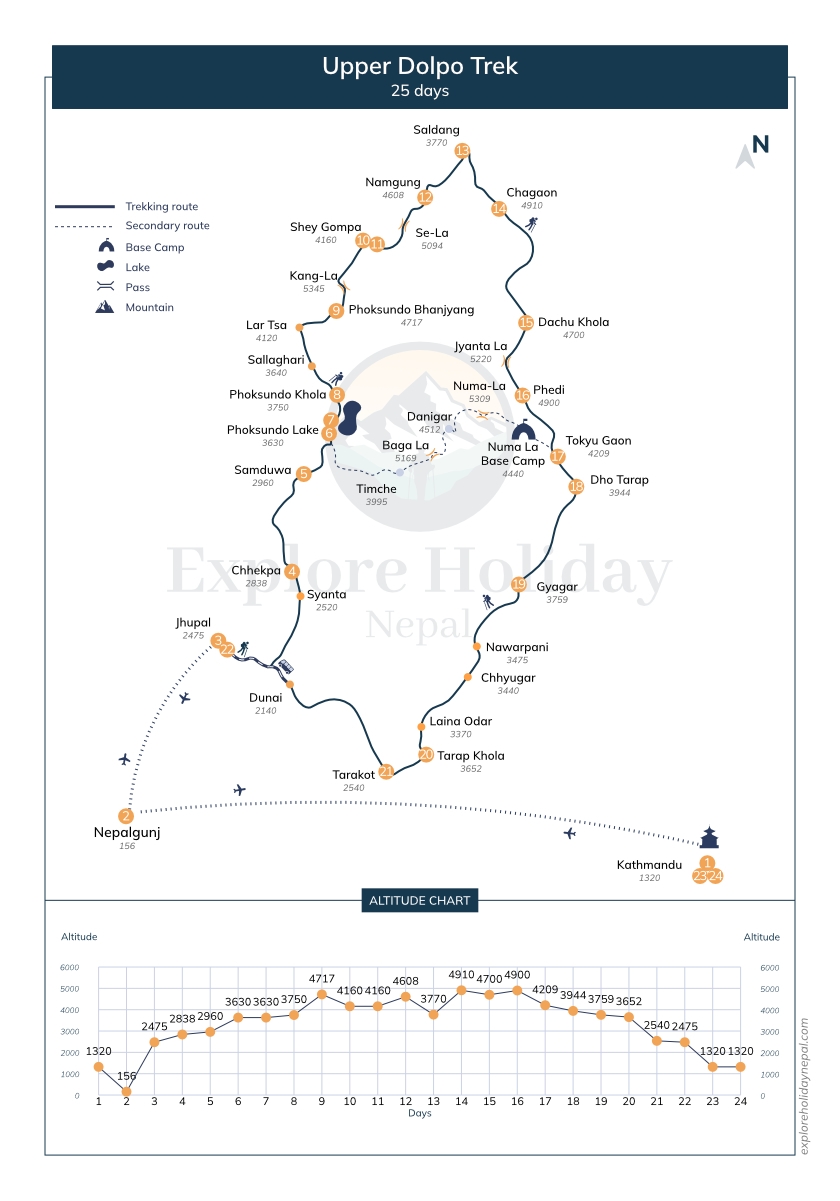
| Trip route | Kathmandu - Nepalgunj - Chepkpa - Samduwa Village - Phoksundo Lake - Phoksundo Khola - Phoksundo Bhanjyang - Kang La - Shey Gompa - Nam Gaon - Saldang - Cha Gaon - Dachu Khola - Jyanta La - Tokyu Gaon - Dho Tarap - Gyagar - Tarap Khola - Tarakot - Dunai - Nepalgunj - Kathmandu |
| Cost | USD 3,140 per person |
Highlights
- Explore the land of snow leopards and blue sheep, adding an element of great fascination to your trek in Upper Dolpo.
- Immerse yourself in the largest national park in Nepal, rich in diverse flora and fauna, enhancing the trekking experience.
- Witness the beauty of the turquoise Phoksundo Lake and visit the traditional Ringmo village, providing cultural and natural highlights.
- Trek over the high scenic Kang-La pass for breathtaking views, leading to the remote and isolated Shey Monastery, a historical gem.
- Traverse from lush green coniferous forests to the windswept barren landscapes, experiencing the diverse and scenic beauty of Upper Dolpa.
Overview
Upper Dolpo Trek: Journey to Nepal's Last Hidden Kingdom
Here's something most trekkers never experience—a region so remote that it stayed completely closed to foreigners until 1989. The Upper Dolpo Trek takes you deep into one of the Himalayan region's most isolated corners, where Tibetan Buddhist culture survives untouched and landscapes look like they belong on another planet.
Upper Dolpo sits in Nepal's far northwest, squeezed between the Tibetan plateau and massive Himalayan ranges. It's the kind of remote where roads don't exist, internet is a distant memory, and villages operate exactly as they did centuries ago. Peter Matthiessen made this region famous with his book "The Snow Leopard," and honestly, not much has changed since he walked these trails in the 1970s.
The Upper Dolpo Trek (as opposed to the full Circuit) typically runs 14-18 days. You'll start from Juphal, trek through forests and villages to the stunning Phoksundo Lake, push deeper into Upper Dolpo's high-altitude desert landscapes, cross serious passes like Kang La (5,151m), and experience Tibetan Buddhist culture that's been preserved by sheer isolation.
Let's be clear though—this is advanced-level trekking. Remote, high, challenging, and expensive. You need serious experience and fitness.
Why Upper Dolpo Stayed Hidden So Long
Good question. If it's so spectacular, why did it take until 1989 for foreigners to visit?
Political sensitivity: Dolpo borders Tibet, and the Nepali government kept the area restricted for security reasons. Even now, you need expensive special permits that cost around $500 for 10 days, then $50 per additional day.
Extreme remoteness: No roads reach Upper Dolpo. Period. Getting there requires flights to Nepalgunj, then tiny planes to Juphal (weather permitting). After that, it's all foot power.
Harsh conditions: This is high-altitude desert territory with extreme weather, minimal vegetation, and brutal winters. It's not forgiving terrain.
Cultural preservation: The high permit costs and restricted access have actually protected Dolpo's traditional culture. Tourism hasn't destroyed the authenticity here like it has in more accessible areas.
These barriers mean Upper Dolpo sees maybe a few hundred trekkers annually. Compare that to Everest Base Camp's tens of thousands, and you understand the difference.
The Landscape: From Forest to High Desert
Upper Dolpo's terrain is dramatically varied and unlike most of Nepal.
Lower Sections: Green and Lush
Starting from Juphal, the trail winds through surprisingly lush landscapes. Pine and juniper forests, terraced fields, green hillsides, rushing rivers. You're in the foothills, and it feels like typical Nepali hill country.
Villages here are a mix of ethnic groups—Magar, Thakuri, and others. Life revolves around agriculture and trade. It's not wealthy, but it's functioning traditional mountain life.
Phoksundo Lake: The Turquoise Jewel
Phoksundo Lake (3,611m) is where things get magical. This is Nepal's deepest lake and second-largest, and its color is absolutely unreal—turquoise so vivid it looks fake. The lake sits in a stark valley surrounded by cliffs, with waterfalls cascading down from surrounding peaks.
The lake is sacred to both Buddhists and Bon-Po practitioners (followers of pre-Buddhist Tibetan religion). Ringmo village sits on the lake's edge with an ancient monastery. Locals circumambulate the lake as religious practice, and you'll see prayer flags everywhere.
Most trekkers spend at least two nights here—one for acclimatization, one just because the place is too beautiful to rush through.
Upper Dolpo: Tibetan Plateau Desert
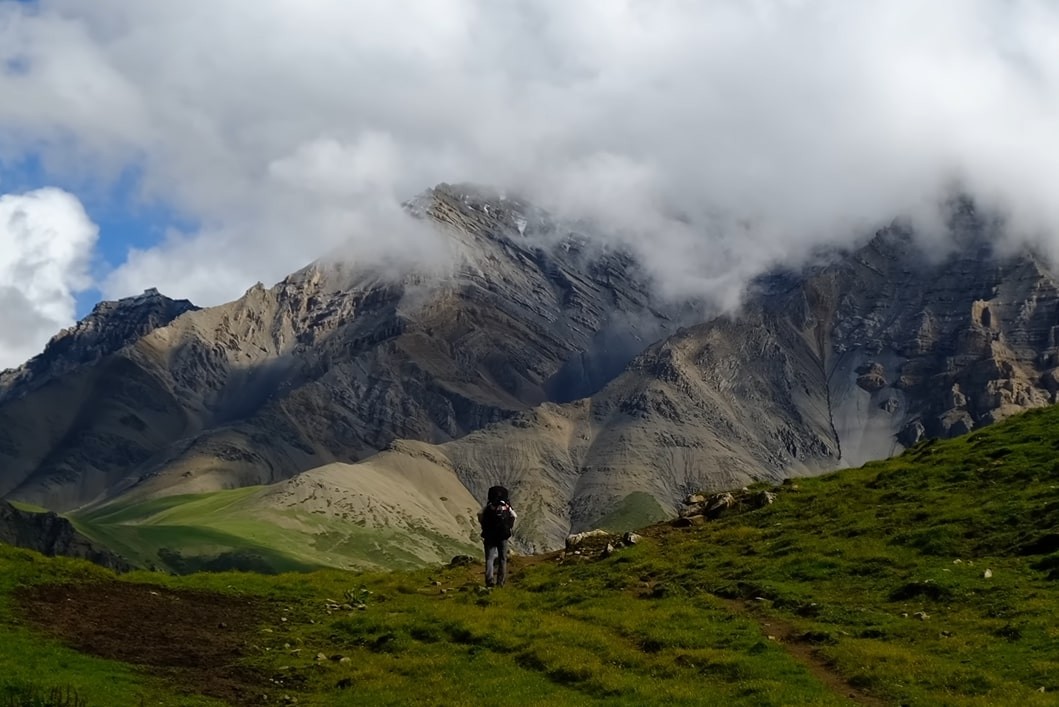
Beyond Phoksundo, the landscape transforms completely. As you climb toward Kang La Pass and deeper into Upper Dolpo proper, trees disappear entirely. The terrain becomes high-altitude desert—barren brown and red hills, sparse vegetation, intense sun, bone-dry air.
This is rain shadow territory. The Himalayas block monsoon moisture, creating desert conditions at altitude. It looks more like Tibet or Ladakh than typical Nepal. The landscape is harsh, stark, and beautiful in an alien way.
High Passes: The Real Challenge
The Upper Dolpo Trek crosses several serious passes:
Kang La Pass (5,151m) is the main one—a genuine high-altitude challenge with steep approaches, possibly snow and ice, and serious altitude. The views from the top encompass distant Tibetan peaks and the rugged Dolpo landscape stretching endlessly.
Shey La Pass (4,940m) is slightly lower but still demanding, offering views of the mystical Crystal Mountain, a peak considered sacred by both Buddhists and Bon-Po followers.
These passes aren't technical—no ropes or climbing gear needed—but they're physically demanding and altitude makes everything harder.
Cultural Experience: Tibetan Buddhism Preserved
The cultural aspect of Upper Dolpo is genuinely unique.
Bon-Po Religion
Upper Dolpo is one of the last strongholds of Bon, Tibet's pre-Buddhist religion. While most of the Himalayan region converted to Buddhism centuries ago, Bon practitioners maintain their traditions here in isolation.
You'll notice differences: Bon followers circumambulate sacred sites counterclockwise (opposite of Buddhists), their monasteries display different symbols, and their religious practices incorporate ancient shamanistic elements alongside Buddhist-influenced rituals.
Ancient Monasteries
Monasteries in Upper Dolpo are functioning religious centers, not tourist attractions:
Shey Gompa (4,500m) is perhaps the most important, sitting in a barren valley with views of Crystal Mountain. The monastery is ancient, remote, and spiritually significant. Monks here have chosen extreme isolation for religious practice.
Tshowa Gompa near Phoksundo Lake is smaller but equally authentic, perched on cliffs above the turquoise water.
If you're fortunate enough to witness ceremonies—monks chanting, long horns echoing across valleys, incense smoke rising into thin air—it's powerful stuff that stays with you.
Villages Frozen in Time
Villages like Dho Tarap and Ringmo look medieval. Stone houses with flat roofs, narrow alleyways, prayer flags snapping in constant wind. Life revolves around barley cultivation (which barely grows at this altitude), yak herding, and increasingly limited trade with Tibet.
These aren't museum recreations. People live here year-round, maintaining traditions because that's how life works here, not for tourists. Kids play in dusty streets. Women work impossibly steep fields. Elders spin prayer wheels and share stories.
The Dolpo-pa people (locals of Dolpo) are ethnically and culturally Tibetan. They speak Tibetan dialects, practice Tibetan Buddhism (and Bon), and maintain customs that have disappeared elsewhere. Their hospitality is genuine but reserved—these communities see few outsiders, so curiosity mixes with caution.
The Snow Leopard Connection
Peter Matthiessen's "The Snow Leopard" chronicles his 1973 journey through Dolpo searching for the elusive cat. Snow leopards still inhabit this region—it's some of their last remaining habitat. Spotting one requires lottery-level luck, but knowing they're out there, watching from rocky ridges, adds wildness to the trek.
You're more likely to see signs—paw prints in dust, scat on trails—than the actual animal. But the region supports healthy populations of Himalayan blue sheep (the snow leopard's primary prey), which you'll definitely spot on distant slopes.
Best Time for Upper Dolpo Trek
Timing matters enormously in Dolpo's extreme climate.
Late Spring/Early Summer (May to June)
This is one of two main trekking windows. By May, snow has cleared from most passes (though some sections might still have patches). Temperatures warm up—days can reach 10-15°C in valleys, though nights remain cold, especially at high camps.
Advantages: Passes generally clear and accessible. Wildflowers blooming in lower sections. Longer daylight hours. Villages are active as people return from winter homes at lower elevations.
Disadvantages: June marks monsoon start in most of Nepal. While Dolpo's rain shadow protects it from heavy rains, weather becomes less predictable. Afternoon clouds and occasional precipitation are possible.
Autumn (September to October)
Prime season. After summer weather clears in September, autumn brings stable conditions, clear skies, and excellent visibility. October especially offers perfect trekking weather.
Temperatures are manageable—warm enough during day for comfortable trekking, cold at night but not extreme. The air is crystal clear after summer, making mountain views spectacular.
Downsides: This is peak season, meaning slightly higher prices and more trekkers. Though "crowded" in Upper Dolpo means maybe 10-15 other groups across two weeks. It's still incredibly quiet compared to popular routes.
Winter (November to April) - Don't Do It
Winter in Upper Dolpo is brutally harsh. Temperatures drop to -20°C or lower. Heavy snow closes passes for months. Most lodges shut down as residents migrate to lower elevations for survival.
Only attempt winter trekking with extensive mountaineering experience, full winter camping gear, and flexible schedule. Even then, it's borderline crazy. The cold is life-threatening, evacuation is nearly impossible, and suffering outweighs enjoyment dramatically.
Monsoon (July to August) - Skip It
While Upper Dolpo gets less monsoon rain than most of Nepal, some precipitation occurs. Trails become muddy, river crossings dangerous, and clouds obscure views. The already dusty landscape becomes unpleasantly sticky when wet.
Unless you have very specific reasons, avoid monsoon season.
Difficulty Level: This is Advanced Trekking
The Upper Dolpo Trek is genuinely difficult—one of Nepal's hardest non-technical treks.
Duration: 14-18 days of consecutive trekking. That's two to three weeks of walking 6-8 hours daily. Your body needs serious endurance.
Altitude: Extended time above 4,000 meters, crossing passes above 5,000m. Altitude sickness is a major risk. The itinerary includes acclimatization days, but you must still ascend carefully and monitor symptoms.
Remoteness: This is as remote as trekking gets in Nepal. Help is literally days away. Helicopter evacuation is complicated, weather-dependent, and expensive. This demands serious preparation and conservative decision-making.
Terrain: Rugged trails, rocky paths, steep climbs, high passes. Not technically difficult, but physically demanding. River crossings on sketchy bridges. Landslide-prone sections. Rockfall zones.
Facilities: Very basic or nonexistent. Camping is common on many itineraries. Where teahouses exist, they're extremely rudimentary—thin mattresses, pit toilets, no showers, minimal food options.
Weather extremes: High-altitude desert means intense sun during day, freezing temperatures at night. Strong winds are constant at higher elevations.
Who should attempt this?
You absolutely need:
- Multiple previous treks of 7-10+ days
- Experience at altitude (successfully trekked above 4,000m previously)
- Excellent physical fitness (comfortable walking 6-8 hours daily with pack)
- Mental toughness for extended discomfort
- Flexible schedule (weather delays are common)
If the Annapurna Circuit Trek or Everest Base Camp Trek seriously challenged you, Upper Dolpo is probably too advanced. Build more experience first with treks like Manaslu Circuit Trek or Kanchenjunga Trek .
Getting There: The Journey to Juphal
Reaching Upper Dolpo's trailhead is half the adventure.
Kathmandu to Nepalgunj (Flight)
First, fly from Kathmandu to Nepalgunj, a city in Nepal's southern Terai plains near the Indian border. Flight takes about an hour. Nepalgunj is hot, dusty, and feels nothing like mountain Nepal. You'll usually spend one night here.
Nepalgunj to Juphal (Flight)
Next morning brings a flight to Juphal (2,475m) on a small aircraft—maybe 15-20 seats. This flight is spectacular when weather cooperates—you fly directly into mountains, watching landscape transform from plains to foothills to serious peaks.
The catch: These flights are extremely weather-dependent. Juphal's tiny airstrip sits in a mountain valley where weather changes rapidly. Morning flights usually happen, afternoon flights frequently cancel. Delays of 1-2 days are common, sometimes longer.
This is why Upper Dolpo itineraries build in buffer days. You can't control weather, and the trek can't start or finish without these flights.
Starting the Trek
From Juphal, trekking begins. The trail follows rivers through forests and villages, gradually gaining altitude. You're officially in one of Nepal's most remote regions.
What to Pack
Packing for Upper Dolpo requires careful planning.
Clothing:
- Base layers (3 sets) - merino wool or synthetic, absolutely no cotton
- Mid-layers - fleece jacket, quality down jacket (don't cheap out here)
- Outer shell - waterproof/windproof jacket and pants
- Trekking pants (2), quick-dry shirts (3)
- Warm hat, sun hat with neck protection, gloves (light and heavy pairs)
- Buff or neck gaiter for dust protection
- Wool/synthetic socks (6 pairs minimum)
Footwear:
- Well-broken-in waterproof trekking boots with solid ankle support
- Camp shoes or sandals (foot relief at lodges/camps)
- Gaiters (essential for dusty trails and possible snow)
Essential Gear:
- Sleeping bag rated to -15°C minimum (colder is better)
- Trekking poles (absolutely essential, not optional)
- Headlamp with extra batteries (cold drains them quickly)
- Water bottles (3 liters capacity minimum)
- Sunglasses with high UV protection (the sun is intense at altitude)
- Sunscreen SPF 50+ and lip balm with SPF
Medical Kit:
- Comprehensive first aid supplies
- Altitude sickness medication (discuss Diamox with doctor beforehand)
- Pain relievers, anti-diarrhea medication
- Water purification tablets or filter
- Personal prescriptions (bring extras)
- Blister treatment (you will get blisters)
Other:
- Camera and extra batteries/memory cards
- Power bank (charging opportunities are limited and expensive)
- Book or Kindle for downtime
- Earplugs (for lodge/tent sleeping)
- Toilet paper and wet wipes (showers are rare)
- Small amount of cash in small bills
Food and Accommodation
Set realistic expectations about comfort levels.
Food: In lower sections, simple teahouse menus—dal bhat, noodle soup, fried rice, maybe momos. Fresh vegetables are limited. Upper sections offer even less variety. Dal bhat becomes the staple because it's efficient. Expect to eat it twice daily. Bring supplemental snacks from Kathmandu—energy bars, chocolate, nuts—for when you're sick of dal bhat.
Accommodation: Depends on itinerary. Some use camping throughout (your team carries tents and cooking equipment). Others use lodges where available—very basic teahouses in villages like Ringmo and Dho Tarap. Expect small rooms, thin mattresses, shared pit toilets, no showers, minimal electricity.
Your sleeping bag rated to -15°C is crucial. Nights are cold, especially at high camps. Lodge blankets are insufficient.
Hot showers? Forget them except maybe in Juphal. Wet wipes become your bathing method. Embrace the grime—everyone's equally dirty after a week.
Safety Considerations
Upper Dolpo's remoteness makes safety absolutely critical.
Altitude Sickness: The biggest risk. Prevention requires following acclimatization schedules, ascending gradually, staying hydrated (3-4 liters daily), and descending immediately if symptoms worsen.
Medical Resources: Essentially nonexistent. No hospitals, no clinics, no doctors. Your guide carries first aid and has basic medical training, but serious problems require evacuation.
Communication: No cell signal throughout most of the trek. Satellite phones are essential for emergencies. Your guide should have one.
Evacuation: Helicopter rescue is complicated and expensive ($10,000-15,000+). Weather must cooperate. Suitable landing zones are limited. It can take days to arrange.
Travel Insurance is MANDATORY:
You must have comprehensive coverage including:
- Helicopter evacuation from remote areas up to 6,000m
- Medical treatment for altitude-related illnesses
- Emergency repatriation
- Trip cancellation/interruption (for weather delays)
Don't consider this trek without proper insurance. The financial risk is enormous.
What Makes Upper Dolpo Special
The Upper Dolpo Trek isn't Nepal's most popular route. It's not the easiest, cheapest, or most accessible.
But for experienced trekkers seeking genuine adventure in one of the world's last remote Himalayan regions, it's extraordinary. The combination of pristine high-altitude desert landscapes, ancient Tibetan Buddhist culture maintained by isolation, real solitude, and serious physical challenge creates an experience popular treks cannot match.
You'll work hard for two to three weeks. Your body will hurt. You'll go days without basic comforts. Weather might force delays. The altitude will challenge you. The remoteness will test your mental toughness.
And you'll return transformed. You'll have walked through landscapes few humans see. You'll have witnessed culture preserved not for tourists but by sheer geographic isolation. You'll have crossed 5,000-meter passes and circumambulated sacred lakes. You'll have tested your limits and discovered reserves of strength you didn't know existed.
The Upper Dolpo Trek rewards those brave enough to venture into true wilderness. If you've got the experience, fitness, time, budget, and adventurous spirit, this trek deserves serious consideration.
Just make sure you're properly prepared, choose a reliable trekking company, and approach the journey with the respect these mountains and communities demand. Do that, and Upper Dolpo will give you an adventure you'll measure all others against.
Top Blogs About Trekking in the Mustang and Dolpo Region:
Uncover the best blogs about trekking in the Mustang and Dolpo region, featuring expert advice, detailed itineraries, personal experiences, and essential tips for adventurers looking to explore the Himalayas.
Discovering Upper Mustang’s Mystical Villages
Altitude Sickness on Nepal Treks: Symptoms, Treatment, and When to Descend (Complete Guide)
Nepal Trekking Permits: Costs, Types, and How to Get Them
Nepal Trekking: What’s the Best Time to Go?
Budget Trekking in Nepal: Tips, Trails, and Tricks
Exploring Nepal’s Wildlife and Nature
Trekking Through Nepal: A Journey into the Himalayas
Top 10 Mountain Peaks in Nepal
Monastery Life in Nepal: Finding Peace in the Heart of the Himalayas
Trip Preparation
- Thermal underwear (top and bottom)
- Moisture-wicking t-shirts (long-sleeved)
- Moisture-wicking underwear
- Fleece jacket or pullover
- Insulated down or synthetic jacket
- Waterproof, windproof jacket (Gore-Tex or similar)
- Waterproof, windproof pants (Gore-Tex or similar)
- Warm beanie or hat
- Sun hat or cap
- Neck gaiter or scarf
- Trekking pants (convertible preferred)
- Waterproof trousers
- Lightweight gloves (inner)
- Insulated gloves or mittens (outer)
- Hiking boots (broken in and waterproof)
- Comfortable camp shoes (e.g., sneakers or sandals)
- Trekking backpack (30-40 liters) with waterproof cover
- Sleeping bag (rated for cold temperatures)
- Sleeping pad or mattress (insulated)
- Adjustable trekking poles
- Insulated water bottles or hydration bladder (2 liters capacity)
- Travel-sized toiletries
- Biodegradable soap
- Quick-dry towel
- Medications for altitude sickness, pain relief, and common ailments
- Sun protection cream, wet wipes, and hand sanitizer
- Camera and batteries
- Notebook and pen
- Earplugs (for sleeping in lodges)
- Portable solar charger
- Headlamp, power bank, and extra batteries
Trip Itinerary
Day 1 : Arrival in Kathmandu 1,320 m and transfer to hotel.
You'll land at Tribhuvan International Airport where our team will meet you and transfer you to your hotel in Thamel. After checking in and freshening up, the rest of the day is yours. If jet lag hasn't hit too hard, walk around Thamel—narrow streets packed with trekking shops, restaurants, and the organized chaos that is Kathmandu. Grab last-minute supplies if needed, exchange money, or just sit at a cafe and people-watch. Tonight we'll have a brief meeting to go over the trek details and answer questions. Rest well. Tomorrow's a big sightseeing day before flying to Nepalgunj.
Day 2 : Morning tour of Kathmandu, afternoon fly to Nepalgunj.
Morning's dedicated to seeing Kathmandu's major sites. You'll visit Swayambhunath (the Monkey Temple) with its iconic eyes of Buddha watching over the valley—great views of the city from up top. Then Pashupatinath, the sacred Hindu cremation site on the Bagmati River. It's intense—you'll see funeral ceremonies happening. Finally, Boudhanath Stupa, one of the world's largest, where Tibetan Buddhist pilgrims circumambulate and prayer flags flutter everywhere. Afternoon flight to Nepalgunj takes about an hour. Nepalgunj's hot, dusty, and completely different from Kathmandu. Stay in a local hotel tonight. Tomorrow's the flight to Juphal where trekking actually starts.
Day 3 : From Nepalgunj fly to Jhupal 2,475 m, trek en route Chepkpa - 04 hrs.
Early morning flight to Juphal—small plane, about 35 minutes, spectacular mountain views if weather cooperates. These flights delay frequently, so don't stress if you're waiting. From Juphal, the trek begins. Four hours to Chepka at 2,720m through villages and forests. The trail's not difficult yet, just getting your legs warmed up. Chepka's small with basic lodges. Your body's starting to remember what multi-day trekking feels like. This is the warm-up. Tomorrow continues deeper into Dolpo territory. Rest well and hydrate.
Day 4 : Trek to Chepkpa 2,838 m - 04 hrs.
Four hours trekking to Dunai at 2,838m. The trail follows rivers and passes through small settlements. Dunai's the district headquarters, so it's relatively developed with actual shops, multiple lodges, and even small restaurants. It's your last taste of anything resembling infrastructure before heading into remote Upper Dolpo. Stock up on any snacks or supplies you want. From tomorrow, things get progressively more basic and isolated. Tonight enjoy whatever comforts Dunai offers—maybe a decent meal, a semi-comfortable bed. Tomorrow the real adventure into Dolpo begins.
Day 5 : Trek to Samduwa village 2,960 m - 06 hrs.
Trek to Samduwa village, reaching an elevation of 2,960 meters after a 6-hour journey. The trail winds through picturesque terrain, offering encounters with local culture and a glimpse into traditional village life.
Day 6 : Trek to Phoksundo Lake 3,630 m - 06 hours.
Embark on a 6-hour trek to the stunning Phoksundo Lake at 3,630 meters. The pristine lake, surrounded by snow-capped peaks, is a highlight of the Upper Dolpo trek. Take in the breathtaking scenery.
Phoksundo Lake, nestled at an elevation of about 3,630 meters, is a mesmerizing alpine lake situated in the Dolpa region of Nepal. Offering serene and pristine waters, the lake provides captivating reflections of the surrounding snow-capped peaks. The landscape surrounding Phoksundo Lake is characterized by arid high-altitude terrain, with barren hills and rugged mountain slopes. The region is rich in cultural diversity, inhabited by the Dolpo people who follow Tibetan Buddhism. Trekkers may explore traditional villages like Ringmo and experience the unique cultural practices and ancient monasteries in the area. The trek to Phoksundo Lake seamlessly combines natural beauty, high-altitude landscapes, and cultural immersion, offering a remote and spiritually enriching adventure in the Himalayas.
Day 7 : Rest day at Phoksundo Lake for local excursion.
Rest day for altitude adjustment. Don't just lie around—take a short hike around the lake or up to higher viewpoints, then come back down to sleep at this altitude. Classic "climb high, sleep low" principle. Visit Ringmo's monastery if it's open. Watch locals going about their daily lives. The village is small but culturally interesting. Drink water constantly today. Your body needs this rest before pushing higher into Upper Dolpo tomorrow. Use the day wisely—gentle movement, lots of hydration, proper rest. Tomorrow you head deeper into seriously remote territory.
Day 8 : Trek to Phoksundo-Khola 3,750 m - 05 hrs.
Five hours trekking through narrow valleys and rocky terrain. You're heading northwest now, deeper into Upper Dolpo where things get progressively more barren and isolated. The landscape's dramatic—steep canyon walls, sparse vegetation, raw beauty. Camp tonight is basic, probably tents by the river. The scenery's spectacular even if comfort levels aren't. You're truly leaving the developed world behind now. Tomorrow continues climbing toward high passes. Make sure your gear's organized and your sleeping bag's ready—nights are cold this high. Rest as well as you can.
Day 9 : Trek to Phoksundo Bhanjyang 4,717 m - 04 hrs.
Four hours climbing to Phoksundo Bhanjyang at 4,717m. You're gaining serious altitude today, almost 1,200 meters. The landscape gets increasingly sparse as you climb. By the time you reach the pass, you're above 4,700m—proper high altitude where every breath reminds you there's less oxygen. Camp here tonight. It's cold, the air's thin, and sleep might be difficult. That's completely normal at this elevation. Don't panic if you're breathless or can't sleep well. Just rest as much as possible. Tomorrow crosses Kang La Pass at over 5,300m—the trek's highest point. Big day ahead.
Day 10 : Cross Kang-La 5,345 m / 17,536 feet to Shey Gompa 4,160 m - 06 hrs.
Huge day—6 hours crossing Kang La Pass at 5,345m, then descending to Shey Gompa at 4,160m. The climb to the pass is tough at this altitude—every step requires effort. Take it slow, breathe deep, rest frequently. The views from the top are incredible if weather cooperates. Then it's a long descent—your knees will feel this. Shey Gompa sits below Crystal Mountain, sacred to both Buddhists and Bon-Po followers. The monastery here is ancient and spiritually significant. Camp or very basic lodges tonight. After crossing the pass, celebrate quietly—you've earned it. Tomorrow's a rest day.
Day 11 : Rest day at Shey Gompa / Crystal Monastery.
Rest day at Shey Gompa. Explore the monastery area if you've got energy. There are good short hikes to viewpoints, but don't overdo it. Your body needs this day to recover after yesterday's big pass crossing and adjust to being back at 4,160m. Visit the gompa itself and learn about the religious practices here if monks are around. The area's peaceful with strong spiritual atmosphere. Crystal Mountain dominates the view. Rest well today—tomorrow resumes trekking with another high pass crossing. Use this time wisely for physical and mental recovery.
Day 12 : Trek to Nam-Gaon 4,608 m via Sela (Gela) La 5, 094 m - 06 hrs.
Six hours crossing Sela Pass at 5,094m and descending to Namduna Gaon at 4,800m. Another high pass, another challenge. The climb's steep and the altitude makes everything harder. But the pass offers great views of surrounding peaks and distant Tibetan plateau. The descent to Namduna Gaon brings you to this extremely remote village—very few outsiders ever come through here. Basic lodges or camping. You're deep in Upper Dolpo now, about as isolated as trekking gets. The landscape's harsh but beautiful. Rest well tonight. Tomorrow continues through high-altitude terrain.
Day 13 : Trek to Saldang 3,770 m - 05 hrs.
Five hours descending to Saldang at 3,770m. Losing altitude feels great on your lungs after days above 4,000m. Saldang's one of Upper Dolpo's largest villages with around 400 people. Traditional stone houses, narrow alleys, prayer flags, active monastery—it's culturally fascinating. Spend time walking around and observing daily life. After tiny settlements and camps, Saldang feels almost bustling. The lower altitude means you'll probably sleep better tonight than you have in a week. Take advantage of it. Tomorrow climbs back up to nearly 5,000m again.
Day 14 : Trek to Cha-Gaon 4,910 m - 05 hrs.
Trek to Cha-Gaon, reaching an elevation of 4,910 meters after a 5-hour journey. Experience the high-altitude landscapes and the unique cultural heritage of the Dolpo region.
Day 15 : Trek to Dachu Khola and camp at 4,700 m - 06 hrs.
Six hours through high alpine terrain to Dachu Khola at 4,700m. The trail stays consistently high, demanding on your lungs. The landscape's barren and beautiful—sparse vegetation, dramatic peaks, endless sky. Dachu Khola is basically a camping spot by a stream. Nothing fancy, just tents in a remote valley. You're deep in the high country now, surrounded by mountains in every direction. It's cold at night, the air's thin, but the scenery's incredible. Tomorrow brings another pass crossing at over 5,200m. Rest as well as altitude allows tonight.
Day 16 : Trek and cross Jyanta-La 5,220 m and walk to Phedi 4,900 m - 06 hrs.
Six hours crossing Jyanta La Pass at 5,220m and descending to Tokyu Phedi at 4,900m. Another high pass, another physical challenge. The climb's steep and altitude makes every step harder. But reaching the top gives you incredible views and sense of accomplishment. The descent to Phedi (which means "base" in Nepali) still keeps you high at 4,900m. Camp tonight preparing for tomorrow's descent to Tokyu Gaon. You're almost through the highest sections now. Just a few more days before dropping to lower, more comfortable elevations.
Day 17 : Trek to Tokyu Gaon 4,209 m - 06 hrs.
Six hours through remote landscapes to Tokyu Gaon at 4,209m. The trail winds through valleys with spectacular mountain scenery. Tokyu's a traditional village with basic lodges and interesting local culture. After days of camping and high passes, sleeping in a village lodge feels almost luxurious even if it's still very basic. You're through the worst of the high-altitude sections now. From here, the trek gradually descends back toward lower elevations. Rest well tonight—you've earned it after the challenging high country.
Day 18 : Trek to Dho-Tarap 3, 944 m - 05 hrs.
Five hours to Dho Tarap at 3,944m. This is an important cultural center in Dolpo with traditional houses, active monasteries, and strong local culture. The village sits in a wide valley—feels more open than the narrow gorges you've been in. Take time to explore and learn about local traditions. Basic lodges with actual beds and walls instead of tents. Breathing's getting easier at this altitude after spending days above 4,500m. Tomorrow's a rest day here, last acclimatization stop before the long trek out of Dolpo. Enjoy the relative comfort.
Day 19 : Trek to Gyagar 3,759 m - 07 hrs.
Resume the trek to Gyagar, reaching an elevation of 3,759 meters after a 7-hour journey. Traverse through the pristine landscapes of Upper Dolpo, savoring the moments of solitude.
Day 20 : Trek to Tarap Khola 3,652 via Chyugar 3,440 m - 06 hrs.
Seven hours to Tarap Khola at 3,800m. Longer day with steady descent through valleys. The trail follows the river with constant water sounds. You're heading back now, retracing part of your route. The vegetation gradually returns as you lose altitude—more trees, more greenery appearing. Camp by the river tonight in a peaceful spot. Your body's appreciating the lower elevation and thicker air. The trek's winding down now. Just several more days until Juphal. Rest well tonight—tomorrow continues the long way out of Upper Dolpo.
Day 21 : Trek to Tarakot 2,540 m - 06 hrs.
Six hours to Tarakot at 2,540m through forests and villages. Tarakot's a historical village with an old fortress worth exploring. It's relatively developed with several lodges and small shops. You're properly back in the green zone now with trees, warm temperatures, and air you can actually breathe comfortably. The trek's basically done—tomorrow is the last day to Dunai, then a jeep to Juphal. Take tonight to reflect on the past three weeks. You just completed Upper Dolpo, one of Nepal's most remote and challenging treks. That's a real accomplishment.
Day 22 : Trek to Dunai 2,140 m - 05 hours and drive to Jhupal - 02 hrs.
Five hours retracing your route back to Dunai, then 2-hour jeep ride to Juphal. The trail's familiar, passing through forests and along rivers. Dunai feels almost luxurious after weeks in remote Upper Dolpo. From there, the jeep ride to Juphal bumps along mountain roads. When you reach Juphal, the trekking's officially over. Spend the evening in a basic lodge, maybe celebrate with whatever's available. Tomorrow brings flights back to Kathmandu—hot showers, real beds, good food. But tonight, just enjoy being done walking. You made it through Upper Dolpo.
Day 23 : Fly to Kathmandu via Nepalgunj and transfer to hotel.
Early morning flight from Juphal to Nepalgunj, then connecting flight to Kathmandu. These small plane flights are weather-dependent, so delays happen—don't stress. Once you land in Kathmandu, you're back to full civilization. The chaos, traffic, noise—it'll feel overwhelming and wonderful simultaneously. Transfer to your hotel, shower properly for the first time in weeks, and eat whatever you've been craving. Your body's exhausted but accomplished. Tomorrow's your buffer day before flying home. Tonight, just enjoy being clean, comfortable, and done with one of Nepal's toughest treks.
Day 24 : Departure
Last day in Nepal. Depending on your flight time, you might have a few hours for final shopping in Thamel, one more dal bhat, or just relaxing at the hotel. Airport transfer happens about 3 hours before international flights—Kathmandu traffic's unpredictable. At the airport, you'll probably see other trekkers heading home too, everyone tired and satisfied. The flight home is long—you'll probably sleep a lot. Going home after Upper Dolpo feels strange. You spent three weeks in extreme remoteness, and now you're back to normal life. Give yourself time to readjust. The trek stays with you. Safe travels.
- 1 - 1 pax US$ 3,310
- 2 - 5 pax US$ 3,140
- 6 - 9 pax US$ 3,125
- 10 - 15 pax US$ 3,110
- 16 - 20 pax US$ 3,095
Inclusions
What is included?
- All arrival and departure transportation from the airport to hotel and vice versa.
- Accommodation in a hotel in Kathmandu with breakfast included.
- A guided tour of Kathmandu.
- Domestic flights from Kathmandu to Nepalgunj and back.
- All necessary permits for trekking.
- Full board during the trek, which means meals (breakfast, lunch, and dinner).
- The trek includes a guide and porters, who will receive daily wages, meals, accommodation, transportation allowance, and medical insurance (only for field staff/porters).
- A group dinner upon arrival or departure, with a briefing about the trek.
- A comprehensive medical kit carried by our guide during the entire trek.
- Private vehicles for sightseeing tours based on the group size, accompanied by a city guide.
What isn't included?
- Nepal visa and medical/travel insurance are not included.
- Meals in Kathmandu and personal expenses like laundry are not covered.
- If you prefer a single room in Kathmandu or during treks (where available), there's an additional cost.
- Emergency evacuation, whether by any means of transportation or helicopter service, is an extra expense.
- You need to bring your personal trek gear, including sleeping bags, duvet/down jackets, and kit/duffel bags.
- Additional snacks, refreshments, and drinking water are at your own cost.
- If you have to return early from the trek due to personal reasons or sickness, you'll need to cover the extra expenses yourself (can be claimed from your insurance).
- Bring a personal medical kit based on your doctor's advice.
Complimentary
Booking Terms and Conditions
Booking, Cancellation, and Refund Policy
Transportation
Trip and the Weather
Upper Dolpo Trek Starting and Ending Points
Major Trips for Upper Dolpo Trek
Best Time for Upper Dolpo Trek
Upper Dolpo Trekking Difficulty
Food and Accommodation
Communication and Networking
Explore Holiday Treks Team for Upper Dolpo Trek
Important Note
Why with Explore Holiday Treks