Pikey Peak Trek
| Trip code | |
| Package name | Pikey Peak Trek |
| Duration | 7 |
| Max. elevation | 4065 m |
| Level | Moderate |
| Transportation | All ground transportation as per Itinerary |
| Accomodation | Hotel in Kathmandu and Tea House / Lodge during the trek |
| Starts at | Kathmandu |
| Ends at | Kathmandu |
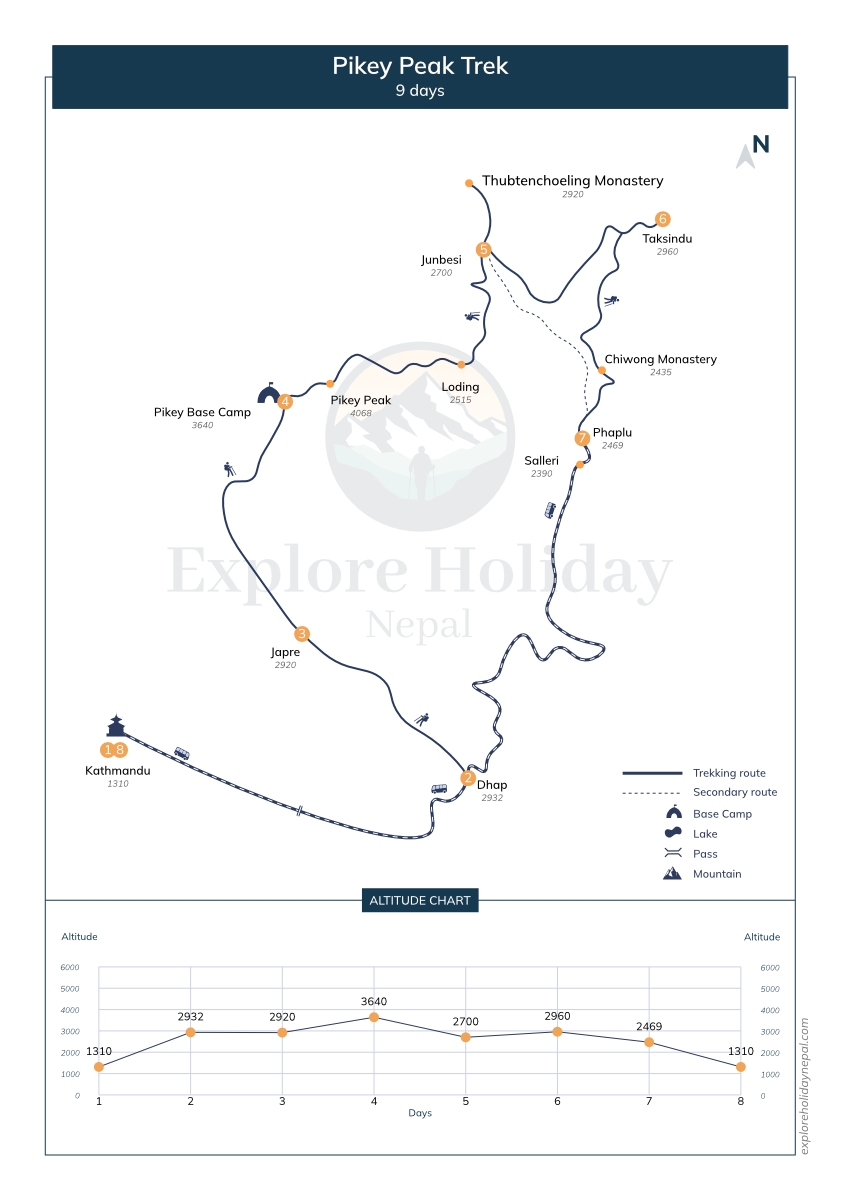
| Trip route | Kathmandu - Dhap - Jhapre - Pikey Base Camp - Taksindu - Phaplu - Kathmandu |
| Cost | USD 750 per person |
Highlights
- Enjoy stunning panoramic views of the world's highest peaks, including Mount Everest, Kanchenjunga, Makalu, Lhotse, and more.
- Summit Pikey Peak (4,065 meters/13,335 feet) for a breathtaking sunrise or sunset view over the Himalayas.
- Immerse yourself in the local Sherpa culture and visit traditional villages along the trail.
- Experience a quieter trekking route compared to some of the more popular trekking destinations in the Everest region.
- Trek through diverse landscapes, including rhododendron forests, alpine meadows, and terraced fields, with opportunities to encounter local flora and fauna.
- Visit ancient monasteries such as Thupten Chholing Monastery, adding a spiritual and cultural dimension to the trek.
- Explore the Pikey Cultural Trail, which connects several Sherpa villages and provides insights into the traditional way of life.
- Capture stunning photographs of the Himalayan landscapes, terraced fields, and traditional Sherpa settlements.
- Engage with local communities and enjoy the hospitality of the Sherpa people as you trek through their villages.
- Traverse beautiful alpine pastures with grazing yaks and sheep, offering a serene and picturesque setting.
- Experience the warmth and friendliness of the Sherpa people, known for their hospitality and unique cultural practices.
- Enjoy a more off-the-beaten-path trekking experience, allowing for a peaceful and authentic connection with the natural surroundings.
Overview
 The Pikey Peak Trek is one of the most enchanting and off-the-beaten-path trekking adventures in the Everest region of Nepal, attracting travelers who seek a combination of breathtaking Himalayan vistas, authentic cultural experiences, and peaceful trails away from crowded routes. Nestled in the serene Solu region, this trek rises to an elevation of 4,065 meters (13,335 feet), offering trekkers a remarkable vantage point to capture sweeping panoramic views of some of the world’s most famous peaks, including Mount Everest, Makalu, and Kanchenjunga.
Unlike the heavily trafficked Everest Base Camp Trek, the Pikey Peak Trek provides a more immersive experience, allowing trekkers to explore remote Sherpa villages, interact with the local community, and gain insight into centuries-old Tibetan Buddhist traditions. Along the way, the journey takes hikers through lush rhododendron forests, terraced farmland, and open alpine meadows, where the scenery changes dramatically with every step, making it a photographer’s paradise and a nature lover’s dream.
Beyond the spectacular landscapes, this trek is also a cultural adventure, as travelers pass through traditional villages such as Junbesi and Chiwong, where life moves at a slower pace, and warm hospitality greets visitors at every turn. The trek also includes visits to ancient monasteries, offering a spiritual dimension to the adventure, where you can witness local rituals and learn about the region’s rich religious heritage.
Combining moderate trekking challenges with serene environments, the Pikey Peak Trek is suitable for both experienced hikers and those new to Himalayan trekking, making it a perfect alternative for travelers looking for a less crowded Everest viewpoint trek. Whether you’re chasing the perfect sunrise over the Himalayas, immersing yourself in Sherpa culture, or simply enjoying the peace and tranquility of the mountains, the Pikey Peak Trek promises a journey that is as enriching for the mind and soul as it is for the eyes.
The Pikey Peak Trek begins with a picturesque drive from Kathmandu to the trailhead, often starting at villages like Dhap or Jiri. From there, trekkers embark on a journey through traditional Sherpa villages such as Junbesi and Chiwong, where stone houses, prayer flags, and bustling local life offer a unique insight into Sherpa culture, customs, and hospitality. Along the way, you may encounter locals celebrating vibrant festivals or performing daily rituals, adding a rich cultural dimension to the trek.
The trail itself is a visual treat, passing through dense rhododendron forests, terraced farmlands, open alpine meadows, and high-altitude pastures. Each day brings a change in scenery, making the trek both captivating and rewarding for nature lovers and photographers alike. The gradual shifts in landscape also help trekkers acclimatize naturally, enhancing both safety and comfort.
A key highlight of the trek is the ascent to Pikey Base Camp, where early risers are rewarded with a breathtaking Himalayan sunrise. From this vantage point, trekkers enjoy panoramic views of Everest, Makalu, Kanchenjunga, and other towering peaks, creating an unforgettable experience that captures the essence of the Nepal Himalayas.
In addition to its natural beauty, the trek offers a spiritual journey with visits to Thupten Chholing Monastery and Chiwong Monastery. These serene monasteries, rooted in Tibetan Buddhism, provide peaceful spots for reflection and offer travelers a chance to observe traditional rituals and prayer ceremonies, enriching the overall trekking experience.
Overall, the Pikey Peak Trek combines stunning landscapes, authentic cultural encounters, and spiritual exploration, making it a truly memorable off-the-beaten-path trekking adventure in the Everest region.
The Pikey Peak Trek can be enjoyed throughout the year, but the most favorable seasons for this adventure are spring (March to May) and autumn (September to November). During these periods, trekkers experience clear skies, stable temperatures, and excellent visibility, making it easier to fully appreciate the stunning panoramic views of Everest, Makalu, Kanchenjunga, and the surrounding Himalayan peaks.
Spring is especially magical, as the trails are lined with blooming rhododendrons and vibrant wildflowers, painting the mountainsides in bright reds, pinks, and whites. The gentle warmth and fresh mountain air create perfect conditions for trekking, photography, and cultural exploration. Autumn, on the other hand, brings crisp, clear skies and cooler temperatures, offering some of the best visibility of the Himalayas throughout the year. The landscapes are rich with golden hues after the harvest season, creating a breathtaking backdrop for the trek.
While trekking is technically possible during other seasons, monsoon (June to August) often brings heavy rainfall, slippery trails, and the risk of landslides, making trekking more challenging and less enjoyable. Winter (December to February) offers a quieter trekking experience, but the cold temperatures and occasional snowfall can make high-altitude hiking difficult and require proper gear and preparation.
For most trekkers, spring and autumn provide the perfect combination of weather, scenery, and cultural experiences, making these seasons ideal for a memorable and comfortable Pikey Peak trekking adventure in the Everest region of Nepal.
The Pikey Peak Trek is generally classified as a moderate-level trek, making it suitable for trekkers with a reasonable level of fitness who are eager to explore the Everest region without undertaking a highly strenuous climb. While the trek involves ascending to high-altitude terrains and passing through mountainous landscapes, it does not require any technical climbing skills, which makes it accessible for both first-time trekkers and those with some previous trekking experience in the Himalayas.
The trail offers a mix of gradual inclines, rolling hills, and steeper sections, particularly as you approach Pikey Base Camp. These changes in elevation provide a rewarding sense of progress as trekkers are treated to panoramic views of Everest, Makalu, and Kanchenjunga with every ascent. Although less demanding than challenging treks like the Everest Base Camp Trek or Annapurna Circuit, the journey still requires physical endurance, as daily trekking hours can range from 5 to 7 hours, often on uneven terrain and in changing weather conditions.
To ensure a safe and enjoyable experience, it is important for trekkers to engage in adequate physical preparation before the trek. This can include cardiovascular exercises, strength training, and practice hikes to build stamina. Additionally, proper acclimatization is crucial to minimize the risk of altitude sickness and to allow your body to adjust comfortably to the higher elevations of the Solu region.
Overall, the Pikey Peak Trek strikes a perfect balance between adventure and accessibility, offering a fulfilling Himalayan trekking experience for those seeking a moderately challenging but highly rewarding journey through the Nepal Himalayas.
Accommodation and FoodFood along the trek is a delightful mix of Nepali and international cuisine, carefully prepared to meet the nutritional needs of trekkers. Traditional dishes like dal bhat (rice with lentil soup), momo (Nepalese dumplings), noodle soup, and vegetable curries are commonly served, often accompanied by hot drinks such as tea, coffee, or local herbal infusions. International options such as pasta, pancakes, and sandwiches are also available in many teahouses, particularly at popular stops along the trail.
The quality and variety of food can vary depending on altitude and location, but meals are designed to provide sufficient energy, warmth, and nourishment to sustain trekkers throughout long days of hiking. Hydration is equally important, so trekkers are encouraged to drink plenty of water or herbal teas and can also purchase bottled water or water treated with purification tablets in remote areas.
Staying in these community-run lodges also supports the local Sherpa economy, allowing trekkers to contribute directly to the wellbeing of the villages they pass through, making the Pikey Peak Trek not only an adventurous journey but also a culturally responsible experience.
Mobile network coverage is available in certain villages and lower-altitude stops, but it can become unpredictable or completely unavailable as you ascend toward Pikey Base Camp. Trekkers are strongly advised to inform family or friends of their trekking plans beforehand and to carry alternative communication methods, such as satellite phones or portable GPS trackers, especially for emergencies or safety purposes.
Despite these limitations, the gradual improvement of communication infrastructure in the region is making it easier for trekkers to stay connected while still enjoying the peace and tranquility of off-the-beaten-path trekking. Maintaining a balance between connectivity and immersion in nature ensures that your Pikey Peak Trek is both safe and deeply rewarding.
Choosing the right trekking company can make a huge difference in your Pikey Peak Trek experience, and Explore Holiday Treks is dedicated to providing a safe, comfortable, and unforgettable journey through the beautiful Solu region of Nepal. With years of experience in organizing treks in the Everest region, our team of knowledgeable guides and skilled porters are intimately familiar with the local trails, weather patterns, and cultural nuances, ensuring that every step of your adventure is well-planned and worry-free.
At Explore Holiday Treks, we prioritize safety, comfort, and cultural immersion. Our guides are trained not only in high-altitude trekking and first aid but also in local customs, traditions, and the history of the Solu region, allowing trekkers to enjoy a deeper, more meaningful connection with the villages and landscapes they pass through. Meanwhile, our porters help carry your gear efficiently, making your trek more manageable and enjoyable.
We also offer well-structured itineraries designed to maximize your trekking experience, with adequate acclimatization, scenic viewpoints, and cultural stops built into the journey. By choosing Explore Holiday Treks, you are not just signing up for a trek—you’re embarking on a well-supported, safe, and enriching Himalayan adventure that allows you to fully appreciate the breathtaking views, serene monasteries, and vibrant Sherpa culture of the Nepal Himalayas.
Whether you are a first-time trekker or an experienced hiker seeking an off-the-beaten-path adventure, Explore Holiday Treks ensures that your Pikey Peak Trek is seamless, memorable, and truly unforgettable.
Cultural Exploration:One of the most rewarding aspects of the Pikey Peak Trek is the opportunity to immerse yourself in the rich Sherpa culture and traditions of the Solu region. As you pass through charming villages such as Junbesi and Chiwong, you’ll encounter a way of life that has been carefully preserved for generations. These villages are dotted with stone houses, prayer flags, mani walls, and local monasteries, offering trekkers a glimpse into the daily life, customs, and spiritual practices of the Sherpa people.
In these villages, you can witness traditional farming techniques, animal herding, and community gatherings, as well as experience the warmth and hospitality of the locals firsthand. Trekkers often have the chance to interact with villagers, learn about their festivals, rituals, and Buddhist beliefs, and even participate in small cultural events if timing allows.
This cultural immersion adds a unique depth to the Pikey Peak Trek, transforming it from a simple hiking adventure into a meaningful journey through the heart of Sherpa life. Every village stop not only offers a rest point but also an opportunity to understand the resilience, traditions, and daily rhythms of the communities that call the Nepal Himalayas home.
By engaging with local culture during your trek, you contribute to sustainable tourism, supporting the Sherpa economy while gaining authentic and memorable experiences that you won’t find on more crowded trekking routes.
Spiritual Highlights:The Pikey Peak Trek offers more than just stunning landscapes—it also provides a spiritual journey through the ancient monasteries of the Solu region. Visits to Thupten Chholing Monastery and Chiwong Monastery allow trekkers to experience the profound influence of Tibetan Buddhism in everyday village life. These serene sanctuaries offer a peaceful environment for meditation, reflection, and cultural learning, giving visitors a deeper appreciation for the region’s spiritual heritage. Observing monks performing rituals, listening to prayer chants, and exploring monastery courtyards enhances the cultural and spiritual richness of the trek, making it a truly holistic Himalayan experience.
Top Blogs About Trekking in the Everest Region
Uncover the best blogs about trekking in the Everest region, featuring expert advice, detailed itineraries, personal experiences, and essential tips for adventurers looking to explore the Himalayas.
Top 5 Everest Trekking Packages
Where is Mount Everest? Discover the World’s Highest Peak
Top 9 Reasons to Go on Everest Base Camp Trek
Accommodation During Everest Base Camp Trek
Shower and Laundry Facilities During the Everest Base Camp Trek
Elevation Facts for Everest Base Camp Trekking
Physical Fitness Requirements for Everest Base Camp Trek
The Best Ways to Trek to Everest Base Camp
When is the Best Time to Hike to Everest Base Camp?
Everest Base Camp Trek: Tips and FAQs
Why Sleeping at Everest Base Camp Is the Ultimate Trekking Experience ?
Trip Preparation
- Thermal underwear (top and bottom)
- Moisture-wicking t-shirts (long-sleeved)
- Moisture-wicking underwear
- Fleece jacket or pullover
- Insulated down or synthetic jacket
- Waterproof, windproof jacket (Gore-Tex or similar)
- Waterproof, windproof pants (Gore-Tex or similar)
- Warm beanie or hat
- Sun hat or cap
- Neck gaiter or scarf
- Trekking pants (convertible preferred)
- Waterproof trousers
- Lightweight gloves (inner)
- Insulated gloves or mittens (outer)
- Hiking boots (broken in and waterproof)
- Comfortable camp shoes (e.g., sneakers or sandals)
- Trekking backpack (30-40 liters) with waterproof cover
- Sleeping bag (rated for cold temperatures)
- Sleeping pad or mattress (insulated)
- Adjustable trekking poles
- Insulated water bottles or hydration bladder (2 liters capacity)
- Travel-sized toiletries
- Biodegradable soap
- Quick-dry towel
- Medications for altitude sickness, pain relief, and common ailments
- Sun protection cream, wet wipes, and hand sanitizer
- Camera and batteries
- Notebook and pen
- Earplugs (for sleeping in lodges)
- Portable solar charger
- Headlamp, power bank, and extra batteries
Trip Itinerary
Day 1 : Drive from Kathmandu to Dhap
Your adventure begins with a scenic drive from Kathmandu to Dhap, a charming village nestled in the lower Solu Khumbu region. After breakfast, you’ll undertake on a 6-7 hour drive through beautiful hills, rivers, and fields, passing along the Sunkoshi River. The overland journey is relatively easy, offering glimpses of rural Nepali life as you pass through villages and terraced landscapes. Upon reaching Dhap, you’ll experience the local culture and enjoy a restful evening in this tranquil village.
Day 2 : Trek from Dhap to Jharpe
After breakfast, we start the day’s trek from Dhap to Jhapre. This 4-5 hour journey takes you along dry paths before transitioning into a rugged trail toward Jhapre. Along the way, you will be rewarded with stunning views of Everest and the Numbur Himal. As you reach Jhapre, you’ll be welcomed by the serene atmosphere and traditional village life. Enjoy a restful night in Jhapre, preparing for the next leg of your trek.
Day 3 : Trek to Pikey Base Camp
Today’s trek takes us to Pikey Base Camp. After an early breakfast, we begin our 6-7 hour hike, which starts on a dusty trail leading to Bhulbule and gradually becomes steeper as we ascend through rhododendron forests toward Lhamuje. This journey offers fantastic views of the surrounding mountains, including glimpses of Everest. Once at Pikey Base Camp, you’ll be treated to panoramic mountain views and the peaceful ambiance of the area. Overnight stay at Pikey Base Camp.
Day 4 : Trek from Pikey Base Camp to Junbesi via Pikey Peak
The day begins early with a hike towards Pikey Peak. The rocky ridgeline offers incredible views, and at the summit, you’ll witness a magical sunrise over several Himalayan peaks, including Everest, Thamserku, Manaslu, and Langtang. After soaking in the breathtaking views, we descend to Junbesi, passing through Mani walls and chortens. Upon arrival in Junbesi, you’ll have the chance to visit the local monastery, which offers stunning views of Numbur Himal. Overnight in Junbesi.
Day 5 : Explore Junbesi and Visit Thupten Chholing Gumba
This day is dedicated to acclimatization and exploration around Junbesi. After breakfast, we undertake on a 4-hour hike to visit Thupten Chholing Gumba, a prominent monastery in the area. The trail winds uphill along the Junbesi Khola, offering scenic views along the way. At the monastery, you’ll gain insight into the spiritual life of the Sherpa community. Afterward, return to Junbesi for more exploration and relaxation. Overnight stay in Junbesi.
Day 6 : Trek from Junbesi to Phaplu
On the final trekking day, we descend from Junbesi to Phaplu, a 4-hour journey. The trail follows the Junbesi Khola, crossing a suspension bridge and passing through scenic villages. After a peaceful walk, you will arrive at Phaplu, marking the end of your trekking adventure in the Solu Khumbu region. Enjoy a relaxing evening in Phaplu with an overnight stay.
Day 7 : Drive Back to Kathmandu
- 1 - 1 pax US$ 850
- 2 - 5 pax US$ 799
- 6 - 9 pax US$ 780
- 10 - 15 pax US$ 765
- 16 - 20 pax US$ 750
Inclusions
What is included?
- All arrival and departure transportation from the airport to hotel and vice versa.
- Accommodation in a hotel in Kathmandu with breakfast included..
- All necessary permits for trekking.
- Full board during the trek, which means meals (breakfast, lunch, and dinner).
- The trek includes a guide who will receive daily wages, meals, accommodation, transportation allowance, and medical insurance (only for field staff).
- A group dinner upon arrival or departure, with a briefing about the trek.
- A comprehensive medical kit carried by our guide during the entire trek.
- Private vehicles for sightseeing tours based on the group size.
- sharing jeep from Kathmandu to Dhap and phaplu to Kathmandu.
What isn't included?
- Nepal visa and medical/travel insurance are not included.
- Meals in Kathmandu and personal expenses like laundry are not covered.
- If you prefer a single room in Kathmandu or during treks (where available), there's an additional cost.
- You need to bring your personal trek gear, including sleeping bags, duvet/down jackets, and kit/duffel bags.
- Additional snacks, refreshments, and drinking water are at your own cost.
- If you have to return early from the trek due to personal reasons or sickness, you'll need to cover the extra expenses yourself (can be claimed from your insurance).
- Bring a personal medical kit based on your doctor's advice.
- world heritage entrance fee during the kathmandu sightseen.
- TIPS AND DONATIONS .
Complimentary
Booking Terms and Conditions
Booking, Cancellation, and Refund Policy
Transportation
Trip and the Weather
Pikey Peak Trek Starting and Ending Points
Major Trips for Pikey Peak Trek
Best Time for Pikey Peak Trek
Pikey Peak Trekking Difficulty
Food and Accommodation
Communication and Networking
Explore Holiday Treks Team for Pikey Peak Trek
Important Note
Why with Explore Holiday Treks