
Everest Base Camp Budget Trek
| Trip code | |
| Package name | Everest Base Camp Budget Trek |
| Duration | 12 |
| Max. elevation | 5545 m |
| Level | Moderate |
| Transportation | Domestic flight and all ground transportation as per itinerary |
| Accomodation | Tea House / Lodge during the trek |
| Starts at | Kathmandu |
| Ends at | Kathmandu |
| Trip route | |
| Cost | USD 799 per person |
Highlights
- Experience the iconic Everest region on a budget without compromising on the views.
- Explore the vibrant Sherpa town, a gateway to Everest Base Camp.
- Enjoy breathtaking views of Everest, Lhotse, and other towering peaks along the way.
- Reach the legendary Everest Base Camp for an unforgettable experience.
- Immerse yourself in the rich culture of the Sherpa people and their monasteries.
Overview
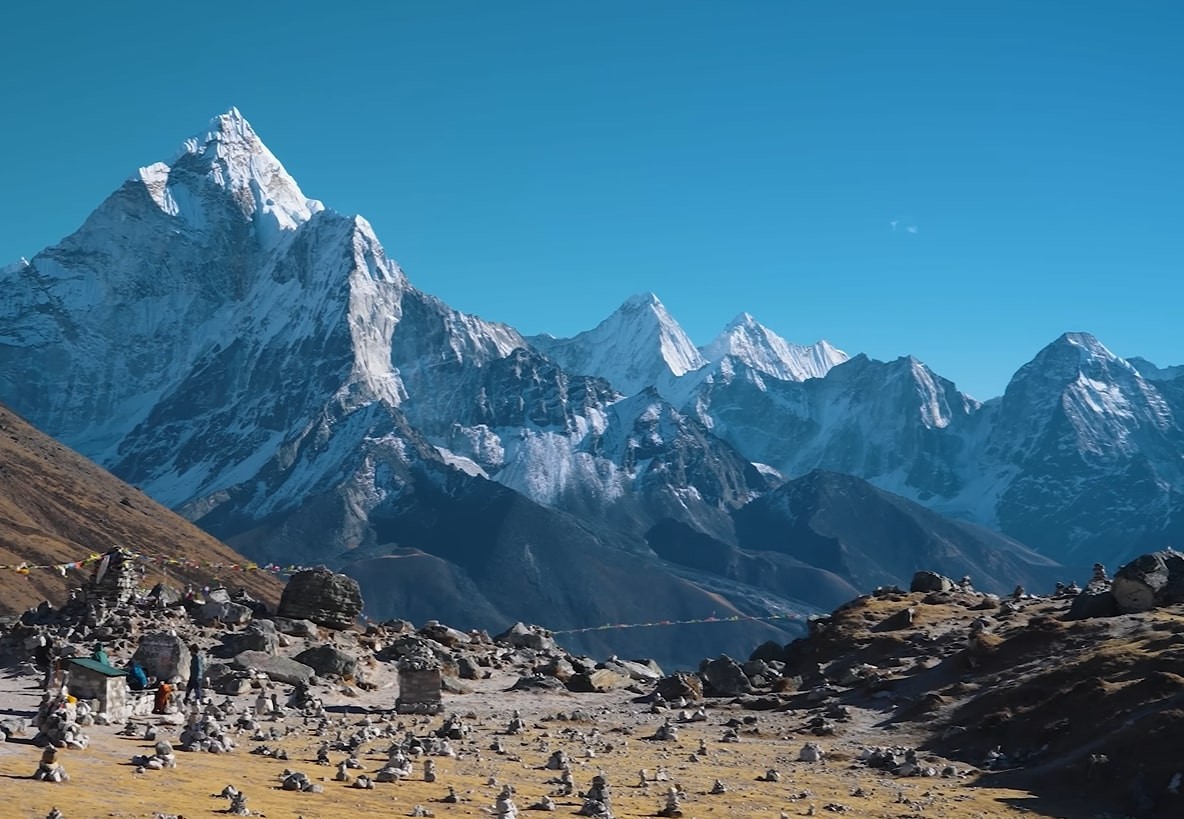 The Everest Budget Trek offers an incredible opportunity to explore the majestic Everest region without the high costs typically associated with trekking in Nepal. This budget-friendly trek allows adventurers to witness the breathtaking beauty of Mount Everest (8,848 meters), the world’s tallest peak, as well as other towering mountains such as Lhotse, Nuptse, and Makalu, all while experiencing the rich Sherpa culture. The trek takes you through the heart of the Khumbu Valley, offering spectacular views of snow-capped mountains, glaciers, and high-altitude landscapes, while staying within a budget-friendly framework. By staying in simple, cozy teahouses and focusing on local meals, Explore Holiday Treks ensures that trekkers can enjoy this iconic region without overspending.
Why Trek With Explore Holiday Treks
There are literally hundreds of companies offering Everest treks. Here's why we're worth considering:
1. We Specialize in Budget Treks
This isn't a side offering for us—budget treks are our main thing. We've done 200+ Everest Budget Treks since 2017.
What this means:
- We know exactly which lodges offer best value
- We've negotiated good rates with teahouse owners
- Our itineraries are optimized for acclimatization without extra costs
- We don't try to upsell you to more expensive options
2. Small Groups, Personal Attention
Maximum 8 trekkers per group, usually 4-6. Solo trekkers pay slightly more ($950-1,000) but we still accommodate them.
Why small groups matter at altitude:
- Guide can monitor everyone's health properly
- More flexibility with rest breaks and pace
- Easier to find accommodation (lodges fill up fast)
- Better cultural interactions
3. Experienced Sherpa and Local Guides
All our Everest guides are from the Khumbu region or have 5+ years experience there. They're not just leading the trek—they're from these mountains.
What our guides provide:
- Route knowledge and navigation
- Altitude sickness monitoring (pulse oximeter checks daily)
- Cultural and historical information
- Help with lodge negotiations
- Emergency response if needed
They also speak English well enough to have actual conversations, not just give instructions.
4. Proper Porter Treatment
This is non-negotiable for us:
- Maximum 25kg per porter (not the 30-35kg some companies load)
- Proper gear provided (boots, jacket, sunglasses)
- Same lodges as clients (not separate cheap places)
- Insurance coverage
- Fair wages above industry standard
Some companies cut costs by exploiting porters. We don't. If that means we're $50-100 more expensive than the absolute cheapest option, so be it.
5. Safety Equipment and Backup Plans
Every guide carries:
- First aid kit (comprehensive, not just band-aids)
- Pulse oximeter (measures blood oxygen saturation)
- Portable altitude chamber (Gamow bag—for emergencies)
- Communication device (satellite phone or radio)
We have helicopter evacuation arrangements with multiple providers. Cost is on you (covered by travel insurance), but we handle coordination.
Important: We've never had to use emergency evacuation on a budget trek (the altitudes are safer), but the systems are in place.
6. Flexible Start Dates
We run trips year-round with departures every 2-3 days during peak season (March-May, October-November).
Can't find a group for your dates? We'll organize a private trek or adjust the schedule. We're pretty flexible.
Best times to go:
- October-November: Clear skies, stable weather, busy but not crowded
- March-April: Rhododendrons blooming, warming temperatures, busier
- December-February: Very cold, fewer trekkers, crystal clear views
- June-September: Monsoon season, not recommended (clouds, rain, leeches)
7. Pre-Trek Briefing and Support
When you arrive in Kathmandu:
- We do a 1-hour briefing covering the entire itinerary
- Check your gear (tell you if something's inadequate)
- Help arrange anything you forgot to bring
- Answer all questions
Gear rental available:
- Sleeping bag
- Down jacket
- Trekking poles
- Duffel bag
We also arrange:
- Airport pickup
- Kathmandu budget hotel
- Last-minute permits or documentation
8. What We're NOT
We're not luxury. You're sleeping in teahouses with thin walls, squat toilets, and no heating. You're eating dal bhat multiple times per day. This is budget trekking.
We're also not the absolute cheapest. If someone quotes $500-600 for Everest, ask serious questions about:
- Are flights really included?
- What's the guide's experience?
- How are porters treated?
- What happens in emergencies?
Cheap can become expensive if things go wrong at altitude.
9. Post-Trek Support
After the trek, we help with:
- Onward travel arrangements
- Kathmandu sightseeing recommendations
- Dealing with any issues or feedback
- Future trek planning (many clients come back for Annapurna or Manaslu)
We're also responsive to messages—usually reply within 24 hours, even during trekking season when we're busy
Booking Process
- Contact us with preferred dates and group size
- We send detailed itinerary and quote
- Pay 25% deposit to secure spot (bank transfer or credit card)
- Pay remaining 75% in cash when you arrive in Kathmandu
- Briefing session day before trek starts
- Fly to Lukla and start trekking
We need at least 2 weeks notice for permits and flight bookings, though we can sometimes accommodate last-minute bookings with rush fees.
Final Thoughts
The Everest Budget Trek won't give you the full "I stood at Everest Base Camp" bragging rights. But it will give you:
- Views of the world's highest mountain
- Experience of Sherpa culture and hospitality
- Challenge of high-altitude trekking (up to 4,400m)
- Buddhist monasteries and spiritual experiences
- Stories and memories that last forever
- All for about half the cost of full EBC
Is it easier than EBC? Yes. Is it less impressive? Honestly, not by much. You're still in the Everest region, still seeing incredible peaks, still challenging yourself.
For budget travelers, people with limited time, or anyone who wants the Everest experience without the extreme altitude risks—this is the move.
Ready to make it happen? Let's talk.
Contact: 9779849816310
Email : [email protected]
Response time: Usually within 24 hours
Questions? Ask anything. Seriously, we'd rather answer 50 questions before booking than have surprises during the trek.
Let's get you to the mountains.
Top Blogs About Trekking in the Everest Region
Uncover the best blogs about trekking in the Everest region, featuring expert advice, detailed itineraries, personal experiences, and essential tips for adventurers looking to explore the Himalayas.
Top 5 Everest Trekking Packages
Where is Mount Everest? Discover the World’s Highest Peak
Top 9 Reasons to Go on Everest Base Camp Trek
Accommodation During Everest Base Camp Trek
Shower and Laundry Facilities During the Everest Base Camp Trek
Elevation Facts for Everest Base Camp Trekking
Physical Fitness Requirements for Everest Base Camp Trek
The Best Ways to Trek to Everest Base Camp
When is the Best Time to Hike to Everest Base Camp?
Everest Base Camp Trek: Tips and FAQs
Why Sleeping at Everest Base Camp Is the Ultimate Trekking Experience ?
Which is the Better Lake Trek in Nepal: Gokyo or Tilicho Lake Trek?
Altitude Sickness on Nepal Treks: Symptoms, Treatment, and When to Descend (Complete Guide)
Everest Base Camp Toilet Problem: The Environmental Crisis on the World's Highest Mountain
Trip Preparation
- Thermal underwear (top and bottom)
- Moisture-wicking t-shirts (long-sleeved)
- Moisture-wicking underwear
- Fleece jacket or pullover
- Insulated down or synthetic jacket
- Waterproof, windproof jacket (Gore-Tex or similar)
- Waterproof, windproof pants (Gore-Tex or similar)
- Warm beanie or hat
- Sun hat or cap
- Neck gaiter or scarf
- Trekking pants (convertible preferred)
- Waterproof trousers
- Lightweight gloves (inner)
- Insulated gloves or mittens (outer)
- Hiking boots (broken in and waterproof)
- Comfortable camp shoes (e.g., sneakers or sandals)
- Trekking backpack (30-40 liters) with waterproof cover
- Sleeping bag (rated for cold temperatures)
- Sleeping pad or mattress (insulated)
- Adjustable trekking poles
- Insulated water bottles or hydration bladder (2 liters capacity)
- Travel-sized toiletries
- Biodegradable soap
- Quick-dry towel
- Medications for altitude sickness, pain relief, and common ailments
- Sun protection cream, wet wipes, and hand sanitizer
- Camera and batteries
- Notebook and pen
- Earplugs (for sleeping in lodges)
- Portable solar charger
- Headlamp, power bank, and extra batteries
Trip Itinerary
Day 1 : Kathmandu to Lukla (2,846 m / 9,337 ft) and Trek to Phakding (2,610 m / 8,563 ft) – 4-5 hours
Your Everest Budget Trek begins with an early morning flight from Kathmandu to Lukla, which takes about 30-40 minutes. The flight offers stunning views of the mountains, and as you land in Lukla, you will be greeted by the beautiful Himalayan scenery. After arriving in Lukla, we begin our trek towards Phakding, a village located at 2,610 meters. The trail is relatively gentle, crossing several suspension bridges over the Dudh Koshi River. After about 4-5 hours of trekking, we reach Phakding, where we’ll spend the night in a local teahouse.
Day 2 : Phakding to Namche Bazaar (3,440 m / 11,290 ft) – 6-7 hours
Today’s trek takes us from Phakding to Namche Bazaar, a bustling Sherpa town and the gateway to the Everest region. The trail ascends gradually, crossing suspension bridges, passing through forests of pine and rhododendron, and offering stunning views of the mountains. As we approach Namche, the final stretch involves a steep climb. After about 6-7 hours of trekking, we will reach Namche Bazaar, located at 3,440 meters. This vibrant town offers a great opportunity to explore local culture and get your first views of Mount Everest. We will spend the night here.
Day 3 : Acclimatization in Namche Bazaar
Acclimatization is crucial at this altitude, and today we take a rest day to allow our bodies to adjust to the elevation. You can take a short hike to nearby viewpoints, such as the Everest View Hotel, where you can enjoy panoramic views of Everest, Lhotse, Ama Dablam, and other surrounding peaks. Another option is to visit the Sherpa museum in Namche Bazaar to learn more about the culture and history of the region. After our acclimatization activities, we return to Namche for another night.
Day 4 : Namche Bazaar to Tengboche Monastery (3,860 m / 12,660 ft) – 5-6 hours
After a restful acclimatization day, we continue our trek towards Tengboche, a beautiful village known for its famous Tengboche Monastery. The trail takes us through pine forests, with stunning views of Everest, Lhotse, and Ama Dablam. The route involves a few ascents and descents, and after about 5-6 hours of trekking, we reach Tengboche. The main attraction here is the Tengboche Monastery, which is one of the most important Buddhist sites in the Khumbu region. We spend the night in a local teahouse and take in the serenity of this peaceful area.
Day 5 : Tengboche to Dingboche (4,410 m / 14,470 ft) – 5-6 hours
Today, we trek from Tengboche to Dingboche, located at 4,410 meters. The trail takes us through rhododendron forests and across the Imja Khola, with magnificent views of the towering peaks like Ama Dablam. The trek involves a gradual ascent, and after about 5-6 hours, we arrive in Dingboche, a village located in the Imja Valley. Dingboche offers a stunning view of Lhotse and Island Peak. We will rest here overnight, adjusting to the altitude.
Day 6 : Acclimatization in Dingboche – Hike to Nagarjuna Hill (5,100 m / 16,732 ft) – 3-4 hours
Another acclimatization day, today we take a hike to Nagarjuna Hill, which lies at an altitude of 5,100 meters. The hike offers spectacular views of the surrounding peaks, including Makalu, Lhotse, and Cho Oyu. After a 3-4 hour hike, we return to Dingboche for the night. This extra rest day helps ensure that our bodies are prepared for the higher altitudes we will encounter in the coming days.
Day 7 : Dingboche to Lobuche (4,940 m / 16,210 ft) – 5-6 hours
After our acclimatization day, we continue our trek to Lobuche, located at 4,940 meters. The trail ascends through the rocky terrain, with expansive views of the surrounding glaciers and peaks. After about 5-6 hours, we will arrive in Lobuche, a small village situated at the base of the Khumbu Glacier. This is a popular stop for trekkers on their way to Everest Base Camp, and we will rest here overnight in preparation for our journey to Base Camp.
Day 8 : Lobuche to Everest Base Camp (5,364 m / 17,598 ft) via Gorak Shep (5,164 m / 16,942 ft) – Back to Gorak Shep – 7-8 hours
Today is a big day, as we trek from Lobuche to Everest Base Camp. We first make our way to Gorak Shep, a small settlement at 5,164 meters, where we take a break. From Gorak Shep, it’s a challenging 3-hour trek to Everest Base Camp, located at 5,364 meters. The path is rocky, and the terrain is often icy, but the reward is absolutely worth it. Once we reach Everest Base Camp, you’ll have the opportunity to take in the spectacular views of the Khumbu Icefall and surrounding peaks. After spending some time at Base Camp, we return to Gorak Shep for the night.
Day 9 : Hike to Kala Patthar (5,644 m / 18,519 ft) Early Morning – Trek to Pheriche or pangbuche (4,371 m / 14,340 ft) – 8-9 hours
This morning, we wake up early for the hike to Kala Patthar, one of the best viewpoints for an up-close view of Mount Everest. At 5,644 meters, the summit of Kala Patthar offers a panoramic view of the Everest region, including Everest itself, Lhotse, Nuptse, and Pumori. After taking in the breathtaking views and snapping some photos, we descend to Gorak Shep and continue our trek to Pheriche, a village located at 4,371 meters. The trek today takes around 8-9 hours.
Day 10 : Trek from Pheriche tonamche bazzer via Tengboche Monastery (3,440 m / 11,290 ft) – 8-9 hours
Today, we begin our descent from Pheriche to Tengboche. The trail is mostly downhill and takes us through alpine forests, past yak pastures, and through traditional Sherpa villages. After 5-6 hours of trekking, we will arrive back at Tengboche, where we can once again visit the famous monastery. This will be a great opportunity to reflect on our journey thus far. we retrace our steps back to Namche Bazaar. The trek takes us down to the Dudh Koshi River and then up to the bustling town of Namche, where we will spend the night. The total trek time for the day is around 8-9 hours. Along the way, we’ll enjoy the beautiful scenery of the mountains, and as we descend, the atmosphere becomes more relaxed. We’ll have time to rest and rejuvenate in Namche.
Day 11 : Trek from Namche Bazaar to Lukla (2,846 m / 9,337 ft) – 7-8 hours
Today is our final day of trekking, as we make our way back to Lukla. The descent from Namche to Lukla takes around 7-8 hours and follows a similar route we took on our way up. Along the way, we’ll pass through small villages, lush forests, and across suspension bridges. Once we reach Lukla, we’ll celebrate the completion of our trek and relax in a teahouse for the night.
Day 12 : Flight from Lukla to Kathmandu
After breakfast, we catch an early flight back to Kathmandu from Lukla. The flight provides one last opportunity to enjoy the stunning views of the Himalayan range. Upon arrival in Kathmandu, we will transfer you to your hotel, where you can relax and enjoy a celebratory dinner. Your trek to Everest Base Camp has now come to an end, and you’ll have a chance to reflect on the incredible experience.
- 1 - 1 pax US$ 999
- 2 - 5 pax US$ 799
- 6 - 9 pax US$ 789
- 16 - 20 pax US$ 769
Inclusions
What is included?
- Teahouse/mountain Lodge accommodations during the trek on a sharing basics.
- Domestic flight
- All ground transportation as per the itinerary
- Sagarmatha National Park entry permit.
- TIMS (Trekkers’ Information Management System) card.
- local Government tax .
- Experienced, English-speaking trek guide.
- Trekking map and group medical kit.
What isn't included?
- International flights to/from Kathmandu.
- Nepal entry visa fee.
- Travel insurance.
- Personal trekking equipment.
- Personal expenses (laundry, calls, internet, etc.).
- Alcoholic beverages and bottled water.
- Additional meals(Lunch, Dinner, breakfast) and beverages not specified.
- trekking staff for career ( potter)
- Tips for trekking staff.
Complimentary
- More than 30 days before departure: 100% refund minus any applicable transaction fees.
- 15-30 days before departure: 50% refund of the total trek cost.
- Less than 15 days before departure: No refund is available.
Booking Terms and Conditions for Everest Budget Trek (Explore Holiday Treks)
At Explore Holiday Treks, booking the Everest Budget Trek involves a straightforward process. Once you decide to join the trek, you will be required to submit a deposit of 20-30% of the total trek cost to confirm your booking. The remaining balance is due prior to the trek's departure, usually at least two weeks before your trek begins. This deposit ensures that your permits, accommodations, and transportation arrangements are secured in advance. The company offers multiple payment methods including bank transfer, credit card, and other convenient options for trekkers to complete their bookings. It is highly recommended to book your trek 2-3 months in advance, especially during peak seasons, to ensure the availability of permits and other essential logistics.
Explore Holiday Treks takes pride in providing clear and transparent terms regarding the booking process. Once your booking is confirmed, a detailed itinerary with trip dates, accommodations, and other important details will be provided. Trekkers are encouraged to carefully read the itinerary and share any specific requirements or preferences, such as dietary restrictions or medical conditions. It is important to note that by booking with Explore Holiday Treks, trekkers agree to adhere to all company policies, including the responsibility of following safety measures during the trek, respecting local customs, and cooperating with the trekking team for a smooth and enjoyable adventure.
Booking, Cancellation, and Refund Policy for Everest Budget Trek (Explore Holiday Treks)
Explore Holiday Treks understands that plans can change, and they offer flexible cancellation and refund policies for the Everest Budget Trek. If a trekker decides to cancel their booking, the following policies apply:
In the case that Explore Holiday Treks cancels the trip due to unforeseen circumstances such as natural disasters, political instability, or extreme weather, trekkers will be offered a full refund or the option to reschedule their trek. Additionally, if the trek is interrupted due to conditions beyond the company's control, trekkers may receive partial refunds or be offered alternative arrangements. Explore Holiday Treks strongly recommends that trekkers purchase travel insurance to cover any unforeseen situations such as illness or accidents that could affect their trip plans.
Transportation for Everest Budget Trek
The Everest Budget Trek includes transportation arrangements that allow trekkers to enjoy a comfortable journey to and from the Everest region. The trek begins with a scenic flight from Kathmandu to Lukla, a small mountain airport located at an altitude of 2,860 meters. This thrilling flight offers breathtaking views of the Himalayan range and marks the start of the trek. The flight is operated by small domestic airlines and is known for its adventure factor, as Lukla's airport is nestled on a short, inclined runway surrounded by steep mountains.
After landing in Lukla, trekkers undertake on their journey on foot, following well-established trekking routes through the Sherpa villages. Explore Holiday Treks ensures that all transportation, including the flight to Lukla and the return flight to Kathmandu, is well-organized and on time. For the return journey, trekkers take the same flight back from Lukla to Kathmandu, completing the circular trip. Explore Holiday Treks provides safe and reliable transportation throughout the journey, with a focus on comfort and punctuality.
Trip and the Weather for Everest Budget Trek
The weather in the Everest region is highly variable, and trekkers should be prepared for changes in temperature and conditions during the Everest Budget Trek. In the lower regions of the trek, such as Lukla and Phakding, the climate is relatively mild, with daytime temperatures ranging between 10°C and 15°C. However, as you ascend into the higher altitudes, temperatures drop significantly, particularly at Tengboche, Dingboche, and Pheriche. The higher altitudes near Namche Bazaar and beyond may experience temperatures as low as -10°C during the evening and early morning hours. It’s important to prepare for these temperature fluctuations and pack the appropriate clothing.
The weather can change quickly, especially at higher elevations, so trekkers should be prepared for wind, rain, and occasional snowfall. The best trekking seasons for the Everest Budget Trek are spring (March to May) and autumn (September to November), as the weather is generally stable, and the skies are clear, offering stunning mountain views. During summer (June to August), the region experiences monsoon rains, which can make trekking trails slippery and difficult, while winter (December to February) brings cold, snow, and challenging conditions at higher altitudes. For the most favorable weather and trekking experience, spring and autumn are ideal.
Major Trips for Everest Budget Trek
The Everest Budget Trek focuses on some of the most iconic locations in the Everest region without the high cost of a full Everest Base Camp trek. After arriving in Lukla, the trek begins with a scenic walk to Phakding, then continues to Namche Bazaar, a lively Sherpa town that is perfect for acclimatization. From Namche, trekkers head toward Tengboche, where the famous Tengboche Monastery is located, offering incredible views of Mount Everest, Nuptse, and Ama Dablam. This area is culturally rich, with opportunities to witness Buddhist rituals and interact with the local Sherpa people.
The trek continues through beautiful villages like Dingboche and Pheriche, where trekkers can enjoy spectacular views of the surrounding Himalayan peaks. Although the trek does not reach Everest Base Camp, the experience of walking in the shadow of the world’s highest peak, visiting monasteries, and trekking through picturesque villages makes this a remarkable journey. Key highlights include the stunning views of Ama Dablam, Lhotse, Makalu, and, of course, Mount Everest itself, offering trekkers a memorable adventure at a fraction of the cost of more strenuous treks.
Everest Budget Trekking Difficulty
The Everest Budget Trek is considered to be a moderate trekking experience, suitable for trekkers with a reasonable level of fitness. The trek involves daily walks of 5-7 hours on well-established trekking paths, with varying levels of difficulty depending on the terrain. The difficulty primarily comes from the altitude, as trekkers ascend higher into the Khumbu region. The highest point reached during this trek is Tengboche (3,860 meters), which requires proper acclimatization to avoid altitude sickness. While the trek doesn’t involve technical climbing, the altitude and the rugged terrain can still be challenging for first-time trekkers or those not accustomed to long days of walking at high altitudes.
To prepare for the Everest Budget Trek, trekkers should engage in some physical training, especially aerobic activities like hiking, running, or cycling, to build endurance. Although the trek is less demanding than reaching Everest Base Camp, it still requires stamina and determination. Acclimatization days, particularly in Namche Bazaar and Tengboche, are essential to reduce the risk of altitude sickness and ensure trekkers are well-prepared for the higher elevations.
Best Time for Everest Budget Trek
The best time for the Everest Budget Trek is during the spring (March to May) and autumn (September to November) seasons. These months provide the most favorable weather conditions for trekking in the Everest region. In spring, temperatures are mild, and the skies are often clear, making it an ideal time for stunning views of the snow-capped peaks. Similarly, autumn offers stable weather, and the crisp air allows for spectacular views of the Himalayas. Both seasons also offer pleasant trekking temperatures at lower altitudes, while the higher regions are cool enough for a comfortable trek.
Summer (June to August) brings the monsoon season to the region, which results in heavy rainfall, potentially making the trails slippery and less accessible. Winter (December to February) brings very cold temperatures, especially at higher altitudes, and could present dangerous conditions for trekking, particularly near the top of the trek. Therefore, trekkers are advised to avoid these seasons if possible, and instead, plan their trip during the spring or autumn months for the best trekking experience.
Food and Accommodation for Everest Budget Trek
During the Everest Budget Trek, trekkers will stay in simple, budget-friendly teahouses along the route. These teahouses provide clean and comfortable accommodations with shared bathrooms and basic facilities. Rooms are typically small but cozy, with beds, blankets, and sometimes heating systems in the colder months. The teahouses are run by local Sherpa families who offer warm hospitality, allowing trekkers to interact with the local culture and lifestyle.
Food on the Everest Budget Trek is generally straightforward and hearty, designed to provide trekkers with the energy they need for their daily hikes. Common meals include dal bhat (lentil soup with rice), momos (dumplings), and noodles. Many teahouses also offer western-style meals, such as pasta, fried rice, and pancakes, along with hot drinks like tea, coffee, and hot chocolate. While food may be simple and basic, it is nutritious and sufficient to keep trekkers fueled throughout their journey.
Communication and Networking for Everest Budget Trek
While trekking in the Everest region, Explore Holiday Treks ensures that trekkers can stay in touch with the outside world when necessary. In the lower elevations, such as Lukla and Phakding, mobile networks are available, and some teahouses even offer Wi-Fi services for an additional charge. As trekkers move higher into the mountains, connectivity becomes more limited. However, most teahouses in popular areas like Namche Bazaar, Tengboche, and Dingboche provide access to satellite phone services, allowing trekkers to make calls in case of an emergency.
It’s important to note that while communication options exist, they can be limited and costly. Trekkers should not rely on mobile phones or the internet for constant communication but should be prepared for a more disconnected experience in the mountains. Explore Holiday Treks ensures that trekkers are aware of this and advises them to carry necessary communication tools, such as a satellite phone or a personal locator beacon, if needed for emergencies.
Important Note for Everest Budget Trek
Before exploring on the Everest Budget Trek, it is important to note that trekkers need to have several permits for the journey, including the Sagarmatha National Park Permit and the TIMS (Trekkers’ Information Management System) Card. These permits are essential for trekking in the Everest region, and Explore Holiday Treks will handle all the necessary paperwork and permit arrangements on behalf of trekkers.
Additionally, trekkers should be physically prepared for the trek, as the journey involves significant elevation gain. Altitude sickness is a concern at higher altitudes, so it’s essential to follow a gradual acclimatization schedule. Trekkers should also ensure they have proper travel insurance that covers medical emergencies, evacuation, and trip cancellation. Lastly, it is essential to respect local cultures and traditions throughout the trek, especially when visiting Buddhist monasteries and interacting with the Sherpa communities.
For more information or to book your Everest Budget Trek, contact Explore Holiday Treks. We specialize in providing affordable and unforgettable trekking experiences in the Everest region. Let us help you make your dream of reaching Everest Base Camp a reality!