
Dhaulagiri Circuit Trek
| Trip code | |
| Package name | Dhaulagiri Circuit Trek |
| Duration | 17 |
| Max. elevation | 5200 m |
| Level | Difficult |
| Transportation | All ground transportation as per itinerary. |
| Accomodation | Hotel in Kathmandu and Pokhara and tea house or lodge during the trek |
| Starts at | Kathmandu |
| Ends at | Kathmandu |
| Trip route | kathmandu-beni-babiachaur-dharapani-muri-boghara-dobang-choriban Khola-italian base camp-glacier camp-dhaulagiri base camp-hidden valley via french pass-yak kharka via dhampus pass-marpha-pokhara-kathmandu |
| Cost | USD 0 per person |
Highlights
Close-up views of Mount Dhaulagiri, Tukuche Peak, Dhampus Peak, and Annapurna I
Crossing two high mountain passes: French Pass (5,360 m) and Dhampus Pass (5,240 m)
Remote glacier walks over Chhonbardan and Dhaulagiri glaciers
Traditional villages such as Darbang, Muri, and Marpha
Deep gorges carved by the Myagdi and Kali Gandaki rivers
A true camping trek through pristine alpine wilderness
Overview
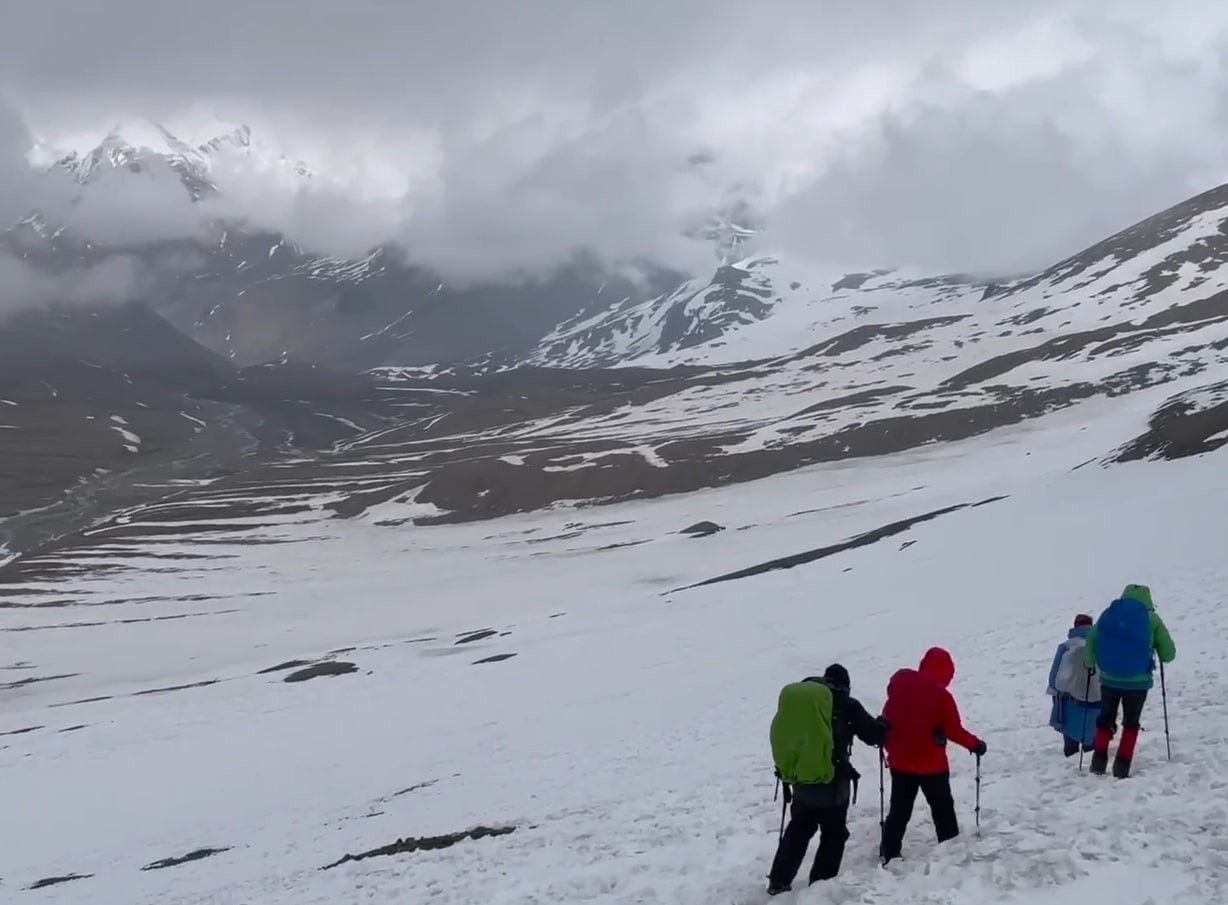 Dhaulagiri Circuit Trek: A Remote Himalayan Expedition
The Dhaulagiri Circuit Trek is one of Nepal’s most demanding and rewarding trekking adventures, designed for trekkers seeking raw wilderness, dramatic landscapes, and minimal crowds. Circling Mount Dhaulagiri (8,167 m) — the world’s seventh-highest peak — this trek takes you deep into a remote corner of western Nepal where nature dominates, and human presence feels timeless.
Unlike popular routes such as Everest or Annapurna, the Dhaulagiri Circuit remains largely untouched. The journey is physically challenging, yet the sense of achievement and immersion in high Himalayan terrain makes it a true expedition-style trek.
Dhaulagiri Circuit Trek Overview
The trek begins in the lower hills of the Myagdi district, passing terraced farmlands, forests of rhododendron and pine, and traditional Magar and Gurung settlements. As the trail ascends, landscapes shift dramatically — lush valleys give way to barren alpine terrain, glaciers, and towering icefalls.
After reaching Italian Base Camp and Dhaulagiri Base Camp, trekkers face the most demanding section of the journey: crossing French Pass and Dhampus Pass. These high-altitude crossings require good acclimatization, strong physical fitness, and experienced guides. The route eventually descends into the Kali Gandaki Valley, ending in Marpha, a charming Thakali village.
Difficulty Level
The Dhaulagiri Circuit Trek is considered very challenging and is recommended only for experienced trekkers. Long trekking days, high-altitude camping, glacier crossings, and unpredictable weather make this trek physically and mentally demanding.
Prior high-altitude trekking experience above 5,000 meters is strongly advised.
Best Time to Trek Dhaulagiri Circuit
Spring (March–May): Stable weather, clear mountain views, blooming rhododendrons
Autumn (September–November): Best visibility, dry conditions, and ideal temperatures
Winter and monsoon seasons are not recommended due to heavy snowfall, avalanches, and difficult trail conditions.
Accommodation and Meals
Most of the Dhaulagiri Circuit is a fully supported camping trek. Tents, kitchen equipment, and meals are arranged by the trekking team. In lower villages and at the end of the trek (Marpha), basic teahouse accommodation is available.
Meals are nutritious and designed for high-altitude trekking, including local Nepali dishes and international options.
Permits Required
Annapurna Conservation Area Permit (ACAP)
Trekking Information Management System (TIMS) Card
Dhaulagiri Special Permit
All permits can be arranged before the trek through registered trekking agencies.
Why Choose the Dhaulagiri Circuit Trek?
Ideal for trekkers seeking extreme adventure and solitude
One of Nepal’s least crowded long-distance treks
Unmatched sense of exploration and accomplishment
Perfect for those who want to go beyond commercial trekking routes
Dhaulagiri Circuit Trek with Explore Holiday Nepal
At Explore Holiday Nepal, we focus on safe, well-planned, and authentic trekking experiences. Our experienced guides, quality camping equipment, and personalized approach ensure that your Dhaulagiri Circuit Trek is both challenging and rewarding.
If you are ready to test your limits and explore one of Nepal’s most remote Himalayan regions, the Dhaulagiri Circuit Trek is an unforgettable journey into the heart of the mountains.
Trip Preparation
- Thermal underwear (top and bottom)
- Moisture-wicking t-shirts (long-sleeved)
- Moisture-wicking underwear
- Fleece jacket or pullover
- Insulated down or synthetic jacket
- Waterproof, windproof jacket (Gore-Tex or similar)
- Waterproof, windproof pants (Gore-Tex or similar)
- Warm beanie or hat
- Sun hat or cap
- Neck gaiter or scarf
- Trekking pants (convertible preferred)
- Waterproof trousers
- Lightweight gloves (inner)
- Insulated gloves or mittens (outer)
- Hiking boots (broken in and waterproof)
- Comfortable camp shoes (e.g., sneakers or sandals)
- Trekking backpack (30-40 liters) with waterproof cover
- Sleeping bag (rated for cold temperatures)
- Sleeping pad or mattress (insulated)
- Adjustable trekking poles
- Insulated water bottles or hydration bladder (2 liters capacity)
- Travel-sized toiletries
- Biodegradable soap
- Quick-dry towel
- Medications for altitude sickness, pain relief, and common ailments
- Sun protection cream, wet wipes, and hand sanitizer
- Camera and batteries
- Notebook and pen
- Earplugs (for sleeping in lodges)
- Portable solar charger
- Headlamp, power bank, and extra batteries
Trip Itinerary
Day 1 : Kathmandu to Pokhara, Drive to Beni
Your journey begins with a scenic drive from Kathmandu to Pokhara on a comfortable tourist bus. The road follows the Trishuli River, offering views of terraced hills, villages, and changing landscapes. After reaching Pokhara, you continue by local jeep or bus toward Beni, the administrative hub of the Myagdi district. This transition from the busy capital to quieter hill towns sets the tone for the adventure ahead. Overnight in a lodge in Beni, where final trek preparations are made.
Day 2 : Trek Beni to Dharapani
Today marks the official start of the trek. Following the Myagdi Khola, the trail passes through fertile farmlands, suspension bridges, and small settlements. Walking is gentle and unhurried, allowing time to observe daily rural life, traditional houses, and terraced fields. The lower altitude makes this an enjoyable introduction to trekking conditions. Dharapani sits peacefully beside the river, offering a calm overnight stop before the trail gradually becomes more demanding.
Day 3 : Dharapani Trekking Day
Continuing upstream along the Myagdi Khola, the trail winds through subtropical forest and cultivated land. Stone paths, river crossings, and shaded woodland make today’s walk varied and engaging. You’ll notice fewer vehicles and a slower pace of life as you move deeper into the Dhaulagiri region. Children playing, farmers tending fields, and water buffalo grazing create a lively rural atmosphere. The gradual ascent helps your body adjust naturally to increasing altitude.
Day 4 : Trek Dharapani to Muri
Today involves multiple river crossings and steady climbs through forested slopes. After crossing the river, the trail ascends to a ridge overlooking the valley before reaching the village of Muri. This Magar settlement is one of the most culturally interesting stops on the trek. Here, you can observe traditional farming practices and village life that have remained unchanged for generations. Overnight in Muri allows time to explore and interact with locals.
Day 5 : Trek Muri to Boghara
The route climbs over a low mountain pass, rewarding you with views of Mt. Ghustung South. Walking through pine and oak forests, the trail alternates between gentle ascents and short descents. As you approach Boghara, the landscape opens up to terraced hillsides and dramatic mountain scenery. From the village, clear views of Dhaulagiri I and Gurja Himal signal your gradual entry into higher Himalayan terrain. Overnight in Boghara.
Day 6 : Trek Boghara to Dobang
Leaving permanent settlements behind, the trail follows forested paths alongside the river. The terrain becomes more rugged, with fewer cultivated fields and more wilderness. Crossing small streams and shaded woodland, you sense the increasing isolation of the region. Dobang lies in a quiet forest clearing and serves as an important stop before entering the more remote sections of the trek. Camping here marks a shift from village trekking to expedition-style travel.
Day 7 : Trek Dobang to Choriban Khola
As altitude increases, human settlements disappear almost entirely. The trail follows dense forest along the Myagdi Khola, with occasional seasonal teashops offering a welcome rest. The path becomes rockier, and the air noticeably thinner. Crossing streams and uneven terrain, you reach Choriban Khola, where camp is set beside the river. The sense of remoteness grows, preparing you mentally and physically for the alpine environment ahead.
Day 8 : Trek Choriban Khola to Italian Base Camp
A demanding ascent of roughly 500 meters brings dramatic changes in scenery. Forest gives way to rocky terrain, glacial valleys, and towering peaks. As you climb, views of the Chhonbardan Glacier and Dhaulagiri massif begin to dominate the landscape. Italian Base Camp, named after a historic expedition, offers stunning panoramic views and marks your entry into true high-altitude trekking. Overnight camping here is both challenging and rewarding.
Day 9 : Acclimatization at Italian Base Camp
Today is dedicated to acclimatization, which is essential for safety. Short hikes around camp help your body adjust while allowing you to explore the rugged surroundings. The area offers close-up views of glaciers, icefalls, and surrounding peaks. You can rest, journal, photograph the scenery, or simply enjoy the silence of the high mountains. This rest day significantly improves your chances of crossing the high passes comfortably in the coming days.
Day 10 : Trek Italian Base Camp to Glacier Camp
The trail traverses glacial moraine and rocky ground, demanding careful footing. Passing the area known as Swiss Base Camp, you continue across barren terrain shaped by ice and rock. The environment feels harsh and otherworldly, with minimal vegetation and immense mountain walls. Glacier Camp is reached after a steady, challenging walk and offers dramatic views under vast Himalayan skies. Camping here brings you closer to the heart of the Dhaulagiri massif.
Day 11 : Trek Glacier Camp to Dhaulagiri Base Camp
A thrilling day as you trek beneath towering peaks. The route climbs steep moraine slopes with breathtaking views of Tukuche Peak. As the valley widens, Dhaulagiri Base Camp appears beneath the massive south face of Dhaulagiri I. Prayer flags flutter in the wind, marking this iconic location. Surrounded by Dhaulagiri I, II, III, and V, spending the night here is a highlight of the entire trek.
Day 12 : Acclimatization at Dhaulagiri Base Camp
Another vital acclimatization day allows your body to adapt before crossing high passes. You can explore nearby ridges, photograph glaciers, and admire peaks such as Manapathi. The team prepares equipment while trekkers rest and hydrate. Despite the altitude, the day feels peaceful, with sweeping views and crisp mountain air. Proper rest here plays a key role in safely reaching Hidden Valley in the following days.
Day 13 : Trek Dhaulagiri Base Camp to Hidden Valley via French Pass
An early start leads to the crossing of French Pass (5,360 m). The climb is demanding but rewarding, offering spectacular views of Dhaulagiri, Tukuche Peak, Sita Chuchura, and surrounding giants. Prayer flags mark the summit of the pass. From here, the descent leads into the vast, open Hidden Valley at around 5,200 meters, where camp is set for what is often the coldest night of the trek.
Day 14 : Trek Hidden Valley to Yak Kharka via Dhampus Pass
Crossing Dhampus Pass (5,240 m) is another major highlight. Glaciers and moraine dominate the landscape as you climb and descend carefully. Once over the pass, the trail drops steeply toward the Kali Gandaki Valley. The altitude loss brings noticeable relief in breathing and temperature. Yak Kharka, meaning yak pasture, welcomes you with grazing herds and a sense of returning life to the landscape.
Day 15 : Trek Yak Kharka to Marpha
Descending further, the scenery changes dramatically. Rocky terrain gives way to pine and rhododendron forests. The trail eventually reaches Marpha, a beautiful Thakali village known for its whitewashed houses, apple orchards, and monastery. Located along the Kali Gandaki River, Marpha offers comfort, culture, and teahouse facilities. After days of camping, this village feels especially welcoming and relaxed.
Day 16 : Marpha to Pokhara (Drive)
Today involves a long but scenic drive back to Pokhara along the Kali Gandaki corridor. The road is dusty in places but offers striking views of deep gorges and arid landscapes. Arriving in Pokhara feels lively after the solitude of the mountains. Enjoy a hot shower, lakeside walk, and celebratory meal while reflecting on the incredible journey you’ve completed.
Day 17 : Pokhara to Kathmandu
The trek concludes with a drive from Pokhara back to Kathmandu. The journey offers a final chance to enjoy Nepal’s changing landscapes, from river valleys to hill towns. Upon arrival in Kathmandu, you can rest, shop for souvenirs, or celebrate the successful completion of one of Nepal’s most challenging treks. This day marks the end of an unforgettable Himalayan adventure.
Inclusions
What is included?
- All arrival and departure transportation from the airport to hotel and vice versa.
- Accommodation in a hotel in Kathmandu and Pokhara with breakfast included.
- A guided tour of Kathmandu.
- All necessary permits for trekking, including ACAP fees (Annapurna Conservation Area Project) and Dhaulagiri Restricted Area Permit.
- Full board during the trek, which means meals (breakfast, lunch, and dinner).
- The trek includes a guide and porters, who will receive daily wages, meals, accommodation, transportation allowance, and medical insurance (only for field staff/porters).
- A group dinner upon arrival or departure, with a briefing about the trek.
- A comprehensive medical kit carried by our guide during the entire trek.
- Private vehicles for sightseeing tours based on the group size, accompanied by a city guide.
What isn't included?
- Nepal visa and medical/travel insurance are not included.
- Meals in Kathmandu and Pokhara and personal expenses like laundry are not covered.
- If you prefer a single room in Kathmandu or during treks (where available), there's an additional cost.
- Emergency evacuation, whether by any means of transportation or helicopter service, is an extra expense.
- You need to bring your personal trek gear, including sleeping bags, duvet/down jackets, and kit/duffel bags.
- Additional snacks, refreshments, and drinking water are at your own cost.
- If you have to return early from the trek due to personal reasons or sickness, you'll need to cover the extra expenses yourself (can be claimed from your insurance).
- Bring a personal medical kit based on your doctor's advice.
Complimentary
Close-up views of Mount Dhaulagiri (8,167 m), the seventh-highest mountain in the world
Trekking through Italian Base Camp and Dhaulagiri Base Camp
Crossing two high mountain passes: French Pass (5,360 m) and Dhampus Pass (5,240 m)
Glacier walks over the Dhaulagiri and Chhonbardan Glaciers
Remote camping experiences in untouched alpine terrain
Dhaulagiri Circuit Trek: Booking Terms and Conditions
When booking the Dhaulagiri Circuit Trek with Explore Holiday Nepal, trekkers are encouraged to carefully review all booking terms and conditions. A deposit is required at the time of confirmation to secure your place, with the remaining balance payable before the trek begins. Guests must provide accurate personal details, passport information, and emergency contact numbers to ensure smooth coordination and safety throughout the journey.
All participants are required to carry valid travel insurance that covers high-altitude trekking, emergency evacuation, and medical expenses. Due to the remote and demanding nature of the Dhaulagiri region, insurance coverage is a mandatory requirement. Any itinerary changes due to weather, trail conditions, or safety concerns may be made by the company in consultation with guides, prioritizing trekkers’ well-being at all times.
Booking, Cancellation, and Refund Policy
Explore Holiday Nepal follows a transparent and fair booking process for the Dhaulagiri Circuit Trek. To confirm a reservation, trekkers must complete a booking form and submit the required deposit. Cancellations made well in advance of the trek start date may be eligible for partial refunds, while last-minute cancellations may incur charges due to non-recoverable expenses such as permits, staff arrangements, and logistics.
Refunds are processed according to the cancellation timeline shared during booking. Costs already incurred for permits, camping equipment, food supplies, and transportation may be deducted. Early communication regarding cancellations or changes is strongly advised to minimize financial loss.
Transportation
Transportation plays a vital role in the Dhaulagiri Circuit Trek due to its remote access points. The journey typically begins with a drive from Kathmandu or Pokhara to Beni or Darbang using a private vehicle or local jeep. These road journeys offer scenic views, but may involve rough and mountainous terrain.
At the end of the trek, transportation is arranged from Marpha or Jomsom back to Pokhara, either by road or flight, depending on weather and client preference. Road conditions in the region can vary, so flexibility and patience are essential. Explore Holiday Nepal ensures safe and reliable transport options throughout the trek.
Trip and Weather Conditions
The Dhaulagiri Circuit Trek passes through a wide range of climatic zones, from warm river valleys to harsh alpine environments. Weather conditions can change rapidly, especially at higher elevations near Dhaulagiri Base Camp, French Pass, and Dhampus Pass.
Trekkers should be prepared for cold temperatures, snowfall, and strong winds at higher altitudes, even during peak trekking seasons. Proper clothing, layered gear, and weather awareness are essential. Explore Holiday Nepal provides pre-trek guidance to ensure trekkers are well-prepared for varying weather conditions.
Dhaulagiri Circuit Trek Starting and Ending Points
The trek usually starts from Darbang or Beni, located in the Myagdi district of western Nepal. These villages mark the transition from cultivated farmland to remote Himalayan wilderness. The route gradually ascends through isolated settlements, forests, and glacial valleys.
The trek typically concludes in Marpha or Jomsom, well-known villages in the Kali Gandaki Valley. From here, trekkers return to Pokhara by flight or road, marking the end of this challenging yet rewarding adventure.
Major Highlights of the Dhaulagiri Circuit Trek
The Dhaulagiri Circuit Trek is renowned for its dramatic landscapes and expedition-style trekking experience. Key highlights include:
Best Time for Dhaulagiri Circuit Trek
The best seasons for the Dhaulagiri Circuit Trek are spring (March to May) and autumn (September to November). These months offer stable weather, clearer skies, and safer conditions for crossing high passes.
Spring brings milder temperatures and blooming alpine vegetation, while autumn offers excellent visibility and crisp mountain views. Winter and monsoon seasons are not recommended due to heavy snowfall, avalanches, and high-risk trail conditions.
Dhaulagiri Circuit Trek Difficulty
The Dhaulagiri Circuit Trek is classified as a very challenging trek, suitable only for experienced trekkers with strong physical fitness. The route involves long trekking days, high-altitude camping, glacier crossings, and steep ascents.
Previous trekking experience above 5,000 meters is highly recommended. Proper acclimatization, mental preparedness, and guidance from experienced professionals are essential for a successful trek.
Food and Accommodation
Most of the Dhaulagiri Circuit Trek is a fully supported camping trek. Meals are prepared by trained kitchen staff and include nutritious Nepali and international dishes suitable for high-altitude trekking.
Accommodation is provided in high-quality tents during the camping sections. In lower villages and at the end of the trek, basic teahouse accommodation is available. Comfort may be simple, but cleanliness and safety are always prioritized.
Communication and Connectivity
Mobile network coverage is limited on the Dhaulagiri Circuit Trek. While some lower villages may have basic connectivity, most of the route has no phone or internet access.
Explore Holiday Nepal equips trekking teams with satellite communication devices for emergencies. Trekkers are advised to inform family and friends in advance about limited connectivity during the trek.
Explore Holiday Nepal Team for Dhaulagiri Circuit Trek
The Dhaulagiri Circuit Trek is led by highly experienced guides trained in wilderness first aid, altitude safety, and glacier navigation. Our guides possess deep knowledge of the region and ensure safe passage through demanding terrain.
Porters and support staff play a crucial role in managing logistics and equipment. Explore Holiday Nepal is committed to ethical trekking practices, fair wages, and the well-being of its team members.
Important Note
Due to the extreme nature of the Dhaulagiri Circuit Trek, trekkers must be physically and mentally prepared. Proper gear, travel insurance, and respect for guide instructions are essential. Weather conditions and trail safety may require itinerary adjustments.
Understanding altitude risks and following acclimatization guidelines significantly enhances safety and enjoyment during the trek.
Why Trek the Dhaulagiri Circuit with Explore Holiday Nepal
Choosing Explore Holiday Nepal for the Dhaulagiri Circuit Trek ensures professional planning, safety-focused execution, and an authentic Himalayan experience. Our team prioritizes responsible tourism, environmental respect, and personalized service.
From initial planning to the final descent, we are dedicated to delivering a well-organized and memorable trekking experience in one of Nepal’s most remote and spectacular mountain regions.